
Arizona Car Accident Lawyer
Arizona Car Accident Lawyer: Help With Your Claim Anywhere in the State
If you were hurt in a crash anywhere in Arizona, an Arizona car accident lawyer can explain who is at fault, which insurance policies may pay and how long you have to act. Valley Accident Law is based in Scottsdale, helps injured people across the Phoenix metro and takes cases anywhere in Arizona. You pay no attorney fee unless we recover money for you. The earlier you call, the better, but it's never too late to find out your legal rights.
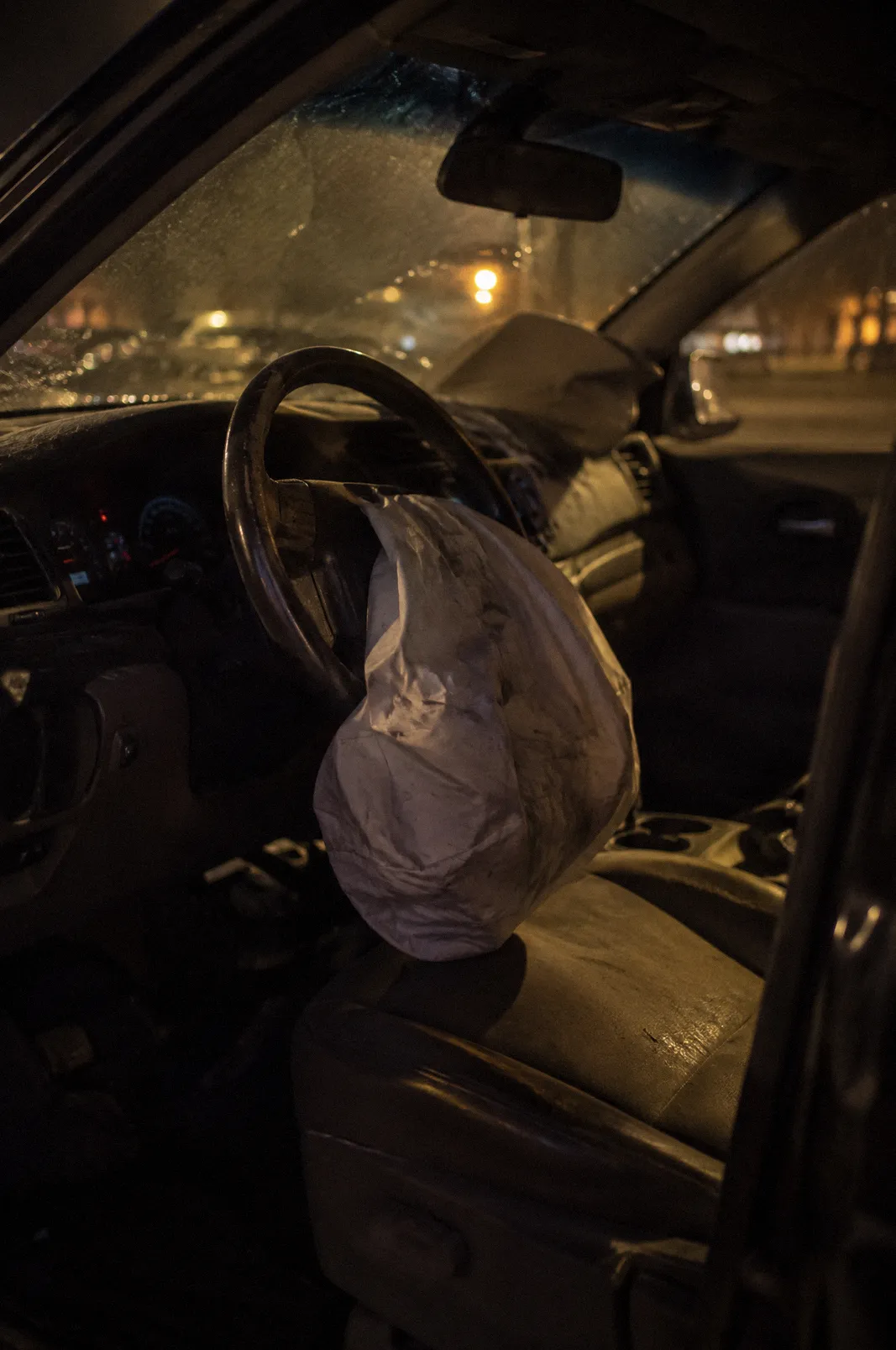
- Filing deadline
- Generally 2 years from the crash
- A.R.S. 12-542(1)
- City, county or state vehicle
- Notice of claim within 180 days
- A.R.S. 12-821.01
- Fault rule
- Pure comparative fault, no percentage bar
- A.R.S. 12-2505
- Minimum liability limits
- $25,000 / $50,000 / $15,000
- A.R.S. 28-4009
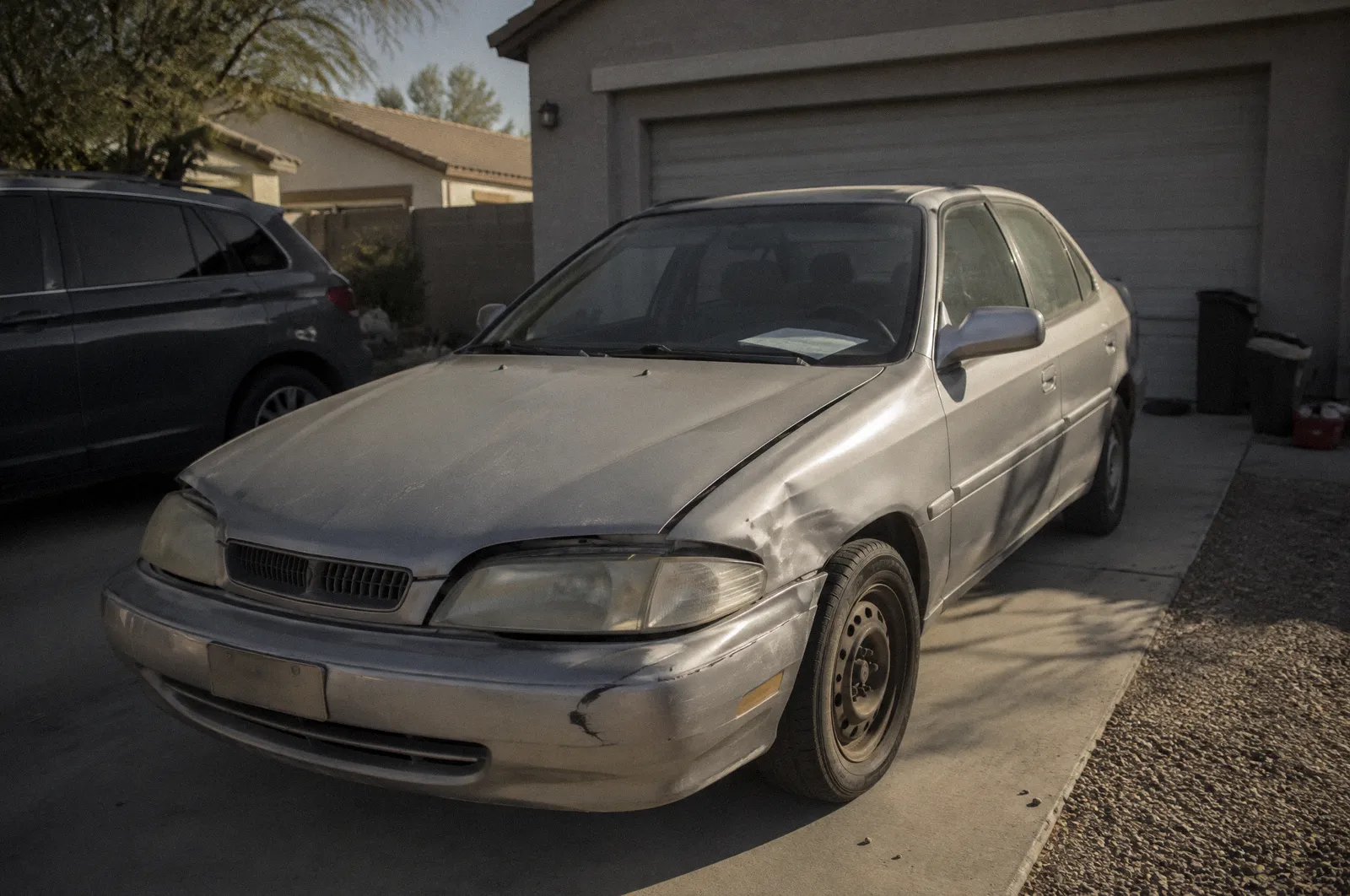
Who Pays When a Crash Injures You in Arizona
Most car accident claims start with the other driver's liability insurance, but they rarely end there. Depending on the facts, money can also come from your own uninsured and underinsured motorist coverage, from an employer whose worker was driving on the job, from the owner of a vehicle someone else borrowed, or from a city or county when a public vehicle or a dangerous road was involved.
An auto injury lawyer sorts out which of those sources applies before anyone signs anything. That matters because the first insurance company to call you is usually the other driver's, and its job is to close the claim for as little as it can. We will explain your legal rights, show you which policies may be in play and handle the conversations with the insurers so you can focus on getting better. That is the practical job of an Arizona vehicle accident lawyer.
Whether the crash happened on Loop 101 in Scottsdale, a street in Yuma or a rural highway north of Flagstaff, the same state law applies. Valley Accident Law takes cases anywhere in Arizona, and we start by phone, so distance is not a reason to wait.
Step by step
What to Do After a Car Accident in Arizona
These steps are general information, not legal advice for your exact situation. Our guide to what to do after a car accident goes into more detail.
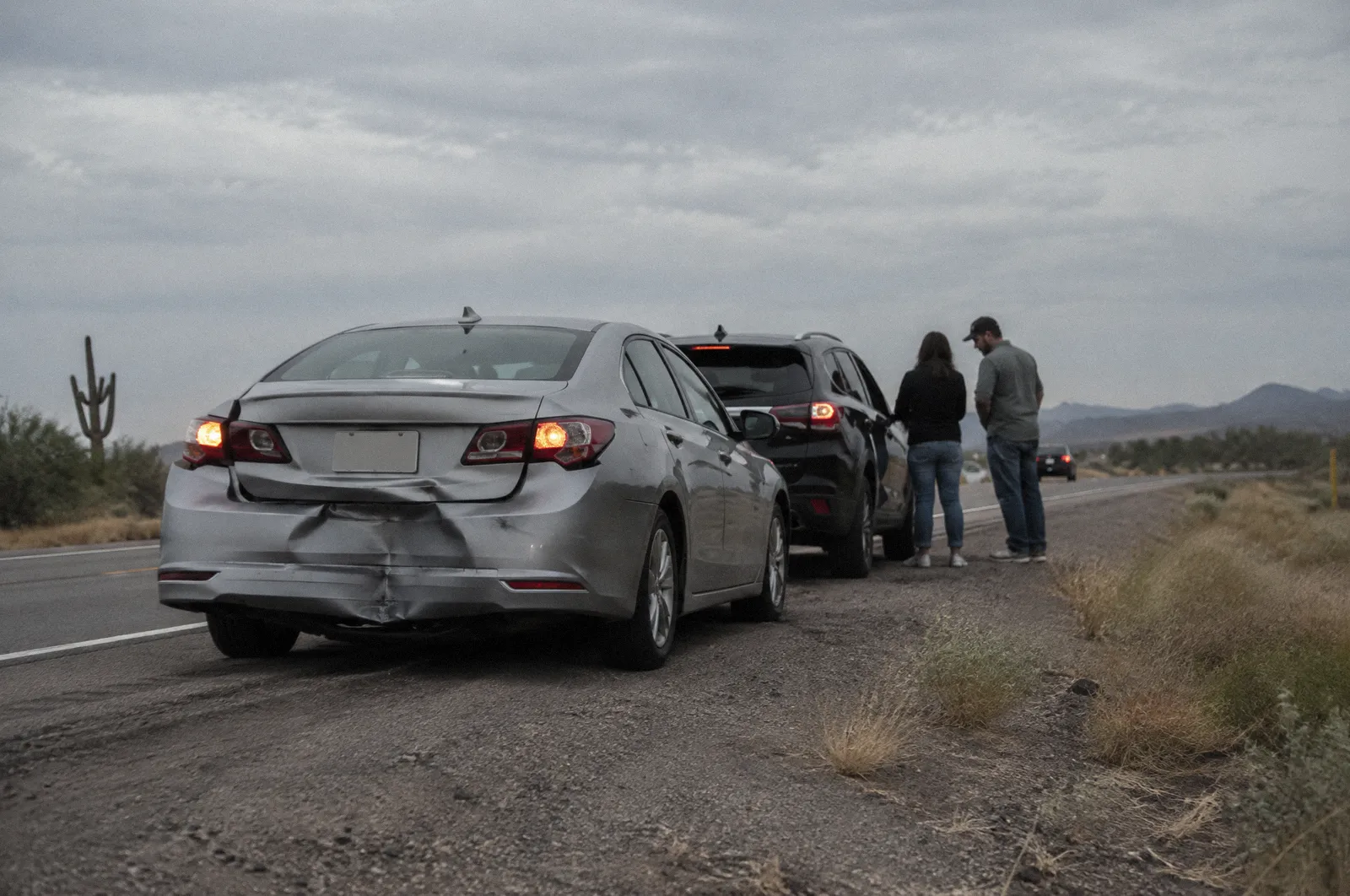
- 1
Get help and report the crash
Call 911. Arizona law requires a driver in a crash that injures or kills someone to give notice immediately, by the quickest means, to local police, the county sheriff or the highway patrol (A.R.S. 28-666). If you believe you were not at fault, make sure you explain this to the officer.
- 2
Document the scene, if safely possible
If safely possible, before any vehicle is moved, photograph the cars, the plates, skid marks, signals, road signs and your injuries. Ask witnesses for a name and number. Do not argue about fault at the roadside.
- 3
Exchange information, not opinions
Trade names, phone numbers, insurance details and plate numbers. Avoid apologizing or guessing what happened. A casual sentence at the scene can show up later as an admission.
- 4
Tell medical providers about every symptom
Pain often shows up hours or days later, and no or seemingly minor symptoms at the scene do not rule out an injury. We cannot give medical advice, but a prompt medical record also gives your claim a clear starting point.
- 5
Be careful with the other side's insurer
You can give basic facts, but think hard before agreeing to a recorded statement or signing a medical release. Adjusters ask questions designed to shrink your claim, and what you say can injure your legal rights. Our page on talking to insurance adjusters explains what to expect.
- 6
Call us before you settle anything
An early quick offer may not account for treatment you have not had yet. We will listen, explain where you stand and tell you plainly whether we think we can help.
How Fault Works: Arizona's Pure Comparative Rule
Insurance companies and their attorneys often negotiate the percentage of fault, because every point assigned to you reduces what they pay. Knowing the rule helps you see why.
What Arizona law provides
- Pure comparative fault with no percentage bar (A.R.S. 12-2505): being partly at fault does not automatically end your claim.
- Your compensation is generally reduced by your share of the blame.
- Generally several liability only (A.R.S. 12-2506): each at-fault party pays its own share, with exceptions.
- Following another vehicle closer than is reasonable and prudent, with due regard for speed, traffic and road conditions, breaks A.R.S. 28-730.
What happens in a real claim
- The adjuster looks for any reason to move blame onto you: a lane change, speed, a phone, a missed turn signal.
- Percentages are argued from the police report, photographs, vehicle damage and witness accounts, so early evidence carries weight.
- Where several drivers share fault, each one's insurer tries to point at the others.
- A driver who was texting may face extra problems: Arizona bans holding a phone while driving (A.R.S. 28-914), and negligence per se arguments can follow, though that comes from case law and depends on the facts.
Insurance That May Pay After a Car Accident
Most Arizona claims involve more than one policy. Here is how the pieces usually fit.
| Coverage | What it can do | Where the rule comes from |
|---|---|---|
| At-fault driver's liability insurance | Pays for injuries and property damage the driver caused, up to the policy limits. State minimums since July 1, 2020 are $25,000 per person, $50,000 per accident and $15,000 property damage. | A.R.S. 28-4009 |
| Your uninsured motorist (UM) coverage | Steps in when the at-fault driver has no insurance or cannot be identified. Physical contact with a hit-and-run vehicle is not required, but corroboration is. | A.R.S. 20-259.01(M) |
| Your underinsured motorist (UIM) coverage | Applies when the at-fault driver's limits are too low to cover your injuries. Insurers must offer UM and UIM in writing, and you may reject it. | A.R.S. 20-259.01 |
| Medical payments and health insurance | May cover bills early while the claim is open. Check your policy. Health plans, AHCCCS and Medicare may later seek reimbursement. | A.R.S. 33-931 et seq.; 36-2915 |
| Public entity coverage | A city, county or state vehicle or road defect triggers a separate notice process with its own short deadlines. | A.R.S. 12-821.01 |
Source: Arizona Revised Statutes as cited. Rules confirmed by our attorney in October 2026.
Evidence That Builds a Car Accident Claim
Strong claims are built on records that exist before anyone argues. Some of this evidence disappears quickly.
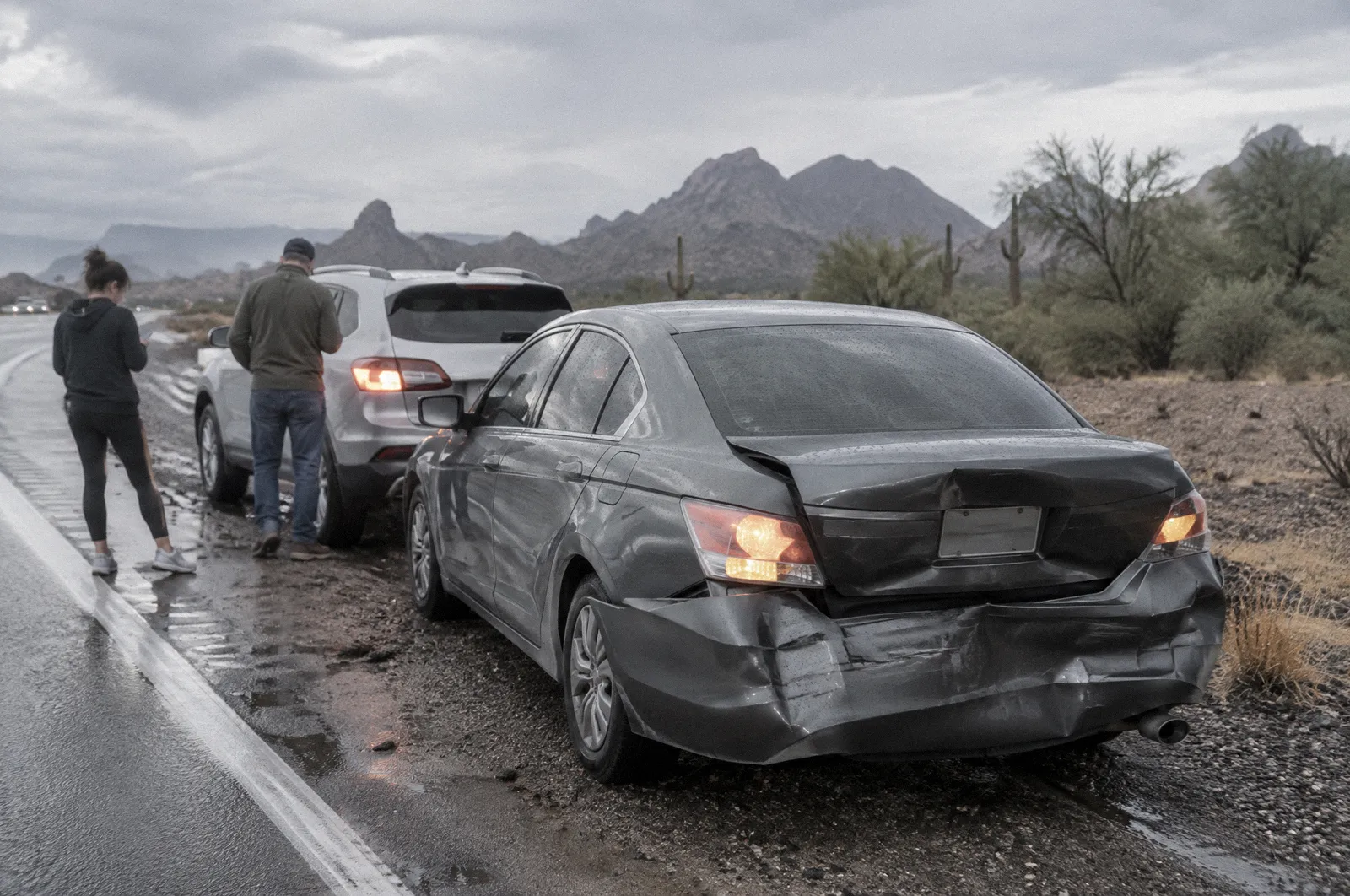
- The police report
It records the officers' observations, any citations and witness names. Our guide to getting a police report in Arizona lists where to request it.
- Photographs and video
Scene photos, dashcam clips and nearby business or doorbell cameras. Many systems overwrite within days, so ask for copies fast.
- Medical records and bills
Emergency, imaging, therapy and follow-up records tie your injuries to the crash and show how they changed your life.
- Vehicle data and repair estimates
Photos of the damage and the repair estimate help show speed and impact, and many newer vehicles store crash data that can be preserved.
- Phone and messaging records
When distraction is suspected, records can show whether a driver was texting or calling at the time.
- Wage and work records
Pay stubs and a note from your employer document lost income and time away from work.
Deadlines You Should Not Miss
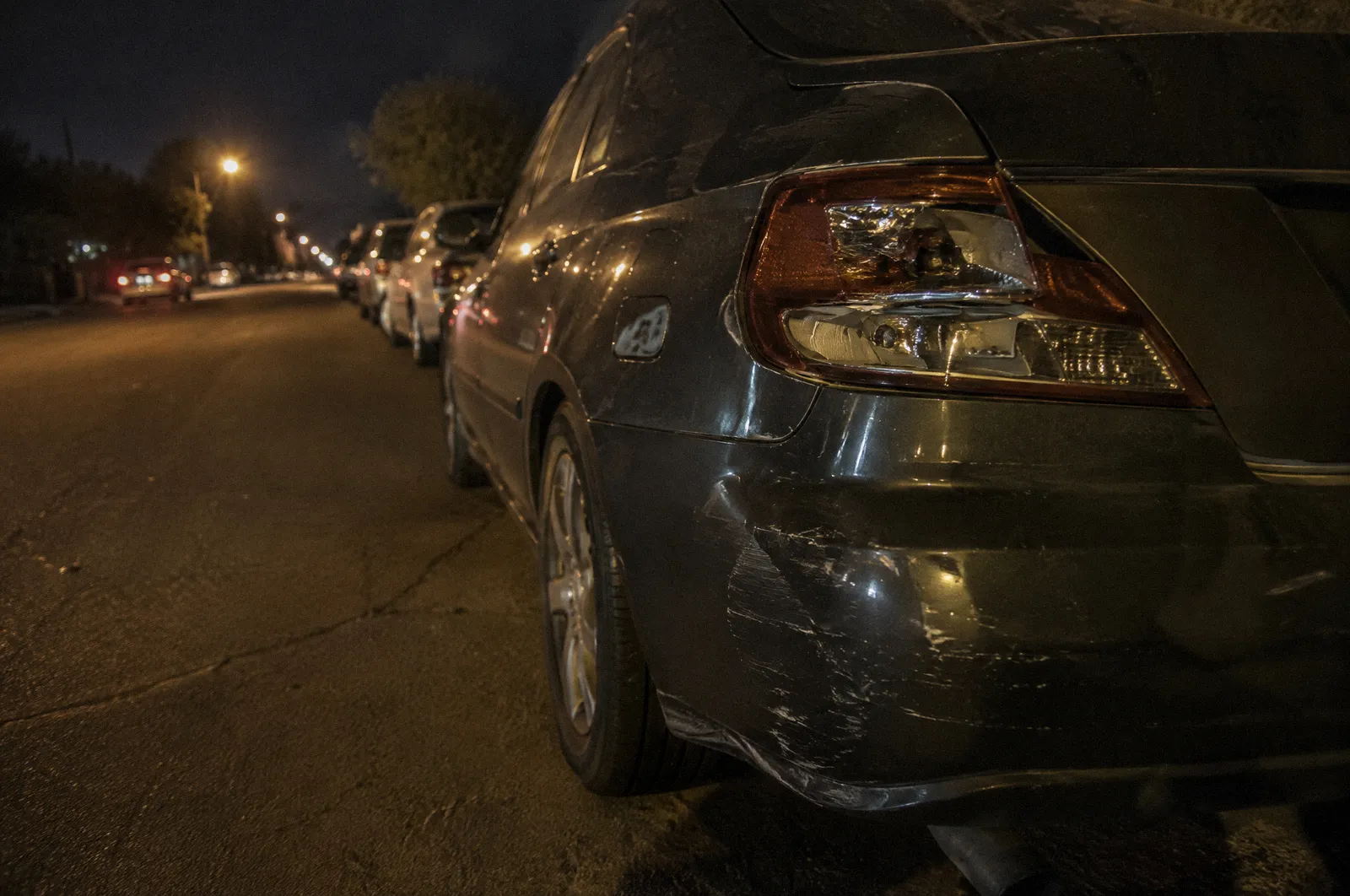
The general deadline to file a personal injury lawsuit in Arizona is 2 years from the date of injury (A.R.S. 12-542(1)), and property damage also generally has 2 years. If a city, county or state vehicle or road may be involved, a written notice of claim with the facts and a specific sum certain is due within 180 days (A.R.S. 12-821.01), and any lawsuit must follow within 1 year after the claim accrues (A.R.S. 12-821). Claims for UM and UIM benefits need written notice to your own insurer within 3 years (A.R.S. 12-555), and a UIM claim also has the 2-year clock against the at-fault driver. A child's deadlines can be paused until age 18 (A.R.S. 12-502). These rules have exceptions, so call us and we will explain how they apply to you.
What a Car Accident Claim May Be Worth
No honest lawyer can quote what your case is worth after one phone call, and anyone who promises a number is guessing. What we can tell you is how value is built. It starts with your medical bills, then adds lost income, future care, and the human cost of pain, limits on daily life and time away from the things you enjoy. Arizona places no caps on personal injury or death damages (Ariz. Const. art. 2, sec. 31; art. 18, sec. 6).
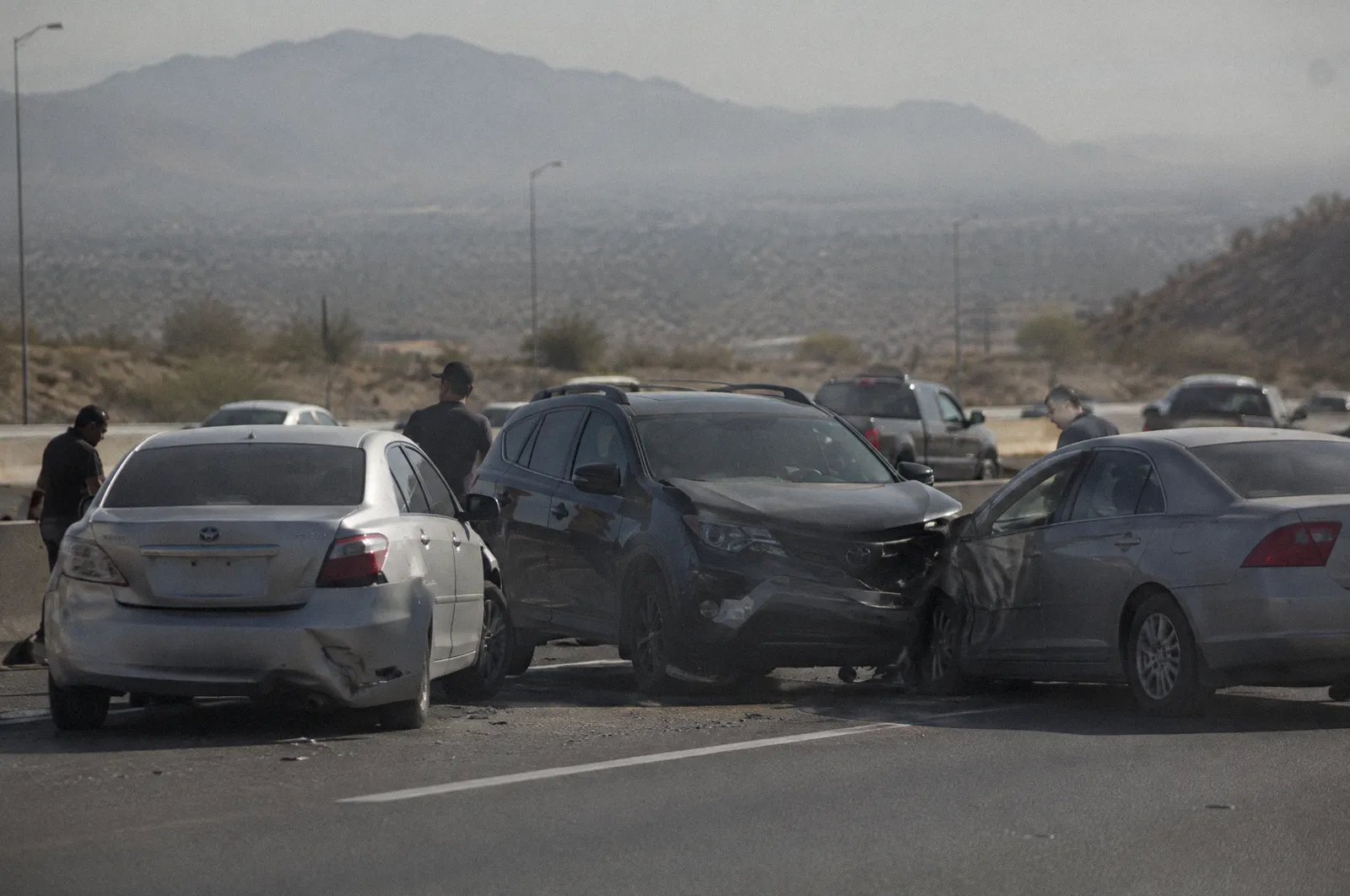
Fault, available insurance and how well the injury is documented usually decide whether a claim resolves near its real value. Punitive damages are the exception, not the rule: they require clear and convincing evidence of an evil mind, meaning the defendant intended harm or acted from spite, or engaged in outrageous, oppressive or intolerable conduct showing conscious disregard for the safety of others (Linthicum v. Nationwide). A drunk driver can be the kind of case where that comes up.
Bills paid by a hospital, health plan or AHCCCS may carry liens against a settlement, so what lands in your pocket depends on those too. Our guides to what your case is worth and medical liens walk through the details.
Crash Types We Handle, With Scottsdale Examples
Each kind of crash has its own evidence and fault arguments. These pages use Scottsdale roads as the example, and the principles carry across the state.
What happens when
How an Arizona Car Accident Lawyer Moves a Claim From Day One
Every case is different, and timing depends on your recovery, but most follow this general path.
First days
Review and protect
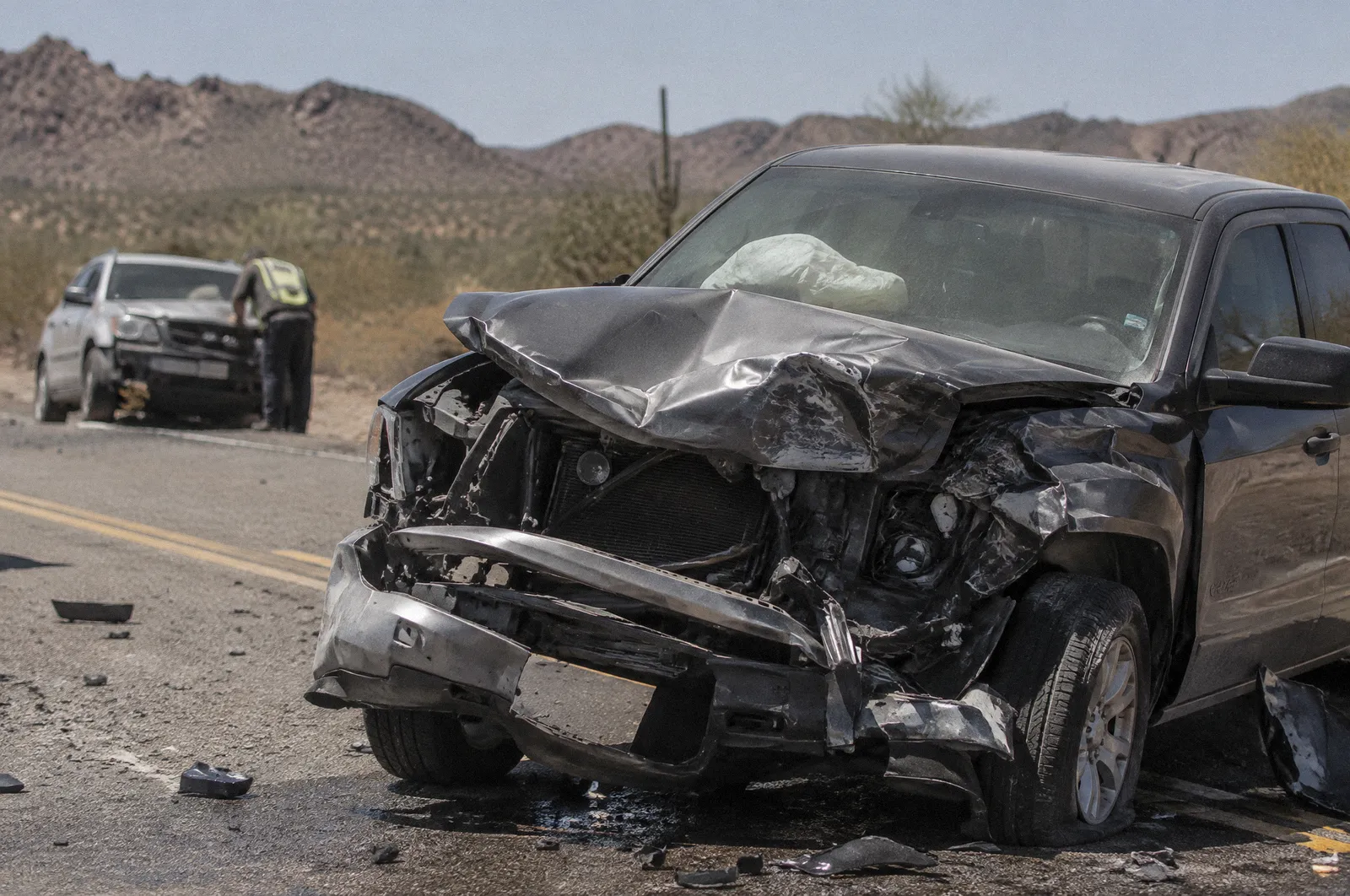
We listen to what happened, send preservation requests for video and data, notify insurers and tell you what not to say or sign.
First weeks
Gather the record
We collect the police report, photographs, witness names and your medical records as treatment begins.
During treatment
Let the injury declare itself
A claim is rarely worth settling before doctors understand the injury and what future care you may need.
After treatment
Build and send the demand
We assemble bills, wage loss and the story of how the injury changed your life, then present a demand to the insurer.
Negotiation
Push back on low offers
Adjusters usually start low. We explain each offer to you and recommend whether to accept, counter or move toward a lawsuit.
If needed
File within the deadline
When a fair resolution is out of reach, we explain the lawsuit option well inside the filing deadline. Our overview of the personal injury claim process covers each stage.
Choosing an Arizona Car Accident Law Firm
People search for the best car accident lawyer, but no ranking can tell you who is right for your claim. Whether you call it an automobile accident attorney, a firm that handles crash injuries or something else, the questions to ask are the same. Ask who you will speak with, how quickly calls are returned, how the firm handles costs and whether the lawyer will explain your options in plain language. Our attorney, Charles Paglialunga, brings 32 years of experience and is a Multi-Million Dollar Advocates Forum member.
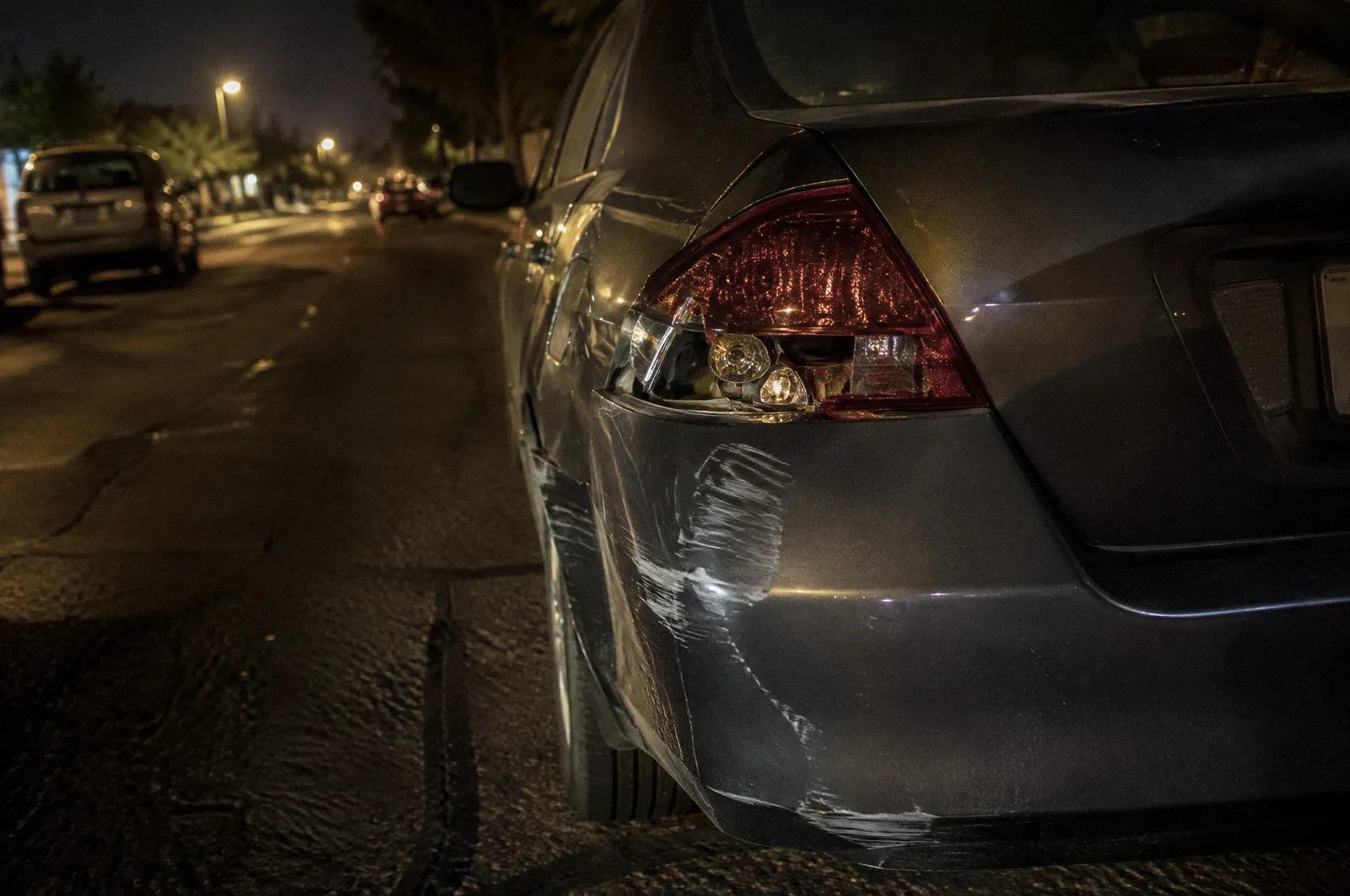
A car wreck lawyer should also tell you plainly when a claim is small enough that you may not need one. If the damage is limited to property, Arizona small claims court handles claims up to $5,000 and justice court up to $10,000 (A.R.S. 22-503, 22-201).
How we are paid is simple. You pay no attorney fee unless we recover money for you. Arizona requires a contingency fee agreement to be in writing and signed, stating the percentage and how costs are handled (Ariz. ER 1.5(c)), and there is no statutory cap. Read yours before you sign anything, ours included. See our explainer on how contingency fees work, or review our other injury practice areas for the types of personal injury cases we handle.
Arizona Car Accident Lawyer by City
Pick the city where you were hurt for local roads, police agencies, courts and hospitals. Every page below is part of this statewide guide.
Questions
Questions about Arizona car accident cases
How long do I have to file a car accident lawsuit in Arizona?
Generally 2 years from the date of injury (A.R.S. 12-542(1)), with much shorter windows when a public entity is involved: a notice of claim within 180 days and a lawsuit within 1 year after the claim accrues. Because these rules have exceptions, call us as soon as you can and we will explain how they apply to you.
How do I find an auto accident attorney in Arizona I can trust?
Look for plain answers about fault, insurance and fees on the first call, a written fee agreement you can read before signing and a lawyer who will tell you when you do not need one. Ask who will actually return your calls. You can ask us all of that on a free case review.
Do I need a lawyer for a minor car accident?
Not always. If you had no injuries and only minor property damage, you may be able to handle the claim yourself. If you have pain, missed work or an insurer that is disputing fault, a free case review costs nothing, and we will tell you honestly whether we can help.
What if I was partly at fault for the crash?
You may still recover. Arizona follows pure comparative fault with no percentage bar (A.R.S. 12-2505), so your compensation is generally reduced by your share of the blame instead of being barred. Expect the insurer to argue for a larger share than the facts support.
What if the other driver had no insurance or fled?
Your own uninsured motorist coverage may apply. For a hit-and-run, physical contact is not required, but you need corroboration such as an independent eyewitness, video, scene evidence or 911 records made right after the crash. Check whether you rejected UM coverage in writing.
How much does it cost to hire you?
You pay no attorney fee unless we recover money for you. Costs and the percentage are set out in a written, signed fee agreement, and we explain them before you decide.
Can you take my case if the crash happened outside Phoenix?
Yes. We are in Scottsdale, we serve the Phoenix metro, and we take cases anywhere in Arizona. We start by phone, so you do not have to travel before we know whether we can help.
What is the average settlement for a car accident?
There is no reliable average because injuries, fault and insurance vary so widely. Value depends on medical bills, lost income, future care, pain and how clearly the other driver's fault can be shown. We can review your records on a free case review and explain what drives your claim.
Free case review
Talk With an Arizona Car Accident Lawyer Today
Tell us what happened and we will explain your legal rights in plain language. Our experienced and friendly attorney is ready to answer your questions, and Call any time. Office visits Monday to Friday, 9 to 5. The earlier you call, the better, but it's never too late to find out your legal rights. Contact us for your free case review.
Thank you, we’ve received your request.
A member of our team will reach out shortly. If your matter is urgent, call us now at (602) 584-8054.