
Arizona Trucking Accident Lawyer
Arizona Trucking Accident Lawyer for Crashes With Semis and Commercial Trucks
A crash with a semi or commercial truck is not an ordinary car accident, and an Arizona trucking accident lawyer starts with what a car case does not have: federal driver rules, a trucking company and records the company may be allowed to discard in six months. Valley Accident Law is in Scottsdale, serves the Phoenix metro and takes cases anywhere in Arizona. You pay no attorney fee unless we recover money for you. The earlier you call, the better, but it's never too late to find out your legal rights.

- Trucking logs kept
- Only 6 months before they may be discarded
- 49 CFR 395.8(k)
- Filing deadline
- Generally 2 years from the crash
- A.R.S. 12-542(1)
- City, county or state truck
- Notice of claim within 180 days
- A.R.S. 12-821.01
- Fault rule
- Pure comparative fault, no percentage bar
- A.R.S. 12-2505

Why a Truck Crash Claim Is Different From a Car Claim
A loaded tractor-trailer is many times heavier than a passenger car, so the people in the smaller vehicle often suffer the worst injuries: spinal cord and brain injuries, broken bones, amputations and burns. Those injuries drive larger medical bills and longer recoveries, and the insurers behind a commercial truck know it.
The legal differences matter as much as the physics. A truck driver works under federal safety regulations and usually works for a company that dispatches, loads, inspects and insures the truck. That means more than one party can share responsibility, and more records exist that can prove what happened, if they are saved in time.
An experienced trucking accident lawyer treats the first days after a crash as a race to preserve that evidence. If you were hurt, or you lost a family member, in a crash with a big rig on an Arizona highway or city street, a big rig accident lawyer can explain your options and the steps that protect them.
Who May Be Responsible: What an Arizona Trucking Accident Lawyer Investigates
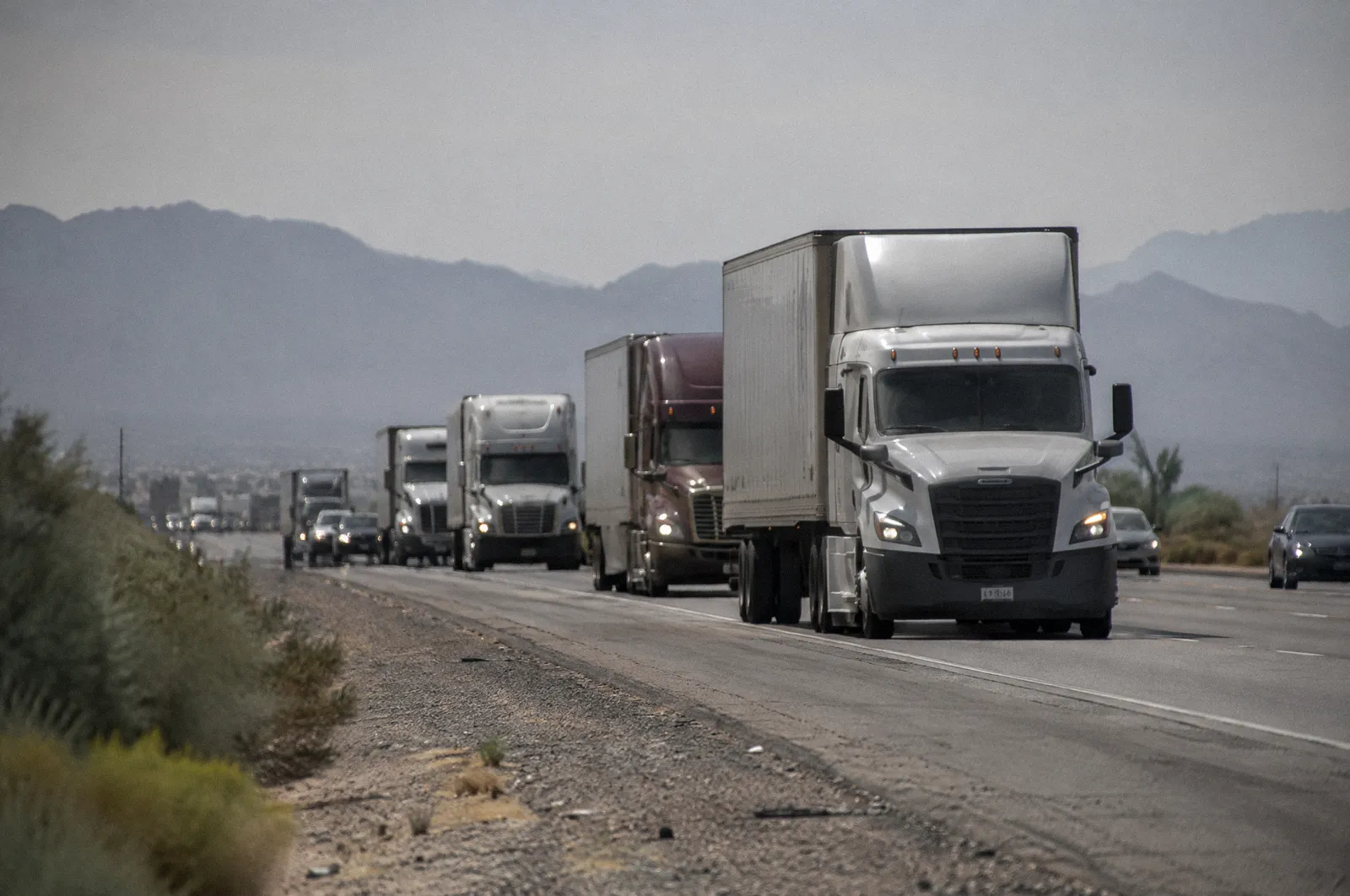
Depending on the facts, responsibility can reach well beyond the driver. Arizona generally holds each at-fault party responsible for its own share (A.R.S. 12-2506), with exceptions, so identifying every party matters.
- The truck driver
Speeding, following too closely (A.R.S. 28-730), distraction, fatigue, impairment or an unsafe lane change.
- The trucking company
Pressure to deliver on time, poor hiring or training, ignoring hours limits, or failing to maintain the truck.
- A shipper, loader or broker
Overloaded, unbalanced or improperly secured cargo, or a freight broker that chose an unsafe carrier.
- A maintenance contractor or manufacturer
Brake, tire, steering or trailer-coupling failures that trace to a repair shop or a defective part.
- Another driver or a road owner
A car that cut off a truck, or a road defect or work zone problem. If a public agency is involved, short notice deadlines apply.
The Six-Month Evidence Trap
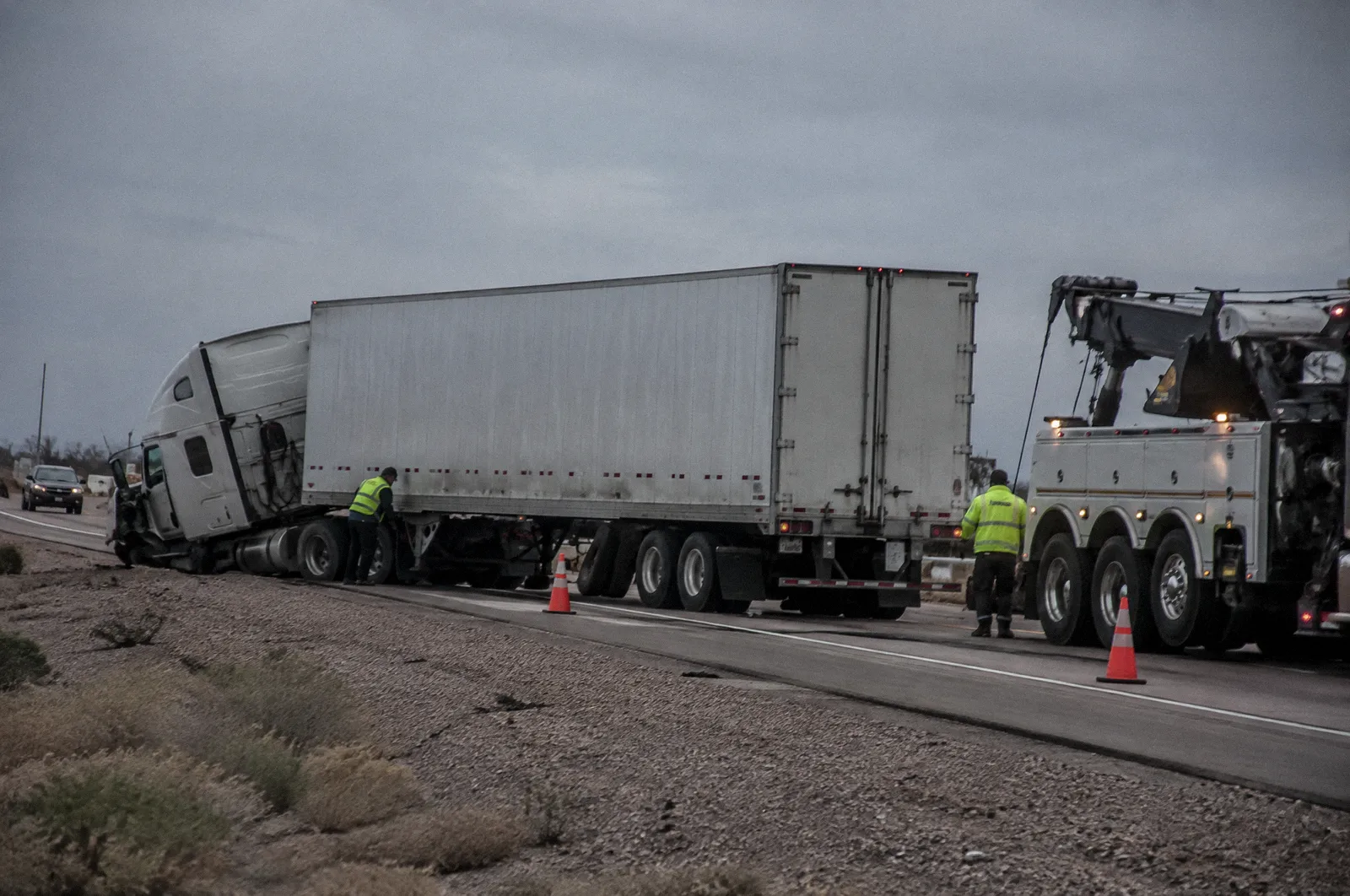
Carriers must keep a driver's hours-of-service logs for only six months before they may discard them, so a written preservation (spoliation) letter should go to the carrier right away, well before the general two-year filing deadline (49 CFR 395.8(k)). Waiting until a lawsuit is near can mean the logs that show fatigue or an hours violation are already gone. If you or a family member were hurt in a truck crash, call us quickly so the letter can go out.
How Long Trucking Records Are Kept
Federal rules set minimum retention periods. After those periods the company may legally discard the file, which is why speed counts.
| Record | How long the carrier keeps it | Rule |
|---|---|---|
| Driver hours-of-service logs | 6 months | 49 CFR 395.8(k) |
| Vehicle maintenance records | 1 year and 6 months | 49 CFR 396.3(c) |
| Driver qualification file | 3 years after employment ends | 49 CFR 391.51 |
Source: Federal Motor Carrier Safety Regulations as cited.
What a Preservation Letter Asks a Carrier to Keep
We tailor the letter to the crash. A typical request covers records such as these.
- Electronic logging device data and hours-of-service logs
- Dashcam and cab-facing camera video
- The truck's engine control module and any event data
- Dispatch messages, trip schedules and delivery deadlines
- Maintenance, inspection and repair records for the tractor and trailer
- The driver qualification file, hiring records and training history
- Post-crash drug and alcohol test results
- Bills of lading and loading records for the cargo
Step by step
What to Do After a Crash With a Commercial Truck
General steps, not legal advice for your exact situation. Our guide to what to do after a car accident covers the basics that apply here too.
- 1
Get medical help and call 911
Report the crash. Arizona law requires immediate notice to police, the sheriff or the highway patrol when a crash injures or kills someone (A.R.S. 28-666).
- 2
Photograph the truck, if safely possible
If safely possible, before any vehicle is moved, capture the company name, USDOT number, trailer number, license plates, skid marks and cargo.
- 3
Do not give a recorded statement
A trucking insurer's adjuster may call quickly. You can decline until you have spoken with us. Agreeing to a recorded statement early can injure your legal rights.
- 4
Write down what you remember
Note the time, road conditions, what the truck was doing and any witnesses while memory is fresh.
- 5
Call a truck crash lawyer before the logs are gone
The preservation letter is time sensitive. We will also help you get the police report. See how to get a police report in Arizona.
Hours-of-Service Rules That Can Prove Driver Fatigue
Federal rules for property-carrying drivers (49 CFR 395.3) limit how long a driver can work. A violation can be strong evidence that a crash was preventable.
- 11 hours of driving
A driver may drive 11 hours after 10 consecutive hours off duty.
- The 14-hour window
The 14-hour clock does not pause for traffic, meals, paperwork or waiting at a loading dock.
- 30-minute break
A break is required after 8 hours of driving.
- Weekly limits
60 or 70 hours in a work week, depending on the carrier's schedule.
Fault, Insurance and the Fight Over Blame
Trucking companies and their insurers often negotiate the percentage of fault, and they start by looking for something you did. Arizona is a pure comparative fault state (A.R.S. 12-2505): a share of blame reduces your recovery but does not automatically end it, and there is no percentage bar.
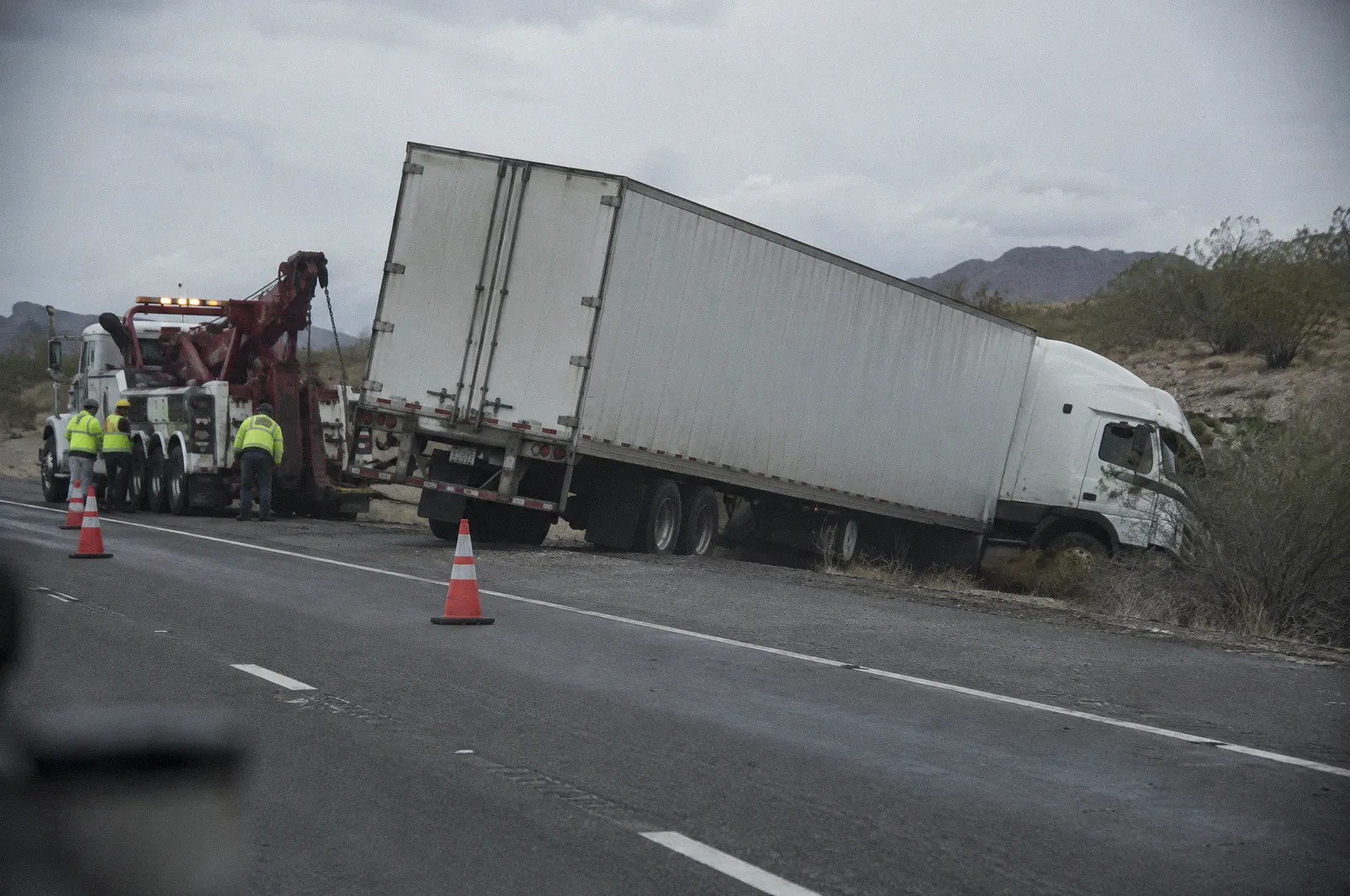
An insurer for a commercial truck may bring its own investigators to the scene within hours. That is another reason not to speak to an adjuster before you have spoken with a lawyer, and why we gather the carrier's records, the truck's data and the crash scene evidence for you.
Impairment can matter too. Arizona law sets a lower alcohol limit for commercial drivers, 0.04, than the 0.08 that applies to others (A.R.S. 28-1381), and a civil claim is independent of any criminal case. A trucking company that knew about a violation and ignored it can open the door to punitive damages, which Arizona reserves for an evil mind shown by clear and convincing evidence (Linthicum v. Nationwide).

Deadlines for a Truck Accident Claim
The general deadline to file a personal injury lawsuit is 2 years from the date of injury (A.R.S. 12-542(1)). A wrongful death claim has 2 years from the date of death (A.R.S. 12-542(2)). If a city, county or state vehicle was involved, a notice of claim is due within 180 days (A.R.S. 12-821.01) and a lawsuit within 1 year after accrual (A.R.S. 12-821). These rules have exceptions, so call us and we will explain how they apply to you. Records may disappear long before any of these dates.
What Drives a Truck Accident Settlement
People often search for the average truck accident settlement, but there is no honest average. A truck accident settlement depends on injuries, medical costs, lost income, future care, the clarity of fault and the insurance available. Arizona has no caps on personal injury or death damages (Ariz. Const. art. 2, sec. 31; art. 18, sec. 6), so a serious injury is not artificially limited.
Medical bills, hospital liens and health plan reimbursement affect what you keep. Our page on medical liens on a settlement explains how they work, and our guide to what your case is worth shows how damages are built.
When choosing among firms, you may see the claim of the best truck accident lawyer. Rather than a ranking, ask how a firm approaches evidence and costs. A truck wreck lawyer should be able to explain, in plain language, what the carrier is likely to say and what you can do about it. You pay no attorney fee unless we recover money for you. That means you can have that conversation before any cost to you. If you lost a loved one, our wrongful death practice page explains who may bring a claim.
Truck Crash Topics, With Scottsdale Examples
These pages go deeper on common kinds of commercial truck cases. Scottsdale is the example, and the rules apply statewide.
Arizona Trucking Accident Lawyer by City
Choose the city where the crash happened for its freight routes, police agencies, courts and hospitals.
Questions
Questions about Arizona trucking accident cases
Who can I sue after a crash with a commercial truck?
Possibly the driver, the trucking company, a shipper or broker, a maintenance contractor, a parts maker or another driver, depending on the facts. Arizona generally holds each at-fault party responsible for its own share (A.R.S. 12-2506), with exceptions, so we look at every party.
How soon should I act after a truck accident?
As soon as you can. Carriers may discard driver logs after six months (49 CFR 395.8(k)), and other records and video disappear sooner. A written preservation letter should go out well before the general two-year filing deadline.
What is the average truck accident settlement in Arizona?
There is no reliable average. Results depend on the injuries, medical costs, lost income, future care, how clear the fault is and the insurance that applies. We can review your records on a free case review and explain what is driving the value of your claim.
Do I need a trucking accident lawyer if the insurer already made an offer?
An early offer usually reflects only the bills so far, not the care you may need later. Before you sign a release, call us. We will explain your legal rights and what the offer leaves out.
What if the truck was a delivery van or a city vehicle?
Delivery drivers may work for the company or as contractors, and each setup changes who is responsible. If a city, county or state vehicle was involved, the notice of claim is due within 180 days (A.R.S. 12-821.01).
How much does a truck accident lawyer cost?
You pay no attorney fee unless we recover money for you. The fee agreement is written and signed and explains the percentage and how costs are handled, and you can read it before deciding.
Can a truck wreck lawyer help if my crash happened outside the Phoenix area?
Yes. We take cases anywhere in Arizona, including crashes on I-10, I-17 and rural highways, and we start by phone.
Free case review
Talk With an Arizona Trucking Accident Lawyer
Tell us what happened and we will explain your legal rights. Our experienced and friendly attorney can start the evidence preservation process while you focus on recovery. The earlier you call, the better, but it's never too late to find out your legal rights. Contact us for a free case review.
Call any time. Office visits Monday to Friday, 9 to 5.
Thank you, we’ve received your request.
A member of our team will reach out shortly. If your matter is urgent, call us now at (602) 584-8054.