
Arizona Golf Cart Accident Lawyer
Arizona Golf Cart Accident Lawyer: Injuries on Courses, Paths and Neighborhood Streets
An Arizona golf cart accident lawyer can help you work out who is responsible when a cart rolls over, collides with a car or throws a passenger on a course, in a retirement community or on a neighborhood street. A golf cart accident is rarely simple, because the driver, the owner, a course or resort, a community association, a manufacturer or another driver may each share the blame, and the insurance picture is often unclear. Most Arizona injury claims must be filed within two years (A.R.S. 12-542(1)), and a call to (602) 584-8054 gets you a free case review.

- Filing deadline
- Generally 2 years from the injury
- A.R.S. 12-542(1)
- Public entity involved
- Written notice of claim within 180 days
- A.R.S. 12-821.01
- Fault rule
- Pure comparative fault, no percentage bar
- A.R.S. 12-2505
- Damage caps
- None on personal injury or death damages
- Ariz. Const. art. 2 sec. 31; art. 18 sec. 6
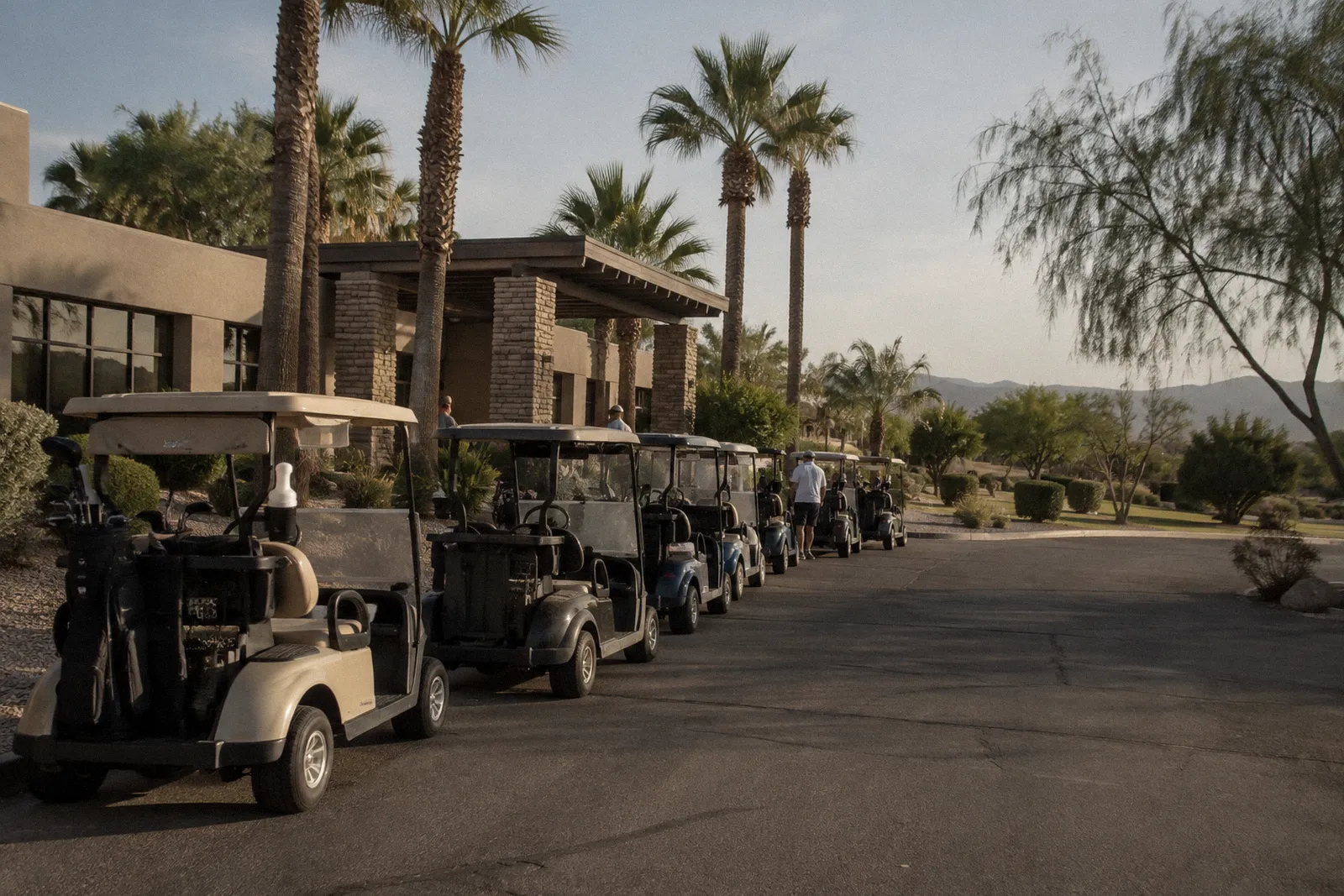
Golf Cart Accidents in Arizona: Courses, Communities and Public Streets
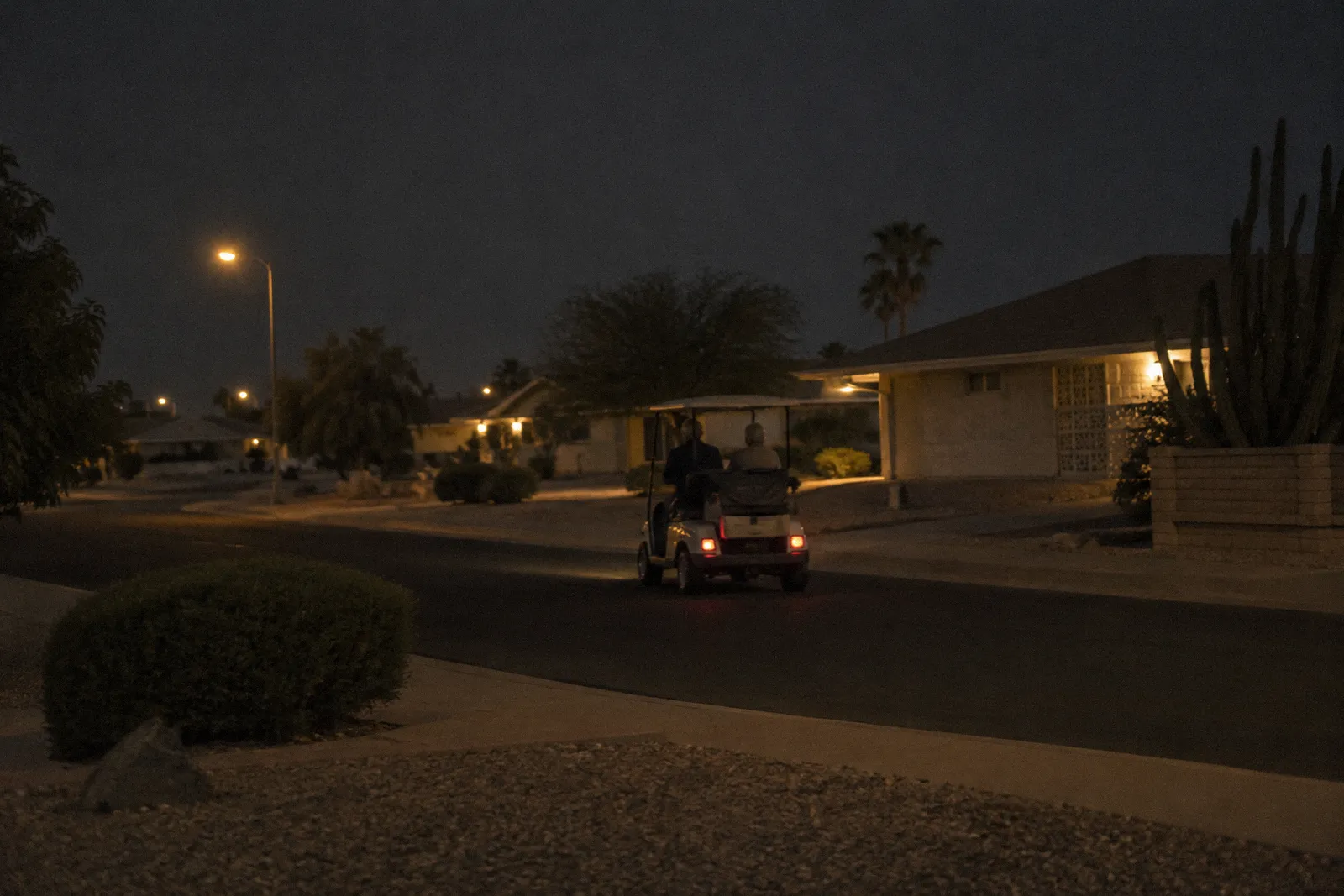
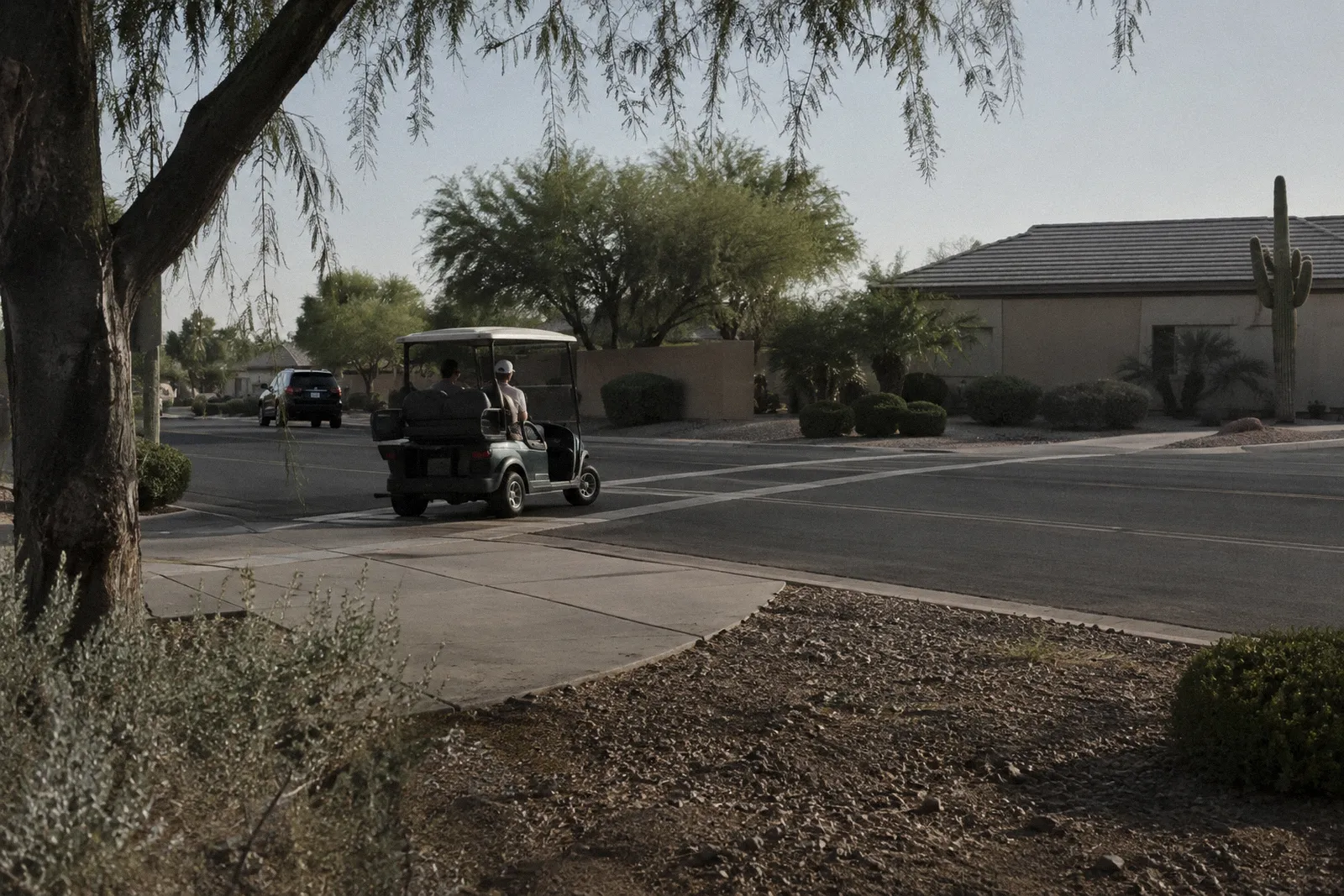
Golf carts are part of daily life across the Phoenix metro and the rest of Arizona. They carry players around courses, move guests around resorts, and serve as neighborhood transportation in golf communities and retirement communities, where a short trip to a friend's house or the clubhouse may never touch a main road. That mix is why a golf cart accident in Arizona can raise questions that a car crash usually does not.
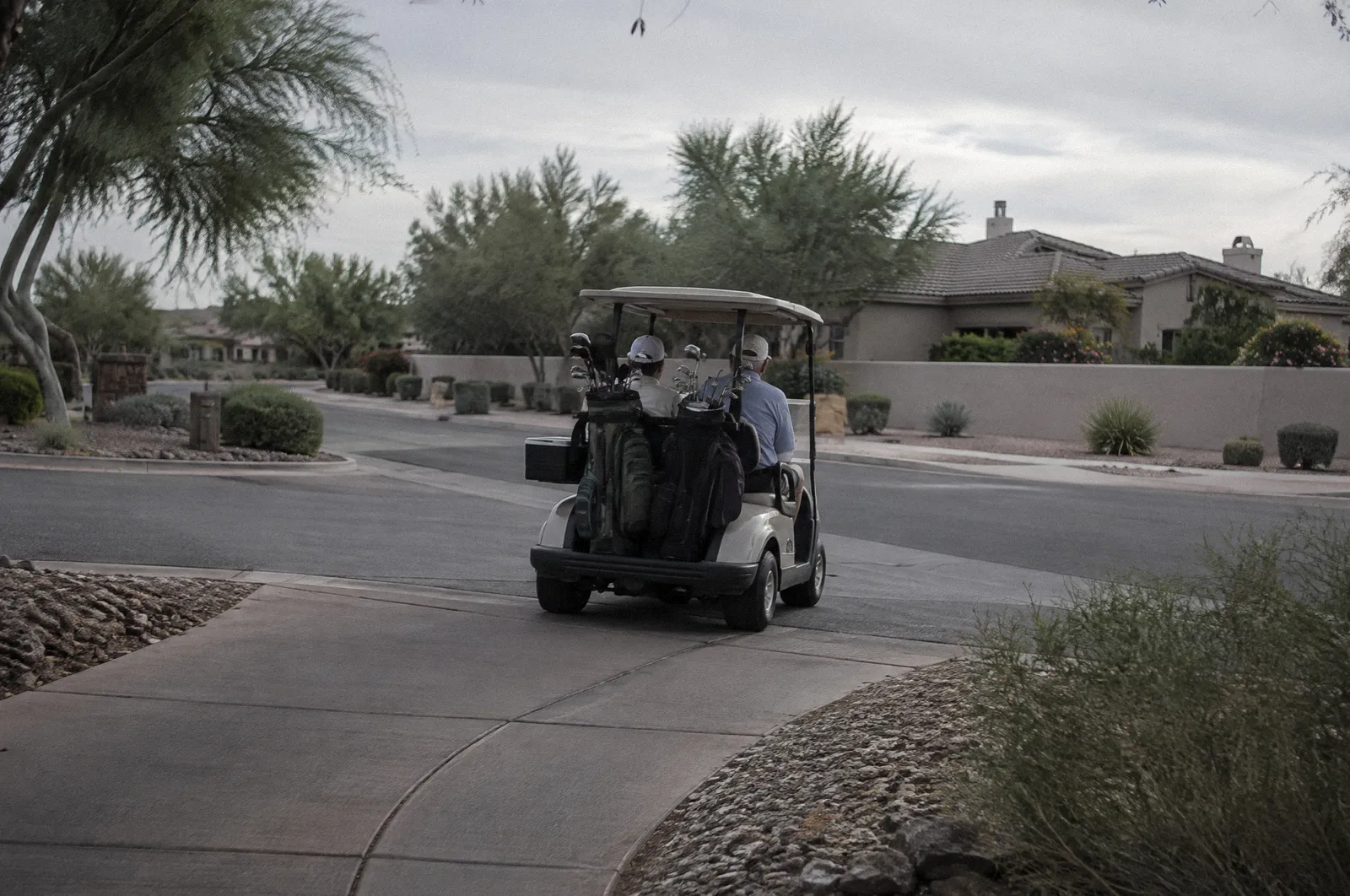
A cart is light and open, and it often has no seat belt, no doors and little to protect a rider who is thrown. A tip on a slope, a sharp turn at speed, a collision with a car at a crossing or a fall from the back seat can cause fractures, head injuries and spinal injuries that change a life. Meanwhile it may not be clear who owned the cart, who was responsible for the path, or which insurance policy responds.
On a free case review we listen, ask where and how it happened, and explain who may be responsible and which deadlines apply. This page walks through how these claims generally work. It is general information, not legal advice about your situation, and it works best as a starting point for that conversation.
Who May Be Responsible After a Golf Cart Accident
Most golf cart claims involve more than one possible responsible party. Finding every one of them matters, because each may have its own insurance.
- The driver of the cart
A driver who was speeding, took a turn too sharply, carried more passengers than the cart was built for, or was looking at a phone instead of the path may be responsible for injuries to passengers and to anyone the cart hits.
- The owner of the cart
When a cart is lent to a friend, a guest, a grandchild or a teenager, the owner's choice to hand over the keys can matter, and so can whether the cart was kept in safe working order.
- A course, resort or private club
Courses, resorts and clubs control their paths, crossings, signs and cart fleets. They also tend to carry commercial insurance, which is why a guest hurt on the grounds often has a claim against the property and not only against the person driving.
- A community association, landlord or developer
In planned communities the association or the developer may control the cart paths, the sight lines at intersections, the speed bumps and the lighting. A missing sign or a blind crossing can be part of the cause.
- A driver in another vehicle
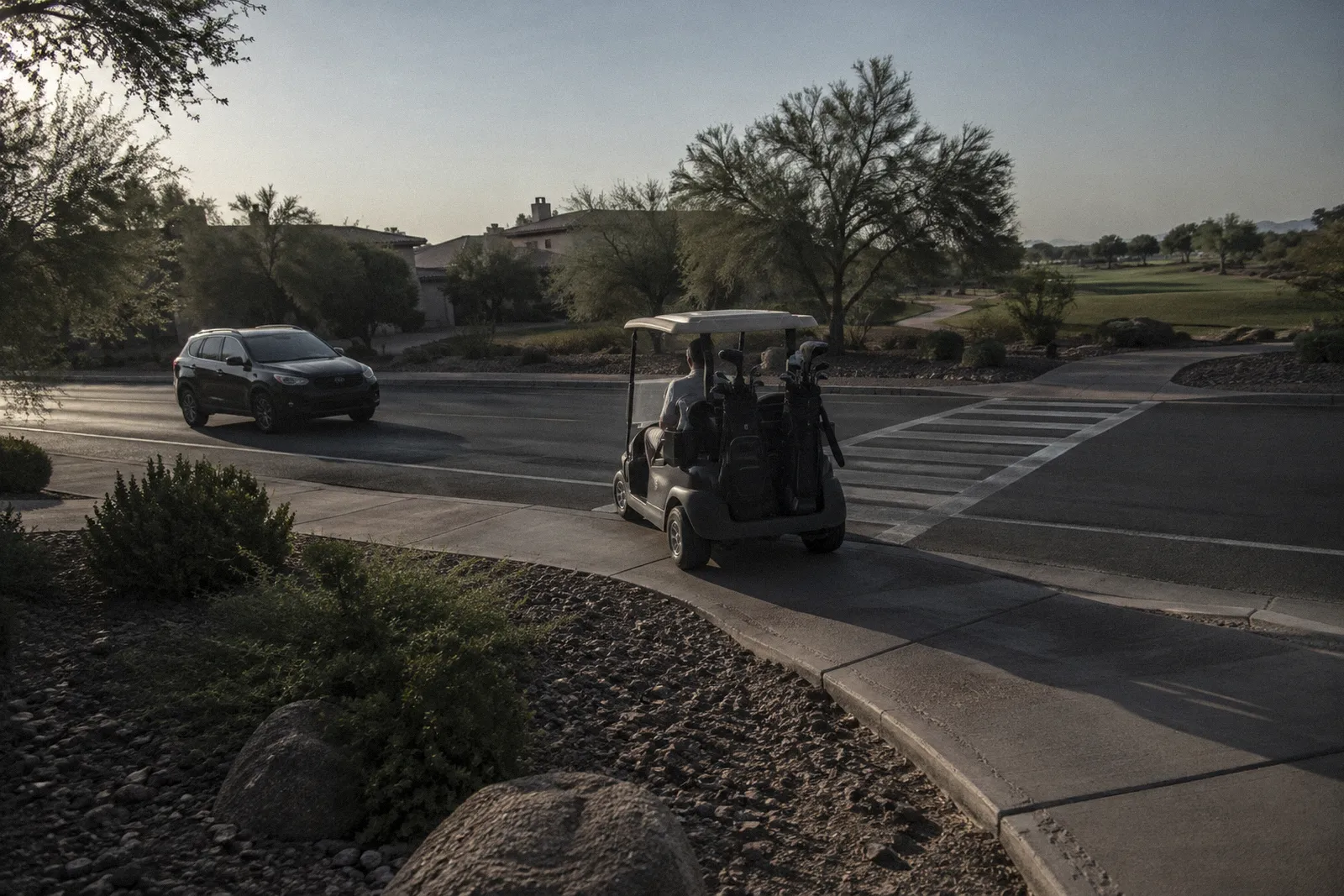
When a car or truck hits a cart at a crossing or on a neighborhood street, the ordinary rules of driving and the other driver's auto insurance come into play. Our Arizona car accident lawyer page covers that side of the claim.
- A manufacturer, repair shop or rental company
Steering or brake failure, a cart that tips more easily than it should, a battery fire, or a speed or lift modification done by a shop can point to a product or repair claim.
- A city or other public entity
If the cart was on a public street, path or park and the defect belonged to a government body, special notice rules apply. See the warning box below.
Claims Against a Public Entity Have a 180-Day Notice Deadline
If a city, town, county or other public entity may share the blame, Arizona law generally requires a written notice of claim within 180 days after the claim accrues. The notice must state the facts and a specific sum certain, and the entity has 60 days to respond before the claim is deemed denied (A.R.S. 12-821.01). A lawsuit against a public entity generally must then be filed within one year after the claim accrues (A.R.S. 12-821).
For a child, those deadlines are paused until age 18: 180 days after the 18th birthday to serve the notice of claim, and one year after the 18th birthday to file the lawsuit. The parents' own claim for medical bills they paid is not paused, and their notice of claim is due within 180 days of the injury, so families should not wait (A.R.S. 12-821.01(D); 12-502).
These rules have exceptions, so call us and we will explain how they apply to you. Our guide to the Arizona notice of claim rules explains the process step by step.
In a Golf Cart Accident, Who Pays for Your Injuries?
Many people ask us who pays after a golf cart accident, and the honest answer is that it depends on whose policy fits the facts. Several kinds of coverage can be in play at once.
Liability coverage of the person or business at fault. That may be a homeowner's or renter's policy for a cart owner or a driver, a commercial policy for a course, resort or club, or the auto policy of a driver in another vehicle. Arizona's minimum auto liability limits are $25,000 per person, $50,000 per accident for bodily injury and $15,000 for property damage since July 1, 2020 (A.R.S. 28-4009), and serious cart injuries can cost far more than that. Some policies limit or exclude coverage when a motorized cart is involved, which is one reason we ask for the actual policies and not a phone summary.
Your own coverage. If a car hit your cart and the other driver carried little or no insurance, your own auto policy's uninsured and underinsured motorist coverage may matter. Written notice to your own insurer is generally due within 3 years, and an underinsured claim also needs a claim or lawsuit against the at-fault driver within the general 2-year deadline (A.R.S. 12-555; 12-542). Missing the second clock can bar the claim.
Health insurance and medical liens. Your health plan, AHCCCS or Medicare may pay first and then seek reimbursement from a settlement. Our guide to medical liens on a personal injury settlement explains how that works.
Expect the adversarial side too. Insurance companies and attorneys often negotiate the percentage of fault, and a recorded statement can be used to move that percentage. Think carefully before agreeing to one, and read talking to insurance adjusters after an accident first.
What to Do After a Golf Cart Accident in Arizona
Nobody plans for this. These steps are general, and your health always comes first.
- 1
Get medical care and call 911 if anyone is hurt
Cart injuries can involve the head and spine even when you feel okay. No or seemingly minor symptoms can still hide a serious injury, so have a medical professional check you out.
- 2
If safely possible, leave the cart where it came to rest
Photos of the cart, the path or road, skid marks, tire tracks and the surrounding area show how the crash happened. Take them before anything is moved, if safely possible.
- 3
Get names and contact details
Collect the driver, the owner, any witnesses and, on a course or resort, the staff member who helped. Ask whether the cart had a fleet number or rental tag.
- 4
Report it where it happened
Ask the course, club, resort or association to make a written incident report and ask for a copy. If it happened on a public street, a police report may exist. Our guide explains how to get a police report in Arizona.
- 5
Keep the cart, the clothing and your records
Do not repair or return the cart, and do not wash or discard torn clothing. Keep every bill, prescription and note about missed work.
- 6
Be careful with statements and social media
Stick to the basic facts with insurers, and avoid posting about the crash or your recovery. Then call us so we can explain your legal rights before you agree to anything.
Arizona
When the Vehicle Is an ATV or UTV: How Those Claims Compare
People often call us after an off-road crash with the same questions they would ask after a cart accident. The core claim looks similar, but the facts that matter shift.
Golf carts
- Usually slow, light and open, so injuries come from rollovers, falls and collisions with larger vehicles
- Often used on courses, in resorts and in golf or retirement communities, where a course, club or association may be responsible
- Cart fleets and rentals mean a business may own the cart and carry the insurance
- Injuries to passengers who are thrown from the back seat are common
ATVs, UTVs and side-by-sides
- Faster and heavier, and often used off pavement, on trails, desert land or rented tours
- Arizona requires a helmet for operators and passengers under 18 on all-terrain vehicles, and operators need eye protection unless the vehicle has a windshield (A.R.S. 28-964)
- Rental and tour companies, landowners, manufacturers and the driver may all be involved
- Rollovers and ejections can cause the same catastrophic injuries we see in serious road crashes
Questions an ATV Accident Lawyer Asks About Off-Road Crashes
Whether an ATV accident lawyer or a UTV accident lawyer looks at your case, the first questions are the same. Who owned and maintained the machine? Was it rented, and what did the rental paperwork say? Where did the crash happen, on private land, a public road or a trail? Was anyone required to supervise a younger rider? And what safety equipment was available and used?
If you were hurt on an ATV, a UTV or a side-by-side, a free case review is the right place to talk through those answers. The same deadlines, the same pure comparative fault rule and the same insurance questions apply, and we will explain how they fit your facts.
Evidence That Can Matter in a Golf Cart Claim
Cart cases are often won or lost on small details that disappear quickly. This is what we try to preserve.
- Photos and video of the cart, the path, the road, the grass or the slope, taken from several angles
- The cart itself, including its make, model, serial number, seat belts or lack of them, brakes and any modifications
- Rental agreements, waivers and receipts if the cart came from a course, resort or rental company
- Incident reports from the course, club, resort or association, and any names of staff who responded
- Maintenance and repair records for the cart, including battery and brake work
- Security, doorbell or clubhouse camera footage, which can be overwritten within days
- Witness names and phone numbers, including other players and neighbors
- Police or fire department reports, 911 records and the emergency medical record
- Medical bills, imaging, therapy notes and proof of missed work
Shared Fault and Damages in a Golf Cart Claim
Arizona follows a pure comparative fault rule with no percentage bar (A.R.S. 12-2505). If you were partly to blame, for example because you were standing on the back of a moving cart, your claim does not disappear, but a jury or an insurer may reduce it by your share. That is why the percentage of fault is often the real fight.
In most cases each defendant pays only its own share of the fault, with exceptions (A.R.S. 12-2506). When a driver, an owner and a course may all share responsibility, getting the facts right for each one is important.
A golf cart injury claim can include medical bills, future care, lost income, pain, and loss of enjoyment of life. Arizona has no caps on personal injury or death damages (Ariz. Const. art. 2 sec. 31; art. 18 sec. 6). If a death occurred, the family's claim is a separate wrongful death claim that must generally be filed within 2 years of the date of death (A.R.S. 12-542(2)). For a plain-language look at value, read what is my personal injury case worth.
Golf Cart Accident Lawyer by City
We take cases anywhere in Arizona and focus on the Phoenix metro. Each city page below covers the local roads, communities, courts and agencies that matter for a cart injury there.
- Golf cart accident lawyer in Scottsdale
- Golf cart accident lawyer in Phoenix
- Golf cart accident lawyer in Mesa
- Golf cart accident lawyer in Tempe
- Golf cart accident lawyer in Chandler
- Golf cart accident lawyer in Gilbert
- Golf cart accident lawyer in Glendale
- Golf cart accident lawyer in Peoria
- Golf cart accident lawyer in Surprise
Talking With an Arizona Golf Cart Accident Lawyer About Your Case
A golf cart lawyer can be most useful early, before a cart is returned, before an incident report is rewritten and before a statement is given. On a free case review we ask what happened, review who owned and controlled the cart and the property, and explain how Arizona's rules apply, including the deadlines.
You pay no attorney fee unless we recover money for you. Our how we work page explains what to expect, and our guide to how contingency fees work covers the written fee agreement. We have also written about pedestrian accidents, bicycle accidents, motorcycle accidents and catastrophic injuries, which often overlap with serious cart injuries. You can also browse all of our types of personal injury cases.
The earlier you call, the better, but it is never too late to find out your legal rights.
Questions
Questions about Arizona golf cart accident cases
In a golf cart accident, who pays for my medical bills?
It depends on whose coverage fits the facts. Possible sources include the cart owner's homeowner's or renter's policy, a course, resort or club's commercial policy, the auto insurance of a driver in another vehicle, your own coverage, and your health plan. Health plans and some public programs may later seek reimbursement. We look at every policy that might apply, and a free case review is a good place to start.
How long do I have to file a golf cart injury claim in Arizona?
Most Arizona injury claims must be filed within two years of the injury (A.R.S. 12-542(1)). If a public entity may share the blame, a written notice of claim is generally due within 180 days (A.R.S. 12-821.01). These rules have exceptions, so call us and we will explain how they apply to you.
What does a golf cart lawyer do on a free case review?
We listen to what happened, ask who owned the cart and who controlled the path or property, identify the insurance that may apply, and explain the deadlines that matter. We will also tell you what to keep and what to avoid saying to insurers. You pay no attorney fee unless we recover money for you.
Can I still make a claim if I was partly at fault?
Often yes. Arizona uses pure comparative fault with no percentage bar (A.R.S. 12-2505), so your share of the blame generally reduces what you can recover and does not erase it. Insurance companies and attorneys often negotiate the percentage, which is why the facts matter.
My child was hurt on a golf cart. Is the deadline different?
For most claims, the limitations period is paused until a child turns 18, and then the normal period runs (A.R.S. 12-502). Claims against a public entity have their own rules, and the parents' own claim for medical bills they paid is not paused. Families should not wait to ask.
Can an ATV accident lawyer help with a UTV or side-by-side crash?
Many of the same questions apply to off-road crashes: who owned or rented the machine, who was responsible for the land, whether safety gear was used, and what insurance exists. Call us to talk through yours on a free case review.
Does it matter whether the crash happened on a course, a private road or a public street?
Yes. The location affects who controlled the property, which insurance applies and whether a police report exists. A public street may also bring in a city or town, which triggers the 180-day notice rule.
Free case review
Let Us Answer Your Questions and Help With Your Case
Call (602) 584-8054 or request your free case review. Our experienced and friendly attorney will explain your legal rights and what your options are. Call any time. Office visits Monday to Friday, 9 to 5. The earlier you call, the better, but it's never too late to find out your legal rights.
Thank you, we’ve received your request.
A member of our team will reach out shortly. If your matter is urgent, call us now at (602) 584-8054.