
Arizona Pedestrian Accident Lawyer
Arizona Pedestrian Accident Lawyer: When a Driver Hits Someone on Foot
If a driver hit you while you were walking, crossing a street or standing near the road, an Arizona pedestrian accident lawyer can explain who is responsible, what insurance may pay and how long you have to act. Valley Accident Law is in Scottsdale, serves the Phoenix metro and takes cases anywhere in Arizona. You pay no attorney fee unless we recover money for you. The earlier you call, the better, but it's never too late to find out your legal rights.
- Filing deadline
- Generally 2 years from the crash
- A.R.S. 12-542(1)
- Crosswalk rule
- Drivers must yield where signals are absent or not operating
- A.R.S. 28-792
- Crossing outside a crosswalk
- Pedestrian must yield to vehicles
- A.R.S. 28-793
- Fault rule
- Pure comparative fault, no percentage bar
- A.R.S. 12-2505
When a Driver Hits Someone on Foot
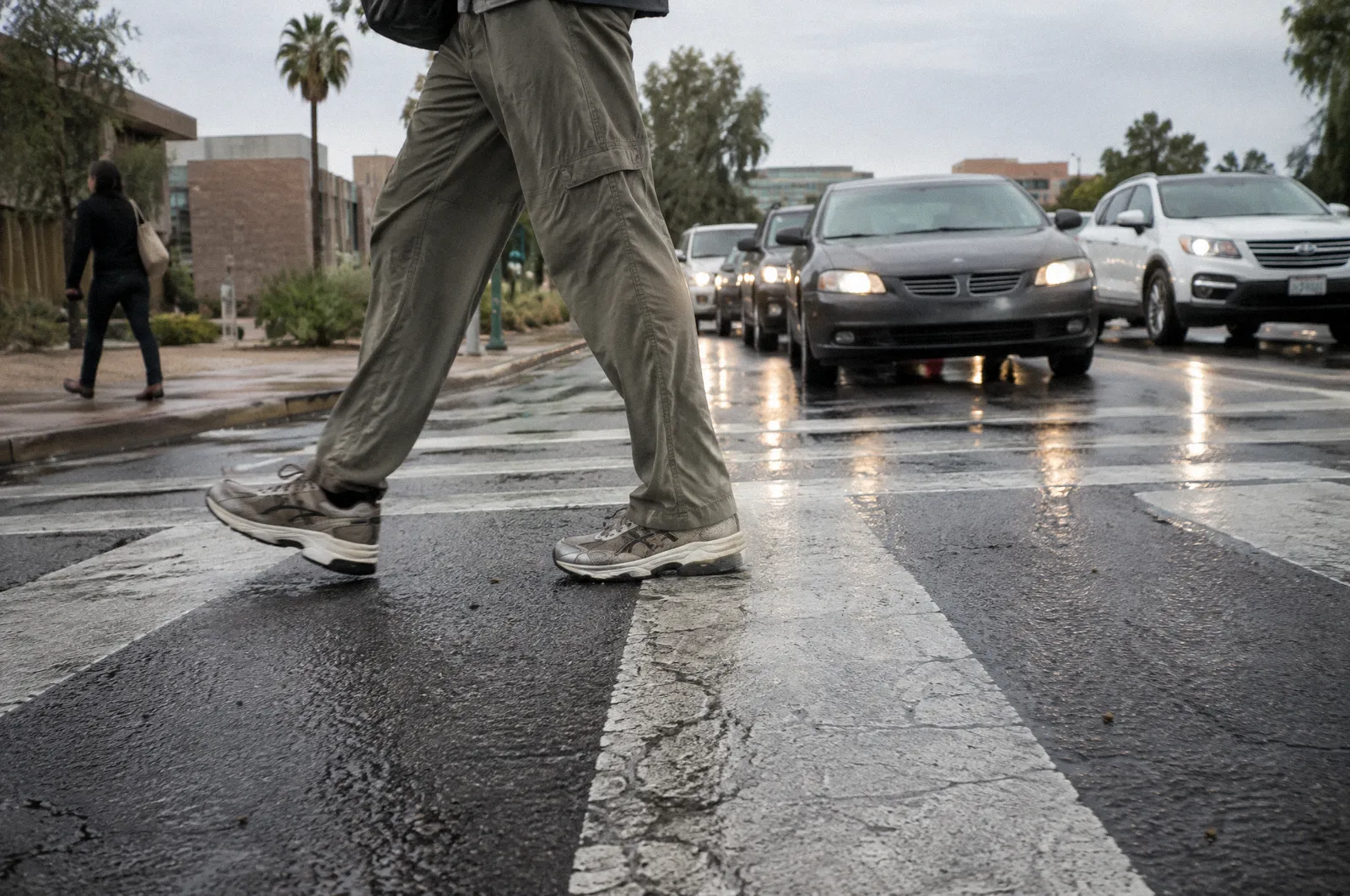
A person on foot has no protection against a moving vehicle. Even at moderate speeds, injuries can include head trauma, fractured legs and hips, and spinal injuries, and recovery can take months or years.
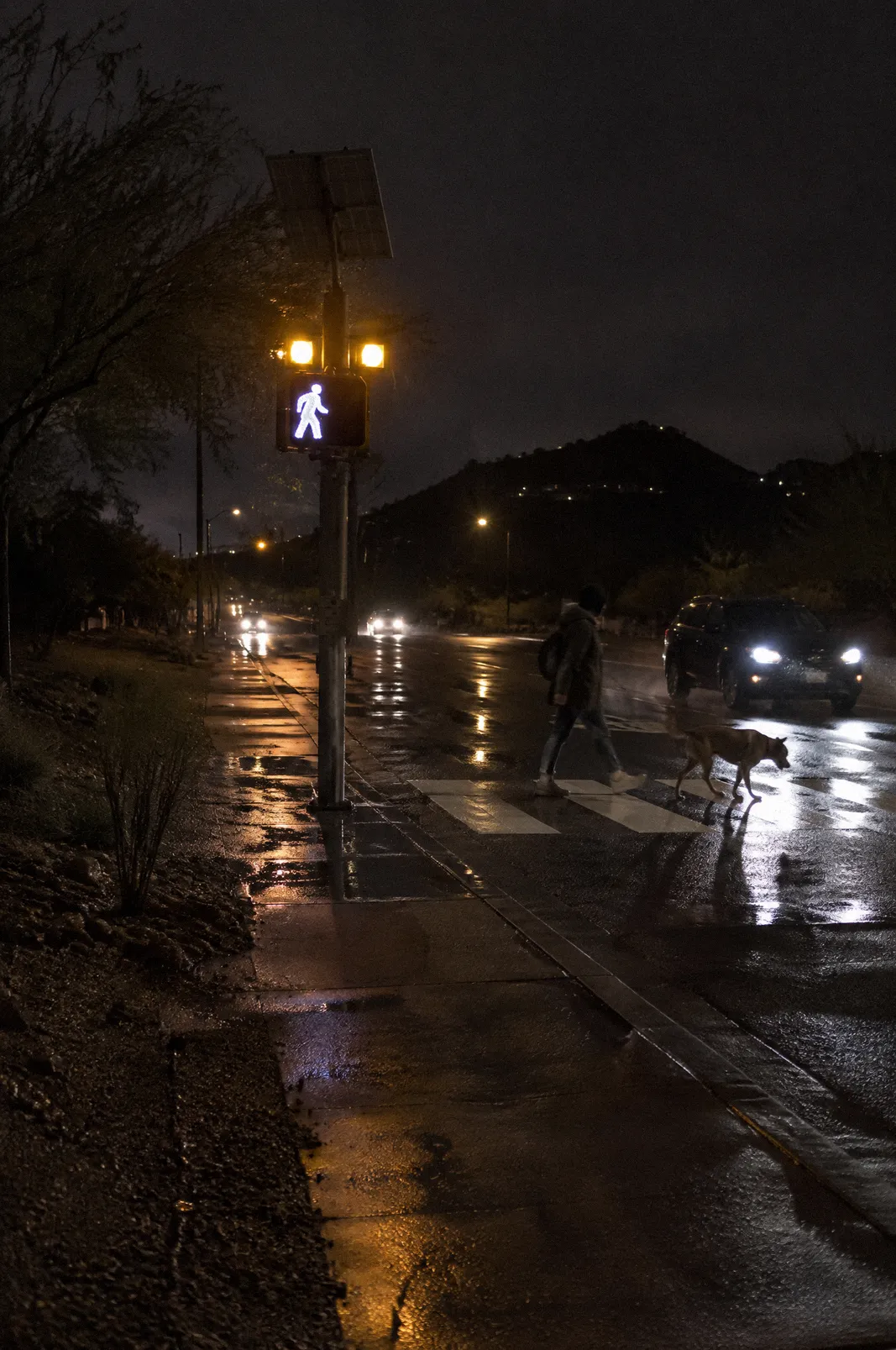
A pedestrian injury attorney in Arizona starts with simple questions. Where were you, what signal or sign controlled the spot, and what could the driver see? Those answers decide how the insurance company will argue the fault, and the adjuster's argument almost always starts with what you did wrong.
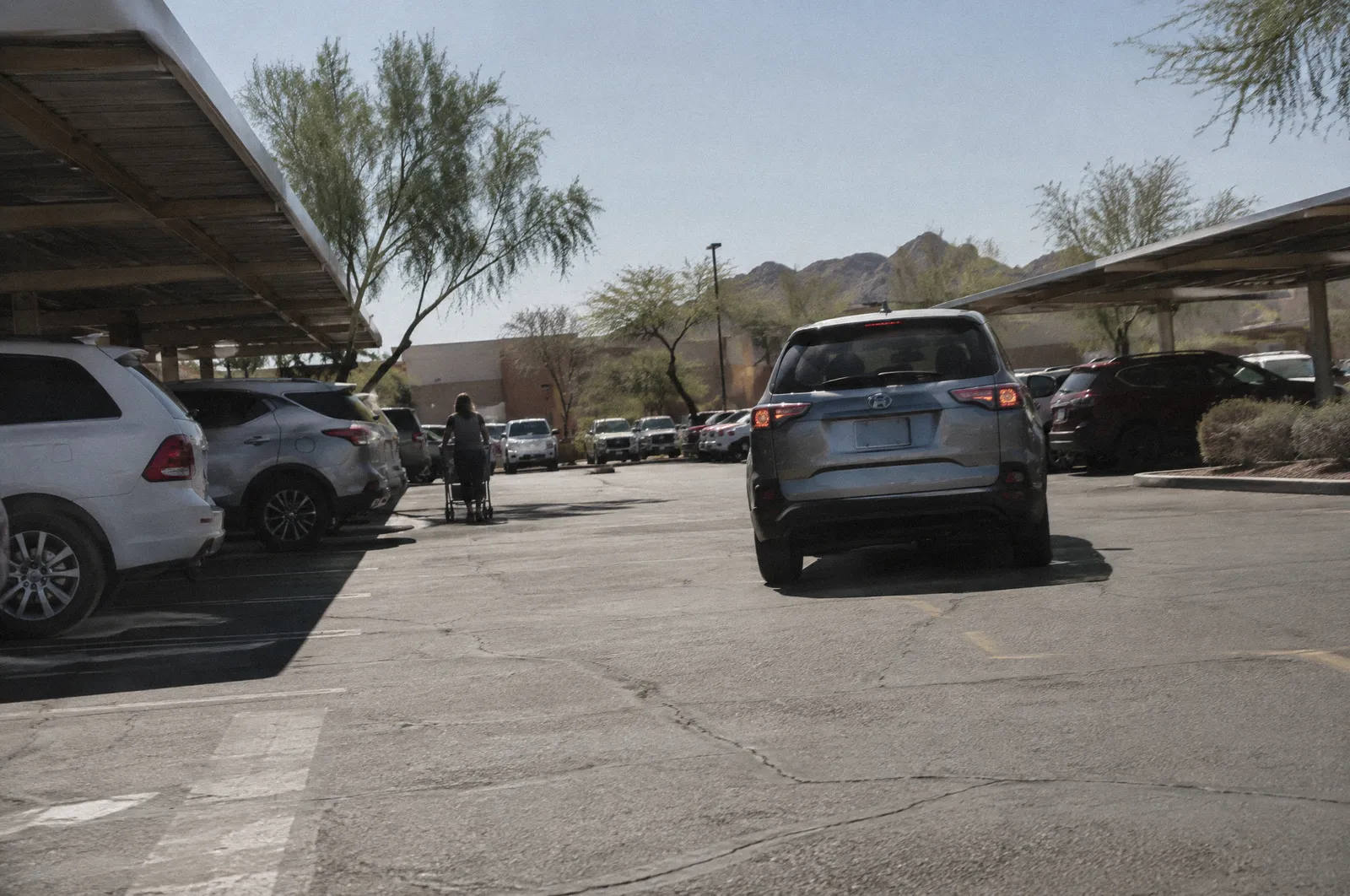
If you were hit in a parking lot, at a crosswalk, on a road shoulder or on a sidewalk, we can help you sort out who is responsible and what coverage applies. Our Scottsdale office handles claims from across the Phoenix metro and the rest of the state, and we start by phone.
Arizona
Crosswalks, Right of Way and Who Must Yield
Arizona's rules put different duties on drivers and on people on foot, and insurers use both sides of this comparison.
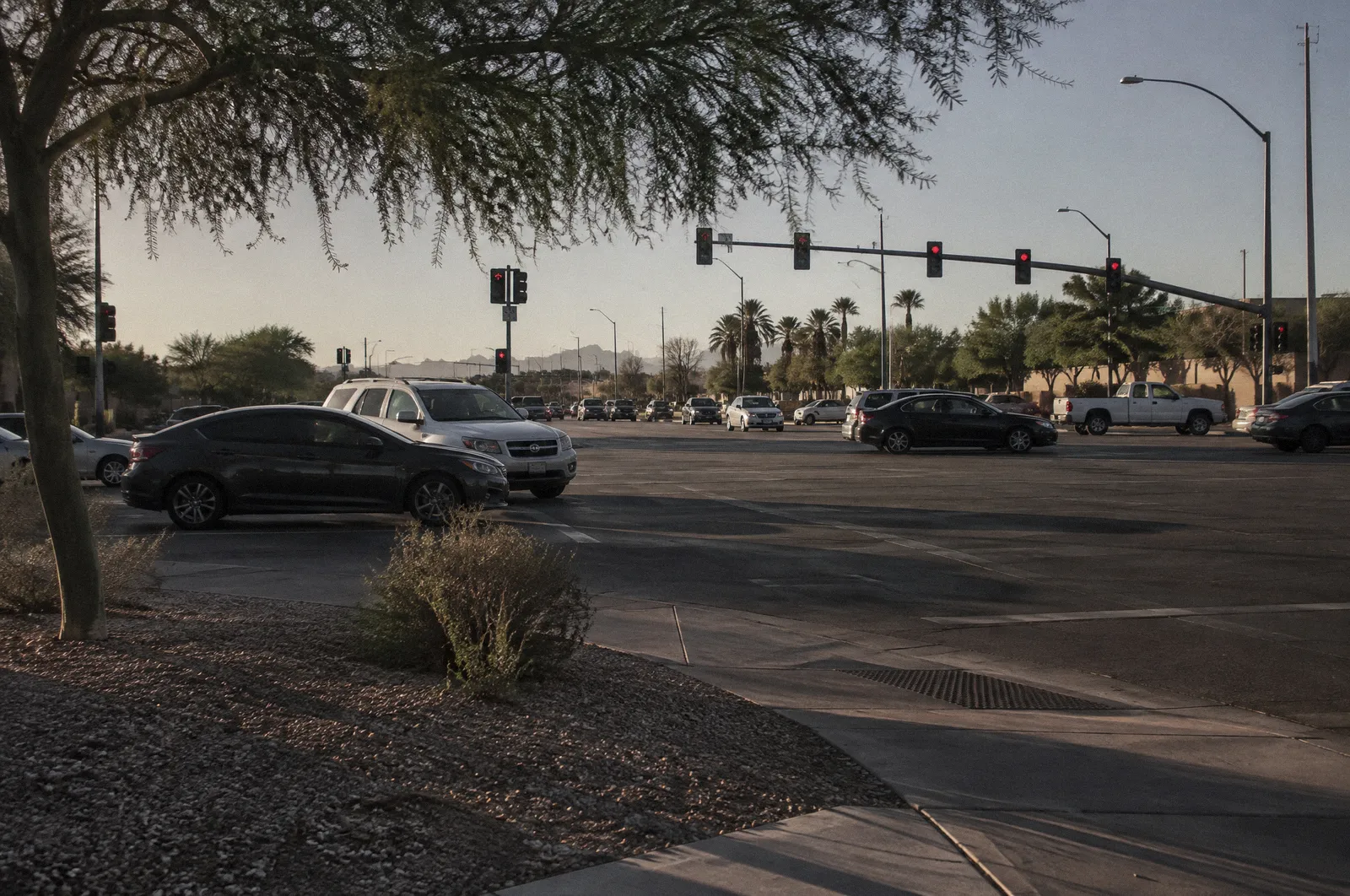
In a marked or unmarked crosswalk (A.R.S. 28-792)
- Where signals are absent or not operating, a driver must slow or stop for a pedestrian in a crosswalk on the driver's half of the road or approaching closely.
- A driver may not pass a vehicle that has stopped for a pedestrian.
- A pedestrian may not suddenly leave a curb into the path of a vehicle too close to yield.
- Even in a crosswalk, an insurer may argue you moved too quickly into traffic.
Outside a crosswalk (A.R.S. 28-793)
- A pedestrian crossing outside a marked or unmarked crosswalk must yield to vehicles.
- Between adjacent signalized intersections, cross only in a marked crosswalk.
- This does not excuse a driver who was speeding, distracted or impaired.
- It becomes a fault percentage, not an automatic end to your claim.
How Pedestrian Accidents Usually Happen
The pattern points to the evidence we need.
- A turning driver who never saw you
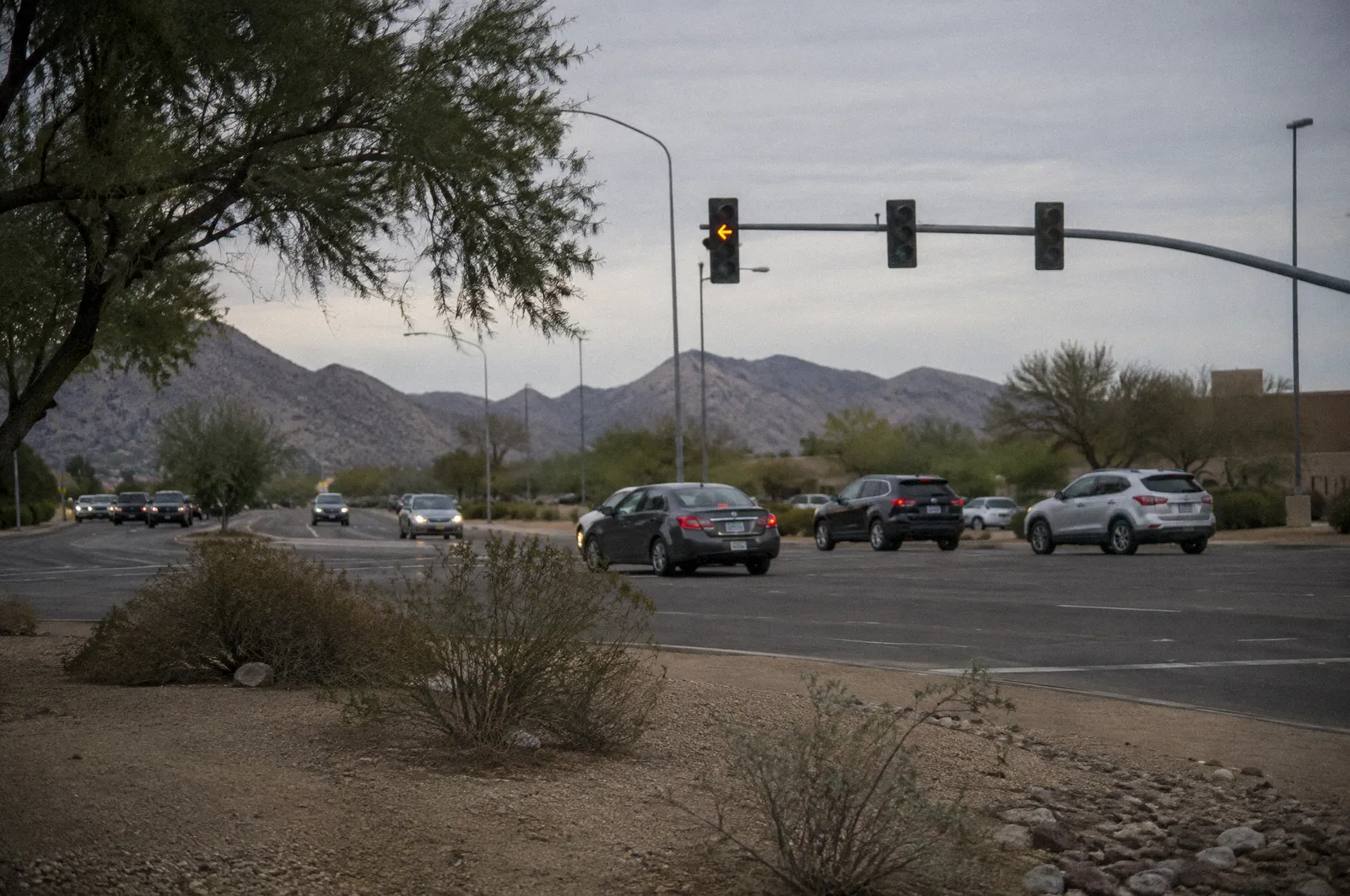
Right and left turns at signals, where the driver watches oncoming cars and not the crosswalk.
- A driver who does not stop
Failing to stop for a pedestrian in a crosswalk, or passing a car that has stopped for one.
- Distracted driving
Arizona prohibits holding a phone or writing, sending or reading text-based messages while driving (A.R.S. 28-914).
- Impaired driving
It is unlawful to drive impaired to the slightest degree, or with an alcohol concentration of 0.08 or more within two hours of driving (A.R.S. 28-1381).
- Poor lighting or visibility
Dark roads, glare, long block lengths and missing crosswalks. If a public road design or signal is involved, a notice of claim has a short deadline (A.R.S. 12-821.01).
- Hit and run
A driver leaves the scene. Leaving an injury or fatal scene is a felony (A.R.S. 28-661, 28-663).
Shared Fault and Pedestrian Claims
Insurance companies and their attorneys often negotiate the percentage of fault, and in pedestrian cases they will point to where you crossed, what you were looking at and whether you were visible. Under Arizona's pure comparative fault rule there is no percentage bar, so a pedestrian who shares some of the blame is not automatically shut out.
We test the story with the evidence: signal timing, video, the driver's speed and phone use, the lighting and the layout of the road. A driver who was distracted or speeding may carry much of the blame even when the crossing was not perfect.
Children are treated differently on deadlines. A child's limitations period is paused until age 18, and then the normal period runs (A.R.S. 12-502). When a public entity is involved, a child's deadlines are paused until age 18 but the parents' own claim for medical bills they paid is not, and their notice of claim is due within 180 days of the injury (A.R.S. 12-821.01(D)). Families should not wait.
Under Arizona's pure comparative fault rule there is no percentage bar, so a pedestrian who shares some of the blame is not automatically shut out.
Arizona
Who May Pay After a Pedestrian Accident
Most pedestrian claims draw on several sources.
| Source | What it may cover | Rule |
|---|---|---|
| The driver's liability insurance | Injuries and property damage the driver caused. State minimums are $25,000 per person, $50,000 per accident and $15,000 property damage. | A.R.S. 28-4009 |
| Your own uninsured or underinsured motorist coverage | May apply to you as a pedestrian, depending on your policy, when the driver has no insurance, too little or cannot be identified. Insurers must offer it, and you may reject it. | A.R.S. 20-259.01; 12-555 |
| Hit-and-run without contact | No contact is required, but you need corroboration such as an independent eyewitness, video, scene evidence or 911 records. | A.R.S. 20-259.01(M) |
| Health insurance, AHCCCS and Medicare | May pay early bills and later seek reimbursement. | A.R.S. 33-931 et seq.; 36-2915 |
| A city, county or state entity | Applies when a public vehicle, signal or road defect played a role. A notice of claim with the facts and a specific sum certain is due within 180 days. | A.R.S. 12-821.01 |
Source: Arizona Revised Statutes as cited. Rules confirmed by our attorney in October 2026.
What to Do After a Car Hits You While Walking
General steps, not legal advice for your exact situation.
- 1
Call 911
Report the crash and ask for medical help. Arizona law requires immediate notice to police, the sheriff or the highway patrol when a crash injures or kills someone (A.R.S. 28-666).
- 2
Stay and get the driver's details
If safely possible, before any vehicle is moved, get the plate, driver and insurance information and photograph the vehicle, the spot and your injuries.
- 3
Find witnesses and cameras
Ask people nearby for their names and numbers. Note nearby businesses with cameras.
- 4
Tell your doctors every symptom
No or seemingly minor symptoms can hide a serious injury. We cannot give medical advice, but medical records anchor a claim.
- 5
If you believe you were not at fault, say so
Make sure you explain this to the officer. Do not agree to a recorded statement before talking with us.
If the Driver Left: Corroboration That Helps
Physical contact with a hit-and-run vehicle is not required for an uninsured motorist claim, but you must corroborate that the unidentified vehicle caused the crash.
- An independent eyewitness
- Video, such as dashcam, storefront or doorbell cameras
- Physical scene evidence such as skid marks, paint transfer and debris patterns
- 911 and police dispatch records made right after the crash
- The police report, filed promptly
Deadlines in a Pedestrian Accident Claim
The general deadline to file a personal injury lawsuit is 2 years from the date of injury (A.R.S. 12-542(1)). A wrongful death claim has 2 years from the date of death (A.R.S. 12-542(2)). A notice of claim against a city, county or state is due within 180 days (A.R.S. 12-821.01), with a lawsuit within 1 year after accrual (A.R.S. 12-821). Notice of an uninsured or underinsured motorist claim goes to your own insurer within 3 years (A.R.S. 12-555). These rules have exceptions, so call us and we will explain how they apply to you.
Pedestrian Accident Settlement and Finding the Best Pedestrian Accident Lawyer
People ask about a pedestrian accident settlement, but there is no honest average. Value depends on injuries, medical bills, lost income, future care and how clearly the driver's fault can be shown. Arizona sets no caps on personal injury or death damages (Ariz. Const. art. 2, sec. 31; art. 18, sec. 6). See what your case may be worth.
When you search for the best pedestrian accident lawyer, look for plain answers on fault and fees. A pedestrian car accident lawyer should explain the crosswalk rules, preserve video and talk with insurers for you. A pedestrian accident injury lawyer should also tell you when a claim may not need one.
If a car hit you, a hit by a car lawyer can start with a free case review. You pay no attorney fee unless we recover money for you. Our fee agreement is written and signed and states the percentage and how costs are handled (Ariz. ER 1.5(c)). Read how contingency fees work, and see our wrongful death practice if a family member died.
Arizona Pedestrian Accident Lawyer by City
Choose the city where you were hit for local roads, police agencies, courts and hospitals.
- Pedestrian Accident Lawyer in Scottsdale
- Pedestrian Accident Lawyer in Phoenix
- Pedestrian Accident Lawyer in Mesa
- Pedestrian Accident Lawyer in Tempe
- Pedestrian Accident Lawyer in Chandler
- Pedestrian Accident Lawyer in Gilbert
- Pedestrian Accident Lawyer in Glendale
- Pedestrian Accident Lawyer in Peoria
- Pedestrian Accident Lawyer in Surprise
Questions
Questions about Arizona pedestrian accident cases
What if I was hit while crossing outside a crosswalk?
You may still have a claim. A pedestrian outside a crosswalk must yield to vehicles (A.R.S. 28-793), but that becomes a share of fault, not an automatic bar, because Arizona has no percentage bar (A.R.S. 12-2505). A driver who was speeding or distracted may still carry much of the blame.
What if the driver left the scene?
Leaving the scene of an injury or fatal crash is a felony. Your own uninsured motorist coverage may help, and physical contact is not required if you can corroborate that an unidentified vehicle caused the crash.
Do I need a pedestrian injury attorney in Arizona if I only have minor injuries?
Possibly not, but no or seemingly minor symptoms at first can turn into larger problems. A free case review is a low-risk way to find out where you stand.
How long do I have to file a pedestrian accident claim?
Generally 2 years from the date of injury (A.R.S. 12-542(1)). A claim against a city, county or state requires a notice of claim within 180 days (A.R.S. 12-821.01). These rules have exceptions, so call us.
Can my child's claim wait until they are older?
A child's deadlines are generally paused until age 18 (A.R.S. 12-502). If a public entity is involved, the parents' own claim for medical bills they paid is not paused and their notice of claim is due within 180 days of the injury. Families should not wait.
What is a pedestrian accident settlement worth?
There is no reliable average. Value depends on injuries, medical costs, lost income, fault and insurance. We can review your records on a free case review.
Should I call a pedestrian hit by car lawyer right away?
It helps to call early, because video is overwritten, witnesses move on and insurers start building their version of events. A call does not commit you to anything, and we will explain your legal rights.
How much does it cost to hire you?
You pay no attorney fee unless we recover money for you. We explain the written fee agreement before you decide.
Free case review
Talk With an Arizona Pedestrian Accident Lawyer
Tell us what happened and we will explain your legal rights. Our experienced and friendly attorney will answer your questions. The earlier you call, the better, but it's never too late to find out your legal rights. Contact us for a free case review.
Call any time. Office visits Monday to Friday, 9 to 5.
Thank you, we’ve received your request.
A member of our team will reach out shortly. If your matter is urgent, call us now at (602) 584-8054.