
Arizona Bus Accident Lawyer
Arizona Bus Accident Lawyer for Passengers, Drivers and Pedestrians Hurt in Bus Crashes
An Arizona bus accident lawyer can tell you who may be responsible, whether the bus belongs to a public agency or a private company, and which deadline applies to you. A claim involving a public transit agency or a city generally requires a written notice of claim within 180 days (A.R.S. 12-821.01), much shorter than the usual two years. Valley Accident Law helps people hurt on or by a bus across Arizona, and you can call (602) 584-8054 for a free case review.

- Public bus: notice of claim
- Within 180 days of when the claim accrues
- A.R.S. 12-821.01
- Public bus: lawsuit
- Generally 1 year after the claim accrues
- A.R.S. 12-821
- Charter or private bus
- Generally 2 years from the injury
- A.R.S. 12-542(1)
- Fault rule
- Pure comparative fault, no percentage bar
- A.R.S. 12-2505
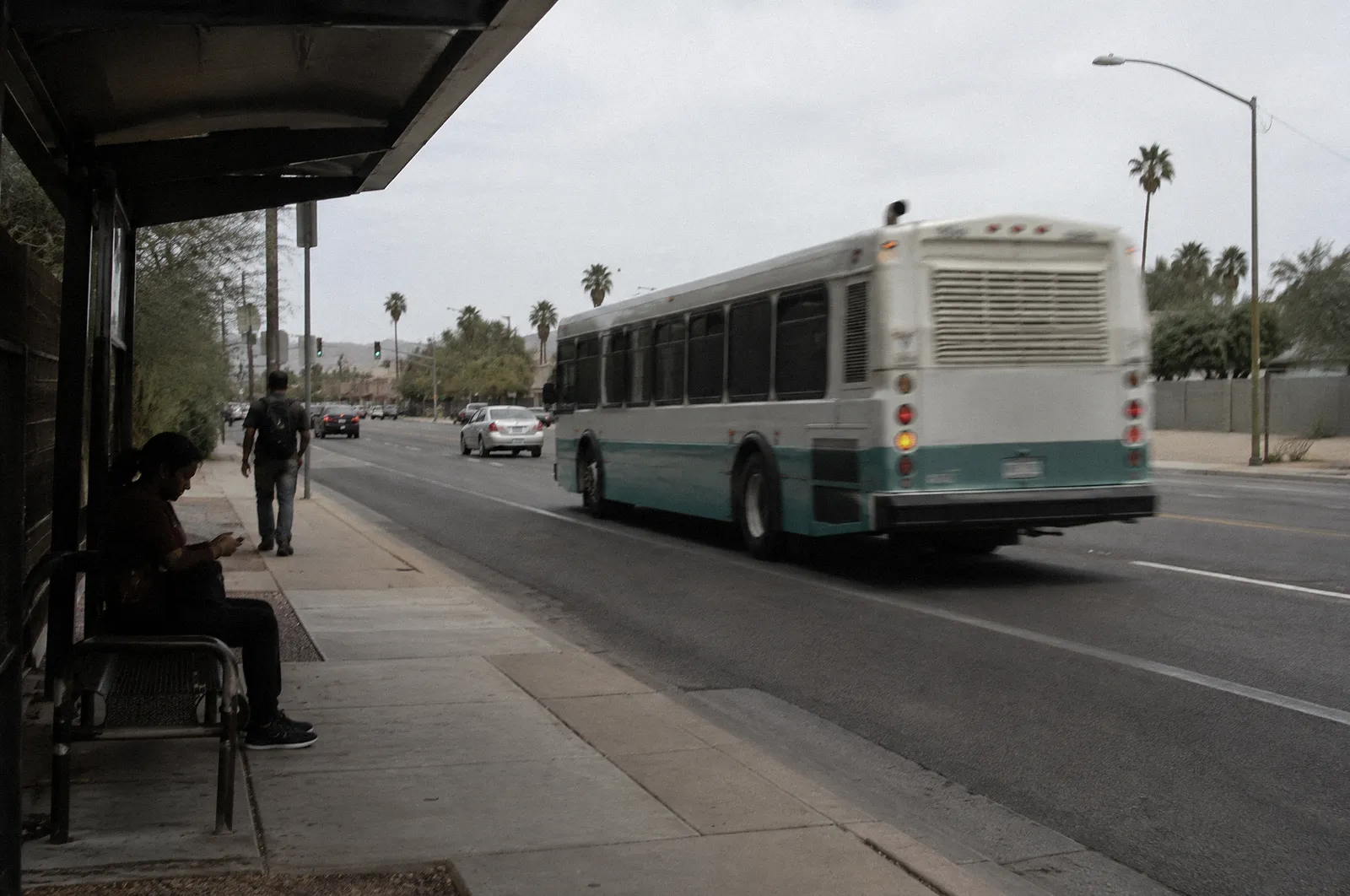
If a Public Bus Was Involved, the Notice Deadline Is Only 180 Days
Arizona law generally requires a written notice of claim within 180 days after the claim accrues when a public entity may be responsible, which can include a transit agency, a city or a school district. The notice must state the facts and a specific sum certain, and the entity has 60 days to respond before the claim is deemed denied (A.R.S. 12-821.01). A lawsuit against a public entity generally must then be filed within one year after the claim accrues (A.R.S. 12-821).
A claim against a private company, such as a charter operator, is different: most Arizona injury claims must be filed within two years (A.R.S. 12-542(1)). These rules have exceptions, so call us and we will explain how they apply to you. Our guide to the Arizona notice of claim rules walks through the steps.
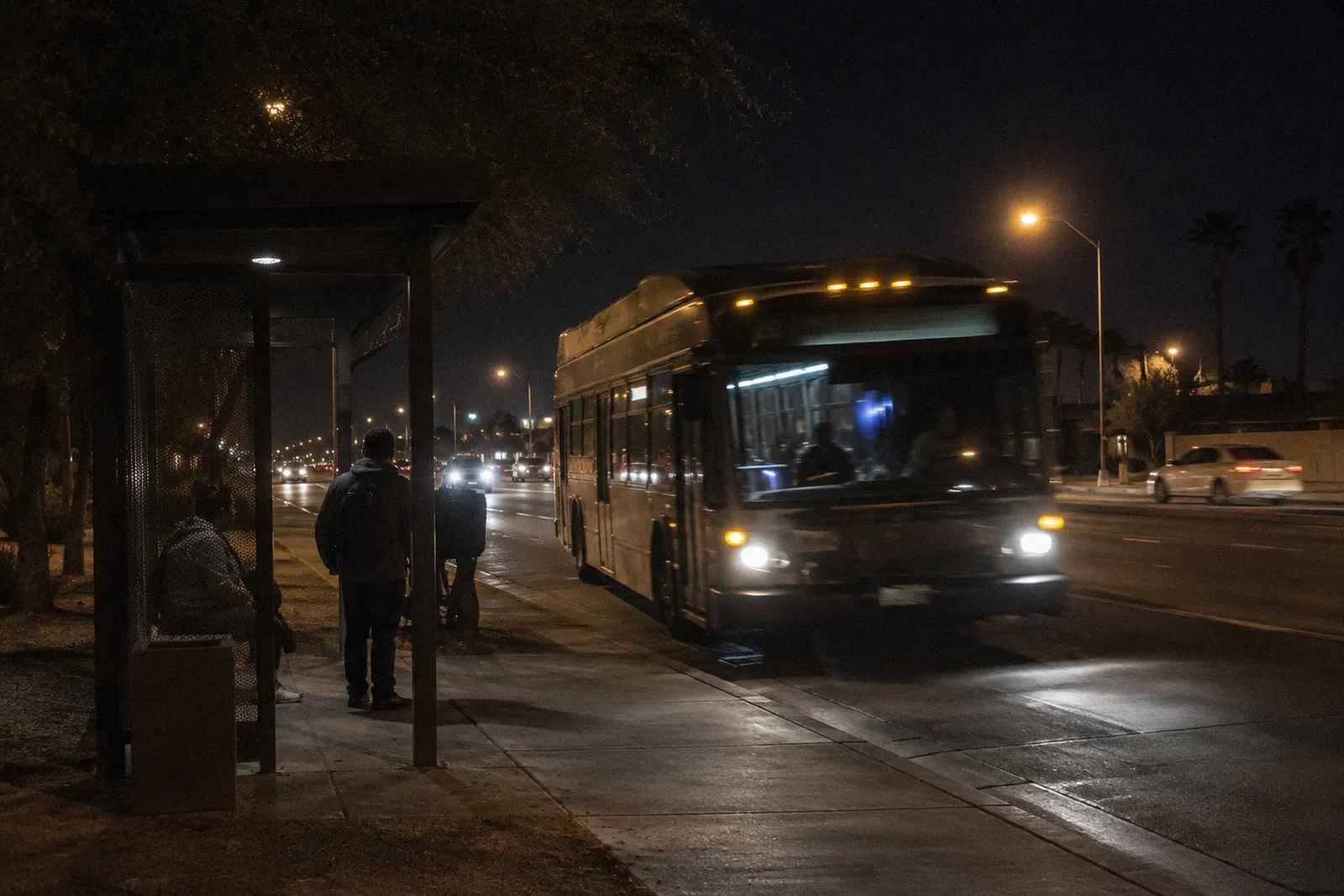
Why a Bus Crash Is Not Handled Like an Ordinary Car Accident
An Arizona bus accident lawyer starts with a question most car crash cases never ask: who actually ran the bus? A bus with a city or transit logo may be operated by a public agency, by a private contractor working for the agency, or by a charter or tour company that owns its own fleet. Each of those answers changes the deadline, the insurance and the paperwork.
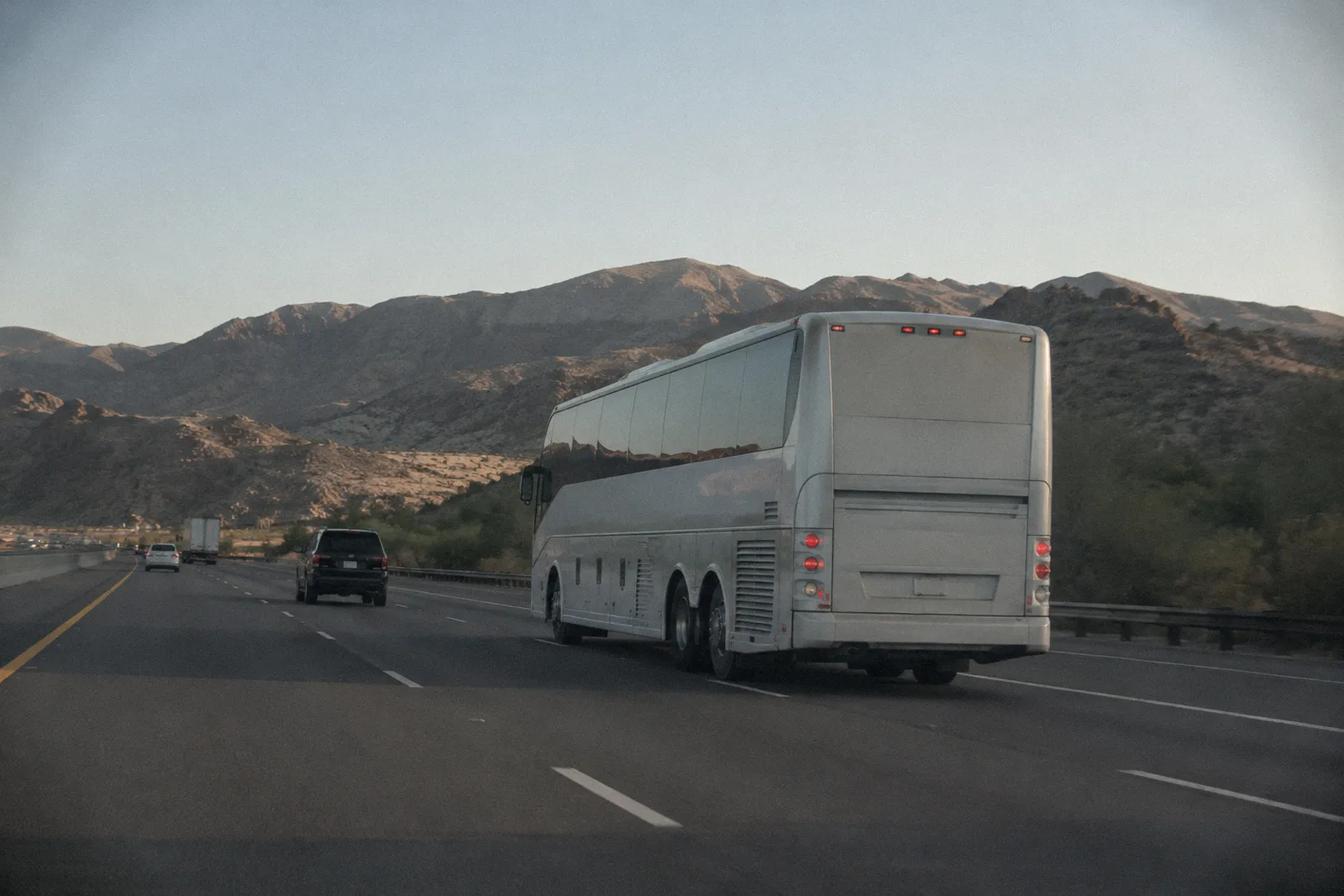
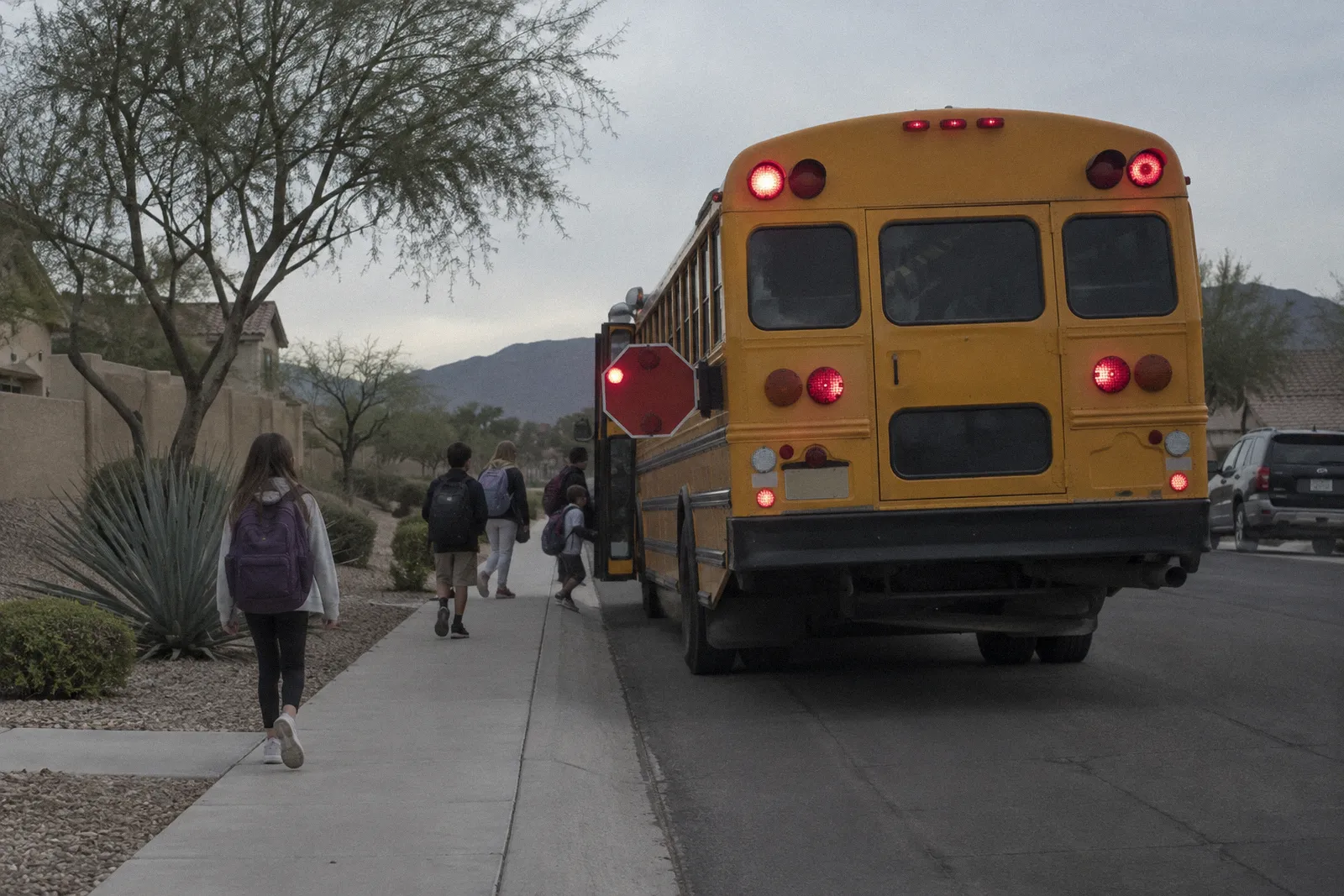
Buses are also large. A city bus that pulls out of a stop, a charter bus on a freeway grade or a school bus at a crosswalk carries a lot of mass, and the people most at risk are often not in the driver's seat: passengers who fall when the bus brakes or when a door closes, people in cars that are struck, and pedestrians and cyclists near stops.
Many buses are also covered by cameras inside and outside, and by driver and maintenance records that a car never has. That evidence can be strong, and it can disappear on a schedule. The sooner it is requested, the better.
Who May Be Responsible After a Bus Accident
A bus crash often has more than one responsible party. We look at each of them, because each may have separate insurance.
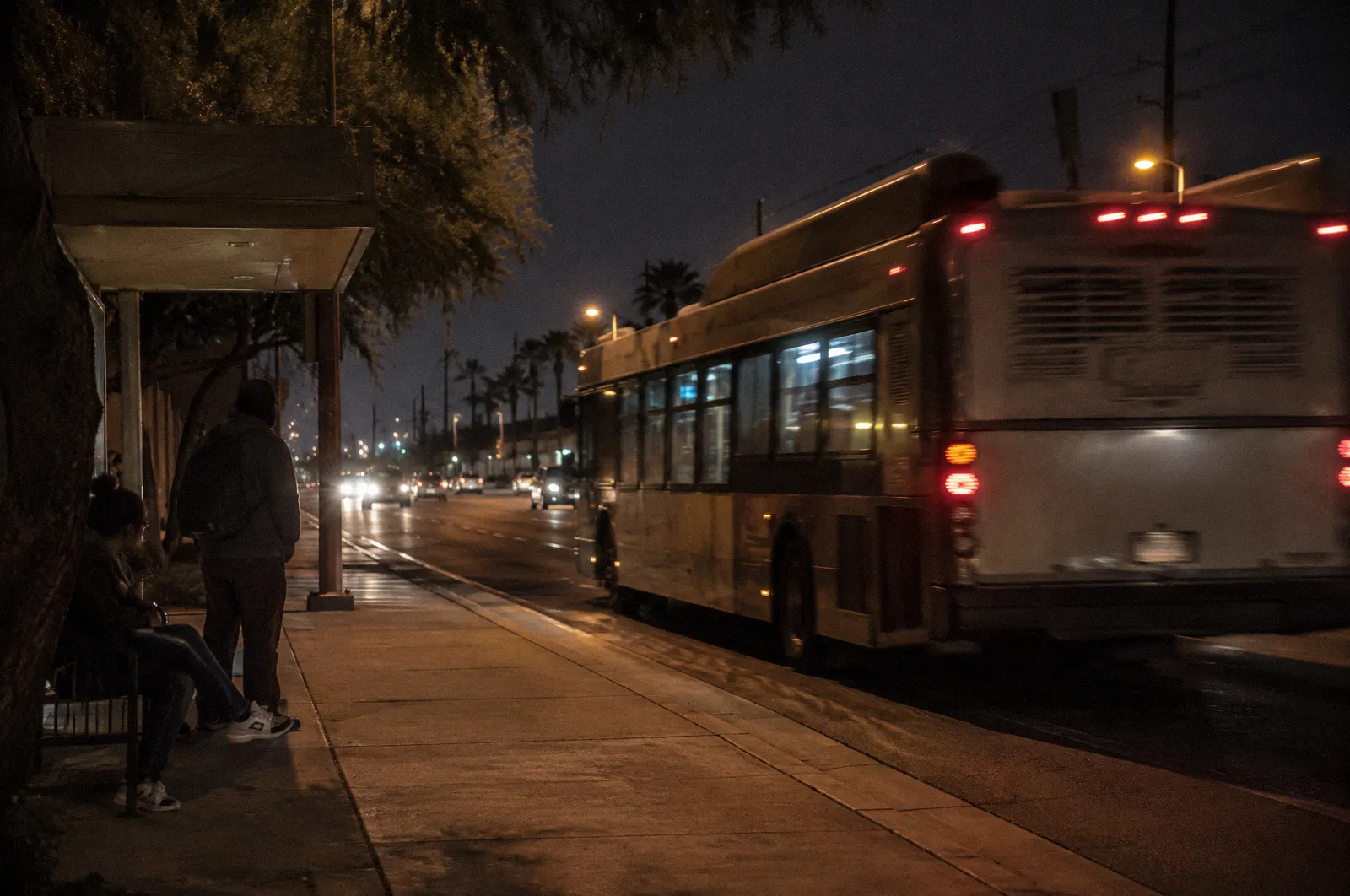
- The bus driver and the company or agency that employs the driver
A driver who ran a signal, turned across traffic, drove too fast for conditions or was distracted can be responsible, and the employer is often responsible for the driver's work. We also look at hiring, training and scheduling.
- A transit agency or city
Valley Metro oversees coordinated bus and light rail service for its member cities, and cities such as Glendale and Mesa run their own circulators. A public operator brings the 180-day notice rule into the claim.
- A private operator or contractor
A contractor may drive the route under an agency's name, and a charter or tour company runs its own buses. Who employed the driver, who owned the bus and who carried the insurance can be different from the name on the side of the vehicle, so we ask for the contracts.
- A maintenance shop or manufacturer
Worn brakes, tires or steering parts, a door that closes on a passenger or a lift that fails can point to a maintenance problem or a defect.
- Another driver
Sometimes the bus is the vehicle that was hit. A driver who cut off a bus, ran a red light or was impaired can be responsible for injuries to passengers and the bus driver. See our Arizona car accident lawyer page for how those claims work.
- The owner or manager of the road, stop or station
A poorly lit stop, a missing crosswalk, damaged pavement or a bad design may be part of the cause, and the owner may be a city, a state agency or a private property owner.
Public Bus or Charter Bus: What Changes for Your Claim
The same crash can lead to very different timelines depending on who ran the bus.
City bus or other public transit
- Written notice of claim generally due within 180 days, with the facts and a specific sum certain (A.R.S. 12-821.01)
- Lawsuit generally filed within one year after the claim accrues (A.R.S. 12-821)
- A child's deadlines are paused until age 18, but the parents' own claim for medical bills they paid is not paused
- Records requests and internal incident reports often move through the agency or its risk management office
Charter, tour or other private bus
- Most injury claims must be filed within two years (A.R.S. 12-542(1))
- A charter company may be a large carrier with commercial insurance and legal counsel from day one
- Federal rules for commercial carriers require hours-of-service logs to be kept for only six months, so a preservation letter should go out right away (49 CFR 395.8(k))
- Trip records, passenger lists and contracts with the group that hired the bus can matter
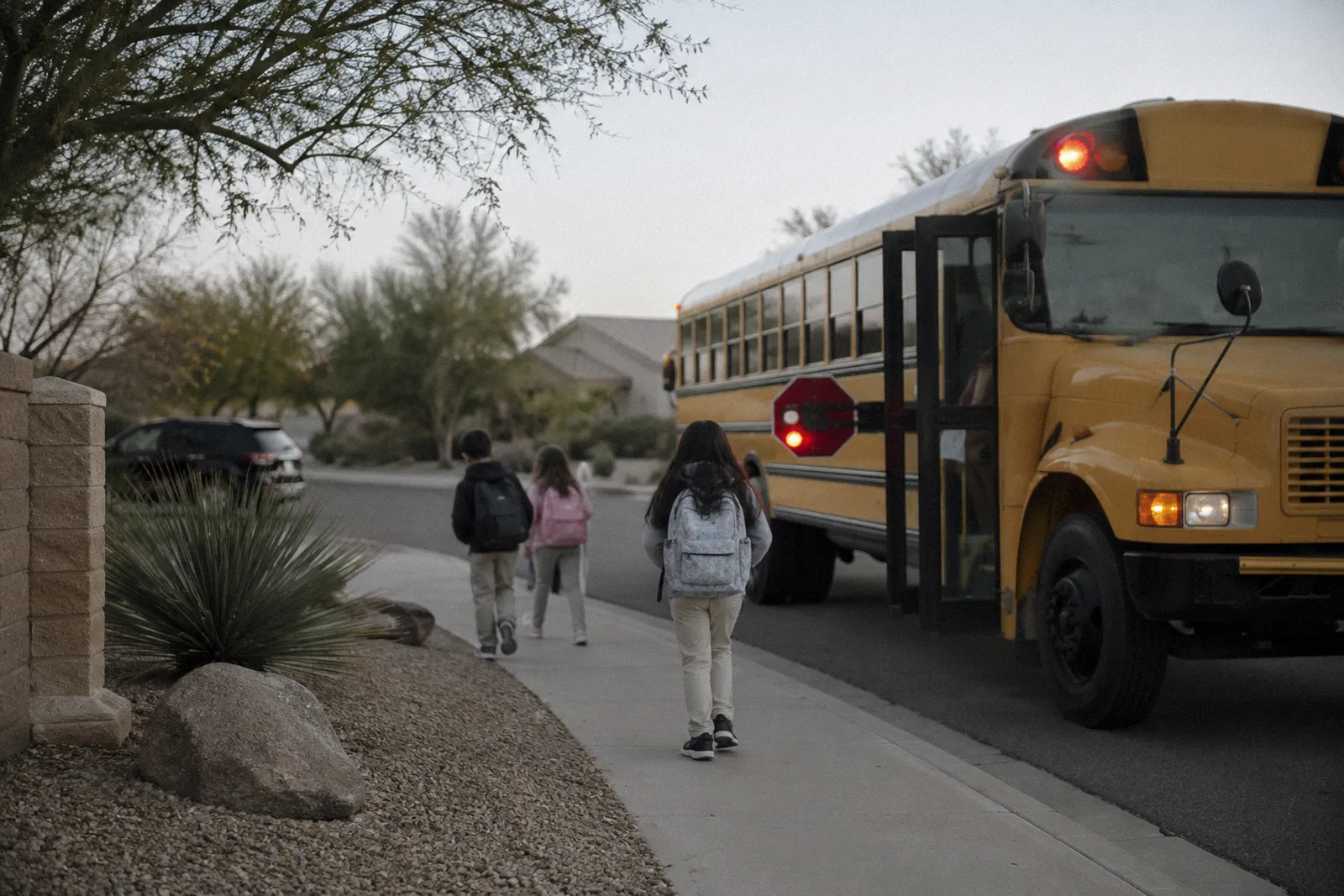
What to Do After a Bus Accident in Arizona
These steps are general. Your health always comes first.
- 1
Call 911 and get medical care
Bus injuries can include whiplash, head injuries and back injuries that show up hours later. No or seemingly minor symptoms can still hide a serious injury.
- 2
Get the bus number, route and operator name
Photograph the side and rear of the bus, the route sign and any ID number. If safely possible, do this before the bus leaves.
- 3
Ask for an incident report
Tell the driver or a supervisor you were hurt and ask how to get a copy of the report. Do not rely on a statement that you looked fine.
- 4
Collect witnesses
Get names and phone numbers of other passengers, drivers and people at the stop. Passengers leave quickly, and their accounts are hard to find later.
- 5
Keep tickets, passes and apps
A fare receipt, transit pass or app record proves you were a passenger and when.
- 6
Do not agree to a recorded statement before talking to us
An insurer or agency adjuster may call quickly. Think before agreeing to a recorded statement, and read talking to insurance adjusters after an accident. Then call us so we can explain your legal rights.
Arizona
Evidence That Can Matter in a Bus Crash Claim
Some of this is held by the bus operator and not by you, which is why timing matters.
- Onboard and exterior camera footage, which can be recorded over on a schedule
- The vehicle event data, speed and braking information stored on the bus
- The driver's schedule, hours worked, training records and employment file
- Maintenance, inspection and repair records for the bus
- Dispatch records, radio logs and route or timetable data
- Your ticket, pass or fare app record, and the names of other passengers
- Police reports and 911 records. See our guide on how to get a police report in Arizona
- Medical records from the first treatment forward, including emergency and trauma care
- Photos of injuries, the vehicles, the stop or street, and any signs or markings
Shared Fault, Insurance and Damages in a Bus Accident Claim
Arizona follows a pure comparative fault rule with no percentage bar (A.R.S. 12-2505). If you were partly at fault, for example by stepping into the street from behind a bus, your claim is reduced by your share and is not erased. Insurance companies and attorneys often negotiate the percentage of fault, so the facts and the video matter.
When several parties share responsibility, each defendant generally pays only its own share, with exceptions (A.R.S. 12-2506). That can matter when an agency, a contractor and another driver are all involved.
A bus accident claim can include medical bills, future care, lost income, pain and the loss of enjoyment of life. Arizona has no caps on personal injury or death damages (Ariz. Const. art. 2 sec. 31; art. 18 sec. 6). When a bus crash causes a death, the family's wrongful death claim must generally be filed within 2 years of the date of death (A.R.S. 12-542(2)). If you were in a car hit by a bus driver without enough coverage, your own underinsured motorist coverage may also matter. For value, read what is my personal injury case worth.
How a Bus Accident Claim Usually Moves
Every claim is different. This is the general order of events.
The first days
Safety, treatment and evidence
You get medical care, we ask for a preservation letter to the operator and we start collecting video and reports.
The first weeks
Identify the operator and the insurance
We find out who ran the bus, who employed the driver and which policies apply, and we calendar the 180-day and two-year deadlines.
Within 180 days if a public entity is involved
Notice of claim
A written notice with the facts and a specific sum certain goes to the entity. The entity has 60 days to respond before the claim is deemed denied.
Months of treatment
Medical care and records
We track treatment and costs. Settling before you know the full extent of an injury can injure your legal rights.
Demand and negotiation
Present the claim
We present the claim with the records and the video, and the insurer or agency responds. Fault percentages are often negotiated here.
If it does not resolve
Lawsuit
A lawsuit is filed within the applicable deadline, one year for most public entity claims and generally two years for private ones.
Arizona
Bus Accident Lawyer by City
We take cases anywhere in Arizona and focus on the Phoenix metro. Each city page covers the local routes, roads, courts and claim offices that matter for a bus crash there.
Talking With an Arizona Bus Accident Lawyer About Your Case
A bus crash lawyer can help in ways that are hard to do alone: sending preservation requests, finding the right defendants, meeting the notice deadline and dealing with agency and insurance adjusters. We do not promise any result, but we can explain your rights and your options on a free case review.
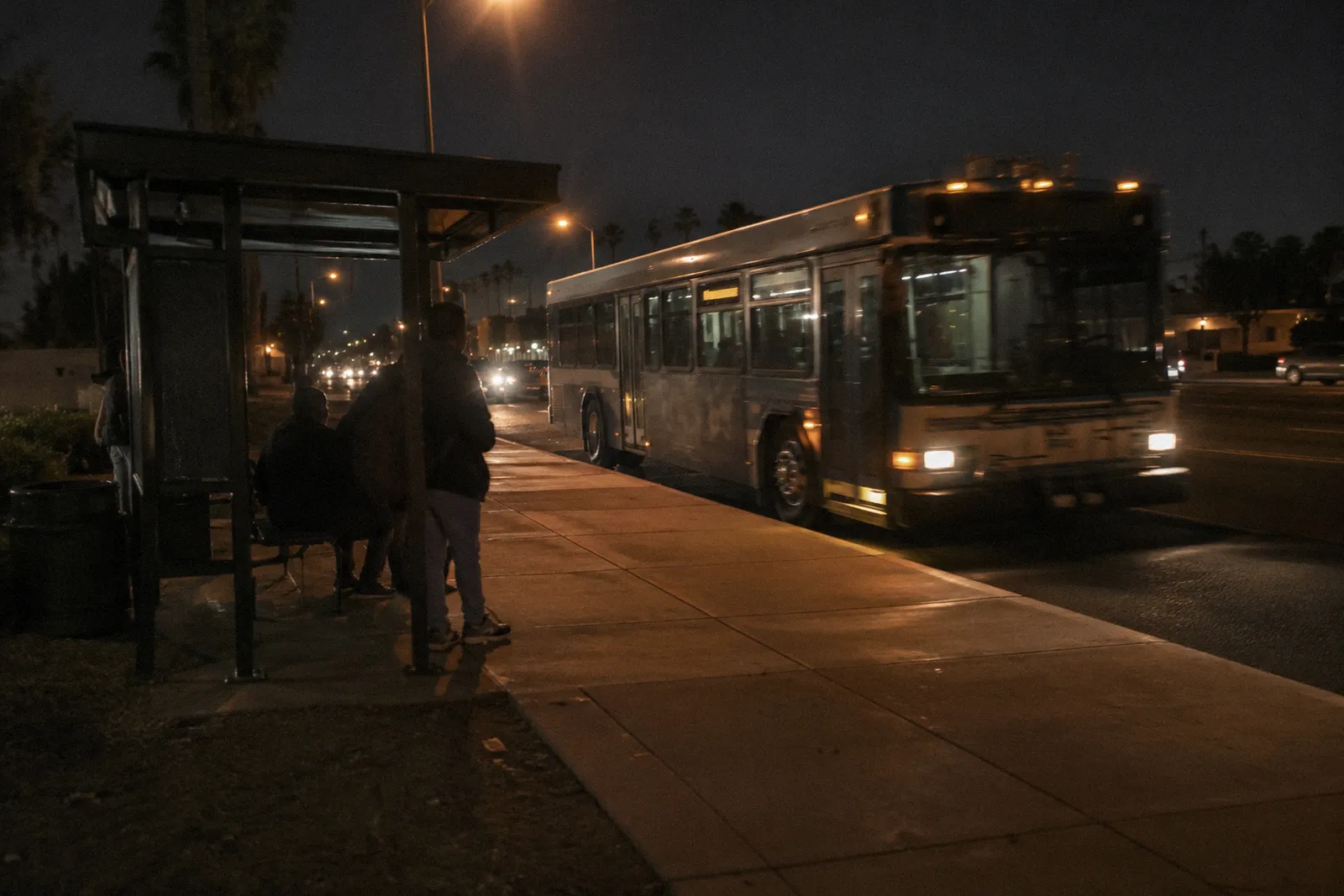
Public transportation accident lawyer questions and charter bus accident lawyer questions overlap, but the answers do not. After a crash on a city bus, a light rail line or another form of public transportation, the first issue is the short government notice period. After a crash involving a tour or charter bus, the first issue is usually a private carrier, its insurance and the records it keeps.
When you are looking for a bus accident law firm, ask who will actually explain the deadline to you and what happens if you wait. You pay no attorney fee unless we recover money for you. Our how we work page explains the process, and our guide to how contingency fees work covers the written fee agreement.
Bus crashes often overlap with other kinds of claims. See our pages on pedestrian accidents, bicycle accidents, rideshare accidents, truck accidents and catastrophic injuries, or browse all of our types of personal injury cases. The earlier you call, the better, but it is never too late to find out your legal rights.
Questions
Questions about Arizona bus accident cases
Who can I sue after a city bus accident?
It depends on who was responsible. The bus driver and the agency or company that employs the driver are common targets, and a contractor, a maintenance shop, a manufacturer or another driver may also be involved. If a public entity is involved, a written notice of claim is generally due within 180 days (A.R.S. 12-821.01), so ask early.
What if I was hurt in a Valley Metro bus accident?
Valley Metro oversees coordinated bus and light rail service for its member cities, and a claim against a public transit operator generally brings the 180-day notice rule into play. Who operated the specific bus can vary, so we look at the contracts and records. Call us as soon as you can.
Is a charter bus accident handled differently from a public bus accident?
Usually the deadlines are different. Most claims against a private company must be filed within two years (A.R.S. 12-542(1)), and the company is often a larger carrier with commercial insurance. Carriers may keep some driver records for only six months, so a preservation request should go out early.
I was a passenger. Do I need to prove the bus driver was at fault?
You need to show that someone was careless and that it caused your injury. That could be the bus driver, another driver, a maintenance problem or an unsafe stop. Pure comparative fault applies in Arizona, so a share of blame on you reduces a claim and does not erase it (A.R.S. 12-2505).
Does it matter if I was a pedestrian or a driver and not a passenger?
No. People in cars, on bicycles and on foot are often the ones most seriously hurt by a bus. The same questions apply about who ran the bus, who is responsible and which deadline applies.
My child was hurt on a school or city bus. Is the deadline different?
A child's deadlines against a public entity are paused until age 18, and the notice and lawsuit clocks then run from the 18th birthday. The parents' own claim for medical bills they paid is not paused and their notice is due within 180 days of the injury (A.R.S. 12-821.01(D); 12-502). Families should not wait.
What do I do if the bus company or agency calls me?
Be polite, give basic facts and avoid agreeing to a recorded statement until you have spoken to us. Insurance companies and attorneys often negotiate fault, and early statements can be used against you.
Free case review
Let Us Answer Your Questions and Help With Your Case
Call (602) 584-8054 or request your free case review. Our experienced and friendly attorney will explain your legal rights and what your options are. Call any time. Office visits Monday to Friday, 9 to 5. The earlier you call, the better, but it's never too late to find out your legal rights.
Thank you, we’ve received your request.
A member of our team will reach out shortly. If your matter is urgent, call us now at (602) 584-8054.