
Scottsdale Truck Accident Lawyer
Truck Accident Lawyer in Scottsdale, Serving Phoenix and the Arizona Interstates
If you were hurt in a crash with a commercial truck, a truck accident lawyer in Scottsdale can start preserving the trucking company's records before they age out. Valley Accident Law represents people injured on I-10, I-17, US-60, Loop 101, and Loop 202 and the surface streets around them. Most Arizona truck accident claims must be filed within two years, and the evidence moves much faster than that.

- Filing deadline
- 2 years from the crash
- A.R.S. 12-542(1)
- Government truck
- Notice of claim within 180 days
- A.R.S. 12-821.01
- Driver logs
- Generally kept 6 months
- 49 CFR 395.8(k)
- Maintenance records
- About 18 months
- 49 CFR 396.3(c)
A Truck Crash Is Not a Car Crash With a Bigger Vehicle
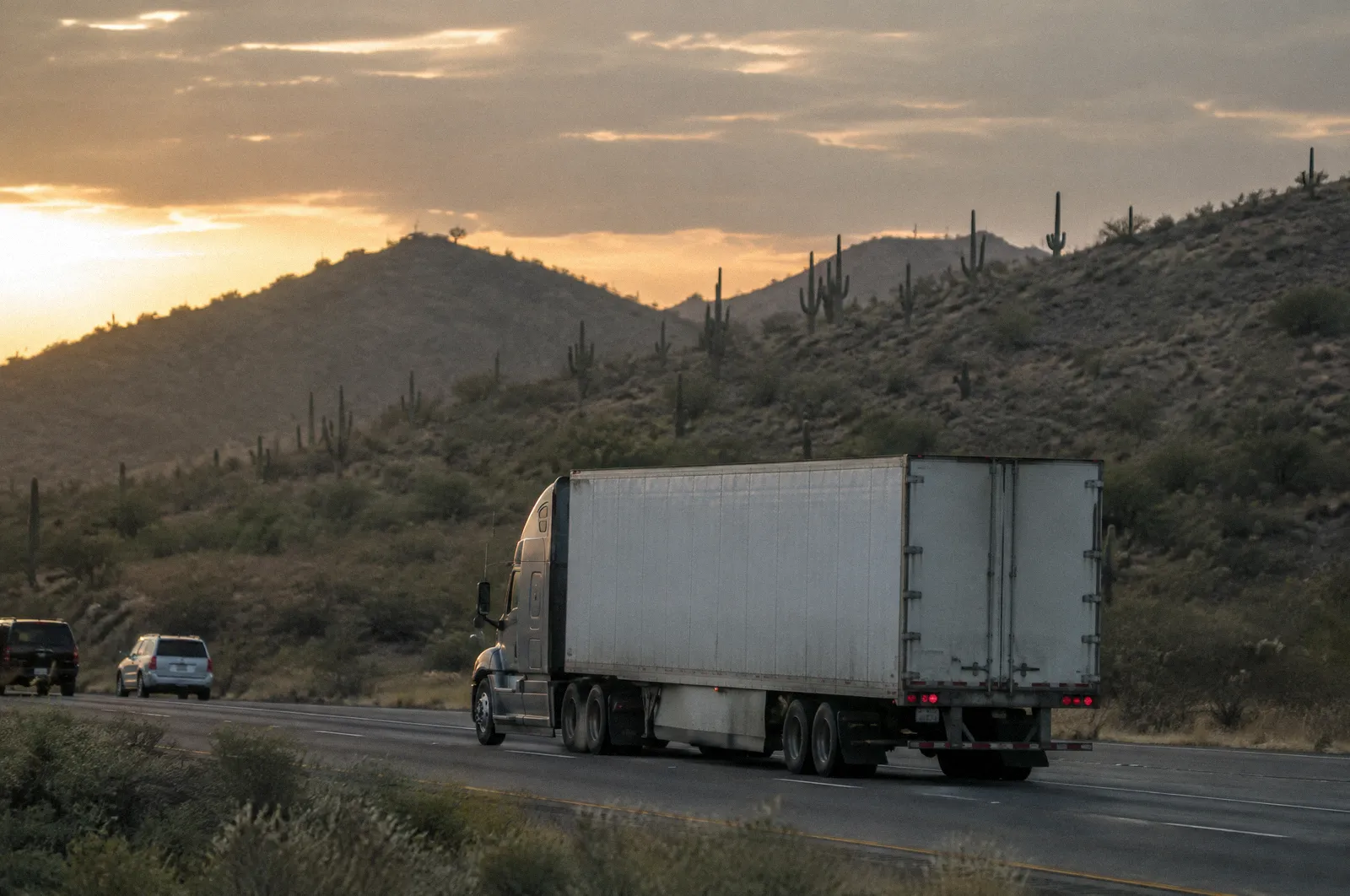
A commercial truck loaded to 80,000 pounds at highway speed has roughly 20 times the kinetic energy of a passenger car. The injuries follow that math. Truck crashes on I-10, I-17, US-60, and the Loop 202 leave drivers and passengers with severe and often permanent damage. For how these claims work across the rest of the state, see our Arizona trucking accident lawyer page.
The legal fight is also different. Trucking is heavily regulated by federal law (the FMCSA), which means the case is not just about who was at fault for the crash. It is also about hours-of-service logs, vehicle maintenance records, driver qualification files, drug and alcohol testing, and whether the trucking company itself created the conditions that caused the crash.
Valley Accident Law has 32 years of experience handling Arizona injury cases, and we approach every commercial truck accident lawyer search the same way: the trucking company is a defendant from the first day. Talk to us today.
How Phoenix Metro Truck Cases Happen
Most commercial truck cases we see fall into these patterns:
- Rear-end collisions
caused by following distance failures, often on I-10 between Phoenix and Tucson or on I-17 north of Phoenix.
- Lane-change crashes
where the truck driver did not check the no-zone (the truck's blind spots).
- Underride collisions
the most catastrophic pattern, where a passenger vehicle ends up under the trailer.
- Jackknife crashes
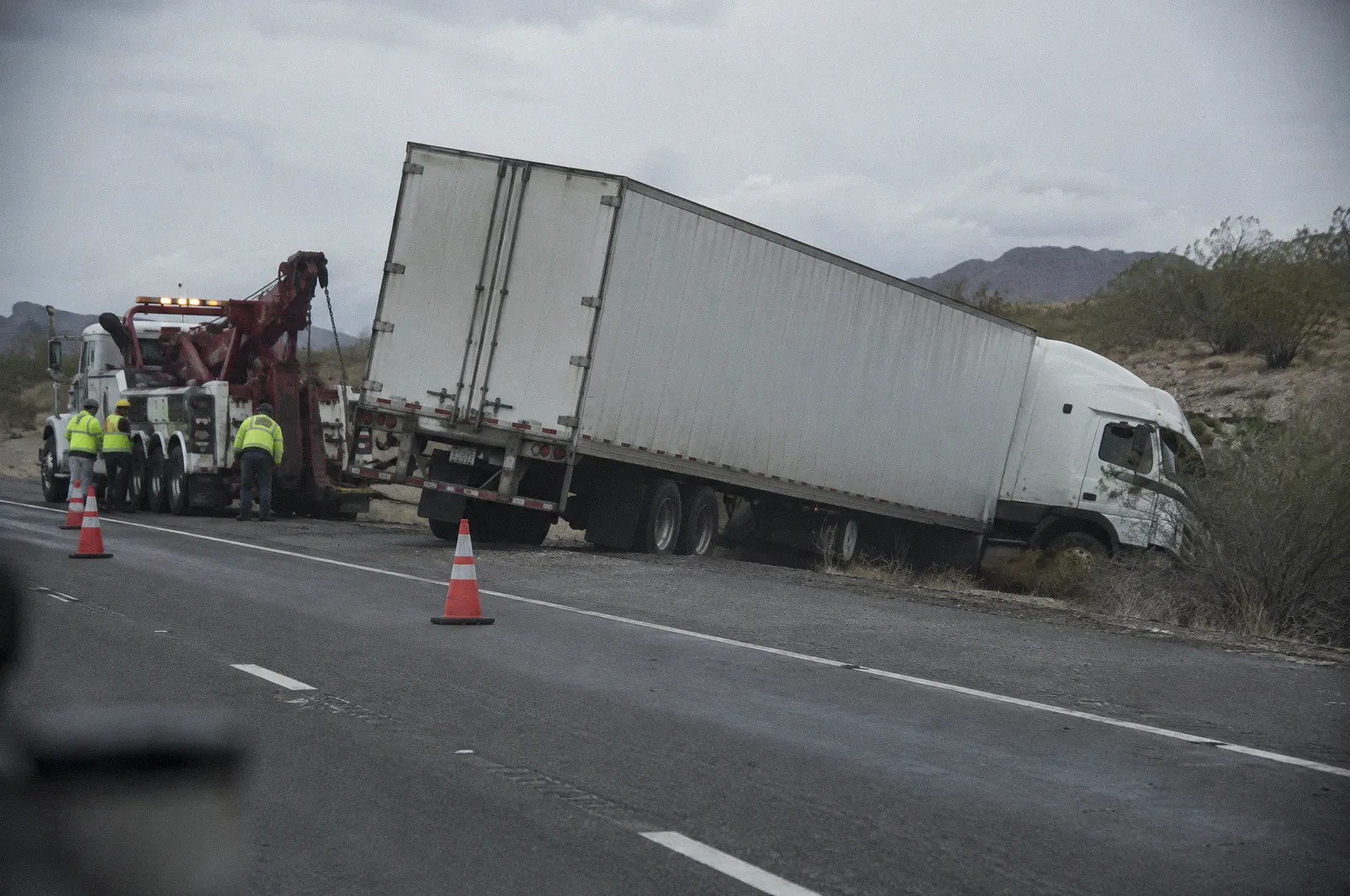
in adverse weather or on grades. See our page on jackknife and rollover accidents.
- Tire blowouts and rollovers
caused by maintenance failures.
- Loading and securement failures
where cargo shifts or comes off the truck.
- Fatigued or impaired driver cases
often discoverable through hours-of-service logs.
Why Federal Trucking Regulations Matter
The Federal Motor Carrier Safety Administration sets rules that govern how trucks operate. The relevant ones for case-building are below. A violation of any of these does not automatically prove liability, but it is often the strongest part of the case. Our page on FMCSA violations goes deeper.
- Hours-of-service rules limiting how long a driver can be behind the wheel before required rest. For property-carrying drivers, that means 11 hours of driving after 10 hours off duty, inside a 14-hour window, with weekly limits of 60 or 70 hours (49 CFR 395.3)
- Driver qualification requirements (CDL, medical certification, training)
- Drug and alcohol testing requirements
- Vehicle maintenance and inspection records
- Cargo securement standards
- Logbook accuracy (electronic logging devices are now required)
Why We Send Preservation Letters Within Days
Call it the six-month evidence trap. You generally have two years to file a truck injury lawsuit in Arizona, but evidence you need can be gone long before then. Trucking companies are not required to keep most of these records for long. Federal rules generally call for hours-of-service logs to be kept for 6 months (49 CFR 395.8(k)), maintenance records for about 18 months (49 CFR 396.3(c)), and a driver's qualification file for 3 years after employment ends (49 CFR 391.51). If driver fatigue caused your crash, the electronic log data that shows it can be erased for good unless a formal preservation letter, sometimes called a spoliation letter, reaches the carrier first. That is why we send preservation-of-evidence letters within days of being retained.
These rules have exceptions, and a letter sent early is the only way to be sure the records still exist when we need them. The earlier you call, the better, but it's never too late to find out your legal rights.
Who Is Liable in a Truck Crash
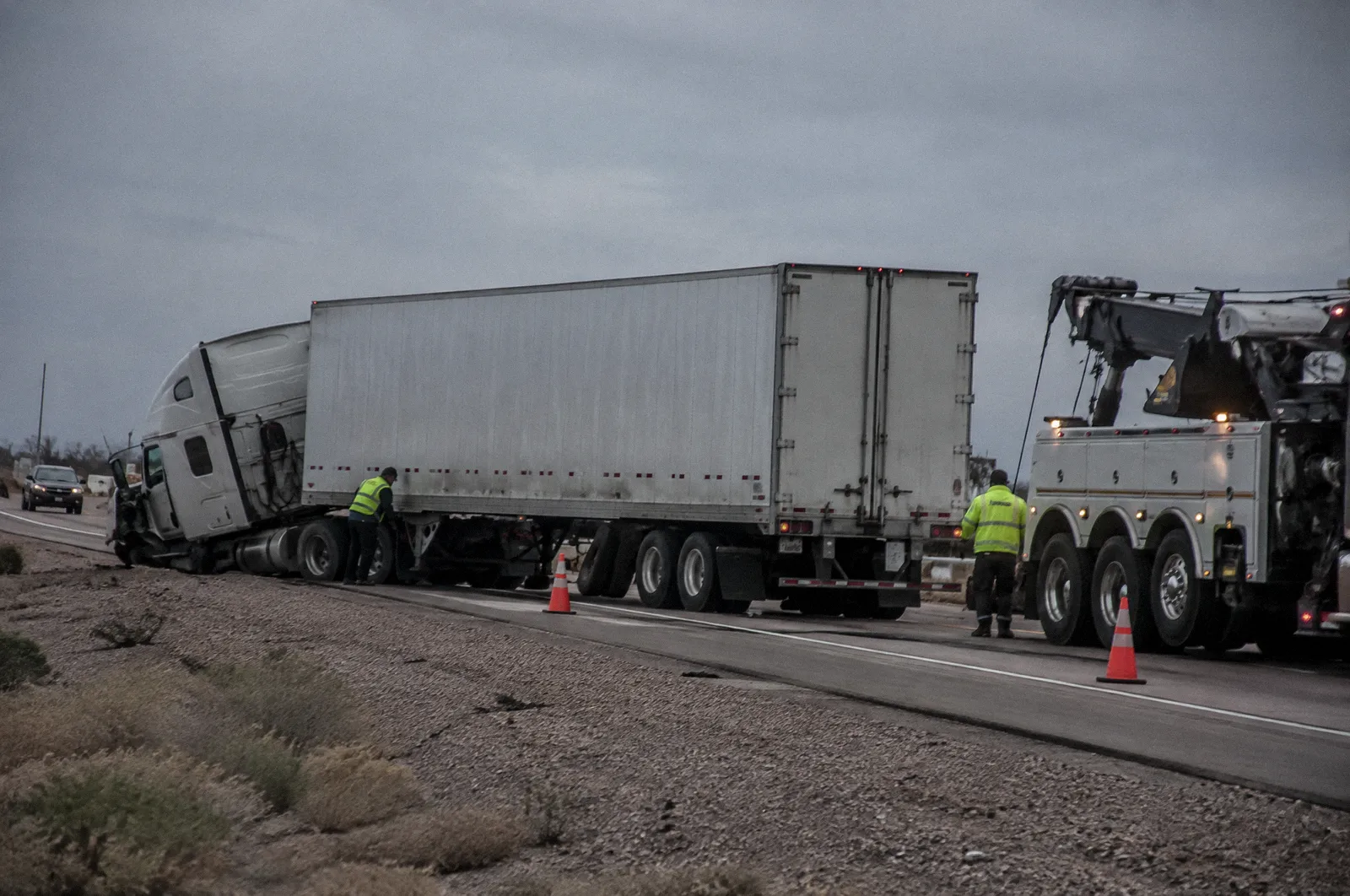
Multiple parties can be liable in a commercial truck case:
- The truck driver
for the choices made behind the wheel.
- The trucking company
often through respondeat superior, sometimes through negligent hiring or supervision.
- The cargo loader
in cargo-shift cases.
- The maintenance contractor
when a brake, tire, or steering failure traces back to poor service.
- The truck or component manufacturer
in defect cases.
- The shipper or broker
in some circumstances.
What a Truck Accident Case Is Worth
That stacking of liable parties is part of why truck cases can recover more than passenger-vehicle cases of similar injury severity. There are usually multiple insurance policies in play, and the policy limits are generally higher than in standard auto cases. Arizona law makes each defendant responsible for its own share of fault in most cases (A.R.S. 12-2506), so identifying every responsible party early matters.
Damages in truck cases can be significant because the injuries usually are. Recoverable categories include past and future medical bills, lost wages and lost earning capacity, pain and suffering, loss of consortium, wrongful death damages where the victim did not survive, and punitive damages where the trucking company knowingly violated federal rules or where the driver was impaired. Arizona does not cap personal injury damages (Ariz. Const. art. 2 sec. 31). Our guide to what a personal injury case is worth explains how the pieces add up.
The Two-Year Filing Window (and Why You Should Move Faster)
Most Arizona truck accident claims must be filed within two years (A.R.S. 12-542). If the truck was a government vehicle (a state, federal, or municipal vehicle), a notice of claim is required within 180 days (A.R.S. 12-821.01), and a lawsuit against a public entity generally must follow within one year after the claim accrues (A.R.S. 12-821).
Even with a two-year statute, you should not wait. The trucking company's records have short retention windows, and the company often has a rapid-response team at the scene within hours of the crash, photographing, measuring, and interviewing witnesses. We need to do the same on your behalf, fast. These rules have exceptions, so call us and we will explain how they apply to you, and see our guide to the Arizona statute of limitations.
What Determines Fault in a Scottsdale Truck Crash
Arizona applies comparative fault, so your compensation can be reduced by whatever percentage of fault gets assigned to you, and the trucking company's insurer will try to maximize that percentage from the start. Arizona's rule is pure comparative fault (A.R.S. 12-2505), so there is no percentage bar, but insurance companies and attorneys often negotiate the percentage of fault. Within hours of a crash, the carrier often has its own investigators documenting the scene, while the police report becomes the baseline both sides argue from. Our guide to Arizona comparative negligence explains how this works.
The evidence that decides these cases includes the report, photos and measurements from the scene, witness statements, medical records connecting your injuries to the crash, and the trucking company's own records, hours of service logs, maintenance history, and electronic logging device data. The adjuster you hear from is trained to settle fast and low, before your injuries are fully understood. Expect the process to run on two tracks at once, your medical treatment and recovery, and the evidence gathering that determines who pays and how much.
A police report is not the final word on fault, it is one piece of evidence among several. Officers write reports quickly and do not always have access to the trucking company's own records, like hours of service logs or maintenance history, that can show a different picture. If you do not know yet who is at fault, that is normal, and it is part of what we sort out. Truck crashes often involve the driver, the trucking company, and sometimes a maintenance contractor or cargo loader, and figuring out who is responsible usually takes some investigation into the records those parties are required to keep. A truck accident lawyer in Scottsdale who knows how to request and preserve these records before they age out gives your claim its strongest foundation.
Arizona
Where Truck Crashes Happen Around Scottsdale and Phoenix
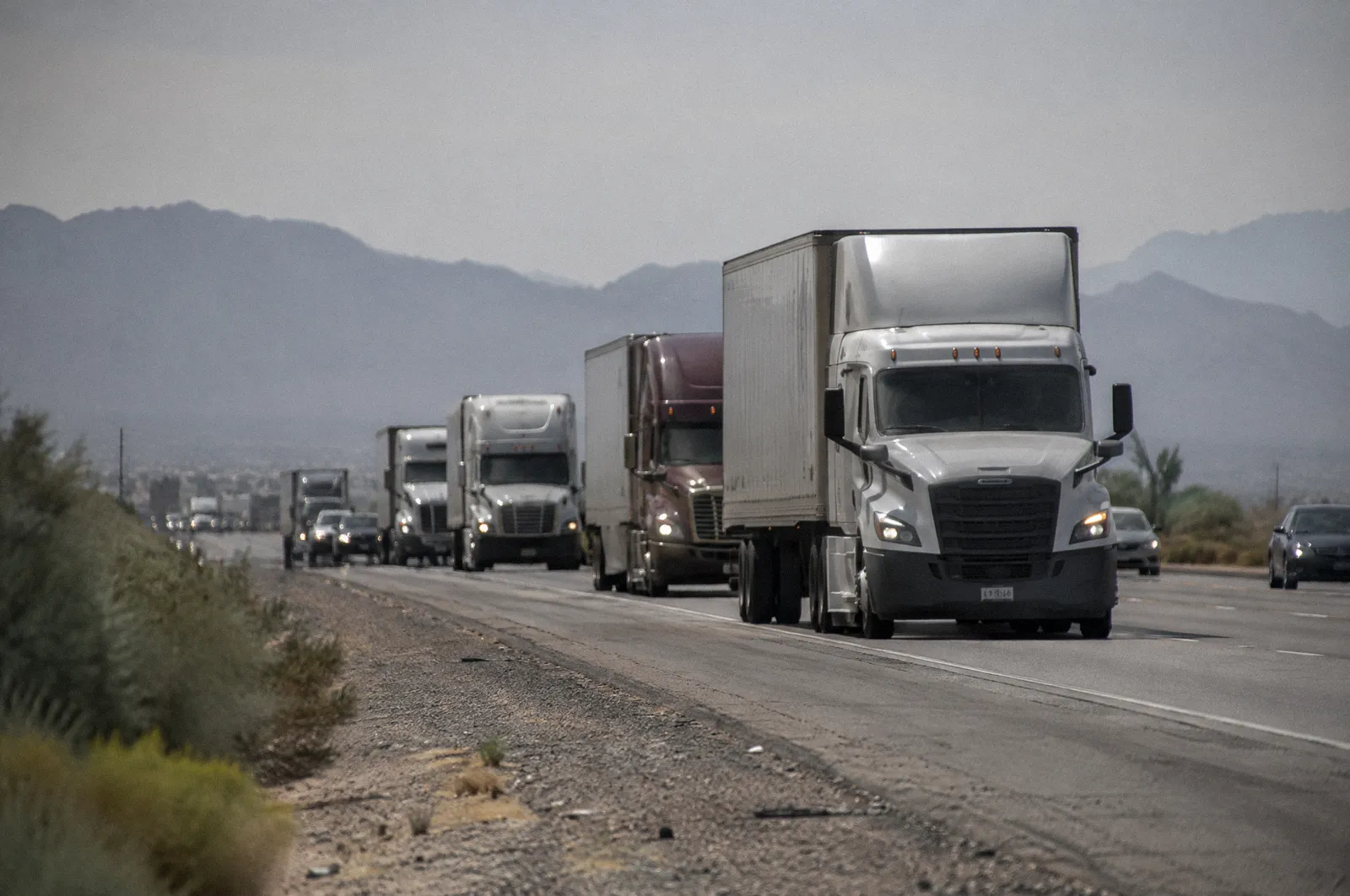
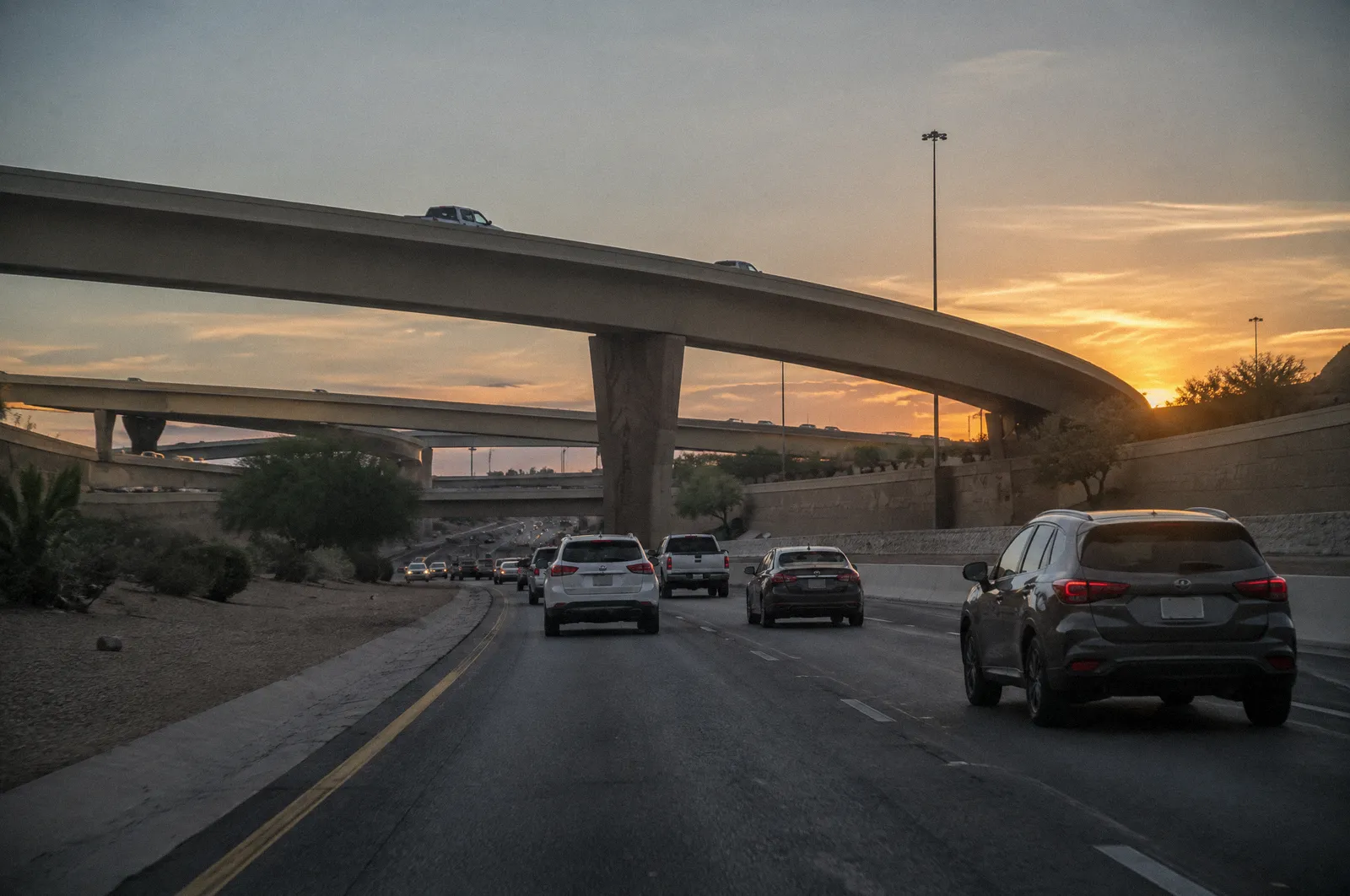
Heavy freight moves through the Valley every day, and the roads shape the crashes we see. Knowing the road helps us find the right evidence, from weigh-station and toll records to nearby camera footage.
I-10
A major freight corridor, including the stretch between Phoenix and Tucson where following-distance rear-end crashes are common.
I-17
A heavily traveled route north of Phoenix with long grades and merging traffic.
US-60
Higher-speed truck traffic through the East Valley.
Loop 101 and Loop 202
Commuter traffic mixes with trucks at freeway speeds, and lane-change crashes in a truck's blind spots are a pattern.
Arizona Department of Public Safety
Often the agency that writes the crash report for crashes on interstates and state routes.
What to Expect From a Truck Accident Lawyer in Scottsdale
When you call us, we start by getting the basic facts of the crash and your injuries, then we walk you through what the next steps typically look like, sending preservation letters to the trucking company, requesting the police report, and connecting you with medical providers if you need care. We handle communication with the trucking company's insurer directly, so you are not on the phone explaining your case to someone trained to work against your interests.
Once we are handling your case we take over communication with the insurer. Adjusters are trained to ask questions and gather statements that limit what the company has to pay, so it is safer for that conversation to go through us. You should not agree to a recorded statement before you have spoken with us, and our guide to talking to insurance adjusters explains why.
We work on contingency, so there is no upfront cost. You pay no attorney fee unless we recover money for you. If you are not sure whether your situation is serious enough to call, call anyway. A short conversation costs you nothing, and it is often the only way to know where you actually stand. A truck accident law firm should be willing to tell you honestly whether the facts support a claim.
Explore Truck Accident Cases by Type
Truck crashes are not all alike, and the evidence changes with the type of vehicle and the way the crash happened. Choose the page closest to your situation. If you are comparing options, a commercial trucking accident lawyer in Scottsdale should be able to explain these differences in plain language.
Working with Valley Accident Law
The first case review is free, and we work on contingency. You pay no attorney fee unless we recover money for you. Our experienced and friendly attorney will explain your legal rights and answer your questions. Request your free case review or call (602) 584-8054.
Arizona
Truck Accident Help in Other Valley Cities
We are based in Scottsdale and also help people hurt in these Valley cities. Each city page covers the local roads, courts and police agencies that matter to a claim there.
Related pages
Other practice areas in Scottsdale
Questions
Questions about Scottsdale truck accident cases
How is a truck case different from a car case?
Federal regulations, multiple liable parties, larger insurance policies, more complex evidence (logs, ELD data, maintenance records), and shorter retention windows on the truck company's records.
How quickly do I need to call?
As soon as you can. Logs may be kept only 6 months, maintenance records about 18 months, and driver qualification files 3 years after employment ends, so some of the most useful records can legally disappear quickly. We send preservation letters fast.
What if the truck driver lived in another state?
In most circumstances it does not change where the case can be heard. The crash happened in Arizona, so Arizona courts and Arizona law generally apply. These rules have exceptions, so call us and we will explain how they apply to you.
What if the trucking company says they were not responsible?
Common opening position. We litigate it with the federal regulations, the records they were required to keep, and accident reconstruction.
Are punitive damages possible?
Yes, in cases involving impaired driving, knowing rule violations, or extreme negligence. Arizona courts look for an “evil mind” shown by clear and convincing evidence (Linthicum v. Nationwide, Ariz. 1986). We evaluate punitive exposure on every case.
Do I still have a case if I was partly at fault for the crash?
Arizona uses comparative fault, so you can under most circumstances still recover damages even if you share some responsibility for the crash. Your compensation is generally reduced by your percentage of fault rather than eliminated entirely. The trucking company's insurer will likely argue for a higher percentage against you, which is one reason to have someone reviewing the evidence on your side early.
How much does it cost to talk to a truck accident lawyer in Scottsdale about my case?
The initial case review is free, and we work on contingency. You pay no attorney fee unless we recover money for you. You can call and describe what happened without committing to anything.
How do I choose a truck accident attorney near me?
When you look for a truck accident attorney in Scottsdale, ask how quickly the firm will send preservation letters to the trucking company, who will answer your calls, and how fees work. Our office is at 5635 N Scottsdale Rd, Suite 170, Scottsdale, AZ 85250, and we represent people hurt in truck crashes across the Phoenix metro and on the Arizona interstates.
Free case review
Let Us Answer Your Questions and Help With Your Case
Call (602) 584-8054 or request your free case review. Our experienced and friendly attorney will explain your legal rights and what your case is worth. The earlier you call, the better, but it's never too late to find out your legal rights.
Call any time. Office visits Monday to Friday, 9 to 5.
Thank you, we’ve received your request.
A member of our team will reach out shortly. If your matter is urgent, call us now at (602) 584-8054.