
Scottsdale Trucking Safety Violations Lawyer
Trucking Safety Violations Lawyer in Scottsdale: How FMCSA Regulations Apply to Your Crash
A trucking safety violations lawyer in Scottsdale looks at whether a truck driver or trucking company broke the federal rules written to keep commercial trucks safe, such as limits on driving hours and requirements for maintenance and record keeping. A broken rule does not decide a case on its own, but it can be strong evidence that someone was careless. Arizona gives you two years from the crash to file (A.R.S. 12-542), and some of the records that prove a violation are only required to be kept for a limited time.

- Daily driving limit
- 11 hours driving after 10 hours off duty
- 49 CFR 395.3
- Driver logs kept
- 6 months
- 49 CFR 395.8(k)
- Filing deadline
- 2 years from the crash
- A.R.S. 12-542(1)
What FMCSA Regulations Are and Why They Matter After a Crash
The Federal Motor Carrier Safety Administration, known as FMCSA, writes and enforces the federal trucking regulations that apply to commercial trucks that cross state lines and to many that do not. FMCSA is part of the U.S. Department of Transportation, which is why you will also see these called trucking DOT regulations. Our page on a truck accident lawyer in Scottsdale explains how we handle commercial truck claims in general. This page explains the rule book behind many of them.
These trucking rules and regulations cover how long a driver may be behind the wheel, how a truck must be inspected and repaired, and what a carrier has to keep on file about each driver. When a crash happens, the records those rules require can show whether the driver was rested, whether the truck was in good condition, and whether the company checked who it put on the road. Whenever FMCSA announces new trucking regulations, the older rules do not vanish overnight, and the version that applies is the one in effect at the time of your crash. We confirm the current text of any rule when we review a case.
Arizona
Key FMCSA Regulations in One Place
These are the federal rules that come up most often after a serious truck crash. They are summarized in plain language and have exceptions, so they are a starting point and not a substitute for a review of your facts.
| Topic | What the rule says | Citation |
|---|---|---|
| Driving time | A property-carrying driver may drive up to 11 hours after 10 hours off duty. | 49 CFR 395.3 |
| Daily window | Driving must end within a 14-hour window after coming on duty. That clock does not pause for traffic delays, meals, paperwork or waiting at a loading dock. | 49 CFR 395.3 |
| Rest break | A driver must take a 30-minute break after 8 hours of driving. | 49 CFR 395.3 |
| Weekly limits | Weekly on-duty limits of 60 or 70 hours apply, depending on the carrier's schedule. | 49 CFR 395.3 |
| Driver logs | Carriers keep records of duty status for 6 months. | 49 CFR 395.8(k) |
| Maintenance | Inspection, repair and maintenance records are kept for about 18 months. | 49 CFR 396.3(c) |
| Driver file | A driver qualification file is kept for 3 years after the driver's employment ends. | 49 CFR 391.51 |
Source: Federal Motor Carrier Safety Regulations, 49 CFR Parts 391, 395 and 396 (FMCSA, U.S. Department of Transportation)
Trucking Safety Violations That Often Matter in a Claim
Not every violation causes a crash, and not every crash involves a violation. These are the areas we look at first.
- Hours of service
A tired driver reacts more slowly and is more likely to drift or miss a slowing line of traffic. Logs, fuel receipts, toll records and dispatch messages can show whether the hours rules were followed. Once the 14-hour window opens it keeps running through traffic, meals and time spent waiting at a loading dock, and a driver who has driven 8 hours must take a 30-minute break.
- Maintenance and inspection
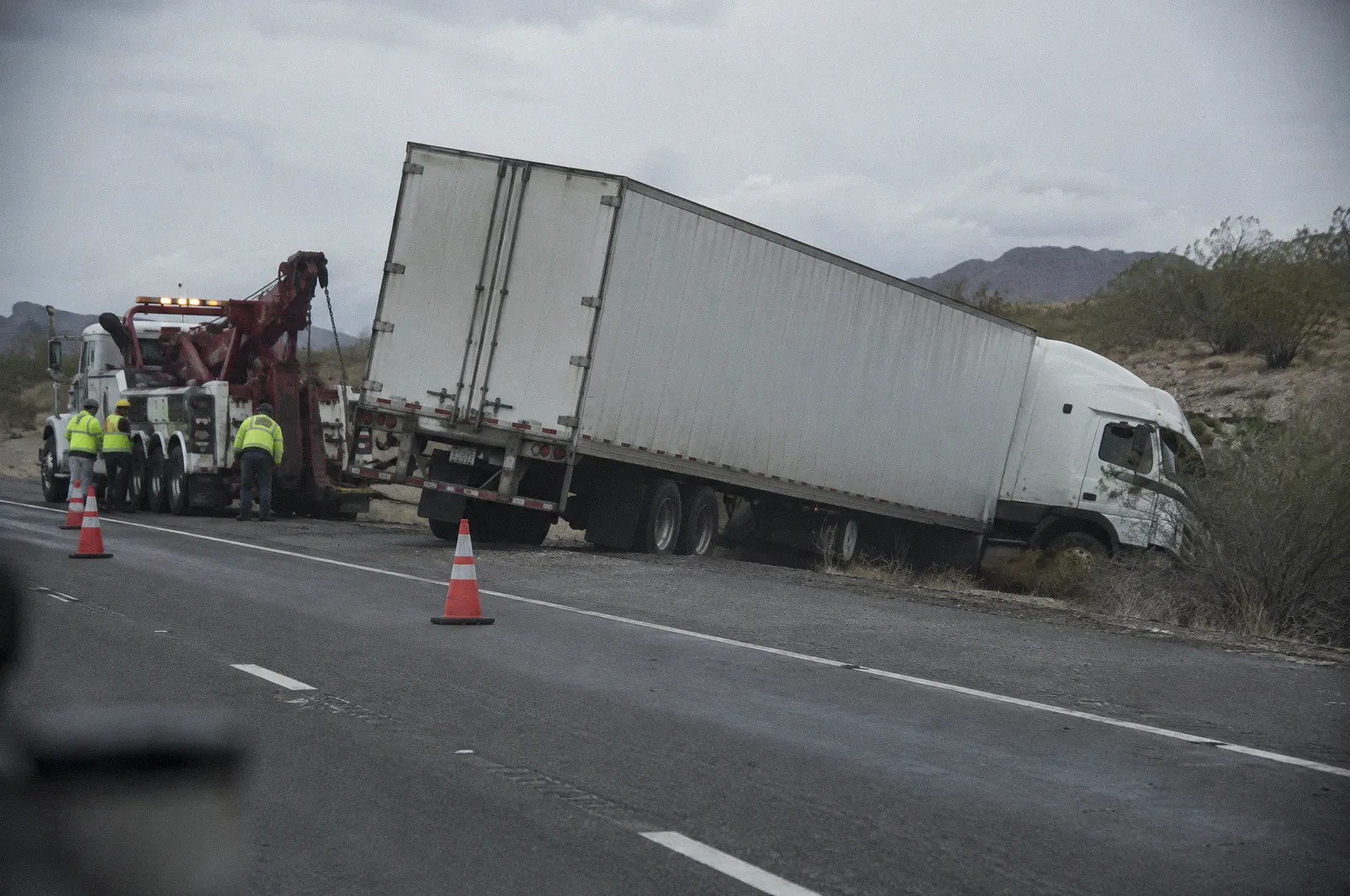
Brakes, tires, lights and steering parts need regular inspection. A missed repair can turn into a jackknife or rollover crash.
- Driver qualification and hiring
A carrier has duties about who it hires and how it keeps track of that person's record. The driver file is where those answers live.
- Cargo loading and securement
Loads that shift or exceed what a truck can safely carry affect steering and braking. Cargo paperwork shows who loaded the truck and when.
How Long Trucking Records May Be Required to Exist
A record that was required to be kept for a set period may be gone once that period ends, which is why timing matters.

6 months
Driver logs
Carriers keep driver duty status records for 6 months under 49 CFR 395.8(k).
About 18 months
Maintenance records
Inspection and repair records are kept for one year and six months under 49 CFR 396.3(c).
3 years after employment
Driver qualification file
The file on a driver is kept for 3 years after the driver leaves under 49 CFR 391.51.
2 years from the crash
Arizona filing deadline
Your personal injury claim must generally be filed within two years under A.R.S. 12-542, with exceptions. If a city, county, state agency or other public entity may be involved, a written notice of claim is due within 180 days (A.R.S. 12-821.01).
A Violation Is Evidence, Not a Verdict
Evidence that a safety rule was broken can support a claim that a driver or company was careless, but it does not decide the case by itself. Insurance companies and attorneys often negotiate the percentage of fault, and Arizona uses pure comparative fault (A.R.S. 12-2505), so your own share of fault, if any, reduces what you recover but does not bar it. A review looks at the violation, the crash and your injuries together.
Step by step
How a Review of Trucking Safety Violations Works
Here is the general order of work. Every case is different, and we explain what applies to yours.
- 1
We listen to what happened.
We start with your account, the police report and any photos, and we identify the truck, the carrier and the driver.
- 2
We ask that records be preserved.
A written request asks the carrier to keep logs, electronic data, maintenance files and driver records that it might otherwise delete.
- 3
We request and read the records.
Hours, inspections and driver files are compared with each other and with outside records such as fuel and toll receipts.
- 4
We look at who may share responsibility.
That can include the driver, the carrier, the owner, a loader or a maintenance provider. See our page on 18 wheeler crashes for more.
- 5
We explain your options.
Our experienced and friendly attorney will explain your legal rights and what we see, so you can decide how to move forward.
Other Truck Crash Pages
If your crash involved a different kind of commercial vehicle, these pages may fit better.
Talking to a Trucking Safety Violations Lawyer in Scottsdale
If you think a driver was too tired, a truck was poorly maintained or a company cut corners, you do not have to prove that on your own. Valley Accident Law offers a free case review so you can understand your legal rights before you decide anything. You pay no attorney fee unless we recover money for you.
We will explain which records matter, how long they may exist and what to avoid saying to an insurer. Our office is at 5635 N Scottsdale Rd, Suite 170, Scottsdale, AZ 85250. Call (602) 584-8054 or send us a message. The earlier you call, the better, but it's never too late to find out your legal rights. You can also read our guide to Arizona's statute of limitations and our page on talking to insurance adjusters.
Questions
Questions about Scottsdale trucking safety violations cases
What are the federal rules on how long a truck driver can drive?
For drivers of property-carrying trucks, the federal rule allows 11 hours of driving after 10 hours off duty, within a 14-hour window that never pauses for traffic, meals or loading delays, with a 30-minute break after 8 hours of driving, along with weekly limits of 60 or 70 hours (49 CFR 395.3). There are exceptions, and the rules are updated from time to time, so we confirm the current version when we look at a crash.
How long do trucking companies have to keep driver logs and maintenance records?
Federal rules set 6 months for driver logs, about 18 months for maintenance records and 3 years after employment ends for the driver qualification file (49 CFR 395.8(k), 396.3(c) and 391.51). A company may keep records longer, but it may not be required to, which is why asking early matters.
Does a safety violation mean I win my case?
No. A violation can be strong evidence that a driver or company was careless, but a claim also depends on how the crash happened, how you were hurt and what share of fault each party carries. Insurance companies and attorneys often negotiate the percentage of fault.
How would I know if the driver broke a rule?
Usually you would not, and you do not need to. The proof is in logs, electronic data, inspection records and driver files held by the company. A review compares those records with each other and with the facts of the crash.
Who is responsible when a truck was poorly maintained?
It depends on the facts. The carrier, the owner of the truck or trailer, or a repair shop may each carry some of the responsibility. We look at who had the duty to inspect or repair the part that failed.
Free case review
Talk to Us About Your Truck Crash
Call (602) 584-8054 or request your free case review. We will explain your legal rights and what we see in your facts. The earlier you call, the better, but it's never too late to find out your legal rights.
Call any time. Office visits Monday to Friday, 9 to 5.
Thank you, we’ve received your request.
A member of our team will reach out shortly. If your matter is urgent, call us now at (602) 584-8054.