
Scottsdale Bus Accident Lawyer
Bus Accident Lawyer in Scottsdale for Passengers, Drivers and Pedestrians Hurt by a Bus
A bus accident lawyer in Scottsdale can tell you who may be responsible, whether the bus belongs to a public agency or a private company, and which deadline applies to you. Claims against Valley Metro or a city generally require a written notice of claim within 180 days (A.R.S. 12-821.01), a much shorter window than the usual two years. Valley Accident Law helps people hurt on or by a bus across the Phoenix metro, and you can request a free case review to talk through where you stand.

- Public bus: notice of claim
- Within 180 days of when the claim accrues
- A.R.S. 12-821.01
- Public bus: lawsuit
- Generally 1 year after the claim accrues
- A.R.S. 12-821
- Private bus company
- 2 years from the injury for most claims
- A.R.S. 12-542(1)
- Fault rule
- Pure comparative fault, no percentage bar
- A.R.S. 12-2505
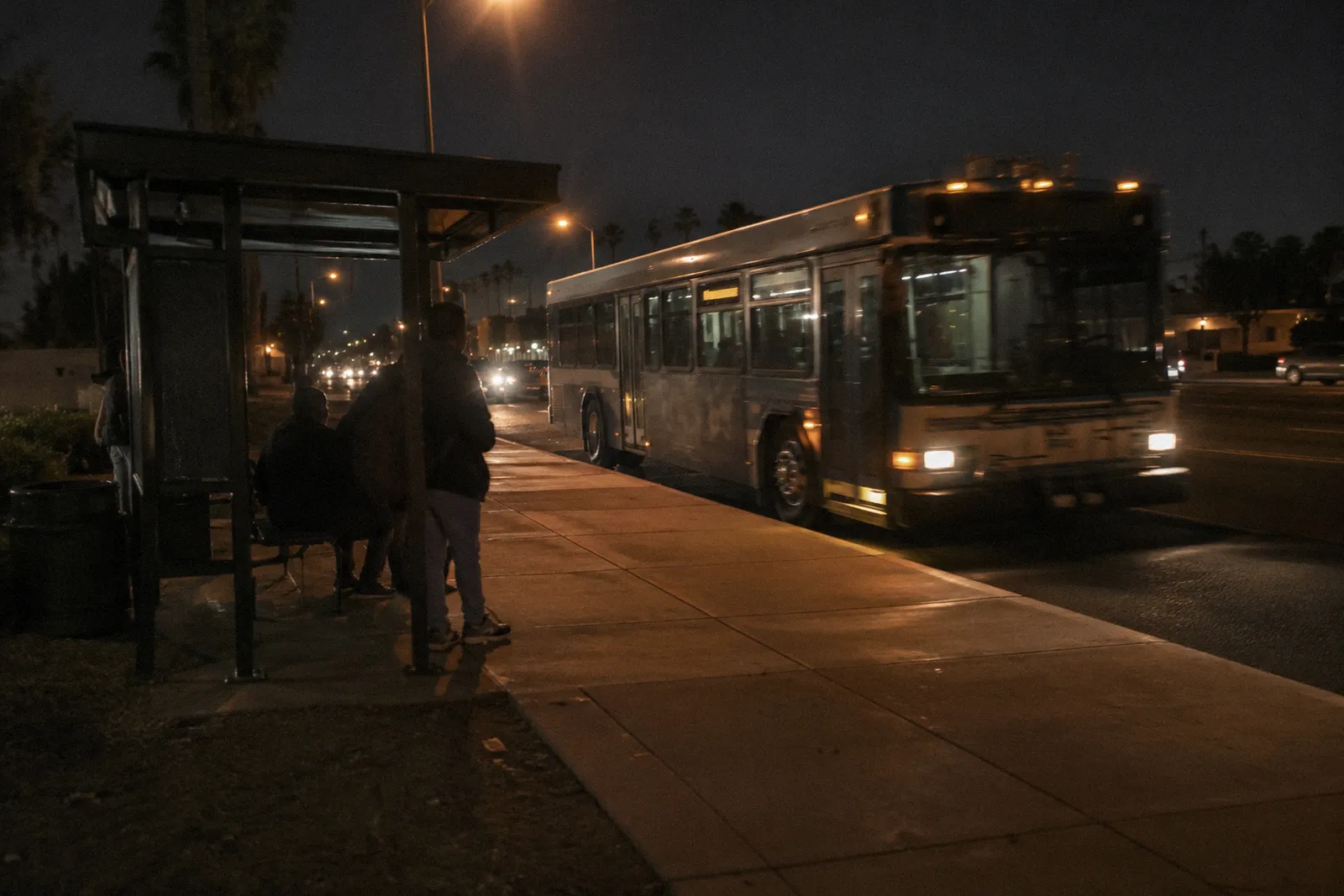
Bus Accident Lawyer in Scottsdale: Why Bus Cases Are Different From Car Crashes
A bus crash is rarely just a bigger car crash. The bus may be run by a public transit agency, a city, a school district, or a private charter company, and who owns and operates it decides almost everything that comes next: which insurance applies, which deadlines apply, and who you will be dealing with. Passengers can be hurt in a sudden stop or a collision, and drivers of other vehicles, pedestrians, and cyclists can be hurt by a bus too. For how these claims work across the rest of the state, see our Arizona bus accident lawyer page.
Valley Accident Law represents people injured in the Phoenix metro, and our attorney, Charles Paglialunga, has 32 years of Arizona accident experience. If a bus was involved in your crash, the first thing we do is find out who owned it, who drove it, and who was responsible for keeping it safe. Request your free case review and we will explain your legal rights in plain language.
If you searched for a bus accident attorney after a crash, you probably have practical questions: who pays your medical bills, and whether you have already missed something. Those are the right questions to ask, and the earlier you ask them, the better.
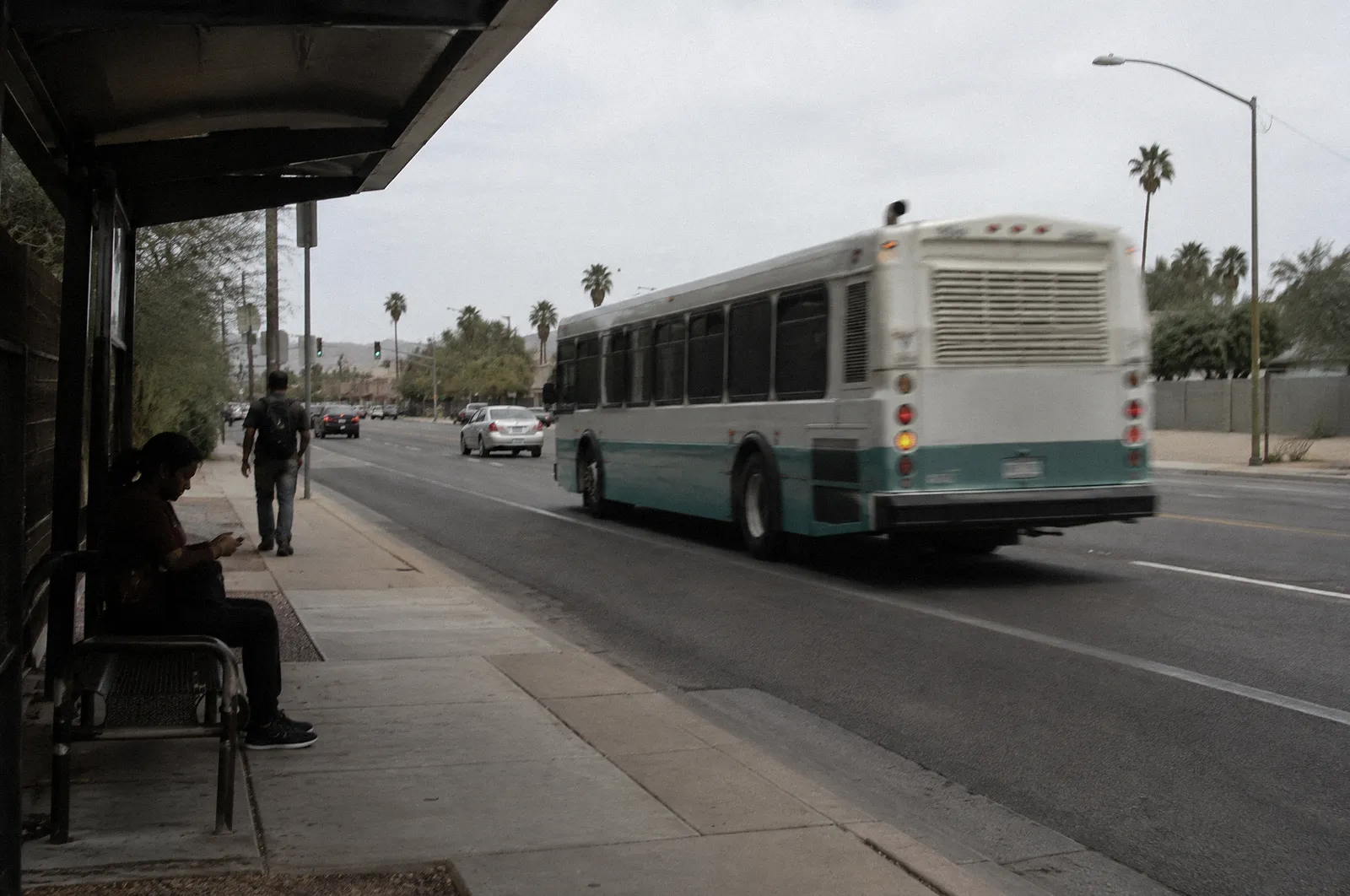
Bus Claims Against a Public Entity Have a 180-Day Notice Deadline
If the bus was run by Valley Metro, a city, or another public entity, Arizona law generally requires a written notice of claim within 180 days after the claim accrues. The notice must state the facts and a specific sum certain, and the entity has 60 days to respond before the claim is deemed denied (A.R.S. 12-821.01). A lawsuit against a public entity generally must then be filed within one year after the claim accrues (A.R.S. 12-821).
These rules have exceptions, so call us and we will explain how they apply to you. For the full picture, read our guide to the Arizona notice of claim rules for government entities. The earlier you call, the better, but it is never too late to find out your legal rights.
Who May Be Responsible After a Bus Accident
Bus crashes often involve more than one responsible party, and finding all of them matters. Arizona generally holds each defendant responsible only for its own share (A.R.S. 12-2506), with exceptions, so a claim that names only one party can leave money on the table.
- The bus driver
A driver who is distracted, drowsy, speeding, or failing to yield can cause a serious crash. The driver and the employer behind the driver can both be part of the claim.
- The agency or company that runs the bus
Hiring, training, scheduling, and supervising drivers are the operator's job. An operator that keeps an unfit or poorly trained driver on the road may share responsibility for what happens.
- A maintenance contractor or the maker of the bus
Brakes, tires, doors, wheelchair lifts, and steering all need to work. When a part fails, the question becomes who was supposed to catch the problem, or who built the part.
- Another driver
Many bus crashes begin with a car that cut off the bus, rear-ended it, or ran a light. Fault may be split between drivers, and the split matters to your recovery.
- A city or road agency
A badly designed intersection, a missing signal, a damaged bus stop, or a broken sidewalk can point to a different public entity with its own notice deadline.
What to Do After a Bus Accident in Arizona
Bus crashes are chaotic, and you may be one of many people hurt. These steps protect your health first and your claim second.
- 1
Get medical attention, even if you have no or seemingly minor symptoms.
Adrenaline hides injuries, and soft tissue, back, and head injuries can show up a day or more later. A medical record that starts on the date of the crash is the foundation of your claim.
- 2
Make sure the crash is reported.
Ask the responding officer for the report number. If you believe you were not at fault, make sure you explain this to the officer. The report is the first written record of what happened.
- 3
Write down who and what was involved, if safely possible.
Note the bus number, the route, the name on the side of the bus, the driver, and any plate numbers, and take photos of the bus, the road, and the scene, ideally before the bus or any vehicle is moved. Get names and phone numbers of witnesses, including other passengers.
- 4
Do not agree to a recorded statement with any insurance company.
You are not required to, and early questions are often built to lock you into answers before you understand your injuries. Insurance companies and attorneys often negotiate the percentage of fault, so what you say early can matter later.
- 5
Call us early.
Buses often carry cameras, and recordings can be overwritten, so we send written requests to preserve evidence as soon as we are involved. If a public entity runs the bus, the 180-day clock is already running.
Public Bus or Private Bus: What Changes for Your Claim
The first question we answer is who runs the bus. Some public transit routes are operated by private contractors for an agency, so we confirm who is responsible before we pick a deadline.
Bus run by a public entity
- Written notice of claim within 180 days after the claim accrues (A.R.S. 12-821.01)
- The notice states the facts and a specific sum certain
- The entity has 60 days to respond, and silence is treated as a denial
- A lawsuit generally must be filed within 1 year after the claim accrues (A.R.S. 12-821)
Bus run by a private company
- Most injury claims must be filed within 2 years of the injury (A.R.S. 12-542(1))
- A commercial insurance company is usually behind the claim and often moves quickly to gather statements
- The driver, the company, and any maintenance contractor may each have a share of responsibility
- Written requests to keep records and camera footage matter early
If You Were Partly at Fault, You May Still Have a Claim
Arizona uses pure comparative fault (A.R.S. 12-2505). Your recovery can be reduced by your share of fault, but there is no percentage that bars you from recovering. Passengers are rarely at fault for a crash, but a pedestrian, cyclist, or driver who was hit by a bus may be told the opposite.
Expect the bus operator and its insurance company to argue about the percentage of fault, because that number moves the final figure. We push back with evidence: camera footage, the driver's records, the scene, and witness accounts. Our guide to Arizona comparative negligence explains how this works.
If a child was hurt, the deadlines can work differently. Arizona generally pauses the limitations period for a minor until age 18 (A.R.S. 12-502), but the notice rules for claims against a public entity can differ for minors, so please call us before you assume anything.
Evidence That Can Matter in a Bus Accident Claim
Some of this evidence belongs to the bus operator, which is one reason early written requests matter. Here is what we try to gather.
- The bus number, route, operator name, and the driver's name and employer
- Onboard and nearby traffic camera footage, where it exists
- Maintenance and inspection records for the bus
- Driver schedules, hours, and training records
- Photos of the scene, the bus stop, signage, and road conditions
- Your medical records from the first visit forward, and all bills
- Names and phone numbers of witnesses and other passengers
- Your own notes on pain, missed work, and how daily life has changed
Arizona
Where Buses and Traffic Meet Around Scottsdale
Crashes involving buses happen on busy city streets as often as on freeways. Knowing the road helps us find the right evidence, from signal timing to nearby camera footage.
Scottsdale Road
A long commuter corridor where we look at signal timing, lane layout, and nearby cameras.
Shea Boulevard and Camelback Road
Wide, busy streets with frequent turning traffic and pedestrians crossing.
Indian School Road and Old Town Scottsdale
Crowded areas where pedestrians, cyclists, and vehicles share the road.
Scottsdale Police Department
Often the agency that writes the crash report for crashes on city streets within Scottsdale.
What happens when
How a Bus Accident Claim Usually Moves
Every case is different, and these stages overlap, but this is the general path.

The first days
Care and evidence
You see a doctor, we identify the bus operator and the driver, and we send written requests to preserve records and footage.
Within 180 days, for a public bus
Notice of claim
If a public entity is involved, we prepare and serve the written notice with the facts and a specific sum certain.
During treatment
Building the value of the claim
We collect your records, bills, and wage losses, and we wait until your condition is clear enough to put a fair number on the claim.
After the demand
Negotiation
The insurance company or the entity responds, often with a low first offer. We explain the offer and your options.
Before the deadline
A lawsuit, if the claim does not resolve
Suit must be filed within the deadline that applies: generally 2 years for a private bus and 1 year after accrual for a public entity.
Talking With an Arizona Bus Accident Lawyer
A bus accident injury lawyer should be able to answer three things in your first conversation: who is responsible, which deadline applies, and what happens next. That is the conversation we are here to have. Passengers, pedestrians, cyclists and other drivers can all need a bus injury lawyer, and the first question is the same for each of them: is the bus run by a public agency or a private company? We will explain your legal rights, what evidence matters, and what a realistic path looks like, without pressure.
People who search for a bus accident lawyer near me are usually looking for someone they can reach and meet in person. Our office is at 5635 N Scottsdale Rd, Suite 170, Scottsdale, AZ 85250, and we represent people hurt in Scottsdale, Phoenix, and the surrounding Valley communities. You pay no attorney fee unless we recover money for you.
If a public agency is involved, please do not wait to see how you feel next month. Contact us for a free case review and we will help you find out where you stand.
Bus Accident Help in Other Valley Cities
We are based in Scottsdale and also help people hurt in these Valley cities. Each city page covers the local roads, courts and police agencies that matter to a claim there.
Questions
Questions about Scottsdale bus accident cases
How long do I have to file a bus accident claim in Arizona?
It depends on who runs the bus. For a public entity such as a city or Valley Metro, Arizona generally requires a notice of claim within 180 days (A.R.S. 12-821.01) and a lawsuit within one year after the claim accrues (A.R.S. 12-821). For a private company, most injury claims must be filed within two years (A.R.S. 12-542(1)). These rules have exceptions, so call us and we will explain how they apply to you.
Who pays if I was hurt on a city or Valley Metro bus?
The claim is generally made against the public entity and its insurance or risk program, after a timely notice of claim. Other parties, such as another driver or a maintenance contractor, may also share responsibility, and we look at each of them.
Can I bring a claim if I was only a passenger?
Yes, a passenger can bring a claim when someone's negligence caused the crash. Passengers are rarely blamed for the crash itself, but insurance companies still look for ways to reduce what they pay.
What if the bus driver or company says it was my fault?
Arizona is a pure comparative fault state, so you can still recover even if you were partly at fault, reduced by your share. Insurance companies and attorneys often negotiate the percentage of fault, and we push back with evidence.
Can a pedestrian or cyclist hit by a bus bring a claim?
Yes. People outside the bus can be hurt just as badly as passengers, and the same questions apply: who ran the bus, who else was involved, and which deadline applies.
Should I give a statement to the bus company or its insurer?
You are not required to agree to a recorded statement, and it is usually wise to talk with a lawyer first. Early answers are often used to limit a claim later.
How much does it cost to hire a bus accident lawyer?
You pay no attorney fee unless we recover money for you. We will explain how fees and costs work in writing before you decide anything.
Free case review
Let Us Answer Your Questions and Help With Your Case
Call (602) 584-8054 or request your free case review. Our experienced and friendly attorney will explain your legal rights and what your options are. The earlier you call, the better, but it's never too late to find out your legal rights.
Call any time. Office visits Monday to Friday, 9 to 5.
Thank you, we’ve received your request.
A member of our team will reach out shortly. If your matter is urgent, call us now at (602) 584-8054.