
Scottsdale Crash Data
Scottsdale Car Accident Statistics: Where the Data Comes From and How to Read It
Reliable Scottsdale car accident statistics come from a short list of agencies: the Arizona Department of Transportation, the Scottsdale Police Department, the Arizona Department of Public Safety, and national sources such as NHTSA and IIHS. Crash numbers change every year, so this guide shows you where to find the current figures and how to read them, instead of repeating a number that may be out of date. If you are looking for your own Scottsdale accident report, the steps are below too.
Reviewed by Charles Paglialunga, Esq.
- Statewide crash totals
- Published each year in ADOT's Motor Vehicle Crash Facts report
- Arizona Department of Transportation
- Your own crash report
- Comes from the agency that responded to your crash
- Scottsdale Police Department or Arizona DPS
- Filing deadline after a crash
- 2 years from the crash
- A.R.S. 12-542(1)
What Scottsdale Crash Numbers Can and Cannot Tell You
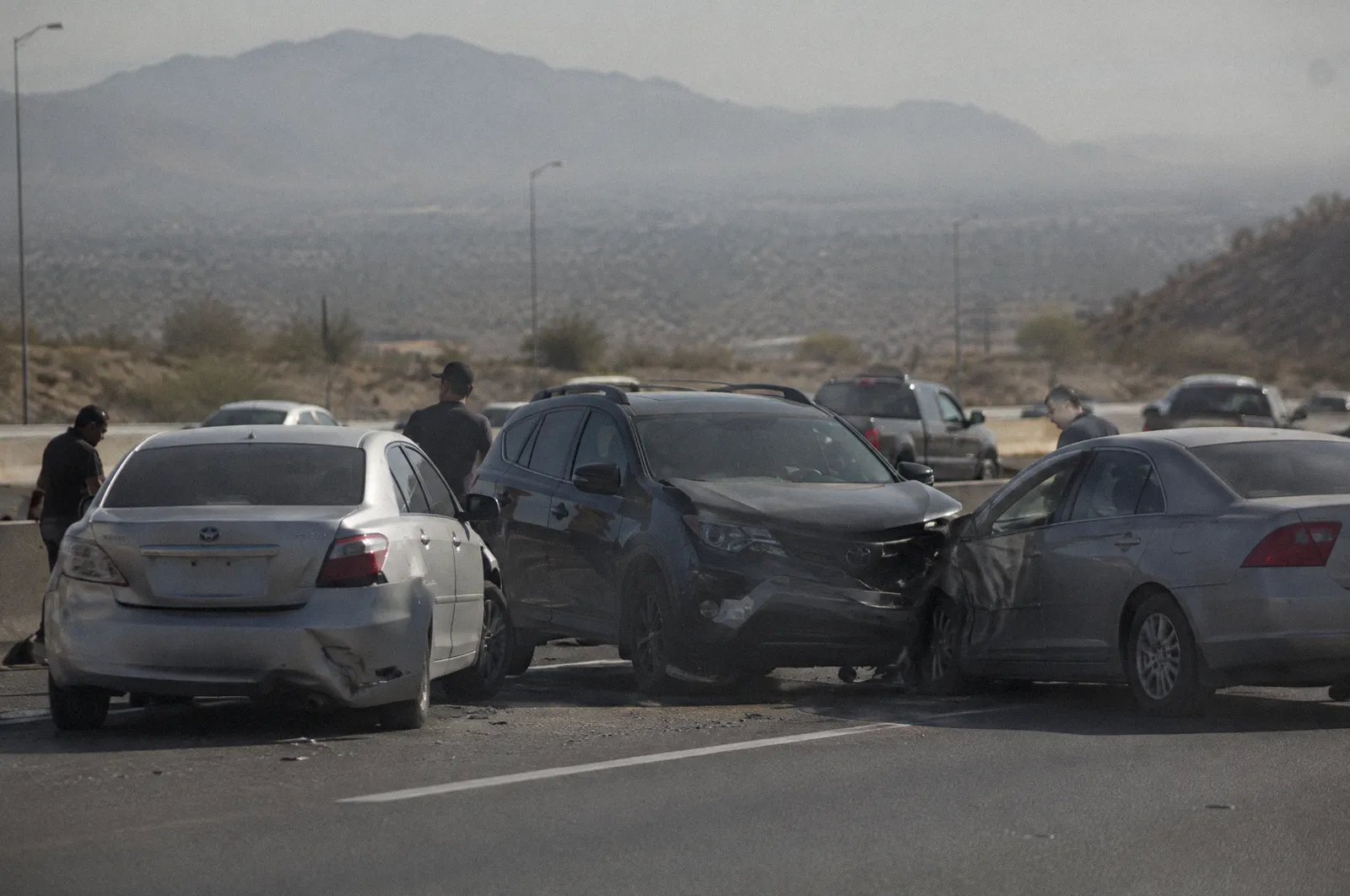
A Scottsdale crash is never just a number. Still, the numbers help explain why certain roads, hours and seasons feel more dangerous than others. The Arizona Department of Transportation's Motor Vehicle Crash Facts report for 2023 counts 122,247 traffic crashes statewide, and Maricopa County accounts for about 71 percent of them. Scottsdale traffic accidents are a small slice of that total, but they follow the same patterns: heavy commuter volume, busy intersections and fast freeway traffic.
We deliberately do not quote a single Scottsdale total here. Counts depend on how a crash is defined (reported crashes, injury crashes, fatal crashes), on the year, and on the agency that kept the record, and a number that was right last year may be wrong today. A car accident in Scottsdale that leaves you hurt matters whether or not it shows up in a statistic, and Scottsdale accidents that are never reported to police are missing from the data altogether.
Arizona
Where Scottsdale Car Accident Statistics Come From
These are the sources worth checking, what each one covers, and what it is best used for.
| Source | What it covers | Best used for |
|---|---|---|
| Arizona Department of Transportation (ADOT), Motor Vehicle Crash Facts | An annual statewide report on reported crashes, with breakdowns by county and contributing factors | Seeing Arizona and Maricopa County trends for a given year |
| Scottsdale Police Department | Crash reports for crashes it investigates on city streets, and local records | Getting your own crash report and local crash information |
| Arizona Department of Public Safety (DPS) | Reports for many freeway and state highway crashes it investigates | Reports for crashes on Loop 101 and other freeways, when DPS responded |
| National Highway Traffic Safety Administration (NHTSA) | National data, including the Fatality Analysis Reporting System for fatal crashes | Comparing Arizona with national patterns, including distracted and impaired driving |
| Insurance Institute for Highway Safety (IIHS) | Research on crash risk, vehicle safety and road design | Understanding why crashes happen, not counting them |
Source: Agency descriptions from ADOT, the Scottsdale Police Department, Arizona DPS, NHTSA and IIHS; no crash counts are quoted
Patterns Behind Scottsdale Traffic Accidents
Crash reports across the country describe the same handful of patterns, and Scottsdale's busy roads are no exception. We describe patterns here rather than numbers we cannot source.
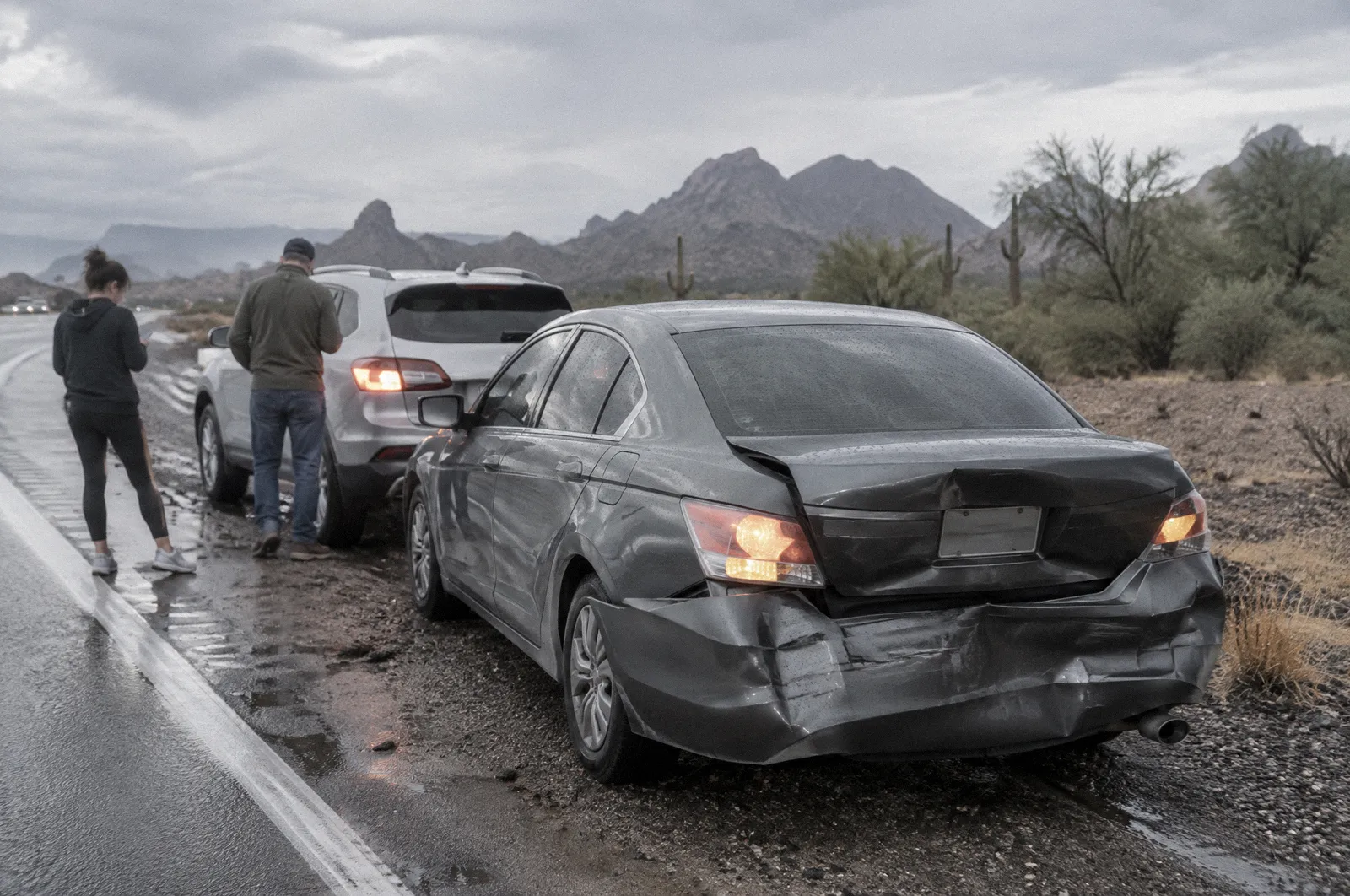
- Rear-end crashes
Stop-and-go traffic at signals and on freeways leaves little room to react. See our page on rear-end collisions.
- Left-turn and intersection crashes
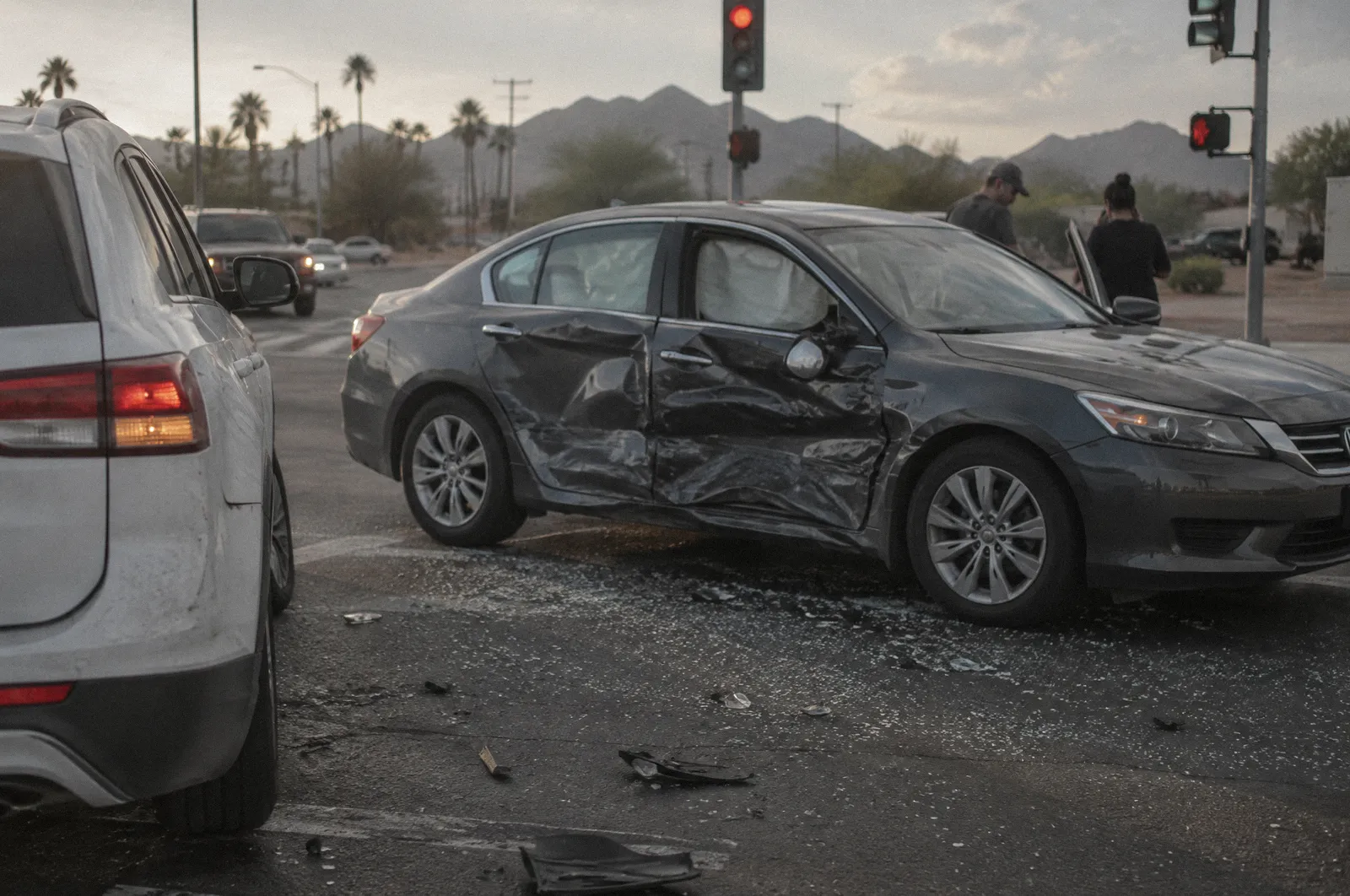
Turning across oncoming lanes and running signals cause many injury crashes. See left turn accidents and intersection accidents.
- Distracted driving
NHTSA's Distracted Driving 2020 research note reported 3,142 people killed in crashes involving distracted drivers nationwide in 2020. See our page on distracted driving accidents.
- Impaired driving
Impaired-driving crashes are more common late at night and on weekends, according to NHTSA's long-running crash data. See drunk driver accidents.
- Speed and freeway crashes
Higher speeds make every crash more serious. See freeway accidents for Loop 101 and interstate crashes.
- People on foot and on bikes
Busy arterials and the Old Town area mix drivers, walkers and cyclists. See our pages on pedestrian accidents and bicycle accidents.
When Scottsdale Crashes Tend to Cluster
These are general patterns that drivers and agencies describe, not counts from a specific report.
Weekday rush hours
Commuter traffic
Morning and evening commutes on Loop 101, Scottsdale Road and Shea Boulevard bring the heaviest volume and the most stop-and-go driving.
Winter and spring
Visitors and events
Seasonal visitors and big events, such as the WM Phoenix Open and the January auction at WestWorld, bring more drivers who do not know the roads.
June 15 to September 30
Monsoon season
Sudden rain, blowing dust and flooded dips can cut visibility and traction within minutes.
Friday and Saturday nights
Late-night driving
Impaired driving is more common at night and on weekends, including around busy Old Town.
Sunrise and sunset
Sun glare
Low sun on east-west roads can hide signals and stopped vehicles.
How to Get Your Scottsdale Accident Report
Your own report matters more to your claim than any statistic. Our guide on how to get a police report in Arizona has more detail.
- 1
Write down the report number.
The officer at the scene can give you a report or incident number. Keep it with your insurance papers.
- 2
Find out which agency responded.
A Scottsdale accident report is usually written by the Scottsdale Police Department for city-street crashes. A freeway crash may have been handled by the Arizona Department of Public Safety, and other agencies may respond in some places.
- 3
Request the report from that agency.
Each agency has its own records process. Ask the agency how to request a copy and whether any fee applies.
- 4
Read it closely.
Check names, vehicles, insurance information, the diagram and the narrative. If something is wrong, ask the agency how to request a correction or supplement.
- 5
Keep a copy with your photos and medical records.
The report, your scene photos and your medical records together tell the story of the crash.
A Statistic Is Not Your Case
A high-crash road does not decide who was at fault in your crash, and a low-crash road does not rule out a claim. Fault is decided by the facts of your crash. Arizona uses pure comparative fault (A.R.S. 12-2505), so your compensation is reduced by your percentage of fault but not barred, and insurance companies and attorneys often negotiate that percentage. Most Arizona injury claims must be filed within two years of the crash (A.R.S. 12-542), and a claim involving a government vehicle or road defect needs a notice of claim within 180 days (A.R.S. 12-821.01). These rules have exceptions, so call us and we will explain how they apply to you.
How to Read Crash Statistics Without Being Misled
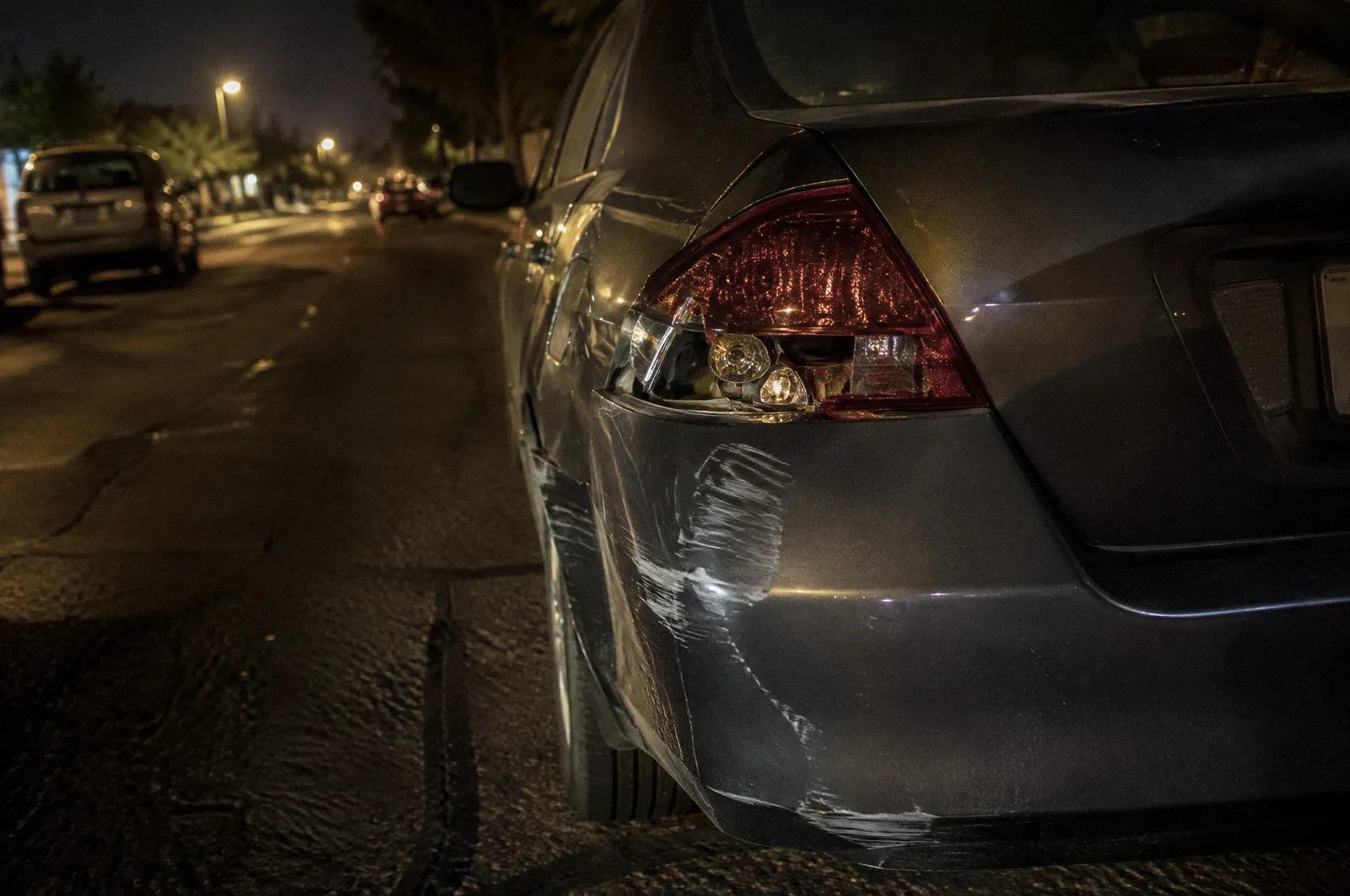
Four habits make crash numbers more useful. First, check what is being counted: reported crashes, injury crashes and fatal crashes are very different totals. Second, check the year, because one year can swing from the next, especially for small areas and rare crash types. Third, look at exposure. A busy road will have more crashes than a quiet one even if it is no riskier per vehicle. Fourth, remember that many minor crashes are never reported to police, so every count is a floor, not a full picture.
If you were hurt and want to talk it through, our page on a car accident lawyer in Scottsdale explains how we help people with crash injury claims. To see where drivers should take extra care, read our guide to the most dangerous intersections in Scottsdale.
Arizona
Scottsdale Roads Worth Extra Care
We name these as busy corridors where drivers should take care, not as a ranking, because we are not quoting counts for them.
Scottsdale Road
A long north-south corridor with many signals, turning lanes and pedestrians.
Shea Boulevard
Left turns across oncoming lanes and limited crosswalks in places.
Pima Road
Feeds residential and commercial traffic toward Loop 101.
Loop 101
Fast freeway traffic and busy interchange ramps.
Hayden Road
A busy corridor with many signalized intersections.
Frank Lloyd Wright Boulevard
Interchange area where surface traffic merges with freeway traffic.
Related pages
Questions
Questions about Scottsdale crash data
Where can I find official Scottsdale car accident statistics?
Start with the Arizona Department of Transportation's Motor Vehicle Crash Facts reports and the Scottsdale Police Department. For fatal crashes and national comparisons, use NHTSA, and for research on why crashes happen, use IIHS.
How many car accidents happen in Scottsdale each year?
The number changes each year and depends on how crashes are counted. We do not quote a single figure because we cannot confirm the current one, and counts of reported crashes miss crashes that were never reported. ADOT and the Scottsdale Police Department publish current counts.
How do I get a Scottsdale accident report?
Ask the officer for your report number, find out which agency responded, and request the report from that agency. Scottsdale Police writes most city-street reports, and the Arizona Department of Public Safety may write freeway reports.
What is the most common type of car accident in Scottsdale?
Rear-end crashes are among the most common collision types in busy traffic, and left-turn and intersection crashes cause many injuries. For the current breakdown, check ADOT's Motor Vehicle Crash Facts report.
Do crash statistics affect my injury claim?
Not directly. Your claim depends on the facts of your crash: the police report, photos, witnesses, medical records and how fault is shared under Arizona's pure comparative fault rule. Statistics can add background, but they do not decide fault.
How long do I have to file a claim after a Scottsdale crash?
Most Arizona injury claims must be filed within two years of the crash (A.R.S. 12-542). A claim involving a government vehicle or road defect needs a notice of claim within 180 days (A.R.S. 12-821.01). These rules have exceptions, so call early.
Free case review
Hurt in a Crash? Talk to Valley Accident Law
Statistics explain the road. They do not explain what happened to you. Call (602) 584-8054 or request your free case review, and we will explain your legal rights and what we see in your facts. The earlier you call, the better, but it's never too late to find out your legal rights.
Call any time. Office visits Monday to Friday, 9 to 5.
Thank you, we’ve received your request.
A member of our team will reach out shortly. If your matter is urgent, call us now at (602) 584-8054.