
Scottsdale Crash Hotspots
Most Dangerous Intersections in Scottsdale and the Phoenix Metro
No official list names one single most dangerous intersection in Scottsdale, because the answer changes with how you count: total crashes, injury crashes, or crashes per vehicle. What the Valley's busiest corridors share is speed, heavy traffic and complicated turning movements. This guide walks through Loop 101 and Pima Road, Scottsdale Road, Shea Boulevard, I-17 and US-60, and explains what raises injury risk and what to do if you are hurt there.
Reviewed by Charles Paglialunga, Esq.
- Comparative fault
- Pure comparative fault, no percentage bar
- A.R.S. 12-2505
- Filing deadline
- 2 years from the crash
- A.R.S. 12-542(1)
- Road defect or government vehicle
- Notice of claim within 180 days
- A.R.S. 12-821.01
Why These Phoenix Metro Roads Produce So Many Car Accidents
Scottsdale and Phoenix car accident hotspots along Loop 101, Pima Road, Shea Boulevard, I-17, and US-60 are busy corridors where drivers should take extra care. If you were injured at one of these locations, knowing what makes them dangerous matters when you file a car accident claim in Arizona.
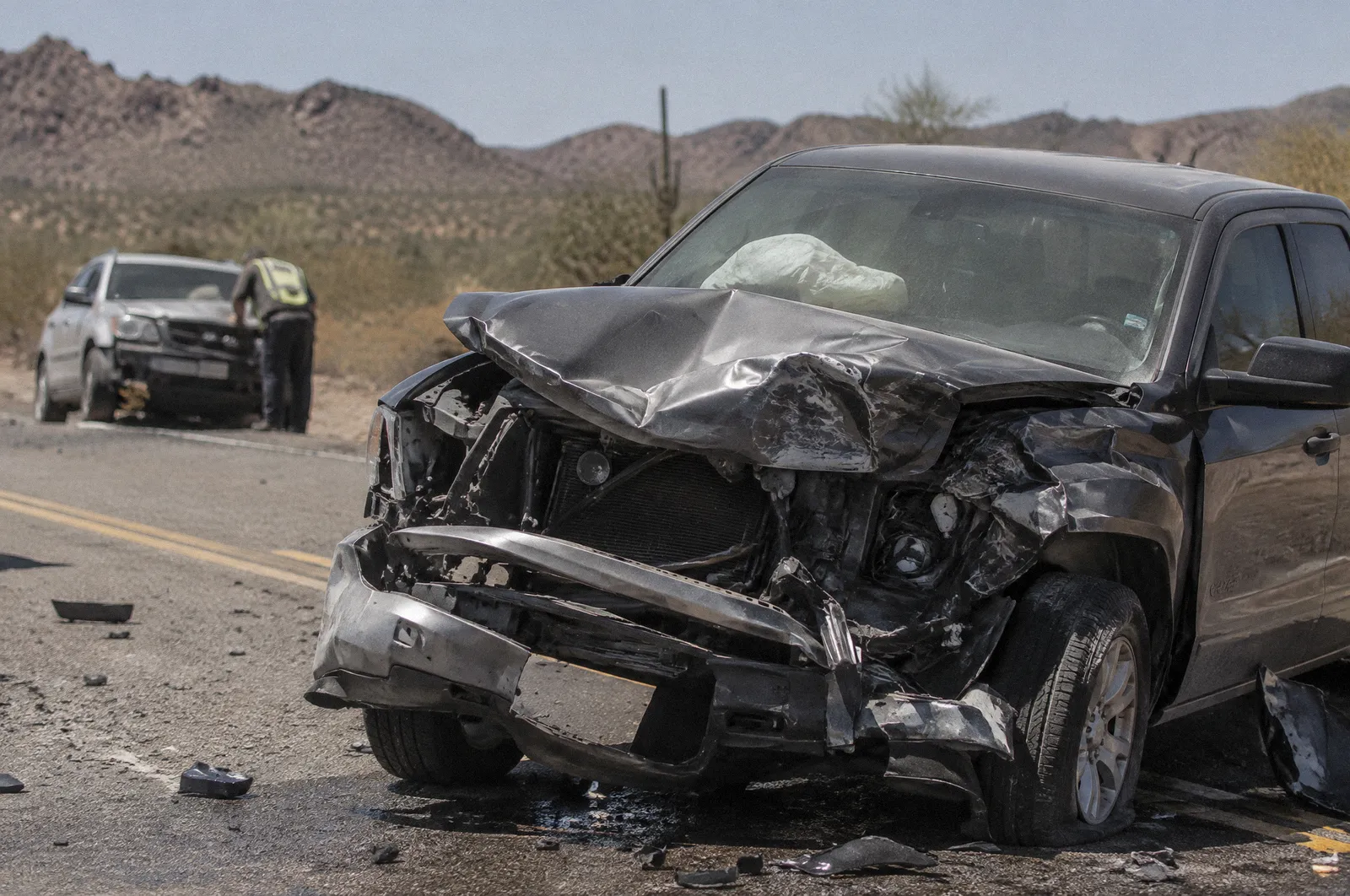
Arizona's annual Motor Vehicle Crash Facts report from the Arizona Department of Transportation for 2023 counts 122,247 traffic crashes statewide, and Maricopa County accounted for about 71 percent of those incidents. Volume, road geometry, speed limits, and driver behavior all contribute. When those factors come together at a high-traffic interchange or busy urban intersection, car accidents become nearly predictable. The most dangerous intersections in this region share common traits: high-speed approach lanes, complex merge points, heavy commercial vehicle traffic, or pedestrian exposure the road design was never built to handle safely.
People who search for the most dangerous intersections in Arizona find lists built from different data and different years, and they do not always agree. Treat any list as a reason to drive carefully, not as a promise about where a crash will or will not happen.
Arizona
The Most Dangerous Intersections in Scottsdale: Where to Take Extra Care
We do not rank intersections by crash count here, because we are not publishing counts we cannot source. These are well-known busy places where drivers should slow down and watch for turning and merging traffic. For official numbers, see ADOT's crash reports and the Scottsdale Police Department's crash data.
Loop 101 and Pima Road
High-speed interchange traffic feeding residential and commercial areas of north Scottsdale.
Scottsdale Road and Frank Lloyd Wright Boulevard
Drivers from surface streets merge with through traffic near the Loop 101 interchange.
Shea Boulevard at Scottsdale Road, Hayden Road, Tatum Boulevard and 32nd Street
Left turns across oncoming lanes during peak commute hours, and limited crosswalks in places.
Hayden Road
A major north-south corridor with many signalized intersections.
I-17 and US-60
Freeway corridors outside Scottsdale that many residents drive daily, covered below.
Loop 101 and Pima Road: High-Speed Collisions in North Scottsdale
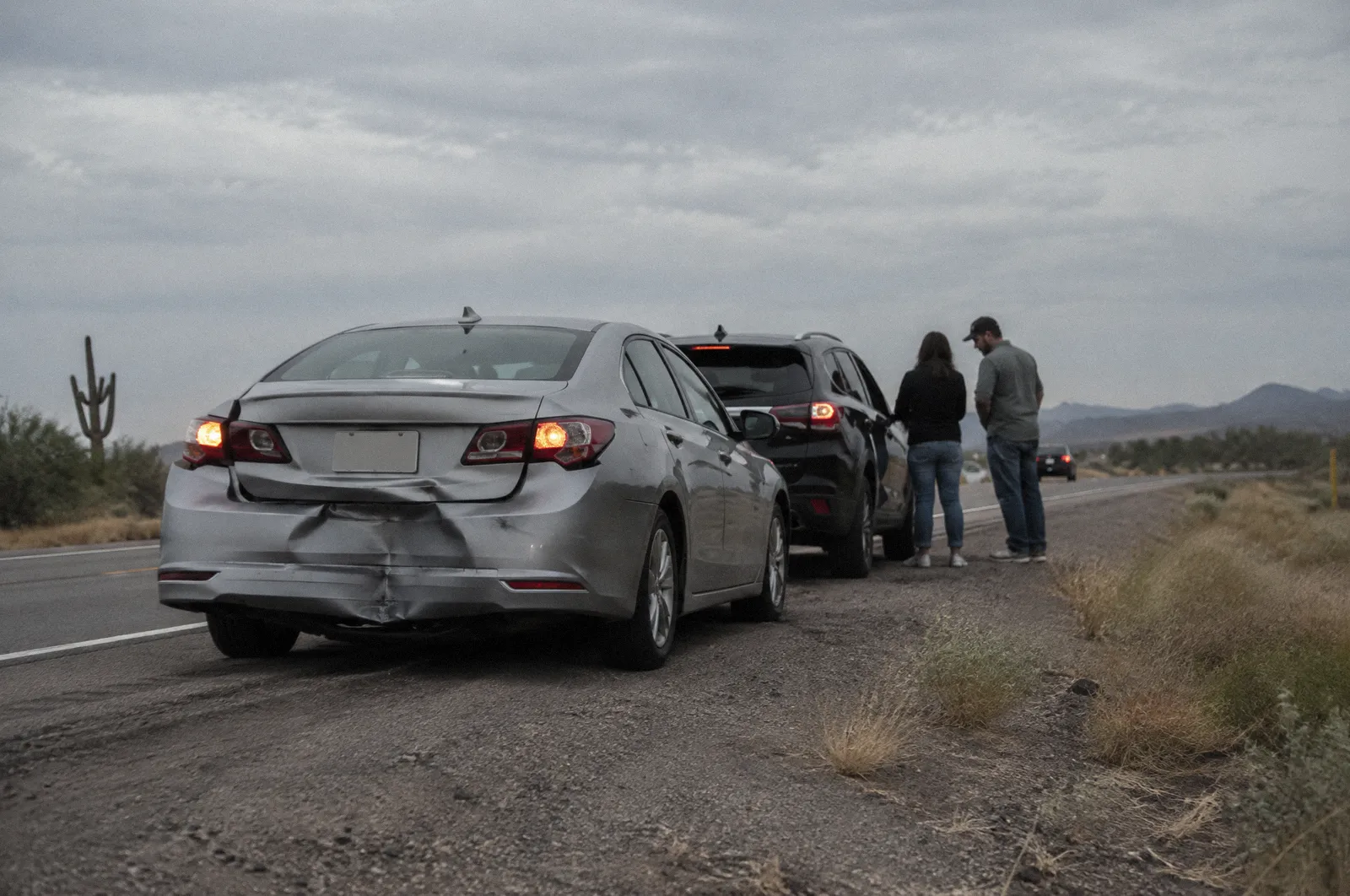
The Loop 101 corridor through north Scottsdale handles some of the heaviest freeway traffic in Arizona. Posted speeds of 65 mph alongside heavy rush hour volume create serious hazards at interchange ramps, where drivers accelerate and brake over short distances. The segment near Pima Road is particularly active, feeding residential and commercial traffic from north Scottsdale developments directly onto the freeway at speed. Rear-end collisions, sideswipe crashes, and merge conflicts are the most common crash types along this stretch. Distracted driving during long commutes compounds the problem. Truck accidents also occur regularly on Loop 101, as commercial freight routes use this corridor to move between distribution centers in the east and west Valley. A Loop 101 crash is covered in more detail on our page about freeway accidents.
Scottsdale Road and Frank Lloyd Wright Boulevard Interchange
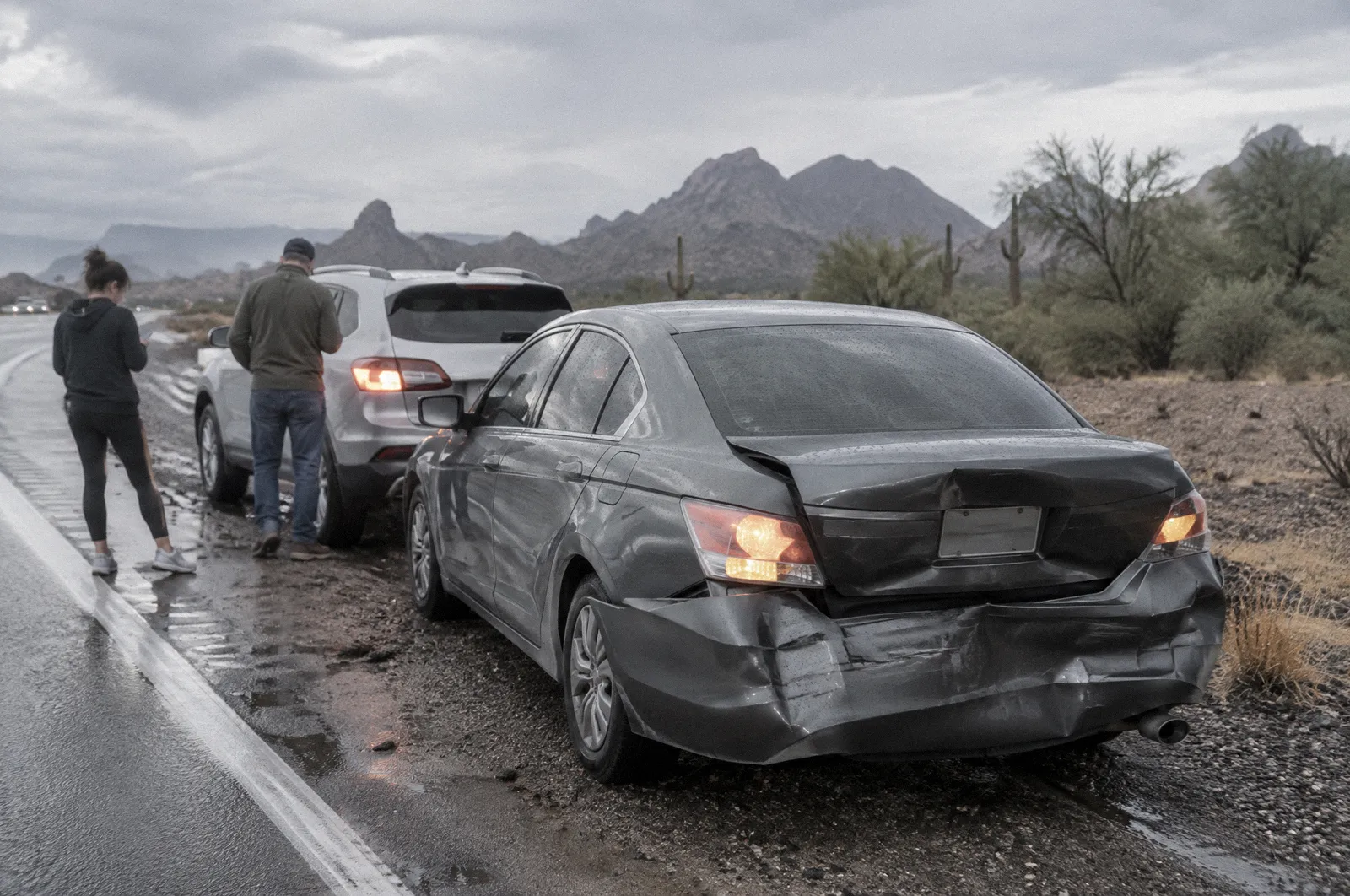
The interchange area near Scottsdale Road and Frank Lloyd Wright Boulevard is another place where drivers should take care along the Loop 101 corridor. Drivers entering from surface streets must merge with through traffic moving at freeway speed, and the interchange geometry gives them limited distance to complete that maneuver safely during peak hours. A Scottsdale Road accident near the interchange often turns on who had the right of way and how fast each driver was moving, which is why scene photos and camera footage matter.
Shea Boulevard: Congestion and Turning Conflicts Through Scottsdale
Shea Boulevard runs through north Scottsdale at posted speed limits between 40 and 50 mph, crossing high-traffic intersections at Scottsdale Road, Hayden Road, Tatum Boulevard, and 32nd Street. Each of these intersections generates turning conflicts, especially left turns across oncoming lanes during peak commute periods. A Scottsdale Road and Shea Boulevard accident is a good example, because several turning movements share one signal.
- Pedestrian crossings
Pedestrian accidents on Shea are a concern. The wide roadway offers limited crosswalk infrastructure across several stretches, making pedestrian crossings hazardous at night. See our page on pedestrian accidents.
- Bicycle lanes
Bicycle accidents also occur where the bike lane narrows or disappears at major cross streets. See our page on bicycle accidents.
- Rush hour
Rush hour on Shea turns manageable traffic into a genuine hazard. When the at-fault driver's insurance company takes your claim after a crash on this corridor, they will examine speed, right-of-way, and comparative fault closely. A personal injury claim on a road like Shea requires building the complete picture of the crash before evidence disappears or witnesses become hard to locate.
Scottsdale Red Light Camera and Traffic Camera Footage
After an intersection crash, people often ask whether a Scottsdale red light camera or another traffic camera recorded it. Do not assume one did. Many intersections have no camera, and footage that does exist can be overwritten quickly. Ask the responding agency and the city early, and look for private cameras at nearby businesses, which are often more useful. Our guide on how to get a police report in Arizona explains how to request the crash report that lists the responding agency.
I-17 and US-60: Major Freeway Crash Zones in the Phoenix Metro
I-17 runs north through Phoenix, carrying commuter vehicles, commercial trucks, and out-of-state traffic through some of the most congested freeway segments in the state. The stretch near the I-10 interchange produces stop-and-go conditions at freeway speeds, creating the right conditions for chain-reaction rear-end crashes. Wrongful death cases tied to I-17 car accidents are filed regularly in Maricopa County Superior Court.
US-60, known as the Superstition Freeway, carries similar problems through the East Valley. The segment from Mesa toward Chandler sees significant commercial truck traffic alongside high commuter volumes throughout the day. The US-60 and I-10 merge area is a place where drivers should take extra care. Converging vehicles travel at different speeds during merge maneuvers, which increases the force of any collision. When people ask about the most dangerous roads in Arizona, freeways like I-17 and US-60 come up often, but the honest answer depends on which year and which measure you use.
Thomas Road and McDowell Road: Urban Collision Points in Central Phoenix
Thomas Road and McDowell Road run parallel through central Phoenix, each crossing dozens of signalized intersections per mile. Both corridors serve dense residential neighborhoods, medical facilities, retail centers, and schools, producing constant competing turning movements throughout the day. Thomas Road intersections at 7th Street, Central Avenue, and 19th Avenue are busy signalized crossings. McDowell Road sees similar patterns from 16th Street to 40th Street, where commercial development generates heavy turning volumes at all hours. Rush hour on both corridors amplifies every hazard, particularly for drivers making left turns across oncoming lanes. Car accidents on Thomas Road and McDowell Road frequently involve pedestrians and cyclists, since both roads cross the light-rail alignment and include mixed-use zones where vehicle and foot traffic share close quarters.
What Raises Injury Risk at These Scottsdale and Phoenix Car Accident Hotspots
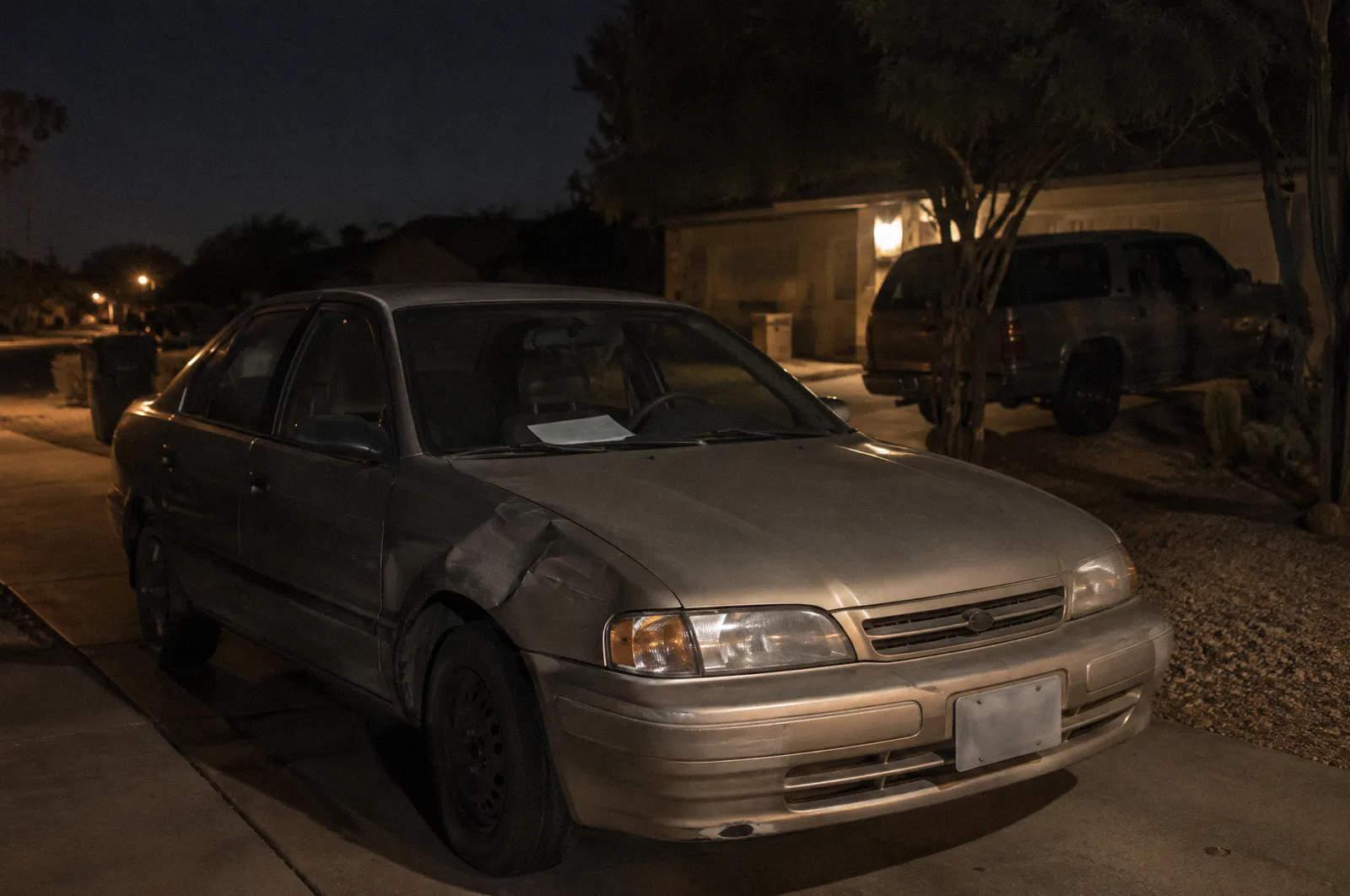
At these Scottsdale and Phoenix car accident hotspots, the combination of speed and vehicle mass determines how serious an injury becomes. A crash at 50 mph carries far more destructive force than one at 25 mph. When a large truck or SUV strikes a smaller passenger vehicle, occupants of the smaller vehicle face meaningful risk of brain injury, spinal injury, and internal trauma.
Arizona's comparative fault statute under A.R.S. 12-2505 is a pure comparative fault rule: an injured person can recover compensation even when they share partial fault for the crash, and there is no percentage bar. Your recovery is reduced by your share of fault. Insurance companies at high-crash corridors frequently argue partial fault to reduce their payout, and insurance companies and attorneys often negotiate the percentage of fault. Having a car accident lawyer in Scottsdale who understands the specific crash patterns at the intersection where you were hurt, and who can counter comparative fault arguments with documented evidence, is a practical advantage when your medical expenses and lost wages are on the line.
Related pages
Questions
Questions about Scottsdale crash hotspots
What are the most dangerous intersections for car accidents in the Phoenix metro area?
No single list settles it, but busy places that come up often include the Loop 101 and Scottsdale Road interchange, Thomas Road at major cross streets in central Phoenix, McDowell Road through the 16th to 40th Street corridor, and the I-17 and I-10 interchange in downtown Phoenix. US-60 merge zones in the East Valley also draw concern. For official counts, use ADOT's crash reports.
What should I do immediately after a car accident on Loop 101 or a Phoenix surface street?
Call 911, stay at the scene, and seek medical attention even if you feel fine right away. Adrenaline can mask serious injuries for hours. Request a copy of the crash report from the responding agency. Photograph the vehicles, road conditions, and any visible injuries. Do not agree to a recorded statement for the other driver's insurance company before you understand your options. Evidence on high-speed corridors can be lost quickly.
Does rush hour affect who is at fault in an Arizona car accident?
Rush hour conditions do not change how fault is determined under Arizona law. Fault depends on which driver violated a traffic law or failed to exercise reasonable care. However, rush hour does affect the type of crashes that occur, with rear-end collisions being more common in stop-and-go traffic. Insurance companies may argue comparative fault, which is why documenting road and traffic conditions at the time of your crash is important.
How does Arizona's comparative fault rule affect my car accident claim?
Under A.R.S. 12-2505, you can pursue compensation in Arizona even if you were partially at fault, and there is no 50 percent bar. Your total recoverable damages are reduced by your share of fault. This rule matters most on high-crash corridors where insurance companies routinely dispute fault percentages. A car accident lawyer can evaluate your exposure and build the strongest case for full compensation.
Can a red light camera or traffic camera help my claim?
It can, if a camera recorded the crash, but many intersections have none and footage may be overwritten quickly. Ask the responding agency about footage early, and check nearby businesses for private cameras.
Where can I find official crash data for Scottsdale?
Start with the Arizona Department of Transportation's Motor Vehicle Crash Facts reports and the Scottsdale Police Department. Our page on Scottsdale car accident statistics explains what each source covers.
Free case review
Talk to Valley Accident Law After a Crash on These Roads
If you were hurt at one of these Scottsdale and Phoenix car accident hotspots, you deserve direct answers from a law firm with 32 years of Arizona personal injury experience. Call (602) 584-8054 or request your free case review to speak with Valley Accident Law. We will explain your legal rights, and the earlier you call, the better, but it's never too late to find out your legal rights.
Call any time. Office visits Monday to Friday, 9 to 5.
Thank you, we’ve received your request.
A member of our team will reach out shortly. If your matter is urgent, call us now at (602) 584-8054.