
Glendale Brain Injury Lawyer
After a Traumatic Brain Injury in Glendale, Talk With a Brain Injury Lawyer
A brain injury lawyer in Glendale can help you prove a traumatic brain injury, document the care you may need later, and deal with the insurance companies while you focus on getting better. In Glendale these injuries often follow high-speed crashes on the Loop 101 and Grand Avenue (US 60), and falls at homes, stores and event venues. Most Arizona injury claims must be filed within two years (A.R.S. 12-542(1)), and the early medical record is what the rest of the claim is built on.
- Filing deadline
- Generally 2 years from the injury
- A.R.S. 12-542(1)
- City vehicle or property
- Written notice of claim within 180 days
- A.R.S. 12-821.01
- Injury found later
- The clock can start when you knew or should have known of the injury and its cause
- Case law, so call us early
- Injured child
- The limitations period is paused until age 18
- A.R.S. 12-502
Brain Injury Lawyer in Glendale: Where These Injuries Happen
Glendale is big, about 65 square miles, and a head injury here can start in very different places. The Loop 101 (the Agua Fria Freeway) runs through the city and past State Farm Stadium, with exits at 59th, 67th and 75th Avenues, Glendale Avenue and Cardinals Way. Grand Avenue (US 60) cuts diagonally through the city on its way to Phoenix, and ADOT has built overpasses and underpasses at six former six-way intersections along it. Those are fast roads where a rear-end or side-impact crash can snap the head against the window, the headrest or the steering wheel.
Surface streets matter just as much. The City of Glendale and local residents have called Olive Avenue and 59th Avenue a hot spot for crashes, and ABC15 reported that ADOT data showed 10 red-light-running crashes at 63rd Avenue and Beardsley Road in 2020. A crash at 83rd Avenue and Bethany Home Road in August 2021, in which three teenagers were killed when another vehicle ran a red light, is a reminder of what a single red-light runner can do.
Valley Accident Law is based in Scottsdale, about 16 miles from Glendale City Hall by way of Lincoln Drive and Glendale Avenue, so we start by phone and you do not have to drive anywhere to find out where you stand. Call any time. Office visits Monday to Friday, 9 to 5.
What happens when
The First Weeks After a Head Injury and Why the Record Matters
A brain injury claim is won or lost on what was written down early and what kept being written down afterward. Your doctors decide what care you need. Our job is to make sure the record shows it.
The day of the injury
Emergency care and the first chart
Whatever happens at the scene or in the emergency room becomes the first page of your claim. Tell the staff how you were hurt and about every symptom, even the ones that seem small.
The next few days
Symptoms that were not there at first
Headaches, dizziness, fog, trouble finding words and irritability can show up after no or seemingly minor symptoms at the scene. Insurers sometimes argue that a delay means the injury was something else, so we want those first reports of change in writing.
The first weeks
Follow-up care and missed work
Specialist visits, therapy and time off work all create records. Gaps in treatment give an adjuster something to point at, so keep your appointments and tell us if you cannot.
The following months
Seeing what recovery really looks like
Some people improve quickly and some do not. Waiting to see how far recovery goes is a real reason a claim should not be settled early.
Before you sign anything
Talk with us first
Once a release is signed, the claim is usually over. The earlier you call, the better, but it's never too late to find out your legal rights.
Arizona
Glendale Hospitals, Rehab and Records That Come Up in a Head Injury Claim
These are the real places we end up asking about when a Glendale resident or visitor suffers a serious head injury. Trauma designations come from the Arizona Department of Health Services list dated December 2025.
Banner Thunderbird Medical Center, 5555 W. Thunderbird Rd.
A Level I trauma center and the only Level I adult trauma center on the state list with a Glendale address. Serious head injuries from Glendale crashes are often taken here.
Dignity Health St. Joseph's Westgate Medical Center, 7300 N. 99th Ave.
A Level IV trauma designation, close to the Westgate district and the stadium.
Phoenix Children's Hospital Arrowhead Campus, 19007 N. 67th Ave.
A Level IV trauma designation, the Glendale option when a child has been hurt.
Encompass Health Valley of the Sun Rehabilitation Hospital, 13460 N. 67th Ave.
Provides inpatient rehabilitation for stroke, brain injury, spinal cord injury and orthopedic conditions, with three hours of therapy a day, five days a week. Rehab records are strong proof of what an injury has cost.
Glendale Police Records, 6835 N. 57th Drive
Open Monday to Friday, 8 a.m. to 4 p.m., except city holidays. The department also points people to BuyCrash.com for online access to traffic reports and to a JustFOIA online form for records requests. The city says a fee may apply.
Glendale City Court, 5711 W. Glendale Avenue
Handles traffic citations and misdemeanors from Glendale. A ticket there is separate from your injury claim.
How Brain Injuries Happen Around Glendale
Every claim is different, but the same few situations keep coming up in this part of the West Valley.

- Crashes at busy arterials
Left-turn collisions on roads like Glendale Avenue and Bethany Home Road, and red-light crashes at places like 63rd Avenue and Beardsley Road, are a common route to a concussion or something worse.
- Event days at Westgate and the stadium
State Farm Stadium seats 63,400 and can expand to 72,200, and Westgate has more than 30 bars and restaurants beside it. When thousands of people leave at once, rear-end crashes, impaired drivers and pedestrians struck in parking areas all become more likely.
- Pedestrians, cyclists and e-bike riders
The Grand Canal and Skunk Creek linear parks give Glendale miles of trails, and trail crossings at busy streets are where riders and walkers meet cars. A head hits pavement hard even at low speed.
- Falls at home and on someone else's property
A wet floor, a loose stair or an unlit walkway can send a person backward onto concrete. If the owner knew about the hazard, the brain injury may be a premises claim as well as a medical emergency.
- Workplace and commercial vehicle incidents
Delivery vans and heavier trucks share the Loop 101 and Grand Avenue with commuters, and a commercial driver's company may carry a larger insurance policy than a private driver.
Helmets, E-Bikes and the Insurance Company Argument
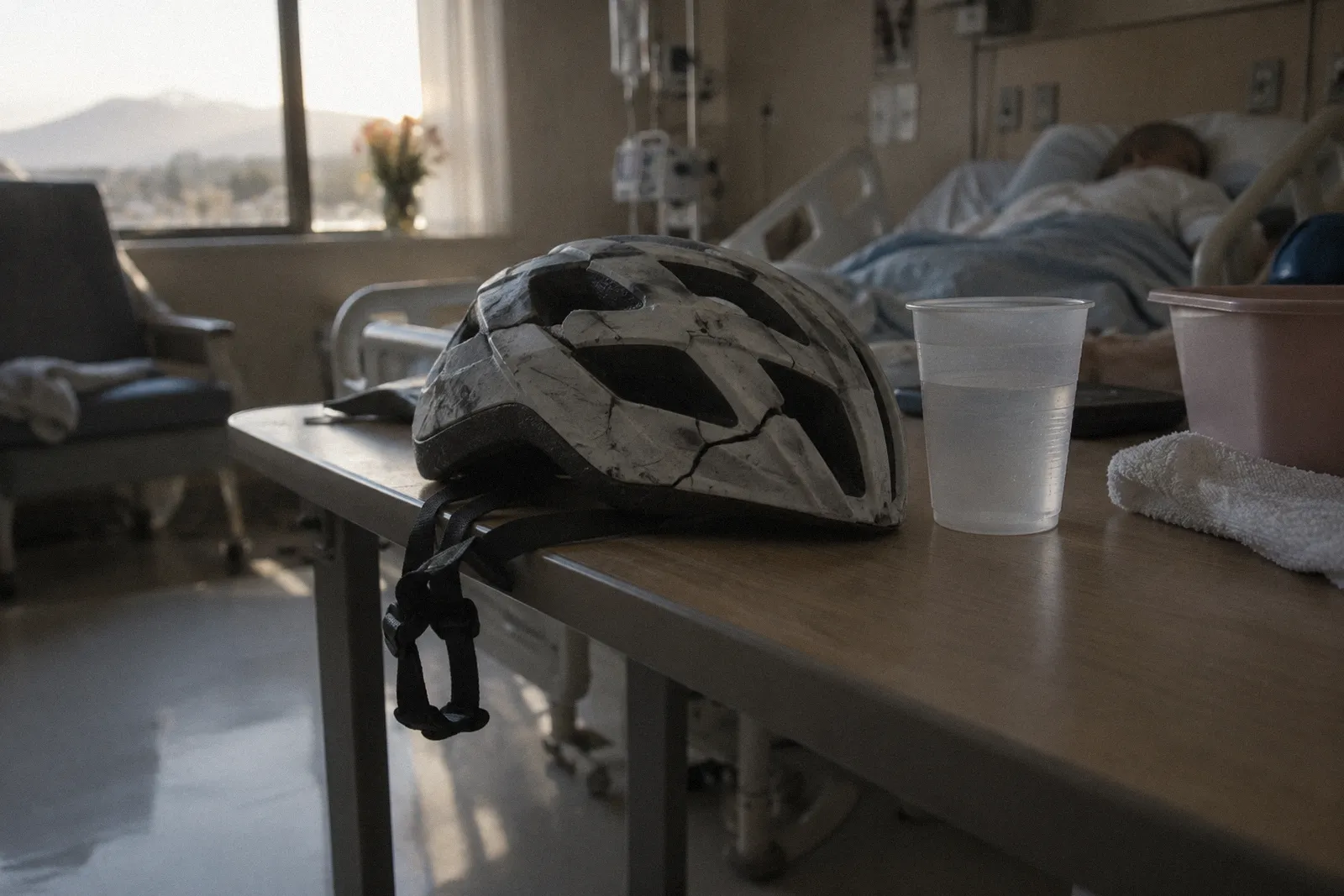
Arizona has no statewide bicycle helmet law, but some cities have local rules for young riders. Glendale adopted an ordinance on electric bicycles and electric standup scooters that took effect on January 9, 2026. It requires a helmet for riders under 18, sets minimum ages of 14 for Class 1 and Class 2 e-bike riders, 16 for Class 3 riders and 12 for e-scooter riders, and carries fines from $50 up to $500 for repeat violations within 12 months.
A helmet rule is not a reason to give up a claim. If an insurer says a rider shares the blame, Arizona follows pure comparative fault, so your recovery may be reduced by your percentage of fault but is not barred (A.R.S. 12-2505). Insurance companies and attorneys often negotiate the percentage of fault, and that is a conversation we would rather have for you than leave you to have alone.
Step by step
What to Do After a Head Injury in Glendale
These steps protect your health first and your legal rights second. They are not medical advice, and your doctors decide what care you need.
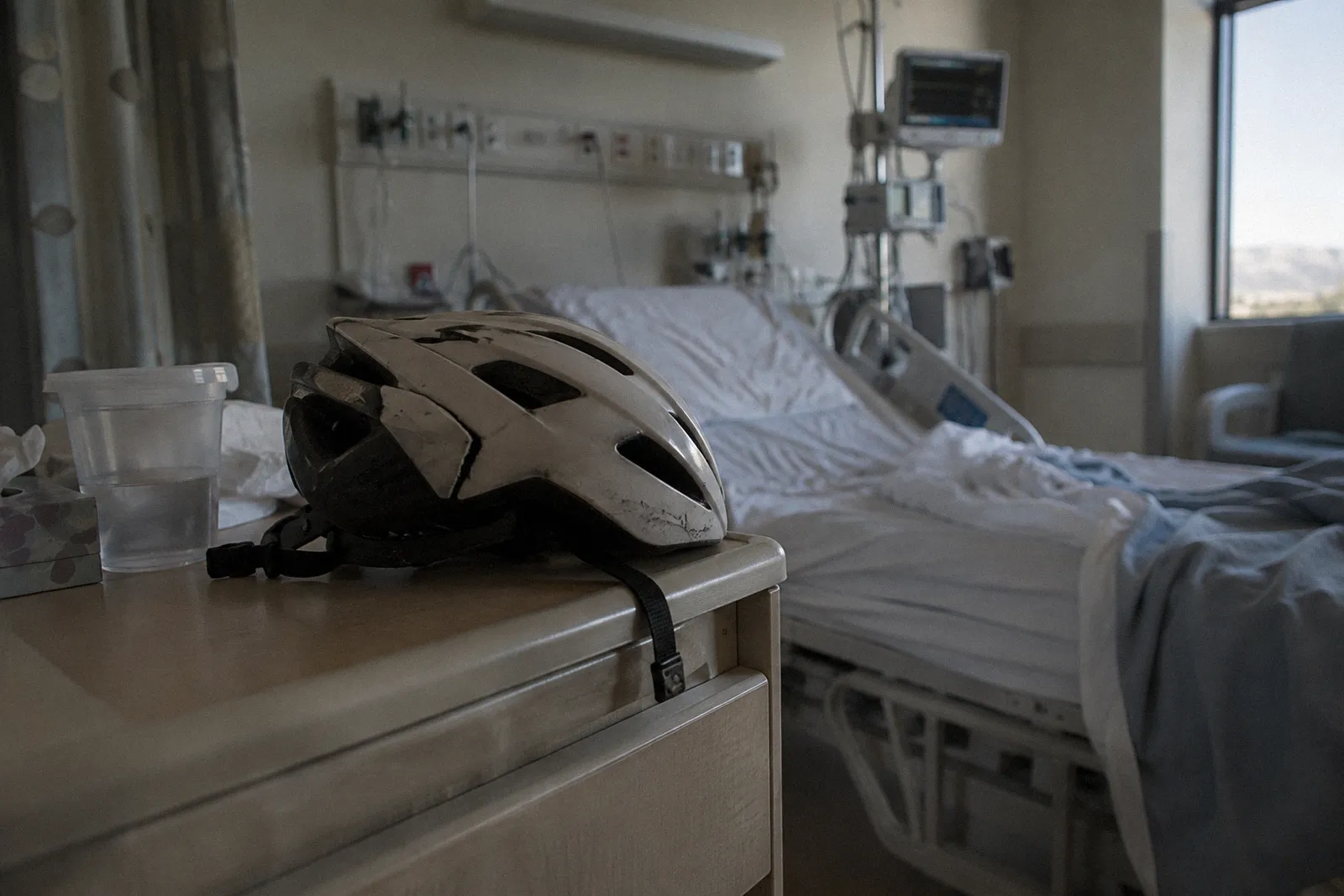
- 1
Get checked out, even if it seems minor.
Concussions and other brain injuries do not always announce themselves at once. A visit on the day of the crash gives you a record that starts at the right place.
- 2
Get the Glendale police report number.
If you believe you were not at fault, make sure you explain this to the officer. Ask for the report number before you leave, then request the report from Glendale Police Records once it is ready. If the crash happened on a freeway, the report will show which agency wrote it.
- 3
Photograph the scene, if safely possible, before any vehicle is moved.
Get the lanes, skid marks, signals, damage and any stadium or Westgate event signage that shows why traffic was so heavy.
- 4
Be careful about agreeing to a recorded statement.
An adjuster may call quickly and sound friendly. You are not required to agree to a recorded statement, and answers given while you are foggy or in pain can be used against you later.
- 5
Keep a plain daily log.
Write down headaches, sleep, missed work, trouble concentrating and things family members notice. It is not a diary for the insurer. It is a record of what the injury has done to your days.
- 6
Call us before you sign or settle.
We will explain your legal rights and what the insurance company is likely to do next.
What a Glendale Traumatic Brain Injury Lawyer Looks For
A glendale traumatic brain injury lawyer reads your file the way an insurance company will, and then asks what is missing.
What the insurer tends to look at
- A scan or chart that looks normal early on
- A gap between the crash and the first doctor visit
- Gaps in follow-up care
- A pre-existing condition they can blame for your symptoms
- A recorded statement taken while you were still dazed
What your claim should show
- The mechanism of injury, from the police report and scene photos
- Every symptom and when it first appeared
- Records from emergency, specialist and rehab providers
- Changes in work, driving, memory and family life described by the people who see them
- The cost of future care, supported by your own providers
Insurance, Fault and Future Care in a Brain Injury Claim
A brain trauma lawyer in Glendale is usually fighting about two numbers: what has been spent, and what will be needed. Arizona does not cap damages for personal injury or death (Ariz. Const. art. 2 sec. 31 and art. 18 sec. 6), but the insurance policy limits still decide how much money is actually on the table. The state minimums are $25,000 per person and $50,000 per accident for bodily injury since July 1, 2020 (A.R.S. 28-4009), which is small next to a serious head injury. That is why we look at your own underinsured motorist coverage as well, and at every other party whose carelessness may have played a part.
If a head injury lawyer in Glendale tells you a quick offer is a fair one, ask what the offer assumes about the next five or ten years. Medical providers and health plans may also have liens against a settlement (A.R.S. 33-931 et seq., AHCCCS, ERISA and Medicare reimbursement rules), so we explain how those work before anything is accepted. Our guide to what a personal injury case is worth walks through the same ideas in more detail.
When the injury has changed how someone thinks, works or cares for themselves, a brain damage lawyer in Glendale should be talking about long-term care, not just the emergency room bill. We work with your providers' own records on that, and we do not make medical judgments ourselves.
This page is about head injuries in particular. For the wider picture of what we do for people hurt in the city, see our personal injury lawyer in Glendale page, and for the statewide rules, read our Arizona brain injury lawyer guide.
Related Glendale Pages and Nearby Cities
A brain injury is often one part of a larger claim. Start with the page closest to how you were hurt.
Related pages
Brain injury by city
Questions
Questions about Glendale brain injury cases
Do I need a brain injury attorney in Glendale if my scan looked normal?
Not every brain injury shows up clearly on early imaging, and your doctors are the ones to tell you what a result means. What we can tell you is that insurers often use a clean early result to argue the injury is minor. If your symptoms are real and continuing, a call to us costs nothing, and You pay no attorney fee unless we recover money for you.
Where do I get a Glendale police crash report?
Glendale Police Records is at 6835 N. 57th Drive and is open Monday to Friday, 8 a.m. to 4 p.m., except city holidays. The department also points people to BuyCrash.com for online traffic reports and to an online records request form. The city says a fee may apply. Our guide to getting a police report in Arizona explains the steps.
Which hospital in Glendale treats the most serious head injuries?
Banner Thunderbird Medical Center is the only Level I adult trauma center on the Arizona Department of Health Services list with a Glendale address. Our page on Phoenix area trauma centers lists the other Level I centers in the Valley. Which hospital you are taken to depends on the ambulance crew and your condition, not on anything you pick.
What if a Glendale city vehicle or city property was involved?
A claim against a public entity needs a written notice of claim within 180 days after the claim accrues, with the facts and a specific sum certain (A.R.S. 12-821.01). A lawsuit generally has to be filed within one year after accrual (A.R.S. 12-821). The City Clerk's office is at 5850 W. Glendale Ave., but we confirm who is authorized to accept a notice for the entity involved. Please do not wait.
Which court would hear a Glendale brain injury lawsuit?
Injury lawsuits for money are generally filed in Maricopa County Superior Court, not Glendale City Court, which handles traffic and misdemeanor matters. Under a 2018 administrative order, civil cases are assigned to a judicial district by ZIP code, and Glendale ZIP codes fall in the Downtown or Northeast districts. We check the current rule when we file.
Does a symptom that showed up weeks later still count?
It can. The clock can start when you knew or should have known of the injury and its cause, but this is an area of case law with exceptions, so please call us and we will explain how it applies to you. The general rule is two years from the injury (A.R.S. 12-542(1)).
Free case review
Talk With Us About Your Glendale Head Injury
Call (602) 584-8054 or request your free case review. Our experienced and friendly attorney will explain your legal rights, answer your questions about the insurance company and tell you what the next step looks like. The earlier you call, the better, but it's never too late to find out your legal rights.
Call any time. Office visits Monday to Friday, 9 to 5.
Thank you, we’ve received your request.
A member of our team will reach out shortly. If your matter is urgent, call us now at (602) 584-8054.