
Glendale Slip and Fall Lawyer
Slip and Fall Lawyer in Glendale, Arizona: Help After a Fall on Unsafe Property
A slip and fall lawyer in Glendale can look at who owned or managed the place where you fell, what they knew about the hazard, and how to hold their insurance company to it. Glendale has stores, restaurants and apartment complexes spread across 65 square miles, plus the crowds around State Farm Stadium and Westgate. Most Arizona injury claims must be filed within two years (A.R.S. 12-542(1)), and a fall on city property has a much shorter 180-day notice rule.
- Filing deadline
- Generally 2 years from the fall
- A.R.S. 12-542(1)
- Fall on city property
- Written notice of claim within 180 days
- A.R.S. 12-821.01
- If you share the blame
- Pure comparative fault, no percentage bar
- A.R.S. 12-2505
Slip and Fall Lawyer in Glendale: Where People Get Hurt
Falls do not follow a pattern the way crashes on the Loop 101 do. They happen wherever a floor, stair, parking lot or walkway is allowed to stay dangerous. In Glendale, a few places come up again and again in the conversations we have.
Westgate Entertainment District sits beside State Farm Stadium and Desert Diamond Arena and has more than 30 bars and restaurants. On event nights thousands of people crowd the same walkways, patios and parking lots, spills happen, and lights and surfaces get far less attention than the crowd. Arrowhead Towne Center, which opened in 1993 and has about 180 stores in roughly 1.2 million square feet, has the ordinary hazards of any big retail property: wet entrances in the monsoon, cluttered aisles, loose mats. In Historic Downtown Glendale, including the Catlin Court Historic District, older sidewalks, thresholds and steps in historic buildings can be uneven.
And then there are the places nobody writes about: the apartment complex stairwell with a burned-out light, the grocery store aisle with a leak, the restaurant where a server never put out a sign. Each is a different owner, with a different insurer, and you cannot tell from the outside which is which.
A slip and fall accident lawyer in Glendale will ask who was responsible for that exact spot, not just who owns the building. When we talk with someone who needs a slip and fall injury lawyer in Glendale, that question comes before any talk of value. For the wider picture of what we do for people hurt in the city, see our personal injury lawyer in Glendale page, and for the statewide rules, our Arizona slip and fall lawyer guide.
Arizona
Glendale Places and Offices That Matter After a Fall
A fall claim usually turns on one question: who controlled the spot where you fell? These Glendale places and offices show up when we answer it.
Westgate Entertainment District, 6770 N. Sunrise Blvd.
Parking is free on non-event days, with two free hours on event days. On stadium and arena event dates charges begin hours before the event, so a parking receipt or ticket helps prove when and where you were.
Arrowhead Towne Center, 7700 W. Arrowhead Towne Center
A large regional mall and a Valley Metro bus transit hub, so people come by car and on foot and the property has many parking areas and entrances.
Catlin Court Historic District and Historic Downtown Glendale
Older streets and buildings where sidewalks and entrances can be uneven. Some of the surrounding streets and sidewalks may be city property.
Glendale Heroes Regional Park and the other city parks
The city's park system covers more than 1,600 acres of parks and open space. A fall on a city trail, playground or ramp means a public entity may be involved.
Glendale City Clerk, 5850 W. Glendale Ave.
The office of the City Clerk is at City Hall. The city does not publish claim-filing instructions on the pages we reviewed, so we confirm who is authorized to accept a notice of claim before we serve one.
What to Do After a Fall at a Glendale Store, Restaurant or Complex
The first hour often decides whether there is any proof of what the floor looked like.

- 1
Get medical care and say how you fell.
Tell the provider the fall caused your pain, even if you have no or seemingly minor symptoms. Hip, wrist, back and head injuries from falls can take a day or two to show themselves.
- 2
Report the fall to the manager or the owner, and ask for a copy.
Ask that an incident report be written, and ask for a copy and the name of the person who took it. If it is an apartment complex, report it in writing to the property manager.
- 3
Photograph the spot, your shoes and the lighting, if safely possible.
Show what caused the fall, how wide the hazard was and whether any warning sign was in view. Return the next day if you can, because the hazard may be gone by then.
- 4
Get names.
Write down the names and phone numbers of anyone who saw you fall or who saw the hazard before you did, including staff. Keep your receipt, ticket or parking record, which proves when you were there.
- 5
Do not agree to a recorded statement or sign a release.
The property's insurance company may call quickly and sound caring. You are not required to agree to a recorded statement, and early answers can injure your legal rights.
- 6
Ask us to write a preservation letter.
Stores and venues often overwrite surveillance video. We send a written request to keep it, along with maintenance and cleaning logs.
A Premises Liability Lawyer in Glendale Starts With the Owner
The answer to who owns the place decides which rules and deadlines apply.
Private owners and businesses
- Stores, restaurants, bars, hotels and apartment complexes
- Usually a commercial liability policy and a claims adjuster
- The general two-year deadline applies (A.R.S. 12-542(1))
- A bar that overserved a patron may have a separate dram shop exposure (A.R.S. 4-311), which is not the same as a simple spill
The City of Glendale or another public entity
- City parks, sidewalks, buildings, trails and bus stops
- A written notice of claim within 180 days, with the facts and a specific sum certain (A.R.S. 12-821.01)
- A lawsuit generally within one year after accrual (A.R.S. 12-821)
- A child's deadlines are paused until age 18, but a parent's own claim for medical bills is not (A.R.S. 12-821.01(D))
What the Property Owner Knew, or Should Have Known
These cases usually come down to what the owner or manager knew or should have known about the hazard, and what they did about it. We look for proof in places like these.
- Spills and wet floors
Cleaning logs, staff schedules and surveillance video can show how long a spill sat there and whether anyone walked past it.
- Parking lots and walkways
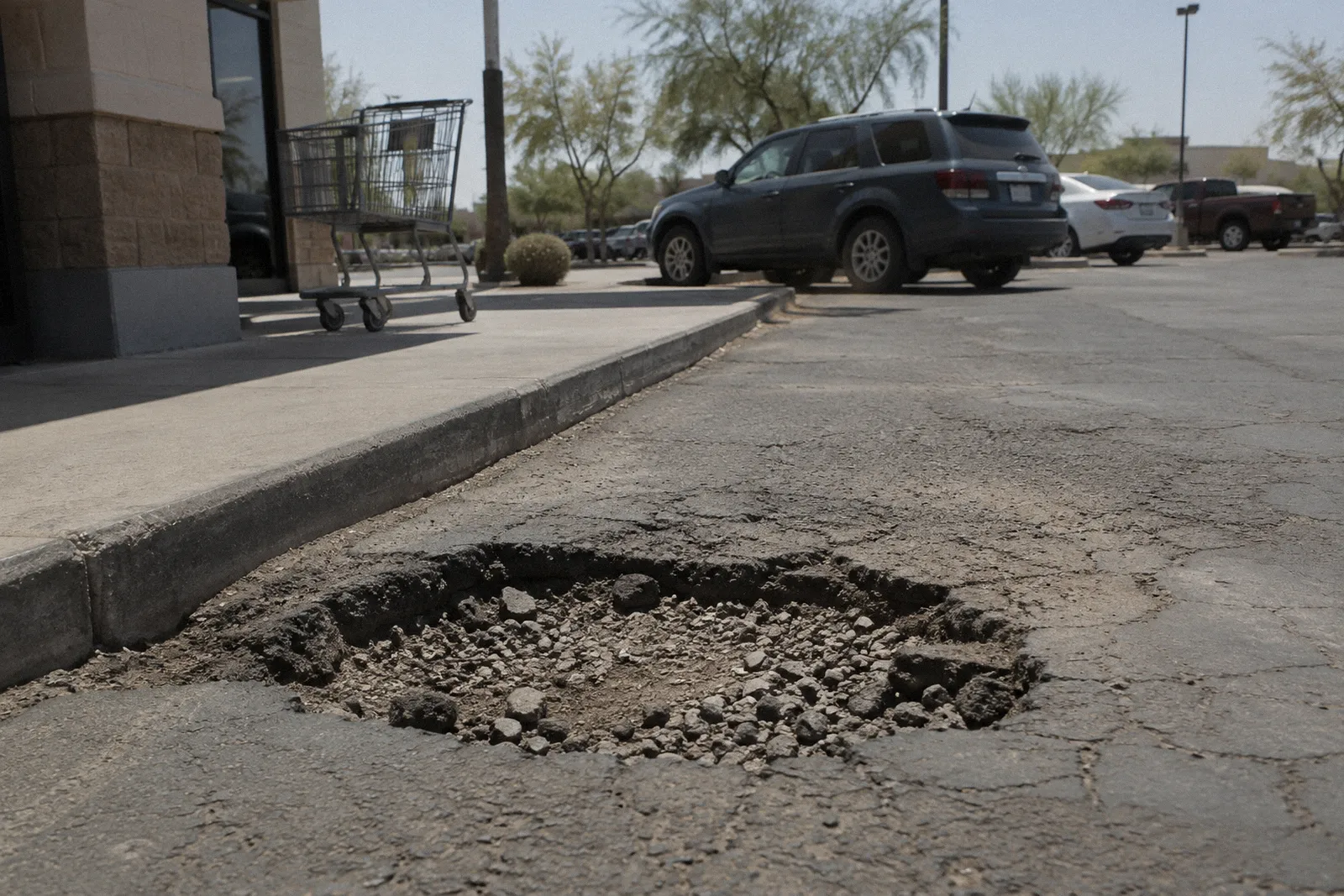
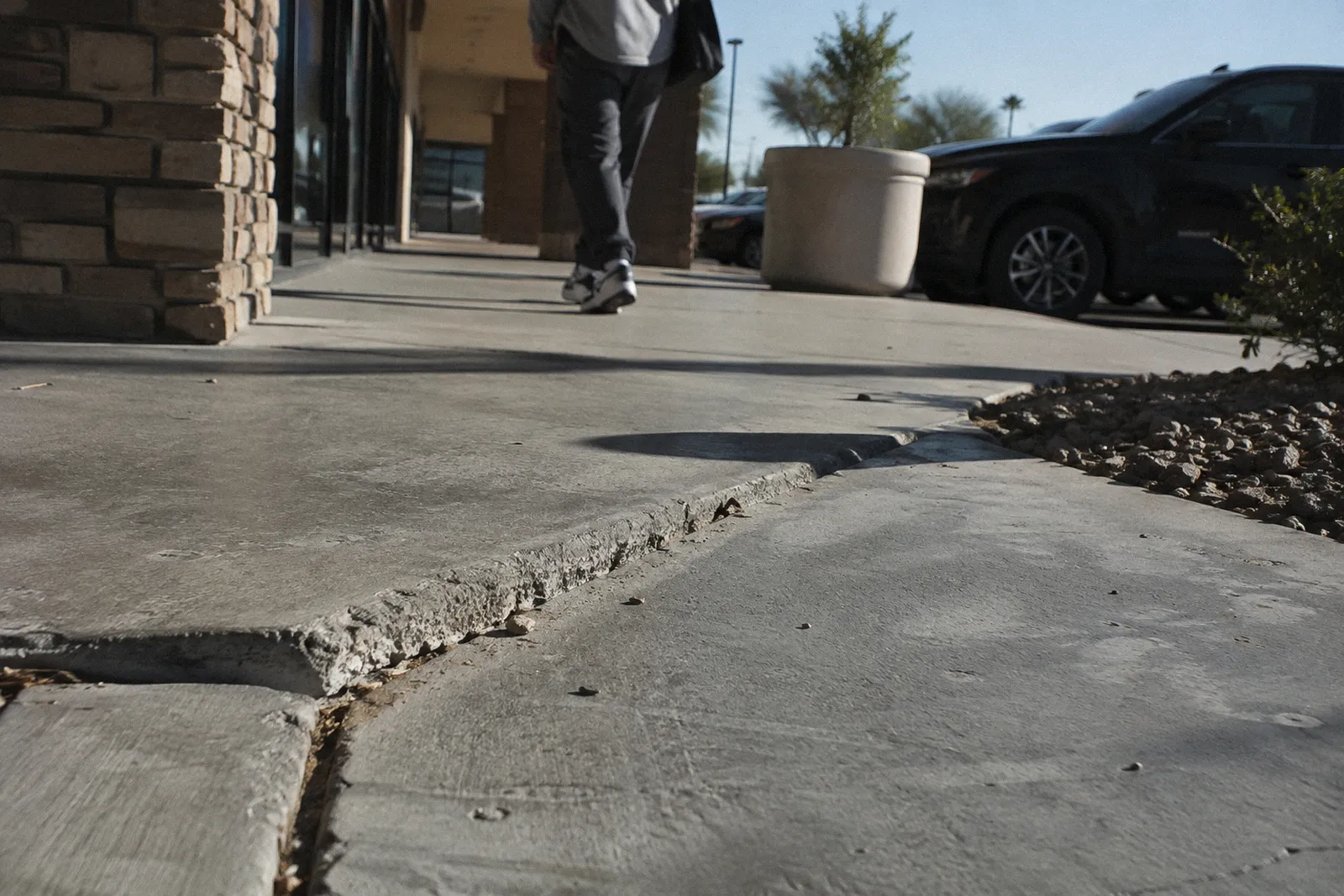
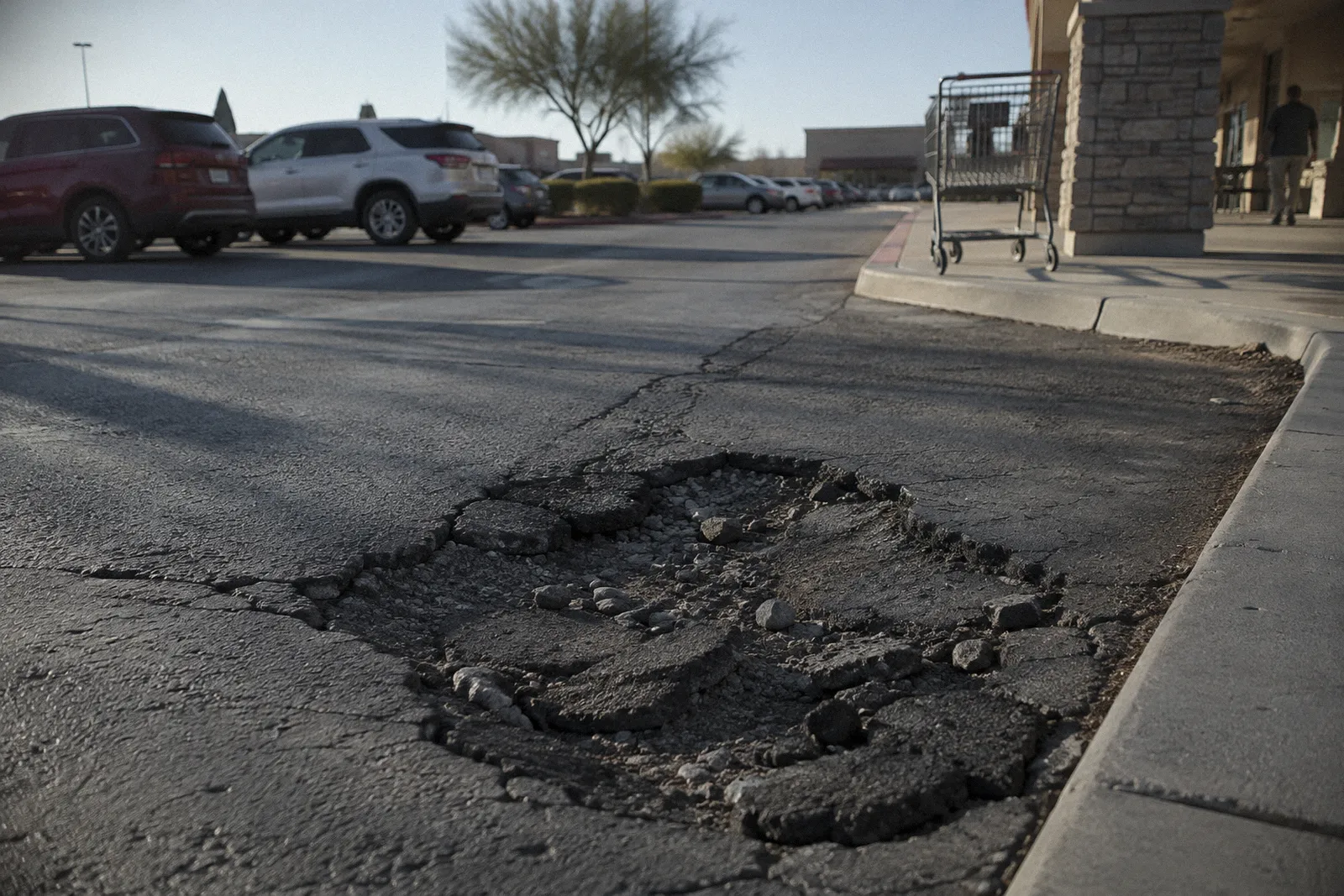
Potholes, broken curbs, faded striping and burned-out lights are the kind of defects that get reported and repaired, or do not. Repair requests tell us what the owner knew.
- Stairs and handrails
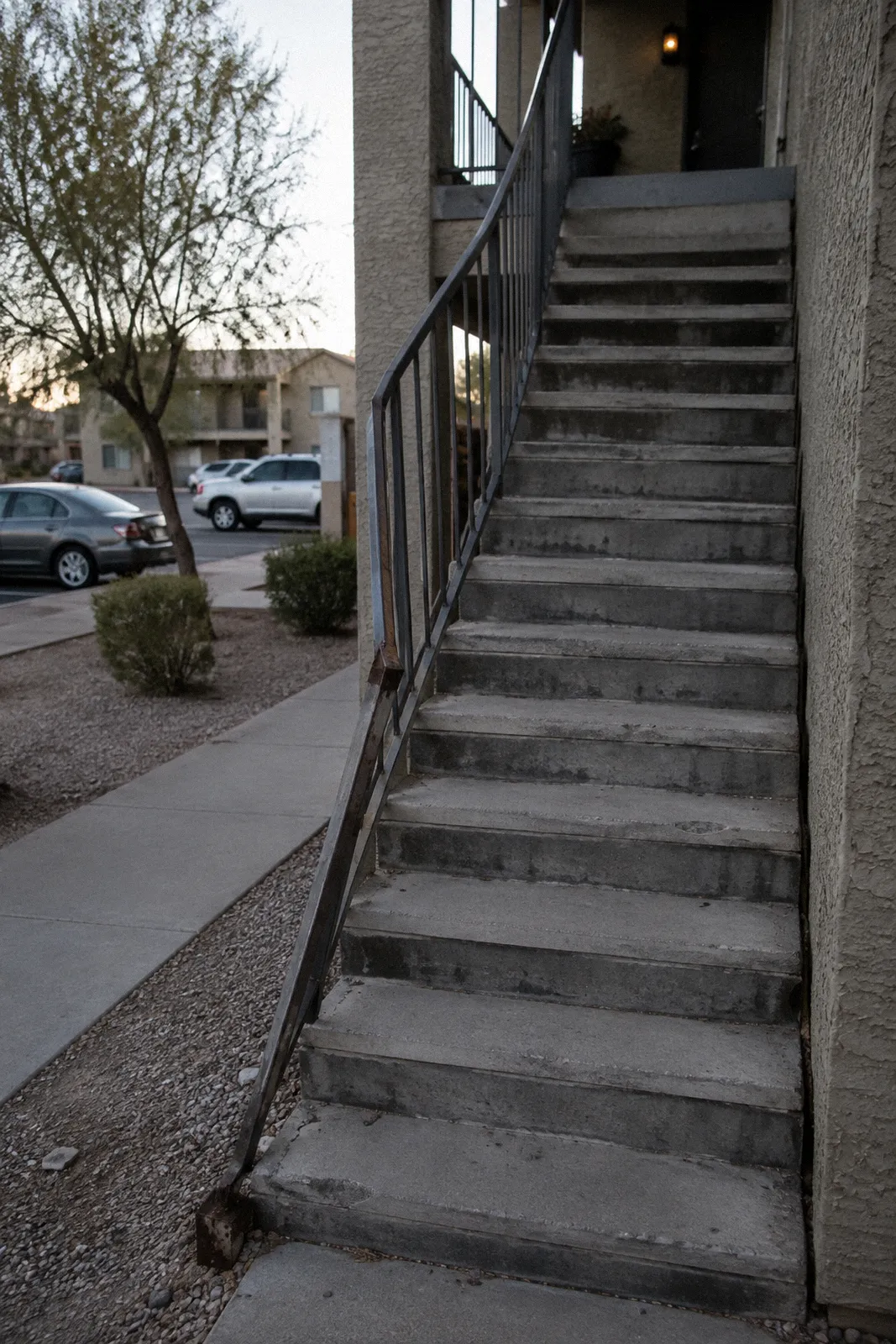
Apartment and commercial stairs are checked for missing rails, uneven treads and poor lighting. Landlord maintenance requests are strong evidence.
- Crowds and event conditions
A venue that expects thousands of guests should plan for spills, trash and congestion. Event staffing and cleanup schedules are part of what we ask for.
- Weather
Monsoon rain tracked inside on shoes, leaking roofs and watered landscaping can all create slippery surfaces that a careful owner would address.
What If Insurers Say You Were Careless
Expect it. Insurance companies and attorneys often negotiate the percentage of fault, and a fall case is where they do it most often: the shoes, the phone in your hand, the sign they say was posted. Arizona follows pure comparative fault, so your recovery may be reduced by your share of the blame but is not barred (A.R.S. 12-2505). We would rather talk through what the other side will say before they say it to you.
Our guide to Arizona comparative negligence explains how a percentage is applied.
Who to Ask for What After a Glendale Fall
Different pieces of proof sit in different hands. This table matches the proof to the office.
| What you need | Who holds it | What to know |
|---|---|---|
| Incident report and video | The store, venue or property manager | Ask the same day and ask in writing |
| Police report, if officers were called | Glendale Police Records, 6835 N. 57th Drive | Open Monday to Friday, 8 a.m. to 4 p.m., except city holidays; a fee may apply |
| Claim for a fall on city property | City Clerk, 5850 W. Glendale Ave. | Notice due within 180 days (A.R.S. 12-821.01) |
| A smaller claim of $5,000 or less | Maricopa County justice court for the address | Small claims go up to $5,000 and justice court up to $10,000 (A.R.S. 22-503, 22-201) |
| A larger injury lawsuit | Maricopa County Superior Court | Assigned by ZIP code under a 2018 administrative order; Glendale ZIP codes fall in the Downtown and Northeast districts |
Source: City of Glendale and Maricopa County court websites, reviewed October 2026
Related pages
Slip and fall by city
Questions
Questions about Glendale slip and fall cases
Do I need a slip and fall attorney in Glendale if I fell at Westgate on an event night?
It is worth a call. Event-night falls can involve a venue, a bar, a parking operator and a contractor, each with a different insurer, and video may be overwritten quickly. A premises liability lawyer in Glendale can send the preservation letters while it still matters. You pay no attorney fee unless we recover money for you.
What if I fell on city property in Glendale?
A public entity has its own rules. A written notice of claim is due within 180 days after the claim accrues, stating the facts and a specific sum certain, and the claim is deemed denied after 60 days (A.R.S. 12-821.01). A lawsuit generally has to follow within one year after accrual (A.R.S. 12-821). The City Clerk's office is at 5850 W. Glendale Ave. See our notice of claim guide.
Which court would hear my Glendale fall case?
A small claim up to $5,000, or a justice court case up to $10,000, goes to the justice court precinct for the address, and for much of Glendale those courts are in Surprise or Avondale. A larger injury lawsuit is filed in Maricopa County Superior Court. Glendale City Court handles traffic and misdemeanor matters. See our guide to Maricopa County courts.
Can I still recover if I was looking at my phone or wearing the wrong shoes?
Possibly. Arizona does not bar a claim because you share some blame, but your recovery may be reduced by your percentage (A.R.S. 12-2505). Insurers and attorneys often negotiate that percentage, so how the fall is documented matters.
Does a premises liability law firm in Glendale need a Glendale office?
No. Our office is in Scottsdale, and we take cases anywhere in Arizona. Most of the first conversation can happen by phone.
Will a police report exist for a fall in a store?
Usually not unless officers were called. The more useful document is the incident report from the business or property manager, so ask for a copy before you leave. If police did respond, Glendale Police Records can tell you how to request it.
Free case review
Talk With Us About Your Glendale Fall
Call (602) 584-8054 or request your free case review. Our experienced and friendly attorney will explain your legal rights and help you decide on your next step. The earlier you call, the better, but it's never too late to find out your legal rights.
Call any time. Office visits Monday to Friday, 9 to 5.
Thank you, we’ve received your request.
A member of our team will reach out shortly. If your matter is urgent, call us now at (602) 584-8054.