
Broken Bone Injury Claim
Broken Bone Injury Claim in Arizona: Fractures After a Crash
A broken bone injury claim in Arizona asks the at-fault party to pay for the medical care, lost income, and lasting limits a fracture causes. A broken arm from a car accident or a broken leg can mean surgery, months of rehabilitation, and time away from work, and Arizona places no caps on personal injury damages. Most injury lawsuits must be filed within two years under A.R.S. 12-542, so it helps to understand your options early.
- Filing deadline
- 2 years from the injury
- A.R.S. 12-542(1)
- Fault rule
- Pure comparative fault, no percentage bar
- A.R.S. 12-2505
- Damage caps
- None on personal injury damages
- Ariz. Const. art. 2 sec. 31; art. 18 sec. 6
- Minors
- Clock tolled until age 18, then the normal period runs
- A.R.S. 12-502
How Broken Bones Happen in Crashes
A car crash moves a body faster than it was built to stop. Arms tend to brace against the steering wheel or door, legs meet the dashboard, pedals, or a collapsed footwell, and the seat belt that protects your life can also bruise or break ribs. Rollovers, side impacts, and crashes involving motorcycles, bicycles, and pedestrians add other fractures, from collarbones and wrists to the pelvis and hip.
A break is easy to picture, but a broken bone injury claim is about everything that follows it: the emergency visit, the imaging, the cast or surgery, the months of therapy, the shifts you could not work, and the way an arm or leg that used to work now limits your day. That is the story your records need to tell, and it is the story the other side's insurer will try to shrink.
Fractures are one group among the many car accident injuries Arizona crashes can cause. This page explains how they fit into a claim. It is not medical advice, and your doctors decide your care.
Common Fractures After a Car Crash
Every fracture is different, and your treating providers will describe yours. These are the breaks we hear about most from people hurt in the Phoenix metro.
- Broken arm injury
Fractures of the forearm, wrist, or elbow are common because arms brace for impact. A broken arm injury can keep you from driving, lifting, typing, or doing a trade for weeks or longer, and a broken dominant arm often changes everything about a workday.
- Broken leg after a crash
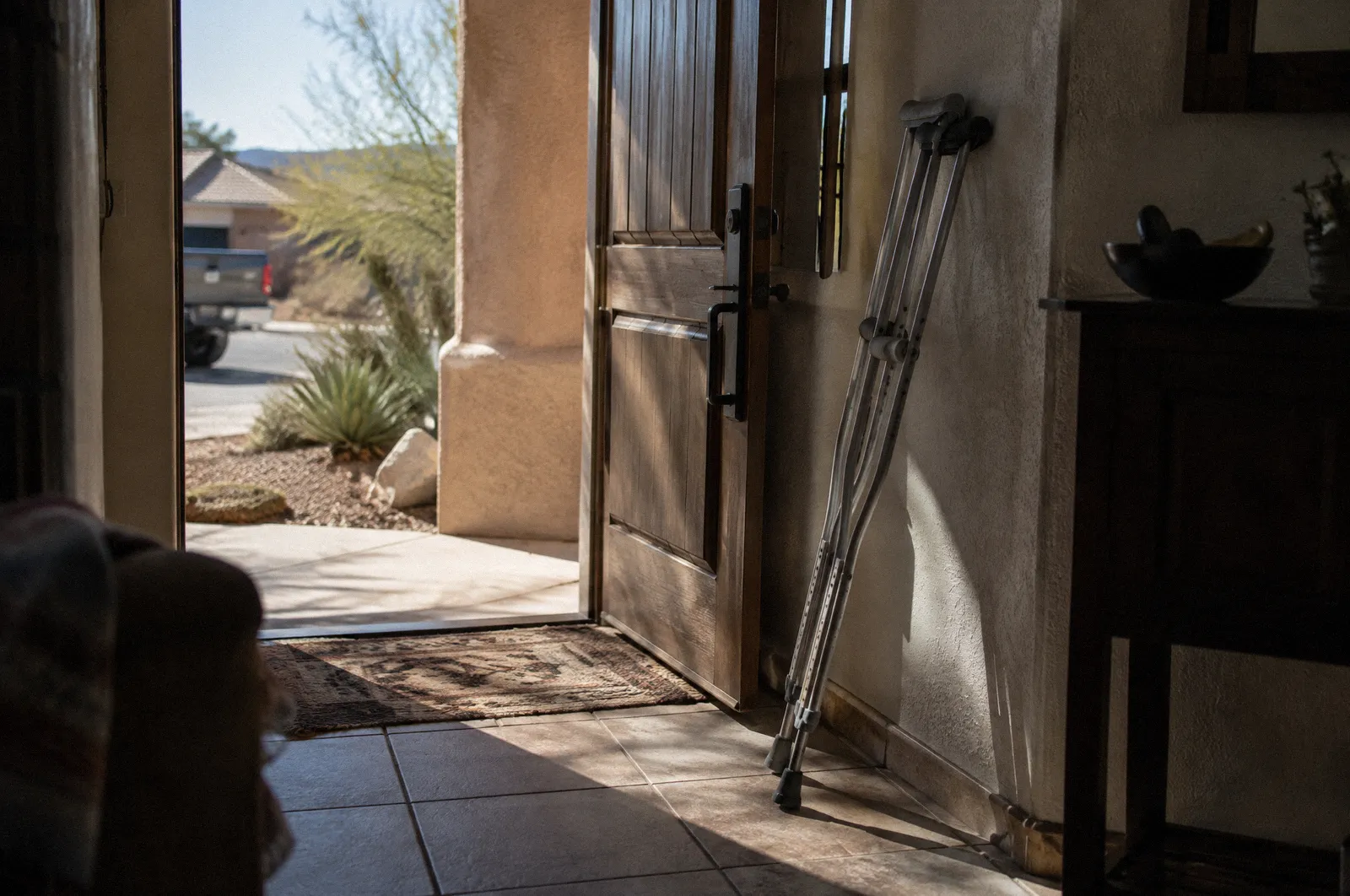
A broken leg car accident claim often involves surgery, hardware, and a long stretch on crutches or in therapy. Leg fractures can also affect how you walk and stand for years, which matters for future care and earning capacity.
- Broken ribs
Broken ribs car accident claims can look modest on paper, yet every breath, cough, and turn in bed can hurt. Some people have no or seemingly minor symptoms at first, so records written close to the crash matter.
- Collarbone and shoulder
These breaks are common in seat belt and side-impact crashes and affect reaching, lifting, and sleeping.
- Hip and pelvis
These fractures usually follow a hard impact and often involve surgery and a long recovery. They are also one of the places a claim can include meaningful future care.
- Hands, feet, and ankles
Small bones add up. Many small breaks hurt for a long time and can matter a great deal to anyone who works with their hands or stands all day.
A Straightforward Break and a Complicated One
The more care a fracture needs, the more the claim turns on documentation.
A fracture that heals with immobilization
- Records center on the emergency visit, imaging, and follow-up appointments
- The claim usually turns on medical bills, missed work, and pain during recovery
- An insurer may argue you were back to normal quickly, so a symptom log helps
A fracture that needs surgery or has complications
- Operative reports, hardware, and rehabilitation records carry the claim
- Your doctors may describe future care, such as follow-up procedures or therapy
- Lost earning capacity can matter if your job depends on the arm or leg
- The longer the recovery, the more the insurer will scrutinize gaps in treatment
How a Broken Bone Injury Claim in Arizona Unfolds
Every case moves at its own pace, but most follow this arc.
At the emergency room
The first records
Emergency notes and imaging create the first record of what the crash did. Tell providers about every area that hurts, because the chart is the earliest evidence of your injuries.
During treatment
Treatment records build the file
Orthopedic visits, surgery, casts, and therapy notes show the course of your injury. Gaps in treatment give an adjuster something to argue about.
While you recover
Work and daily life
Pay records, employer notes, and a simple log of what you could not do show the human side of the claim.
At maximum medical improvement
The long-term picture
When your doctors say you have healed as much as you will, they can describe any permanent limits and future care. Settling before this point risks leaving future costs uncovered.
When settlement is discussed
The offer
An insurer's first offer rarely reflects the full picture. We will explain what the offer includes and what it leaves out before you decide anything.
Future Care, Lost Earning Capacity, and Pain and Suffering
Past bills are only part of a broken bone injury claim. If your doctors expect future surgery, therapy, or lasting limits, those costs belong in the claim, and so does lost earning capacity if you cannot do the work you did before. A roofer with a broken leg and an office manager with a broken leg face very different futures, and the claim should show that.
Arizona also lets injured people recover for pain and suffering, which covers the physical pain, the emotional strain, and the activities you can no longer enjoy. Arizona does not cap personal injury damages, so these claims are measured by the facts of your injury. Hospitals and health plans may assert liens against a recovery, so read our guide to medical liens early.
Arizona follows a pure comparative fault rule under A.R.S. 12-2505, so you can recover even if you were partly at fault, reduced by your share. Insurance companies and their attorneys often negotiate the percentage of fault, so expect that conversation. If a child was hurt, the limitations period is tolled until age 18 under A.R.S. 12-502 and then the normal period runs. If the claim is against a public entity, a child's deadlines are paused until age 18: the notice of claim is due within 180 days after the 18th birthday and the lawsuit within one year after it (A.R.S. 12-821.01(D); 12-502). The parents' own claim for medical bills they paid is not paused, and their notice of claim is due within 180 days of the injury, so families should not wait. Call us before assuming anything.
Is a Broken Arm Considered a Catastrophic Injury?
There is no single label that decides what a claim is worth. People generally use catastrophic for injuries that change the rest of a person's life, such as severe brain injuries, spinal cord injuries, and amputations. A simple fracture that heals well is usually not described that way. A broken arm can still have serious, lasting effects when there are complications, repeated surgeries, nerve damage, or a job that depends on your hands, and those facts are what a claim should document. What matters is the documented impact on your life, not the word used for it.
Why Broken Leg Settlement Numbers Are Unreliable
Online calculators and articles love to quote a broken leg settlement figure. They cannot see your medical records, your pay, your coverage, or how the insurer will argue fault, so any number is rough and unreliable. No one can responsibly name a value before the facts are in. Our guide to what your case is worth explains the real factors.
Questions
Questions about broken bone injury claim
How much is a broken leg settlement worth?
There is no standard figure. A broken leg settlement depends on your medical bills, whether you needed surgery, how long you were out of work, whether you have lasting limits, the coverage available, and how fault is allocated. Anyone who names a number before seeing your records is guessing.
Can I still make a claim for broken ribs if they healed?
Yes. A claim covers the medical care, missed work, and pain you went through, not just ongoing problems. Healing does not erase what you went through, but prompt records and consistent treatment make a claim much easier to support.
What if I was partly at fault for the crash?
Arizona is a pure comparative fault state, so you can still recover when you were partly at fault, with your award reduced by your percentage of responsibility. Insurers often push your percentage up, so it is worth having someone look at how fault is being assigned.
How do I prove a crash caused my fracture?
Emergency room records, imaging reports, and treating provider notes tie the break to the date of the crash. Photos of the vehicles and scene, the police report, and witness statements help show how the forces involved could cause the injury.
What if my child broke a bone in a crash?
Arizona tolls the limitations period for a minor until age 18 under A.R.S. 12-502, then the normal period runs. If the claim is against a public entity, a child's deadlines are paused until age 18, but the parents' own claim for medical bills they paid is not paused: their notice of claim is due within 180 days of the injury (A.R.S. 12-821.01(D)). Families should not wait, and a settlement involving a child has its own requirements, so call us and we will explain how the rules apply.
Does the type of break change the claim?
Yes. A simple fracture that heals with a cast and a complicated break that needs surgery and rehabilitation produce very different records, bills, and long-term effects. The claim follows the documented facts of your injury.
Free case review
Talk With Us About Your Broken Bone Injury Claim
If a crash left you with a broken arm, a broken leg, broken ribs, or another fracture, we can walk you through how the claim works. Call (602) 584-8054 or request your free case review, and our experienced and friendly attorney will explain your legal rights. The earlier you call, the better, but it's never too late to find out your legal rights.
Call any time. Office visits Monday to Friday, 9 to 5.
Thank you, we’ve received your request.
A member of our team will reach out shortly. If your matter is urgent, call us now at (602) 584-8054.