
Maricopa County Courts
Maricopa County Courts for Personal Injury Claims: Where a Lawsuit Is Filed and Heard
Most Maricopa County courts personal injury lawsuits are filed in Maricopa County Superior Court, with smaller claims going to a justice court. Small claims cases in a justice court are limited to $5,000, and the justice court handles civil claims up to $10,000 (A.R.S. 22-503, 22-201). Most injury claims never reach any of these courts, because most settle with an insurance company first, but knowing where a lawsuit would be filed helps you understand your options.
Reviewed by Charles Paglialunga, Esq.

- Small claims
- Up to $5,000
- A.R.S. 22-503
- Justice court
- Civil claims up to $10,000
- A.R.S. 22-201
- Larger injury claims
- Maricopa County Superior Court
- Court of general jurisdiction
- Filing deadline
- 2 years from the injury, in most cases
- A.R.S. 12-542
Maricopa County Courts for Personal Injury Cases at a Glance
The right court depends mostly on how much money is at stake and who is on the other side. This table is a map, not a prediction for your case.
| Court | What it generally hears | Limit or scope |
|---|---|---|
| Small claims division of a justice court | Disputes where the amount claimed is small | Up to $5,000 (A.R.S. 22-503) |
| Maricopa County Justice Court | Civil claims in a neighborhood precinct | Up to $10,000 (A.R.S. 22-201) |
| Maricopa County Superior Court | Larger injury claims and wrongful death cases | Above the justice court limit |
| City courts, such as Scottsdale City Court | Traffic tickets and city code cases | Not injury lawsuits |
| U.S. District Court, District of Arizona | Federal cases, such as certain claims between citizens of different states | Federal jurisdiction rules apply |
Source: Arizona Revised Statutes as cited. Court jurisdiction has exceptions and the amounts can change, so confirm with the court.
Which Court Is the Right Court for a Car Accident Claim?
For a court for car accident claims, think in terms of the amount of money at stake. If your only loss is a modest property damage claim, a justice court or the small claims division may be the place. If the claim involves injuries, medical bills, lost wages, and pain and suffering that add up to more than the justice court limit, the lawsuit belongs in Maricopa County Superior Court.
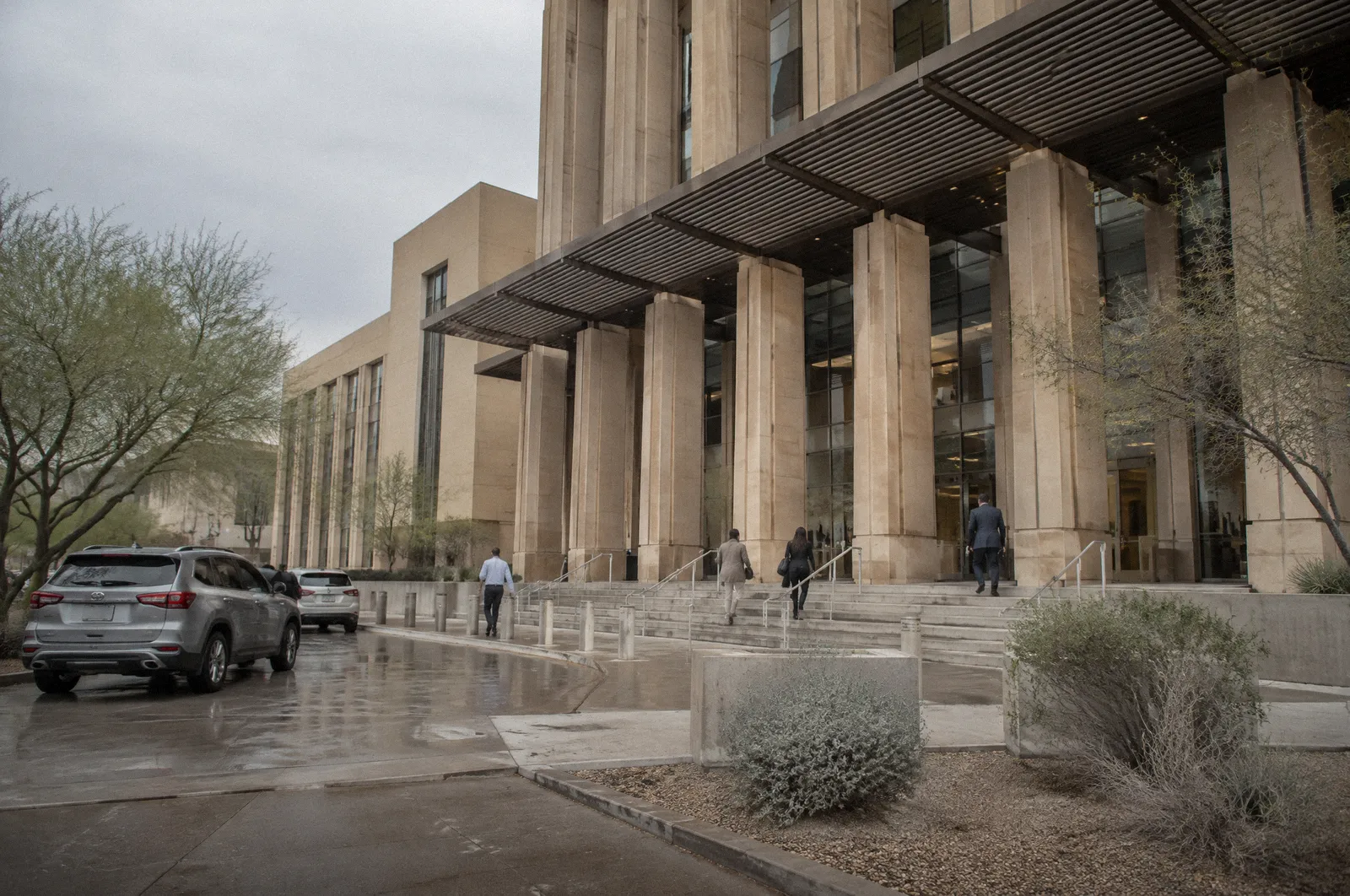
The next question is where in Maricopa County to file. A lawsuit is generally filed in the county where the defendant lives or where the crash happened, and for most Valley collisions that is Maricopa County. Which justice court precinct applies can depend on where the defendant lives or where the claim arose. These rules have exceptions, so call us and we will explain how they apply to you.
A traffic ticket is a separate matter. The other driver may be cited in a city court, such as Scottsdale City Court or Phoenix Municipal Court, but that case is about the citation, not about your injuries. What happens with a ticket does not decide your injury claim.
Arizona
Courts That Matter for Injury Claims in the Valley
These are the real courts people in the Phoenix metro most often hear about in an injury case. Locations and the areas each one serves can change, so check with the court before you go anywhere.
Maricopa County Superior Court, downtown Phoenix
The main courthouse complex for civil injury lawsuits filed in the county.
Southeast Regional Court Center, Mesa
A regional Superior Court location serving the East Valley.
Northwest Regional Court Center, Surprise
A regional Superior Court location serving the West Valley.
Northeast Regional Court Center, Phoenix
A regional Superior Court location serving the northern Valley.
Scottsdale City Court
Hears Scottsdale traffic citations and city code cases, not injury lawsuits.
Sandra Day O’Connor U.S. Courthouse, Phoenix
Home of the U.S. District Court for the District of Arizona, for the federal cases that qualify.
Arizona Court of Appeals, Division One, Phoenix
Hears appeals from Maricopa County Superior Court.
Small Claims in Maricopa County Compared With Superior Court
Choosing the wrong court can cost time, so it helps to see the two main options side by side.
Small claims and justice court
- Small claims is limited to $5,000, and justice court civil cases to $10,000
- Designed for simpler, lower dollar disputes
- Procedures are faster and less formal
- Not built for serious injury claims with large medical bills
Maricopa County Superior Court
- Hears claims above the justice court limit
- Used for most serious injury and wrongful death lawsuits
- Follows the full rules of civil procedure, including disclosure and discovery
- Insurance companies and attorneys often negotiate the percentage of fault long before any hearing
How Maricopa County Superior Court Handles Injury Lawsuits
Maricopa County Superior Court is Arizona’s court of general jurisdiction in the county, and it is where most serious injury lawsuits are filed. The case begins when a complaint is filed that describes what happened, why the defendant is responsible, and what compensation is being sought.
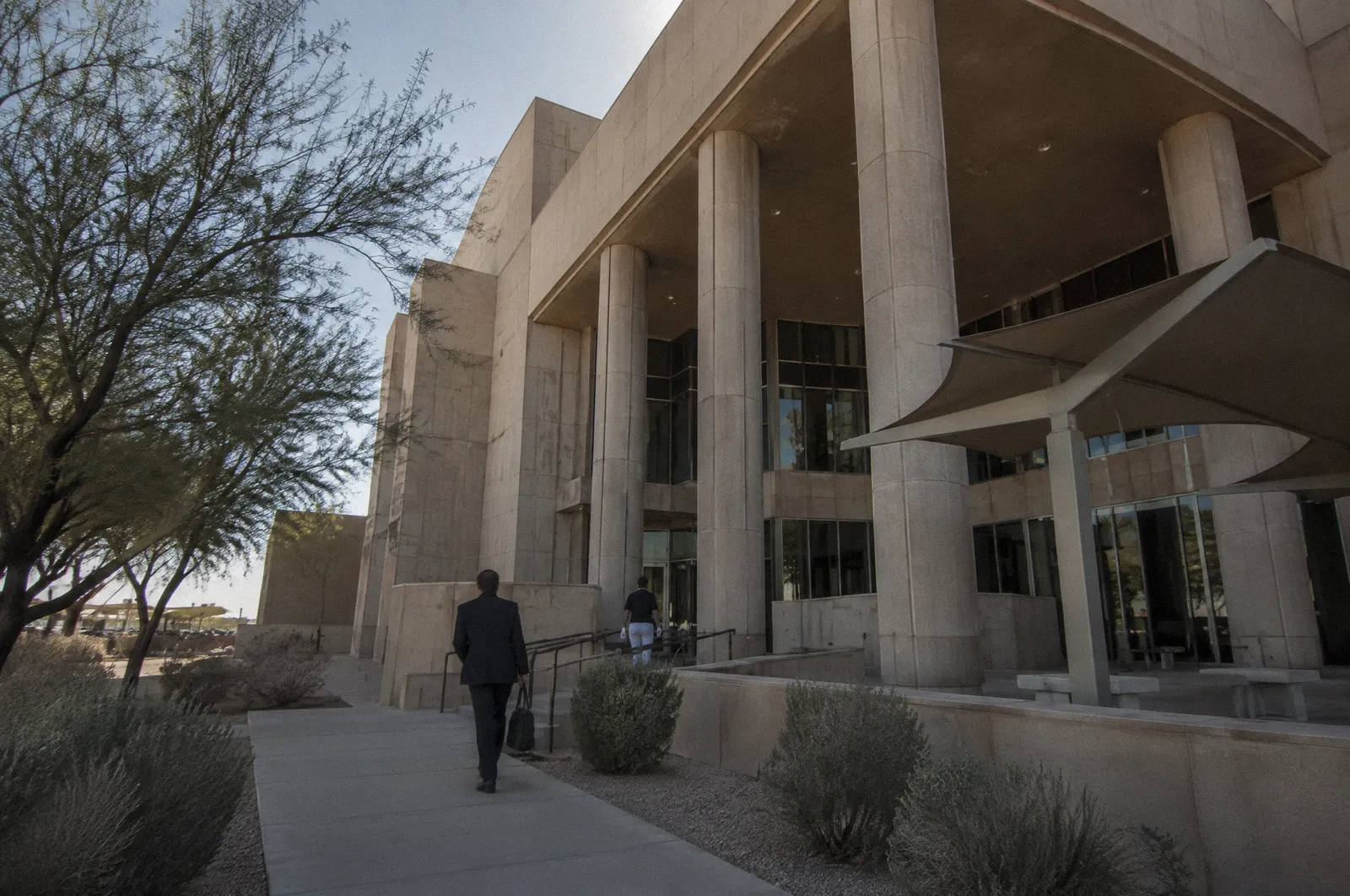
Courts commonly ask that a Maricopa County civil cover sheet be filed along with the complaint. The civil cover sheet is a short form that identifies the type of case and the amount being claimed, and it helps the court assign and track the case. Because filing forms and electronic filing procedures change, confirm the current requirements with the clerk of the court before you file anything.
Filing a lawsuit does not mean your case will be tried before a jury. Many injury cases settle after a lawsuit is filed, often within months, and filing preserves your rights while negotiations continue. Filing also matters because of deadlines: most injury lawsuits must be filed within two years of the injury under A.R.S. 12-542.
Step by step
How an Injury Lawsuit Moves Through Superior Court
Every case is different, and most never go through every stage. This is the general path.

- 1
The complaint is filed
The injured person, called the plaintiff, files a complaint with the court and pays the filing fee or asks the court to defer it.
- 2
The defendant is served
The defendant must be formally served with the summons and complaint within the time the court rules allow.
- 3
The defendant responds
The defendant files an answer, usually through an insurance company’s attorney. The answer commonly disputes fault or the extent of the injuries.
- 4
Disclosure and discovery
Both sides exchange information, including medical records, bills, photographs, and witness names. Depositions may be taken.
- 5
Settlement talks or mediation
Many cases resolve here, sometimes with the help of a neutral mediator.
- 6
Trial, if the case does not settle
If no agreement is reached, a judge or jury decides the case. A smaller number of cases reach this stage.

Claims Against a City, the State, or Another Public Entity
A shorter and separate process applies when the defendant is a public entity, such as a city bus or a county vehicle. A notice of claim is required within 180 days after the claim accrues (A.R.S. 12-821.01), with facts and a specific sum certain, and the claim is deemed denied after 60 days. A lawsuit against a public entity generally must be filed within one year after accrual (A.R.S. 12-821). Read our guide to the Arizona notice of claim before you assume you have two years.
Related pages
Questions
Questions about Maricopa county courts
Which court handles a car accident injury claim in Maricopa County?
Most injury lawsuits that involve medical bills, lost wages, and pain and suffering are filed in Maricopa County Superior Court. Smaller claims, such as a minor property damage dispute, may belong in a justice court or the small claims division. The right court depends on the amount at stake.
What is the small claims limit in Maricopa County?
Small claims cases are limited to $5,000 (A.R.S. 22-503). Justice courts hear civil cases up to $10,000 (A.R.S. 22-201). Claims above that belong in Superior Court. These limits are set by statute and can change, so confirm them with the court.
What is a Maricopa County civil cover sheet?
It is a short form filed with a civil complaint that identifies the type of case and the amount claimed, which helps the court classify the case. Check with the clerk of the court for the form currently required, because court forms and procedures are updated from time to time.
Do I need to go to court to get paid after a crash?
Usually not. Most injury claims resolve through negotiation with an insurance company without a lawsuit, and many cases that are filed still settle before a judge or jury decides anything. Filing a lawsuit can preserve your rights while negotiations continue.
Is a traffic ticket case the same as my injury case?
No. A ticket is handled in a city or justice court as a citation. Your injury claim is a civil matter about compensation. A citation can be one piece of evidence about fault, but it does not decide your claim.
Can an injury case be heard in federal court?
Sometimes. The U.S. District Court for the District of Arizona hears certain cases, for example some claims between citizens of different states. Most Arizona crash cases stay in state court. These rules have exceptions, so call us and we will explain how they apply to you.
Free case review
Talk Through Where Your Case Would Be Filed
If you were hurt in a crash and are wondering whether a lawsuit may be needed, call (602) 584-8054 or request a free case review. Our experienced and friendly attorney will explain your legal rights and where your case would be heard. The earlier you call, the better, but it’s never too late to find out your legal rights.
Call any time. Office visits Monday to Friday, 9 to 5.
Thank you, we’ve received your request.
A member of our team will reach out shortly. If your matter is urgent, call us now at (602) 584-8054.