
Arizona Lane Filtering Law
Arizona Lane Filtering Law: What Riders and Drivers Need to Know After a Crash
The Arizona lane filtering law, A.R.S. 28-903(F), has allowed lane filtering since September 24, 2022. A rider on a two-wheeled motorcycle may pass stopped vehicles on a road with two or more lanes going the same direction and a speed limit of 45 mph or less, at 15 mph or less. Riding between lanes of moving traffic, lane splitting, is still illegal. Legal filtering does not decide fault after a crash, so insurers may still argue that a rider shares the blame.

- Statute
- A.R.S. 28-903(F), effective Sept 24, 2022
- Lane filtering, stopped traffic only
- Rider speed
- 15 mph or less while filtering
- On roads with a 45 mph or lower limit
- Fault rule
- Pure comparative fault, no percentage bar
- A.R.S. 12-2505
- Filing deadline
- 2 years from the crash
- A.R.S. 12-542(1)
Arizona Lane Filtering Law Explained: What Does Lane Filtering Mean?
When a car hits a motorcyclist legally filtering between stopped lanes, Arizona's fault rules do not automatically protect the rider. Here is Arizona's lane filtering law explained: what counts as legal filtering, who usually carries fault after a crash, and where a motorcycle accident claim goes from there. Our page for a motorcycle accident lawyer in Scottsdale covers rider claims in general.
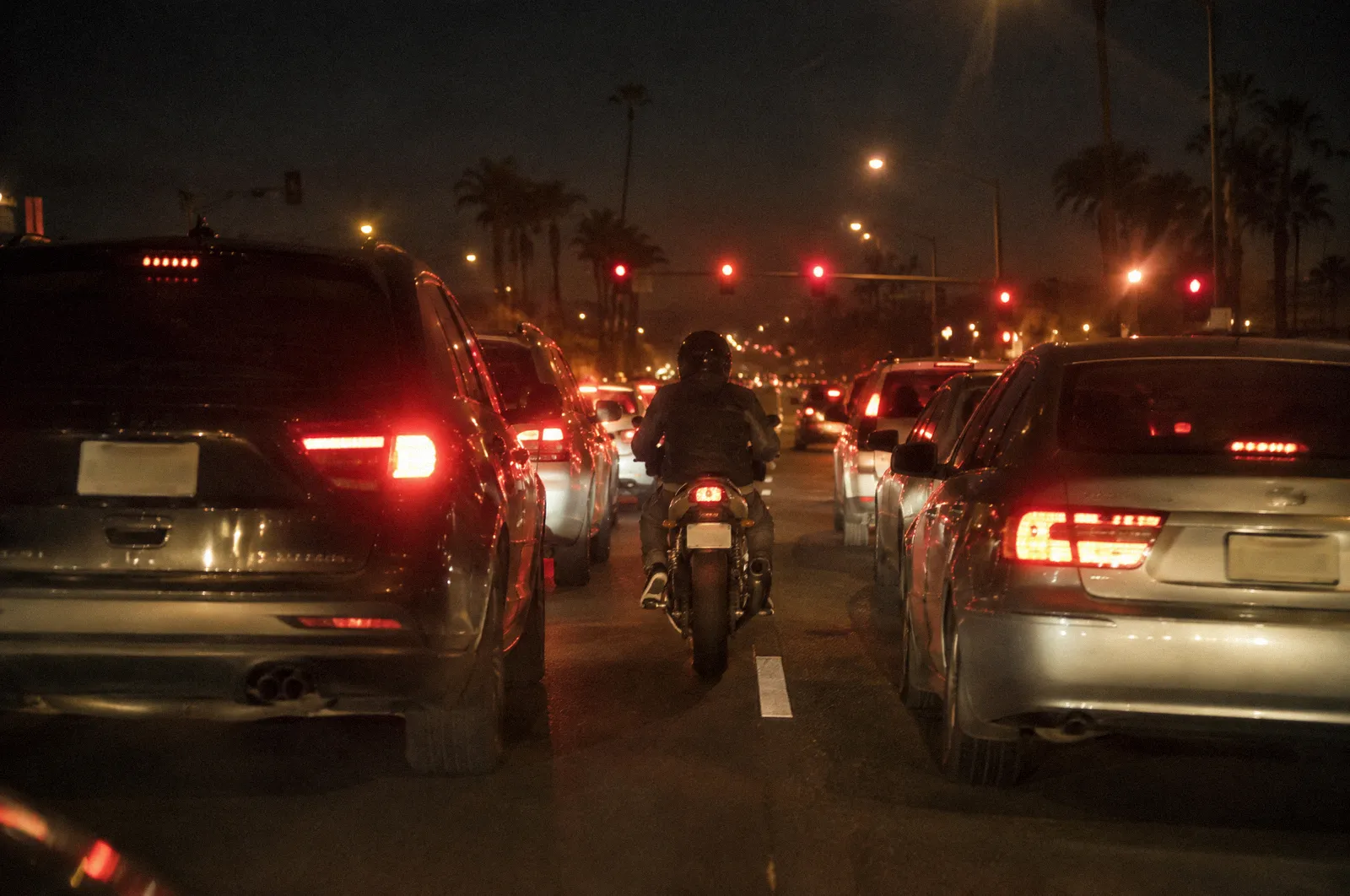
Lane filtering is riding a motorcycle at a low, controlled speed between two lanes of vehicles that are stopped, most often in heavy Phoenix metro traffic or at a red light. The rider is not weaving through cars near the posted speed limit; the surrounding traffic has already stopped. Arizona law treats this narrow maneuver differently than riding among moving vehicles, which is why the distinction matters so much after a crash.
For a rider, filtering can mean the difference between sitting in stalled traffic and legally moving toward the front of a line at a light. For a driver who changes lanes without checking a mirror, it can mean the difference between a routine merge and a personal injury claim.
Arizona
Is Lane Filtering Legal in Arizona, and How Does It Differ from Lane Splitting?
Arizona's version of lane filtering law is narrower than many riders expect. Yes, Arizona has allowed motorcyclists to filter between stopped lanes since September 24, 2022, when A.R.S. 28-903(F) took effect and the state joined a small group that permit the maneuver under specific conditions. Before that change, any movement between lanes, filtering or splitting, was treated the same way: not allowed. The 2022 change carved out a narrow exception for filtering only, not for riding between lanes of moving traffic. Lane filtering in Arizona is a legal option for riders, and lane splitting in Arizona is not.
Lane filtering (legal under limits)
- A two-wheeled motorcycle passes stopped vehicles.
- The road has at least two lanes moving in the same direction.
- The posted speed limit is 45 mph or less.
- The rider travels at 15 mph or less.
Lane splitting (still illegal)
- Riding between lanes of traffic that are actively moving.
- Even at a modest speed, it is splitting and not filtering.
- A rider can be cited for an unsafe lane change or unsafe passing.
- It can also lead to a reckless driving charge, a class 2 misdemeanor (A.R.S. 28-693).

Is Lane Splitting Legal in Arizona? Lane Splitting Remains Illegal
Lane splitting, riding between two lanes of traffic that are actively moving, is still illegal in Arizona. The exception applies only when traffic in the adjacent lane has stopped. A rider who moves between lanes of moving cars, even at a modest speed, is splitting, not filtering, and can be cited for an unsafe lane change or unsafe passing. Riding between moving vehicles can also result in a reckless driving charge under A.R.S. 28-693, which is a class 2 misdemeanor. This distinction becomes central in a crash investigation: adjusters and officers look at whether traffic was actually stopped at the moment of impact to decide which rule applied. Under Arizona lane splitting law, traffic that is slow but still moving does not qualify.
The Speed and Traffic Conditions That Make Lane Filtering Legal
Arizona's lane filtering statute sets out specific conditions, and a rider who does not meet all of them loses the protection filtering normally provides. Filtering is permitted only when:
- The roadway has at least two lanes of traffic moving in the same direction.
- The posted speed limit on that roadway is 45 mph or less.
- Traffic in the lane the motorcycle is moving through is stopped, not just slow.
- The motorcycle itself is traveling at 15 mph or less while filtering.

What Is the Maximum Speed for Legal Lane Filtering?
Meet all four conditions and the rider is filtering legally. Fall outside any one, on a road with higher speed limits, between lanes still rolling, or at a speed closer to 25 or 30 mph, and the maneuver is no longer protected. The conditions exist for safety, giving a filtering motorcyclist enough gap and control speed to stop if traffic shifts suddenly.
The maximum speed for legal lane filtering in Arizona is 15 mph or less (A.R.S. 28-903(F)), and a rider generally cannot be moving much faster than the stopped traffic around them. A rider who filters through stopped lanes must stay under that cap for the whole maneuver, not just at the start. Going noticeably faster than that, even between two clearly stopped lanes, exceeds what Arizona law allows and can lose the legal presumption that filtering was permitted at the time of the crash.
Fault and Liability When a Car Hits a Lane Filtering Motorcyclist
Arizona's lane filtering law protects a rider who meets every condition above, but it does not automatically decide fault after a crash.
- When the driver is at fault
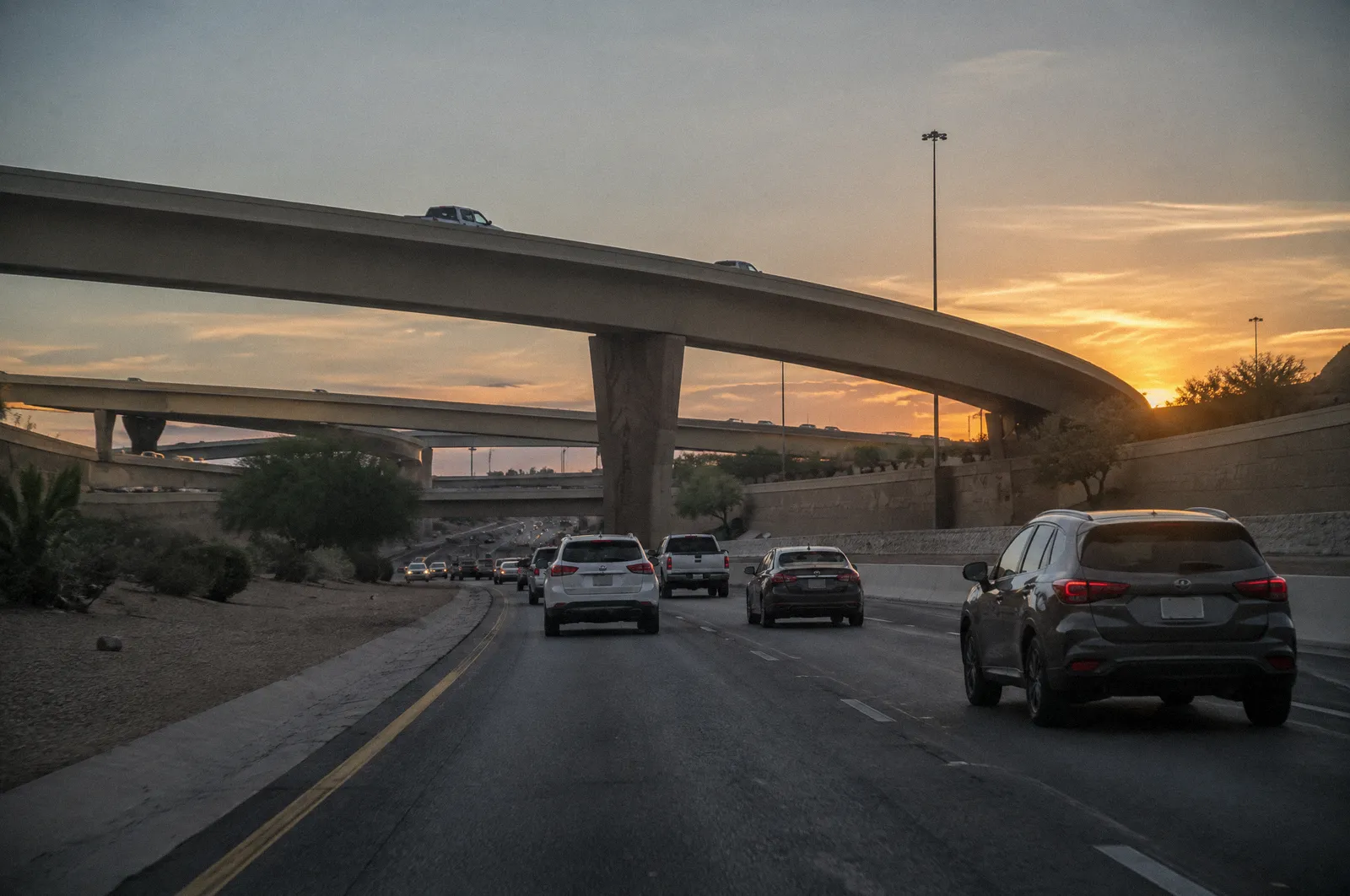
When a rider is filtering within those conditions and a driver changes lanes, opens a door, or merges without checking mirrors and blind spots, that driver is often primarily at fault, the same way a driver is at fault for any unsafe lane change into a vehicle they failed to see. Arizona courts and insurers look at the driver's duty to check for traffic, including motorcyclists, before moving across a lane line.
- Can a Filtering Rider Be Found Partially at Fault?
Yes. Insurance adjusters routinely argue that a filtering rider contributed to a crash simply by being positioned between two lanes, even when the rider met every condition Arizona law requires. Adjusters may point to lane position, following distance, or road rash patterns to suggest a rider was moving faster than allowed or was not fully within a stopped lane. That framing is common in how motorcycle injury claims get lowballed, and it is worth pushing back on with the same crash-scene evidence an adjuster would use against a rider.
- How Comparative Negligence Applies to These Crashes
Under Arizona comparative negligence rules, a jury or insurer assigns a percentage of fault to each party, and compensation is reduced by the rider's own share rather than blocked outright. Arizona uses pure comparative fault (A.R.S. 12-2505), with no percentage bar, and insurance companies and attorneys often negotiate the percentage of fault. A rider found 20 percent at fault for filtering slightly above the speed threshold would still recover damages, just reduced by that percentage. Because the split is often negotiated rather than fixed, understanding how Arizona comparative fault rules reduce settlements before accepting an early offer protects a rider from giving away more of a claim than the facts support.
- What actually weakens a claim
This is also where a personal injury claim becomes less about the crash and more about who can prove which percentage. Filtering legally does not weaken an injury claim by itself. What weakens a claim is a rider who cannot show, through the crash report, photos, or witness accounts, that road, traffic, and speed conditions matched what the law requires at the moment of collision.
What to Do After Being Hit While Legally Lane Filtering
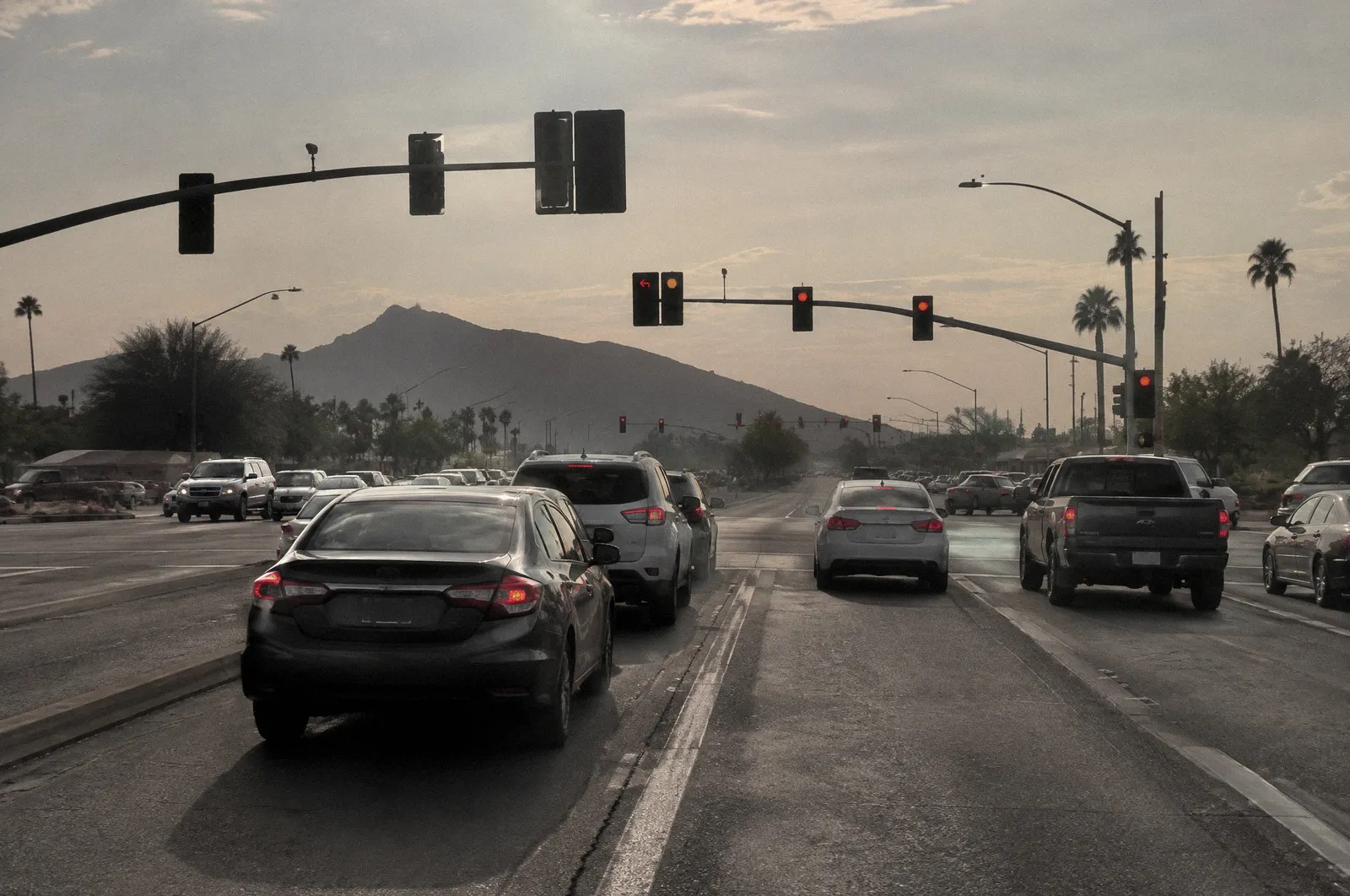
Because Arizona's lane filtering law requires specific conditions, the crash report needs to reflect each one clearly. Treat the scene the same way as any other crash, with a few additions.
- 1
Call the police.
Call police and request an officer respond, since the report should note lane positions, whether traffic was stopped, and the posted speed limit.
- 2
Photograph the scene.
Photograph the lanes, the traffic conditions, and anything showing how fast vehicles around the crash were moving, if safely possible, before any vehicle is moved.
- 3
Find your witnesses.
Get contact information from anyone who saw the crash, since a witness who can confirm traffic was stopped is often the difference between a clean liability case and a drawn-out dispute.
- 4
Get checked and be careful with statements.
Seek medical evaluation promptly, even for injuries that feel minor, and avoid agreeing to a recorded statement to the other driver's insurer before speaking with an attorney.
Can a Driver Be Ticketed for Hitting a Legally Filtering Motorcyclist?
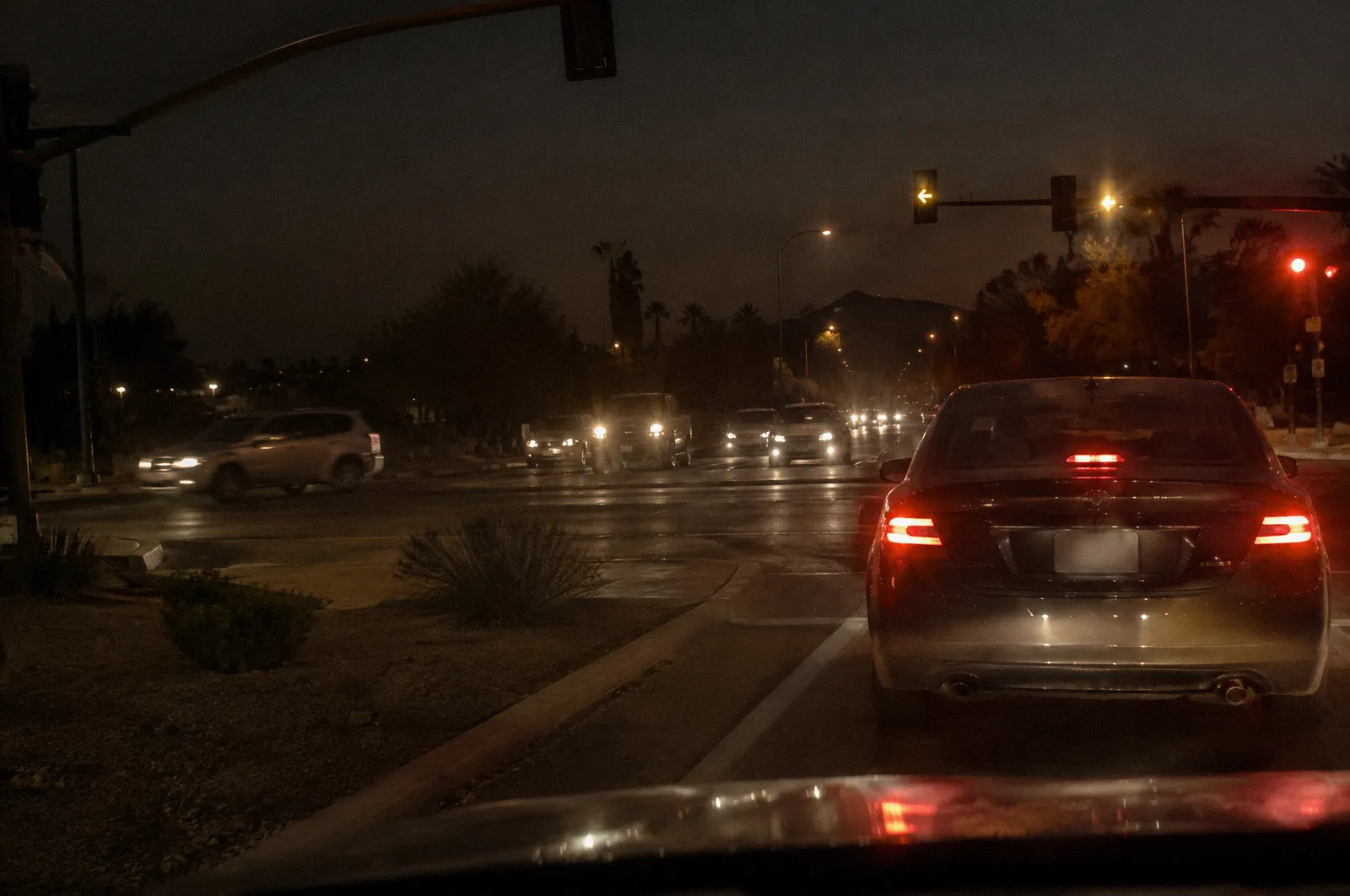
Yes. A driver who changes lanes or merges without properly checking for a motorcyclist, including one legally filtering, can be cited for an unsafe lane change or failure to yield, the same citations that apply in any lane-change crash. Whether a citation is issued depends on what the responding officer observes at the scene.
Other rider rules still apply while filtering. Arizona requires a helmet for riders under 18, and eye protection for operators unless the motorcycle has a windshield (A.R.S. 28-964). Read about motorcycle crash injuries to see how injuries are documented, and our guide to Arizona's statute of limitations for the deadline that applies to your claim.
Get Help After an Arizona Lane Filtering Accident
If a driver hit you while you were legally lane filtering, do not accept a fault determination or a settlement offer before someone reviews the crash report and traffic conditions on your behalf. Contact Valley Accident Law for a free case review to go over what happened and what your claim may be worth. You pay no attorney fee unless we recover money for you.
Our experienced and friendly attorney will explain your legal rights. Our office is at 5635 N Scottsdale Rd, Suite 170, Scottsdale, AZ 85250. Call (602) 584-8054 or send us a message. The earlier you call, the better, but it's never too late to find out your legal rights.
Questions
Questions about Arizona lane filtering law
Is lane filtering still legal in Arizona right now?
Yes. Arizona's lane filtering law has remained in effect since it took effect, allowing motorcyclists to filter between stopped lanes when the roadway, speed limit, and rider's speed meet the conditions state law sets out. Riding between lanes of moving traffic is a separate maneuver, lane splitting, and is not covered.
What if the driver says they never saw the motorcyclist filtering?
Not seeing a motorcyclist is not a legal excuse for an unsafe lane change. Drivers must check mirrors and blind spots before moving across a lane line, and failing to see a legally filtering rider typically points toward driver fault.
Is there a citation for illegal lane splitting in Arizona?
A rider caught splitting lanes of moving traffic, rather than filtering between stopped lanes, can be cited for an unsafe lane change or unsafe passing, and can face a reckless driving charge, a class 2 misdemeanor (A.R.S. 28-693). Officers make that call based on whether traffic was actually stopped.
Do all Arizona roads allow lane filtering?
No. Filtering is only legal on roadways with at least two lanes moving the same direction and a posted speed limit of 45 mph or less. Higher speed limits, or only a single lane in that direction, mean it does not qualify.
Can you lane split in Arizona?
No. Riding between lanes of moving traffic remains illegal. Only lane filtering past stopped vehicles is allowed, and only under the conditions in A.R.S. 28-903(F).
When did lane filtering become legal in Arizona?
The law took effect on September 24, 2022 (A.R.S. 28-903(F)). Before that, riding between lanes was not allowed, whether the traffic was stopped or moving.
Free case review
Talk to Us About Your Lane Filtering Crash
Call (602) 584-8054 or request your free case review. We will explain your legal rights and what we see in your facts. The earlier you call, the better, but it's never too late to find out your legal rights.
Call any time. Office visits Monday to Friday, 9 to 5.
Thank you, we’ve received your request.
A member of our team will reach out shortly. If your matter is urgent, call us now at (602) 584-8054.