

Does the at fault driver get a ticket after a crash? Often, but not always, and a ticket never settles legal fault by itself. A citation may help show what happened, while fault is decided on all the evidence. Here is how citations work in an Arizona claim, and when to call a car accident lawyer.
Does the At Fault Driver Get a Ticket After a Car Accident?
Sometimes. When police respond to a crash, they look at the scene, talk to the drivers and witnesses, and decide whether anyone broke a traffic rule. If an officer believes someone did, they may write a citation (a ticket for a traffic violation). Some crashes end with one ticket, some with two, and some with none, whether the event is a minor collision or a serious auto accident.
So, does the at fault driver get a ticket? It depends on what the officer can establish at the scene. People often ask who gets a ticket in an accident, and the answer is whoever the officer believes broke a traffic rule. An officer who watches a driver run a red light can cite that driver on the spot, while a disputed collision with no witnesses is harder to call.
Does the At Fault Driver Always Get a Ticket?
No. Police officers may not have seen the crash, may hear two conflicting accounts, or may decide the evidence is too unclear to cite anyone. Many car accidents end with no citation at all, and injured drivers also leave by ambulance before an officer finishes the investigation. A missing ticket tells you little about who is legally responsible, which is the question of liability.
What if the At Fault Driver Did Not Get a Ticket?
You still have options. A claim rests on evidence of negligence, and a citation is only one piece of it. Photos, witness names, nearby video, medical records and the police report can all show how the crash happened. If the driver fled, no one can cite them until they are identified, and Arizona's hit and run law adds its own consequences for that driver. Your own policy may also offer coverage in a hit and run, so read it and call us.
Does a Traffic Ticket Prove Who Is at Fault in a Car Accident?
No. A traffic ticket records an officer's view that a driver broke a traffic rule. A car accident ticket is not a court finding on your injury claim or a ruling on liability. A citation may help show what happened, and fault is still decided on all the evidence.
Adjusters read the police report and any citation closely, with their own company's interests in mind. A traffic ticket on the other driver gives them a reason to examine their insured's conduct. A traffic ticket on you gives them a reason to argue you share the blame. Experienced attorneys know the adjuster will weigh a citation but not treat it as the last word.
Can You Get a Ticket and Still Not Be at Fault?
Yes. An officer can cite a driver for a violation that did not cause the crash, such as an expired registration, and officers can guess wrong when two drivers tell different stories. If you got a ticket and believe the other driver caused the crash, tell us what happened. Negligence is about who caused the harm, not who was cited, so your claim may still stand.
Does Paying a Traffic Ticket Mean Admitting Fault in an Accident?
The other side may try to treat a payment as an admission, and how much weight it carries depends on the facts and the type of citation. Before you pay, contest or ignore a citation from an auto accident, call us. Handling it carelessly can injure your legal rights in a later claim for damages, and speaking with an accident attorney first helps you avoid that.
Can the Other Driver's Citation Be Used in Your Injury Claim in Arizona?
It can help in practical ways. A citation may support your account in a personal injury claim and in talks with the insurance company, and it points to the rule the officer believed was broken, such as failing to yield. Whether judges and juries can see the citation is a legal question that depends on the facts and the rules of evidence, so our attorneys review it case by case. Fault still rests on the report, photos, witness statements, vehicle damage and medical records.
What if the Police Report Blames the Wrong Driver?
Police reports matter, and errors happen. If you believe you were not at fault, say so clearly to the officer and explain what you saw. If the report still gets it wrong, gather your own evidence, including photos, witness names and nearby video, which can be overwritten quickly. Then call us, and our attorneys can compare the report with the evidence. A mistaken report does not end your claim.
Can I Still File an Injury Claim if the Other Driver Was Not Ticketed?
Yes. A claim depends on showing that the other driver's negligence (failure to use reasonable care) caused your injuries and damages, not on a ticket. An accident lawyer can help you gather that proof. In most Arizona personal injury cases, the deadline is generally two years from the date of injury. A claim against a city, county, the state, a public school or a public employee needs a written notice of claim within 180 days that states a specific dollar amount (A.R.S. 12-821.01), and a lawsuit within one year (A.R.S. 12-821). Call early.
Who Gets a Ticket When Both Drivers Are Partly at Fault?
Both can. An officer who sees one driver speeding and another turning without checking may cite each. Two tickets do not cancel out or set the percentages. Arizona follows pure comparative fault (A.R.S. 12-2505): a court or jury assigns each person a share of the blame, and your damages are reduced by your share. Arizona has no rule that shuts you out of a claim because you were partly to blame. Insurance companies and attorneys often negotiate those percentages, which is the core of Arizona comparative negligence, so the evidence you collect shapes that conversation.
What Should You Do After a Crash Whether or Not Anyone Got a Ticket?
After most car accidents, take these steps, in this order when it is safe:
- Move to a safe place, check on everyone, and call 911 so police can respond.
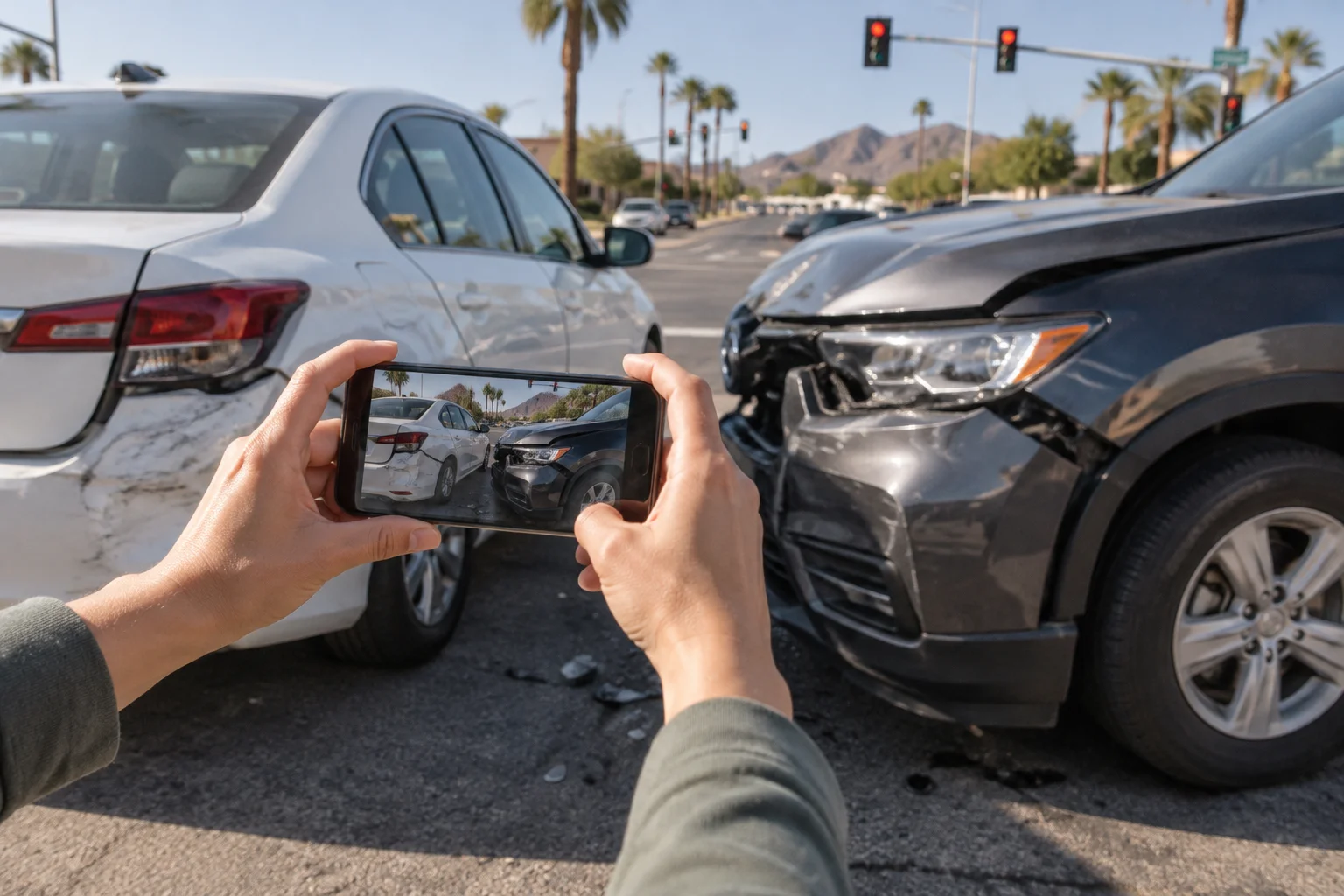
- If it is safe, photograph the scene, the vehicles and the road before anything is moved.
- Collect names and contact information from the other drivers and any witnesses.
- Tell the officer plainly what happened. Stick to facts and skip guesses.
- Have a medical professional evaluate you, even if you feel mostly fine. Accident injuries can cause no symptoms, or seemingly minor ones, at first.
- Think before agreeing to a recorded call with any insurer. You can talk with us first.
- Do not sign a release until you understand it. Signing the wrong release can injure your legal rights and will under most circumstances close your case permanently.
If you are not sure what to say to an adjuster or what a citation means for your claim, call us at 602-584-8054 any time for a free consultation, and our attorneys will explain your legal rights.
Questions People Ask About Crash Citations
Does the at fault driver get a ticket in every Arizona crash?
No. Officers cite a driver only when they believe a traffic rule was broken and the evidence supports it, and many crashes end with no citation or with tickets for more than one driver. A missing ticket does not mean you have no claim. Your claim rests on all the evidence, including photos, witness statements, medical records and the police report.
Is a police report the same thing as a traffic citation?
No. A police report is the officer's written account of the crash, including statements, diagrams and observations. A citation is a separate notice that a driver is charged with a traffic violation. A report can exist with no citation at all, and neither one alone decides fault in your injury claim.
Does a ticket change how long I have to file a claim?
No. The deadline runs from the injury, not from the citation. In most Arizona personal injury cases it is generally two years, and claims against public entities have shorter notice deadlines. Call early so nothing is missed.
Talk With Valley Accident Law About Your Crash Claim
Whether or not a ticket was written, we will explain your legal rights and what your evidence shows. The earlier you call, the better, but it's never too late to find out your legal rights, so contact our office today.
This article is general information, not legal advice, and reading it does not create an attorney-client relationship.