
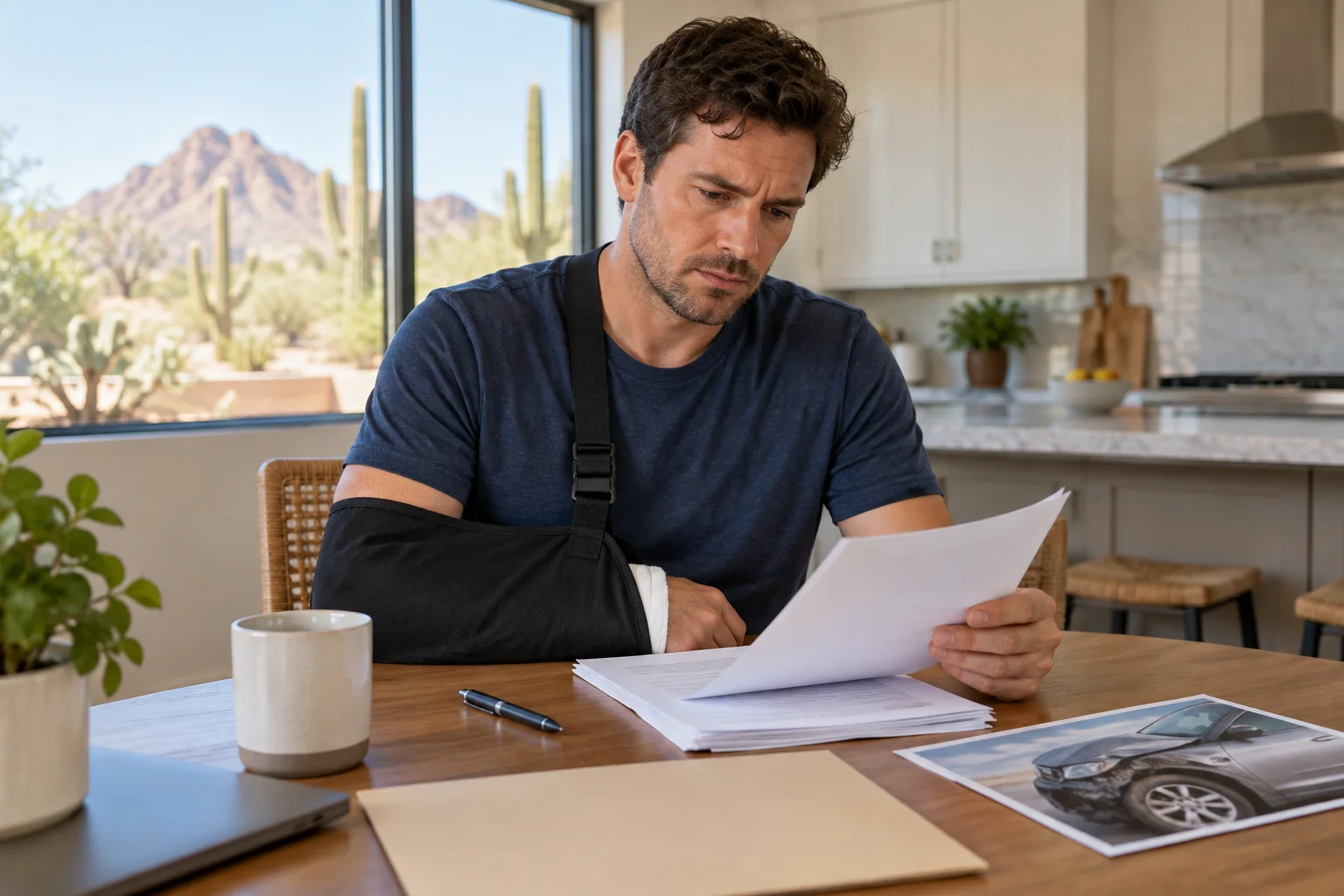
Should I sign a property damage release form after a car accident? Not until you read every line. Some forms cover only your vehicle, but others also release your claim for injuries. Before you sign anything from the other driver's insurance company, learn the rules for talking to insurance adjusters.
What Is a Property Damage Release?
A property damage release is a signed document in which you accept payment for damage to your vehicle and agree not to seek more money for that same damage. After a car accident, the other driver's insurer sends one once its adjuster (the employee who investigates and values the claim) finishes a repair estimate or declares the car a total loss.
Property damage releases come in two sizes. A narrow one covers your vehicle, its contents, and an expense like towing or a rental car. A broad one covers everything the crash caused, including your bodily injury (physical harm to your body) claim. Only one of them is narrow enough to be worth signing, and only after an attorney reads the wording.
Insurance companies often send these damage releases along with the payment, so the paperwork can arrive before you have seen a doctor.
Should I Sign a Property Damage Release Form?
The short answer to “should I sign a property damage release form” is often yes, but only after you confirm what it covers. A narrow release moves your car repairs forward and lets the insurer close the property damages part of its file. A broad release signed early can end your claim for injuries before you know how badly you are hurt, and injuries from car accidents sometimes show up days or weeks later.
When It Is Safe to Sign
A release is usually safe to sign when all of these are true:
- It names only your vehicle, its contents, and an expense like towing or a rental car.
- The payment matches your repair estimate or the car's value, and you agree with that number.
- It says nothing about injury, bodily injury, medical bills, or all claims.
- It does not ask you to accept liability for the crash.
Even then, ask the adjuster to confirm in writing that the release does not touch your claim for injuries.
When You Should Not Sign
Hold off if any of these apply:
- The form releases “all claims” or uses the phrase “any and all.”
- It mentions bodily injury, personal injury, or medical bills.
- It asks you to admit liability or fault.
- You are still treating, or you do not know your total medical bills yet.
- The adjuster pushes you to sign today.
An adjuster works for the insurance company and does not advise you. If you are unsure, attorneys can read the form before you decide, because many people only find out what a release gave up after they signed it.
Property Damage Release Form Example: What the Language Looks Like
Every insurer words its release forms differently, so treat this as a general property damage release form example, not the text of any one company's form.
| Phrase you may see | What it usually means | |---|---| | “Damage to the vehicle described above” | Covers only your car. This is the language you want. | | “Any and all claims” | Reaches past the car. It may include your claim for injuries. | | “Known and unknown” | Covers problems that surface later, including injuries. | | “Bodily injury” or “personal injury” | Releases your right to claim for injuries and the medical bills that come with them. |
One broad phrase can outweigh a page of narrow ones, and a signature can bind you to the words above it, depending on the exact wording and the circumstances.
Should I Sign a Release of All Claims Form?
Generally no, not while a claim for injuries is possible. A release of all claims ends every claim from the crash against the people and insurance company it names, not just the car. That includes property damage, personal injury, medical bills, lost income, and pain and suffering.
A form labeled “property damage release” can still hold all-claims language, which is why “should I sign a property damage release form?” has no yes-or-no answer until you read the text. Injuries reach past medical bills to lost income and the pain and suffering valuation, which turns on facts you may not know yet. Some forms also include a line admitting you caused the crash, and Arizona uses pure comparative fault (A.R.S. 12-2505), so an admission of liability in a property form can follow you into your later claim.
If the adjuster sends all-claims language with a property-only payment, you can decline and make a written request for a property-only version.

What Does a Release for Property Damage in an Auto Accident Cover?
A properly limited release for property damage in an auto accident covers the physical loss to your vehicle: repairs, or the car's value if the insurer totals it, plus contents, towing, storage, and loss of use. These property damages are all it should cover, and the payment should be priced from your repair estimate. Property damages like these are usually paid quickly, separate from anything you recover for injuries. Your claim for bodily injuries has its own deadline. In most Arizona injury cases, the deadline is generally two years from the date of injury (A.R.S. 12-542). Arizona filing deadlines are shorter for a claim against a city, county, the state, a public school, or a public employee, which needs a written notice of claim within 180 days (A.R.S. 12-821.01) and a lawsuit within one year (A.R.S. 12-821).
What Should a Settlement Release Form Say Before You Sign It?
A settlement release form ends a claim for money, so every blank matters. Before you sign, check that it:
- Names only the driver and insurer you are releasing.
- Describes the release as property damage to your vehicle, in plain words.
- States the payment amount and the date you will receive it.
- Says your bodily injury and personal injury rights remain open.
- Leaves no blank lines above the signatures.
If the settlement agreement misses any of these, send the adjuster a written request to fix it.
How Do I Get a Release Limited to Property Damage Only?
Ask in writing. Email the adjuster that you will sign a release limited to property damage, and request a revised form that excludes bodily injury and personal injury. Ask the insurer to reissue the form rather than crossing out lines yourself. If the insurer refuses, do not sign.
Can I Still File an Injury Claim After Signing a Property Damage Release?
Usually yes, if the release is limited to property damage. A release covers only what its words cover, so a narrow property release leaves your medical bills, injuries, and pain and suffering open. Whether a specific document is narrow is a legal question, and attorneys can read the release and tell you where you stand.
Does the Other Driver's Insurer Have to Pay for My Car Without a Release?
In many cases an insurer can pay for your vehicle on a property-only release, and claimants do not need to release their injuries to get a car fixed. If an insurer says it will not pay unless you also release your injuries, call an attorney before you respond. If your policy includes collision coverage, you can also use your own insurance to pay for repairs and let it pursue the other driver.
What If I Already Signed a Release That Covers My Injuries?
Do not sign anything else, and keep the signed form, every email, and any payment record. Whether a release can be challenged depends on its exact wording, what you were told, and what you knew. Releases signed early are the hardest to undo, so call soon. Our attorneys can read the document with you and help you find out where you stand. You pay no attorney fee unless we recover money for you.
Common Questions About Property Damage Releases
Does a property damage release form need to be notarized?
Some forms ask for a notary and many do not, and requirements vary among release forms.
How do I fill out a property damage release form?
Fill in only facts you can verify: your name, the accident date, your vehicle, and the claim number. Check the payment against your estimate. Do not sign until the language excludes injury.
Can I use a property damage release form template or PDF from the internet?
The insurer usually sends its own release form, and that is the version that binds you. A downloaded property damage release form PDF can help you compare language, but do not sign one without an attorney confirming that it protects your claim for injuries.
Get Your Release Read Before You Sign
Before you sign any release, our attorneys will explain what it covers and what it leaves open. The earlier you call, the better, since deadlines and release wording both matter, so call 602-584-8054 or contact Valley Accident Law to find out where you stand.
This article is general information, not legal advice, and reading it does not create an attorney-client relationship with Valley Accident Law.