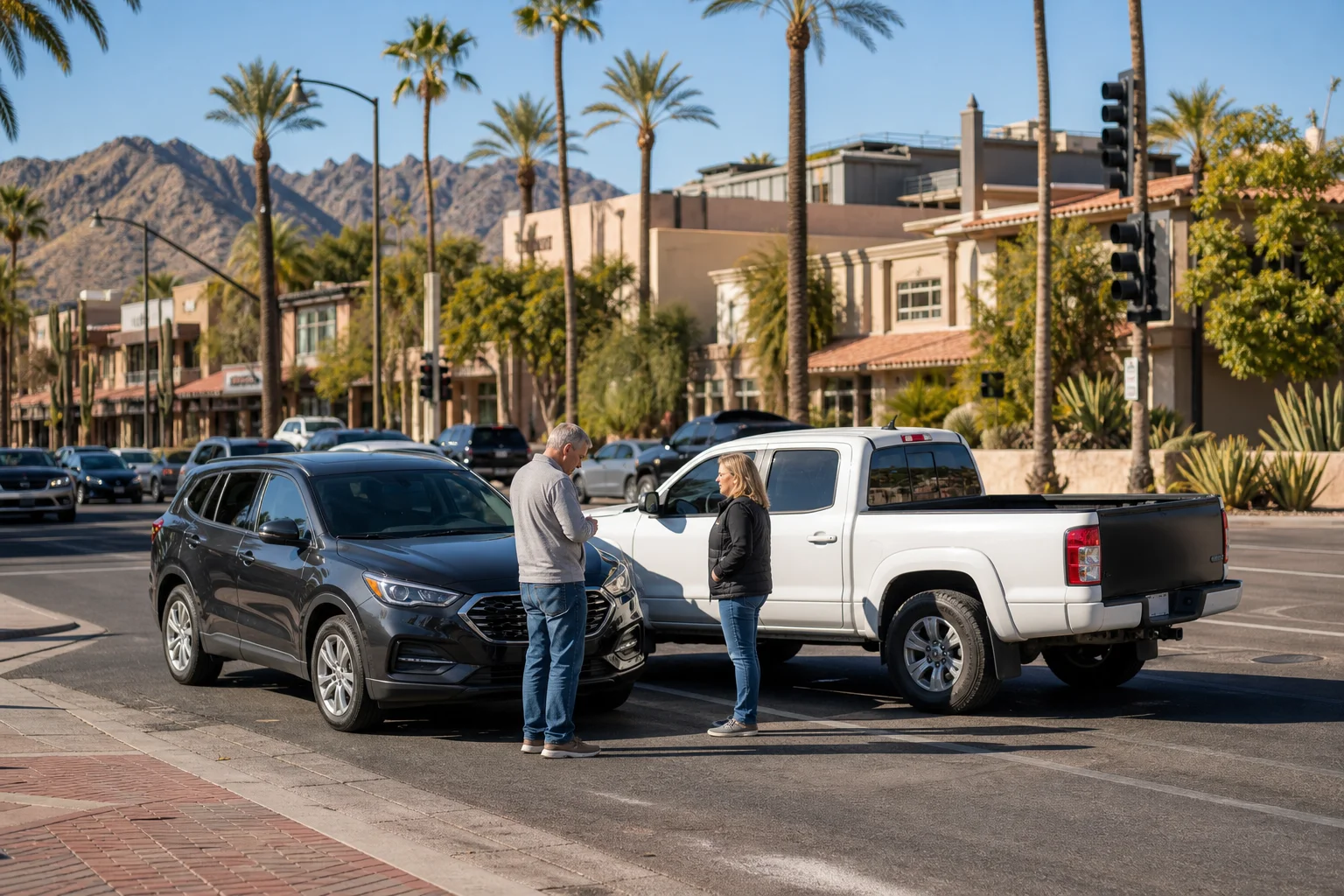
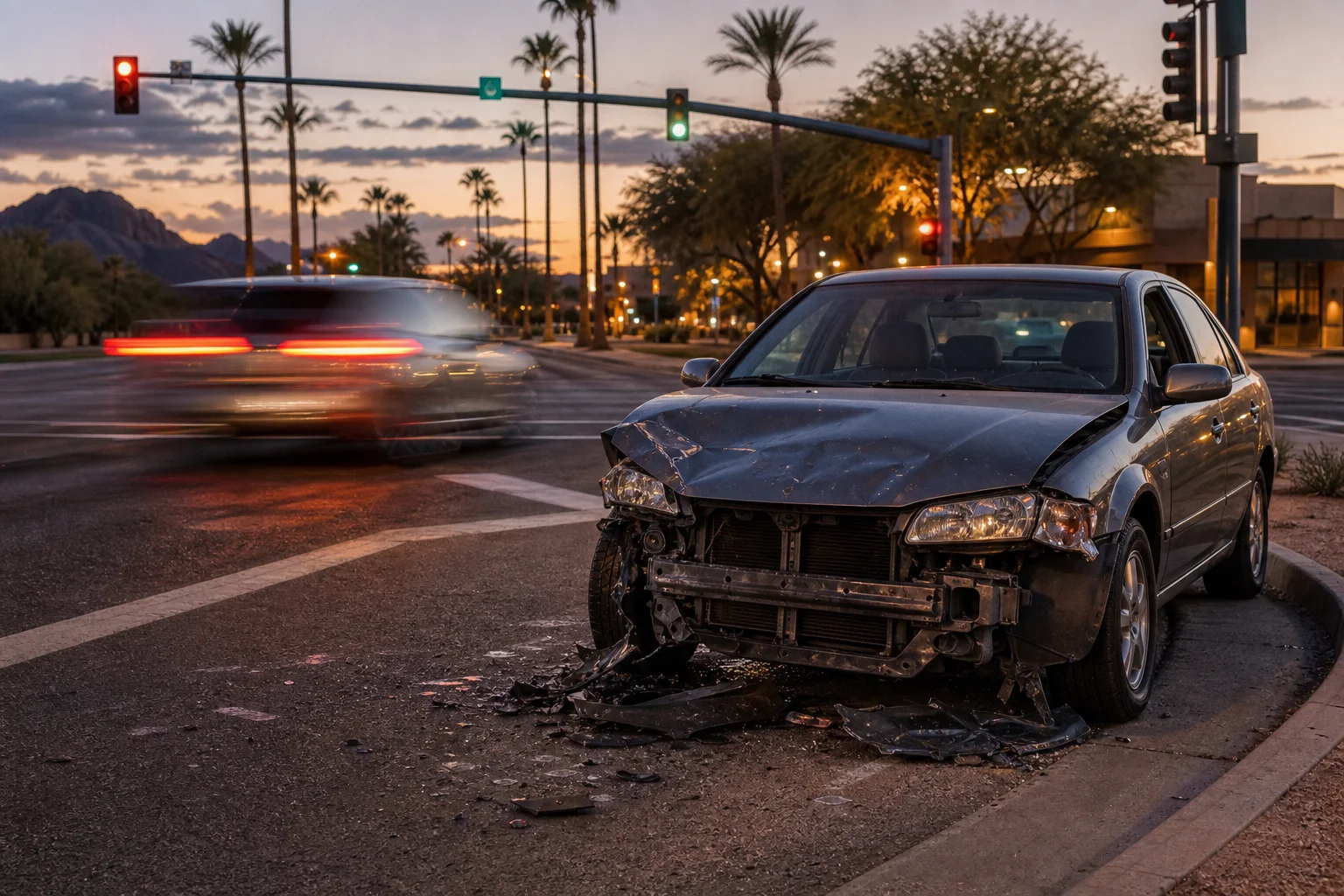
If the other driver hit you and drove away, Arizona law already tells you a lot about who is at fault. This is ARS 28-661 decoded: the statute requiring drivers to stop after a crash, and it shapes fault in nearly every Hit and Run Accidents case that reaches a claim or a courtroom.
By Charles Paglialunga, Esq., Founder, Valley Accident Law, 32 years Arizona personal injury
ARS 28-661 Decoded: What the Statute Actually Requires
Arizona hit and run law starts with a simple duty: a driver involved in an accident resulting in physical injury or death must stop at or as close as possible to the accident scene, provide identification and insurance information, and render reasonable aid to anyone hurt. That is ARS 28-661 decoded in plain terms: stop, identify yourself, help. The statute does not care why a driver left. Panic, a suspended driver’s license, an outstanding warrant, or a DUI concern all describe a motive, not a legal excuse. Once a driver involved in the accident leaves without stopping, the duty under Section 28-661 has already been broken, regardless of what happens afterward.
Is a Minor Fender Bender Still a Hit and Run Under ARS 28-661?
Not usually. ARS 28-661 applies specifically to accidents that cause physical injury or death. A minor fender bender involving only vehicle damage and no injuries falls under a separate Arizona statute with its own reporting duties. That said, if the other driver leaves after a property-only crash, you should still document what you can and report it to police, since the line between no injury and injury that shows up later is not always clear at the accident scene.
Is a Hit and Run a Felony or a Misdemeanor in Arizona?
Leaving the scene of an accident that causes physical injury or death is a felony under ARS 28-661, not a misdemeanor. Arizona ties the severity of the charge to the harm the crash caused: a hit and run resulting in physical injury is prosecuted as a class felony, and the classification moves up when the accident results in death. A conviction can mean prison time, and courts do not treat a class felony charge as symbolic, sentencing ranges attach to it the same way they attach to any other felony in Arizona’s criminal code. Because the exact class turns on medical evidence and how prosecutors charge the case, the specific number matters less to your civil claim than the fact that Arizona treats fleeing an injury or death accident as serious criminal conduct, not a minor traffic violation.
What Happens to a Driver’s License After a Conviction?
A hit and run conviction under ARS 28-661 also affects the driver’s license itself. Arizona courts can order a license revocation on top of any criminal sentence, and that revocation period generally continues to run, including time the person spends incarcerated, so a jail sentence does not simply pause the clock. Some drivers become eligible only for a restricted privilege to drive, limited to essentials like work or medical appointments, once the revocation period allows it. A driver found guilty of a class felony under this statute faces license consequences that follow the criminal case on their own timeline, separate from your insurance claim.
How Does Fleeing the Scene Affect Fault in Your Injury Claim?
When a driver flees rather than stops, that decision becomes part of the fault picture in your civil claim. Arizona is an at-fault, comparative negligence state, meaning the insurance company or a jury weighs each driver’s percentage of fault rather than assigning it all to one side automatically. Arizona comparative fault law reduces a plaintiff’s recovery by their own percentage of fault, but it does not erase it, and a driver involved in the accident who chose to leave the scene rather than stay and cooperate has already handed the other side one of the strongest facts in the case. When a driver caused the accident and still chose to flee, that decision compounds the fault picture rather than erasing it. Insurers know that a driver who did not remain at the scene had something to avoid, whether that was a DUI charge, a suspended driver’s license, or simple panic, and adjusters weigh that conduct heavily against the fleeing driver’s version of events.
Can a Hit and Run Charge Be Used as Evidence of Fault in Your Lawsuit?
Often, yes. A driver’s decision to leave the scene rather than stop is conduct a jury or insurer can weigh when deciding fault, since staying and cooperating is what a driver who believes they are not at fault typically does. A related criminal charge does not automatically decide your civil case, the standards of proof are different, but the underlying facts, including that the driver fled, are typically fair game in your injury claim.
What Should You Do Immediately After a Hit and Run in Arizona?
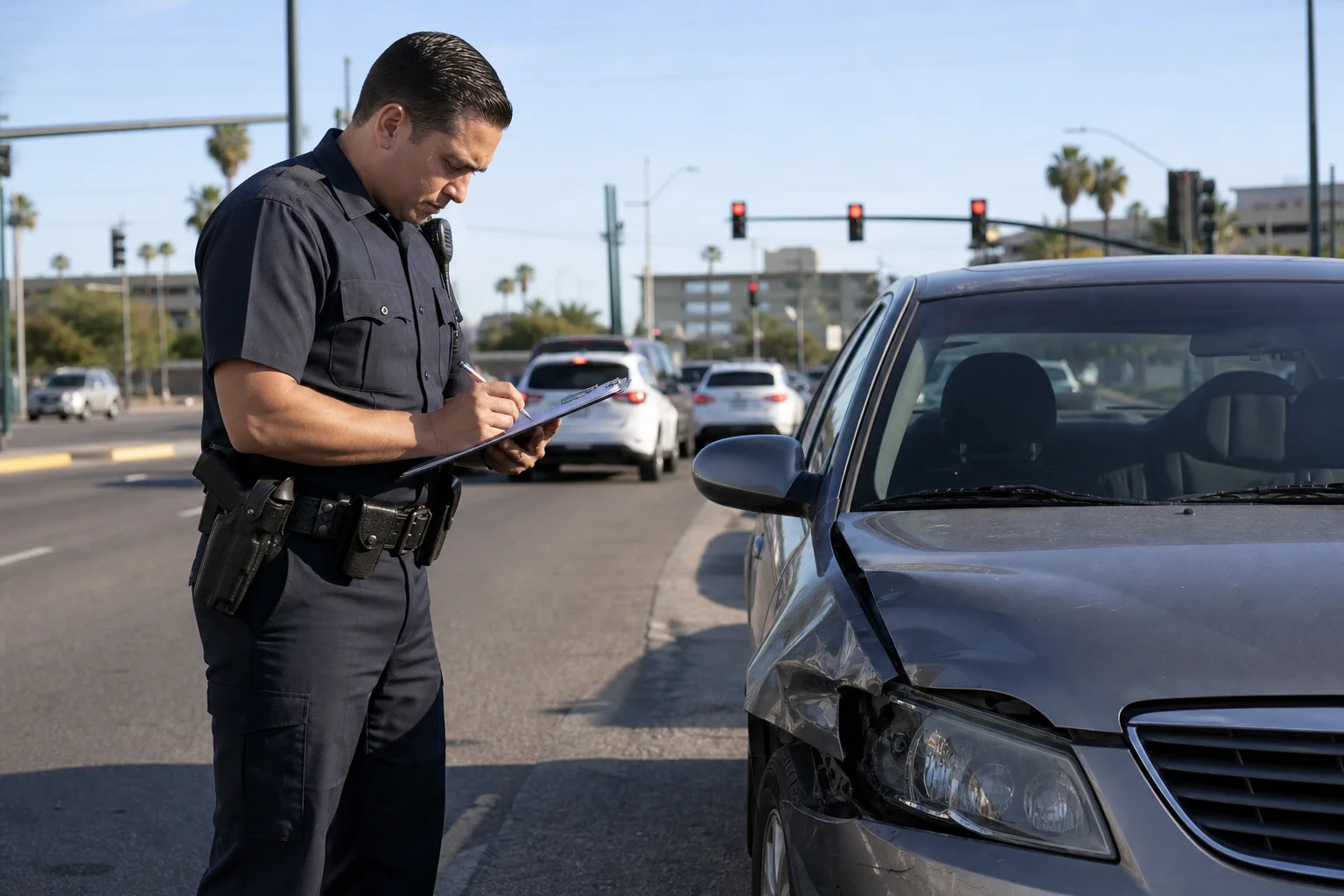
If you are hit and the other driver takes off, your first priority is safety, then documentation. If you are able to remain at the scene of the accident until help arrives, do so, since staying gives responding officers a clearer picture than a scene documented after the fact. Move to a safe location if you can, call 911 to report the crash and request medical evaluation even if injuries feel minor at first, since some physical injury from a collision, like whiplash or a concussion, does not show symptoms for hours. Write down or photograph anything you noticed about the fleeing vehicle: color, make, partial plate, direction of travel. The first steps after a crash tend to shape the rest of the claim, from what a witness remembers to what a responding officer writes in the report. Whether you were hit at a Scottsdale intersection or a Phoenix side street, the same basic steps apply: get medical attention, get a police report number, and get the scene documented before evidence disappears.
Can You Still Recover Compensation If the Driver Is Never Identified?
Yes. Arizona law does not require your claim to end just because police cannot identify the driver who caused the accident.
Does Uninsured Motorist Coverage Pay Out for Hit and Run Accidents?
Uninsured motorist coverage on your own auto policy is written specifically for this situation. When the at-fault driver cannot be identified or carries no insurance, your own UM coverage steps in and pays out the same categories of damages a liability claim would: medical bills, lost wages, and pain and suffering, up to your policy limits.
What Happens If the Driver Is Caught After You’ve Already Filed?
If investigators later identify the driver who caused the accident, your case does not simply restart. Your insurer may pursue subrogation against the now-identified driver to recover what it paid you, and depending on timing, you may also gain the option to pursue that driver directly. Either way, you keep the compensation you already recovered rather than losing ground for having moved forward early.
What Is the Statute of Limitations for a Hit and Run Claim in Arizona?
In Arizona, most personal injury claims, hit and run cases included, must be filed within two years of the date of the crash. That deadline runs whether or not the fleeing driver has been identified, so waiting to see if police make an arrest is not a safe strategy as the two-year window gets closer. If a government vehicle or entity is somehow involved, a much shorter notice deadline, often 180 days, applies separately and on top of the two-year rule, one more reason to get a claim moving rather than wait on a criminal investigation to resolve first.
Frequently Asked Questions
What class felony is a hit and run in Arizona? Arizona charges leaving the scene of an injury or fatal accident under ARS 28-661 as a felony, not a misdemeanor, with the class rising based on how serious the harm was, from physical injury up to a fatal outcome. Because the exact charge depends on medical evidence and how prosecutors file it, ask an attorney about the specific class filed in the criminal case tied to your claim.
Does uninsured motorist coverage pay for a hit and run accident in Arizona? Yes, in most cases. If the driver who hit you cannot be identified or has no insurance, your own uninsured motorist coverage typically pays for medical bills, lost wages, and pain and suffering up to your policy limits, the same categories a standard liability claim would cover.
Can a hit and run charge be used as evidence of fault in my injury lawsuit? Often. A driver’s decision to flee rather than stop is evidence a jury or insurer can weigh when deciding fault, since staying and cooperating is what a driver who believes they are not at fault typically does. It does not automatically decide your case, but it strengthens the fault argument against the driver who left.
Is a minor fender bender still a hit and run under ARS 28-661 if no one is hurt? Not usually. ARS 28-661 applies specifically to accidents causing physical injury or death. A minor fender bender with vehicle damage only and no injuries falls under a separate Arizona statute with its own reporting duties, though you should still exchange information and report it to police if the other driver leaves.
Get Help With Your Arizona Hit and Run Claim
You do not have to sort out fault, insurance coverage, and a pending criminal case on your own after a driver leaves the scene, whether the crash caused injury or death. Charles Paglialunga and the Valley Accident Law team can review what happened and discuss your options in a Contact / Free Case Review.