
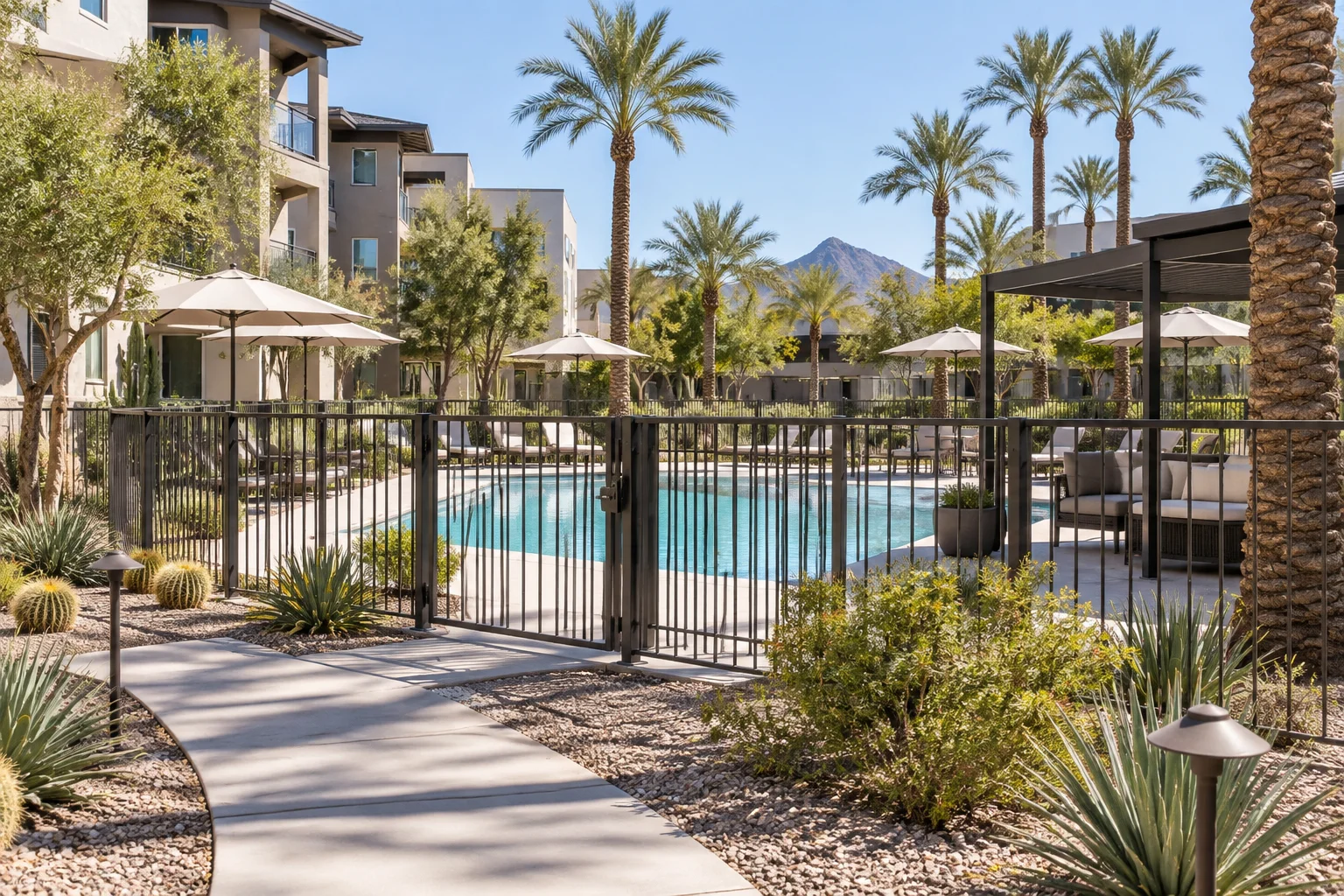
When you're hurt at an Arizona rental property or community pool, figuring out who is responsible, the landlord, the property manager or the HOA, often decides who pays, because premises liability law assigns that duty to whoever actually controlled the space where you fell. Sorting that out is the first step in any Personal Injury claim.
Who Is Legally Responsible for an Injury at an Arizona Rental Property: Landlord, Property Manager or HOA
Arizona premises liability law does not ask who holds the deed to a property, it asks who actually controlled the space where the fall, trip or pool accident happened. A landlord who leases units directly usually answers for injuries tied to habitability and the inside of a rental unit. A property manager hired to run day to day operations, collect rent and coordinate maintenance can carry that same duty when the lease or the management contract puts upkeep in their hands instead of the landlord's. An HOA board typically answers for common areas, pools, walkways, clubhouses and parking lots, that every owner and tenant in the community can access.
What Makes a Landlord Liable for an Injury at an Arizona Rental Property
Under Arizona's Residential Landlord and Tenant Act, a landlord must keep a rental property fit to live in, which includes structural components, plumbing, electrical systems and any common areas the landlord directly controls. When a landlord ignores a known hazard, a broken stair rail, a leaking roof causing a slippery floor, inadequate lighting in a parking area, and a tenant or guest gets hurt, that failure can support a claim. The lease agreement usually spells out which repairs the landlord owns versus which fall to a property manager or an HOA, so it is one of the first documents an attorney reviews. Liability generally requires showing the landlord knew, or should have known, about the hazard and had a fair chance to fix it before someone got hurt.
When a Property Manager Is Liable Instead of the Landlord
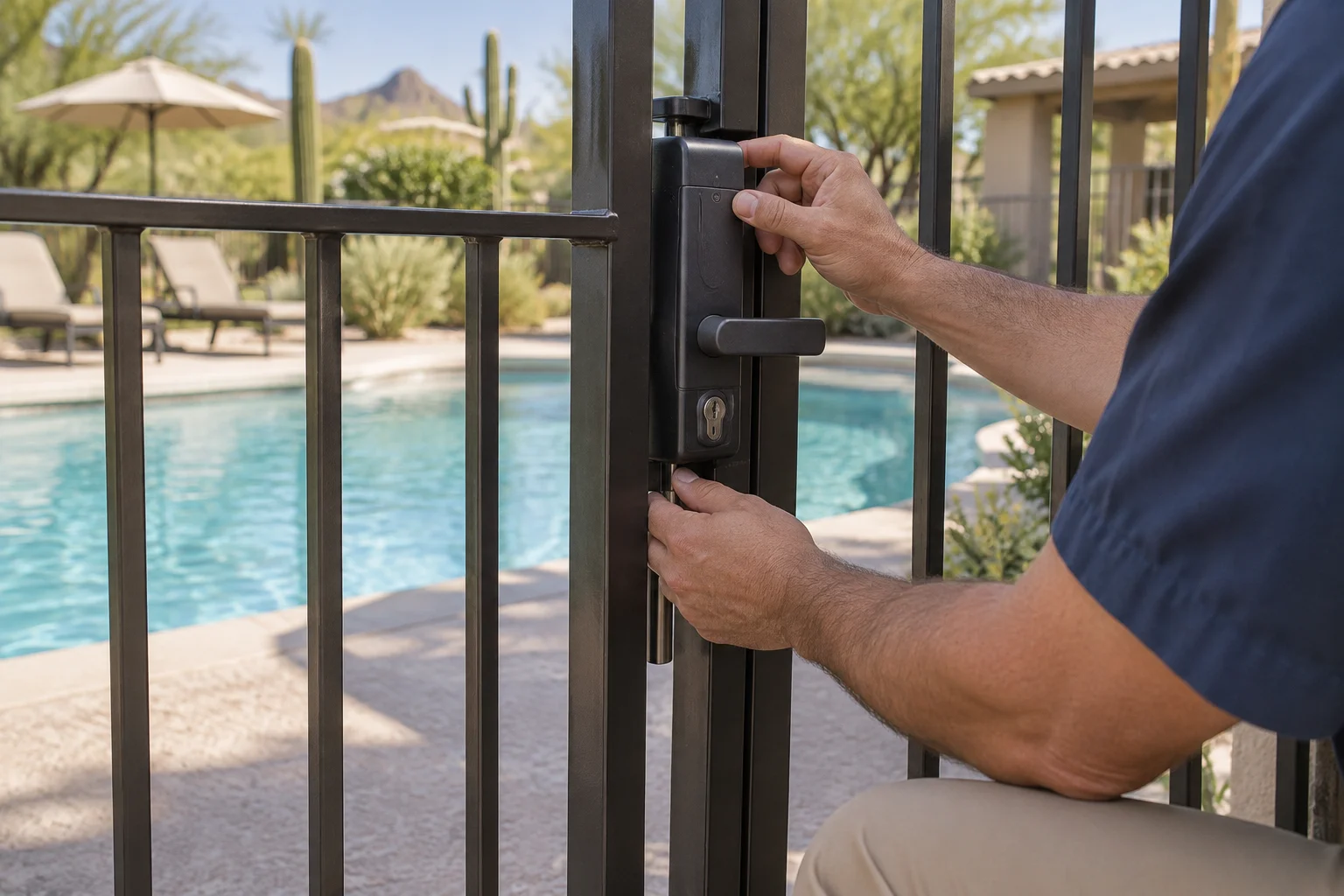
Many Arizona landlords, especially owners of multi-unit buildings, hire a property management company to handle leasing, rent collection and maintenance. When that arrangement exists, the property manager can become the liable party, because they, not a distant owner, had actual day to day control over the hazard. If a maintenance request went unanswered for weeks, if the management contract assigned pool or hallway upkeep to the manager, or if staff ignored a broken gate latch near a pool, the property management company itself may face the claim rather than the landlord who signed the lease. Records showing who received maintenance requests, and how quickly they responded, are usually the clearest evidence of who held that duty.
Can You Sue an HOA for a Pool Injury at an Arizona Community Pool
Homeowners associations that operate a community pool owe a duty to keep it reasonably safe, since the pool is a common area available to every owner, tenant and guest in the community. In a condo or planned community, the HOA can be liable if the board knew about a cracked pool deck, a malfunctioning gate, or missing depth markers and failed to fix it within a reasonable time, or if the association hired a property management company to handle upkeep and that company dropped the ball. Arizona HOAs are also expected to follow their own governing documents and any applicable safety codes for fencing, gates and signage around a shared pool. Whether the injury happened to an owner, a tenant, or a guest, the analysis starts with who the HOA put in charge of pool maintenance and whether that party met the standard of care.
What Arizona Premises Liability Law Says About Landlord, Property Manager or HOA Duties
Claims against a landlord, a property manager or an HOA all rest on the same basic elements: a legal duty owed to people lawfully on the property, a breach of that duty, and an injury caused by the breach. What differs is the source of the duty. A landlord's duty largely comes from the lease agreement and the Residential Landlord and Tenant Act. A property manager's duty usually comes from the management contract between the manager and the owner or the HOA. An HOA's duty comes from its governing documents, typically the CC&Rs, plus the general obligation every property owner has to provide reasonably safe common areas. Because these duties can overlap, an attorney usually pulls the lease, the management agreement and the HOA's governing documents together before deciding who to name in a claim.
How to Determine Which Party Is Liable for a Specific Accident
Because these claims often name more than one potential defendant, sorting out who takes responsibility starts with a few practical questions. Where exactly did the injury happen: inside a leased unit, in a shared hallway, or at a pool or clubhouse used by the whole community. Who was contractually responsible for maintaining that specific area under the lease, the management contract or the HOA's rules. Had that party received any prior complaint or repair request about the same hazard. A careful review of the lease, the property management company's service records and the HOA's maintenance logs together can identify which insurer should actually be handling the claim before a filing deadline narrows the options.
The team profiled in Valley Accident Law's About Us has spent nearly three decades sorting out these disputes across the Phoenix metro, and a free case review of your lease, HOA records and injury can identify which insurer should be paying your claim before you sign anything. Insurers often extend a fast number while liability is still being sorted out, so understanding whether to accept the first settlement offer matters just as much as knowing which party's policy is paying it. If the injury is minor and treatment stays limited, the claim amount may fall inside Arizona's small claims limit, though a fall or pool accident serious enough to need ongoing care typically exceeds that ceiling quickly.
Can More Than One Party Be Held Liable for the Same Injury
Yes. It's common in Arizona for a landlord, a property manager and an HOA to each hold a share of responsibility for the same accident, especially when a hazard sits at the boundary of their duties, like a shared stairwell the HOA maintains but the manager was told about repeatedly. Arizona follows a comparative fault system, so more than one defendant can be assigned a percentage of fault, and a claim doesn't have to identify a single responsible party before it can move forward. An attorney typically names every party whose insurance could reasonably be on the hook and lets the evidence sort out the actual percentages, rather than guessing wrong and losing the chance to recover.
Frequently Asked Questions
Can I sue my landlord for an injury at my apartment complex pool in Arizona? Yes, if the landlord owned or directly controlled the pool and knew about the hazard that caused your injury. Many apartment complex pools are actually maintained by a property manager rather than the landlord personally, so the claim may need to be directed at whichever party held maintenance responsibilities for the pool, not simply whoever is named on your lease.
What is the difference between landlord liability and HOA liability for a pool accident? Landlord liability typically applies when the pool sits on rental property a landlord leases directly to tenants under a lease agreement. HOA liability applies when the pool is a common area shared by an entire community, including owners, tenants and guests, and governed by the association's rules rather than one individual lease. The distinction often decides which insurance policy actually responds to your claim.
How long do I have to file a premises liability claim against a landlord, property manager or HOA in Arizona? Arizona generally gives injured people two years from the date of the accident to file a personal injury lawsuit, including premises liability claims against a landlord, property manager or HOA. That deadline can shift in specific situations, so have a professional review the facts early rather than assume the general rule applies to your case.
Who is responsible if a guest, not a tenant, is injured at the pool? A guest generally receives the same protection as a tenant for hazards in a shared pool or other common area. Whether the landlord, the property manager or the HOA is responsible still depends on who controlled and maintained that specific area, not on whether the injured person's name appears on a lease.
What evidence helps prove which party was liable for my injury? Maintenance records, prior complaints, the lease agreement, the property management contract and the HOA's governing documents all help establish who had a duty to fix the hazard. Asking the property manager or HOA board directly whether they received earlier reports about the same problem helps too, since a documented complaint often points straight at the responsible party.
Get Help Identifying the Liable Party in Your Arizona Injury Claim
Sorting out whether a landlord, a property manager or an HOA is responsible for your injury can mean digging through leases, contracts and maintenance records while a filing deadline keeps moving closer. A Contact / Free Case Review with Valley Accident Law can help identify the right party before that happens.