An insurance company will often pay your medical bills and lost wages after a fall, but two damages routinely get disputed or denied. Understanding what an Arizona store or restaurant fall claim pays for, and the two damages insurers refuse, protects you from settling for a fraction of what a Personal Injury claim is worth.
What an Arizona Store or Restaurant Fall Claim Pays For
A slip and fall claim against a store or restaurant is built on economic and non-economic damages. Economic damages are the costs you can point to a receipt or a paycheck for: emergency room bills, follow-up treatment, physical therapy, and wages lost while you recover. Non-economic damages cover what a bill cannot capture, mainly pain and suffering. Under Arizona law, both categories are recoverable when a property owner's negligence caused your fall, but insurers only volunteer the first category without a fight.
How Much Is a Store or Restaurant Slip and Fall Claim Worth in Arizona?
Value depends on the severity of the injury, how clearly the store or restaurant is at fault, and how well your treatment is documented. A soft tissue injury with a short recovery is worth less than a fracture requiring surgery or a head injury with lasting symptoms. Liability clarity matters just as much as medical cost: a case with a clear hazard and a weak defense settles differently than one where fault is contested.
What Is the Average Settlement for a Slip and Fall at a Store or Restaurant in Arizona?
Average settlement figures circulating online are not reliable, because Arizona slip and fall cases range from small soft tissue claims to seven-figure verdicts depending entirely on the facts. Valley Accident Law's attorneys have taken Arizona personal injury cases to results including a $6.1 million verdict, and that range is exactly why no single average number means much without knowing your medical bills, your liability facts, and your insurer's own history on similar claims.
The Two Damages Insurers Refuse to Pay in a Slip and Fall Claim
Once you understand what an Arizona store or restaurant fall claim pays for, and the two damages insurers refuse, the rest of the process makes more sense. The two most commonly disputed items are pain and suffering and future medical treatment, and both get minimized for the same underlying reason: neither one comes with a receipt.
Why Do Insurers Deny Pain and Suffering on a Store or Restaurant Fall Claim?
Pain and suffering is subjective, so an insurance company leans on claims-evaluation formulas that assign a low multiplier to soft tissue injuries and discount your own account of ongoing pain unless it is backed by consistent medical documentation. When an insurance company denies pain and suffering outright, it is usually because the medical record has gaps, not because the pain was not real.
Why Do Insurers Refuse to Pay for Future Medical Treatment After a Fall?
Insurers prefer to close a file before future treatment is documented, and they frequently dispute whether ongoing symptoms are actually connected to the fall rather than a pre-existing condition. Paying for treatment you have not yet received requires a medical opinion projecting what that care will cost, and an adjuster will rarely accept your account of what a doctor "might" recommend without that written projection.

Who Is Liable When You Fall in an Arizona Store or Restaurant?
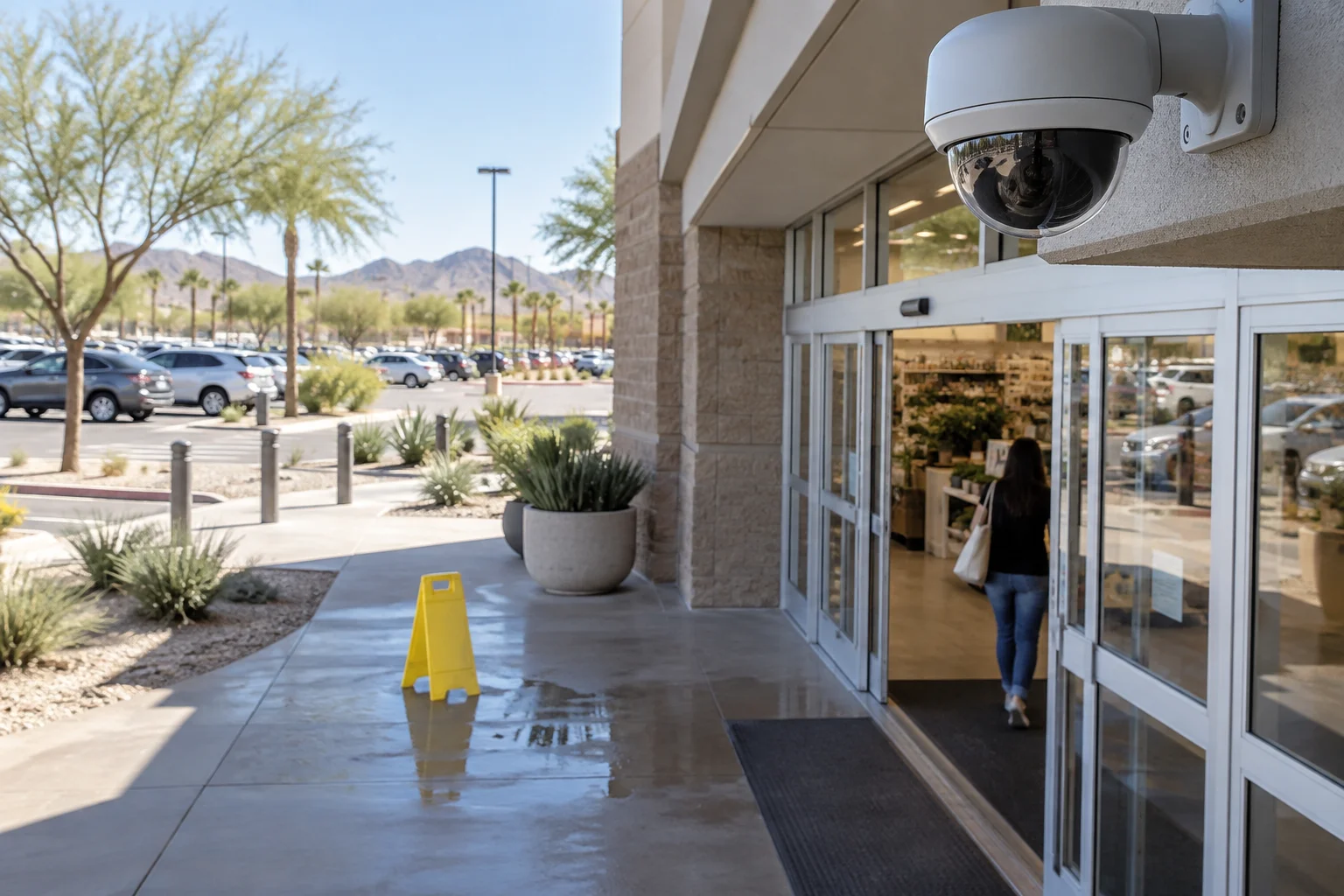
Arizona premises liability law holds a business responsible for keeping the property reasonably safe for customers, known as invitees. That duty covers the entire property a customer is invited onto, whether the fall happened on the sales floor, in parking lots outside the entrance, or in grocery stores where spilled liquid or produce creates a hazard between routine cleanups. The property owner or manager can be liable if the hazard existed long enough that a reasonable inspection would have caught it.
How Do You Prove a Store or Restaurant Is Responsible for Your Fall?
Proving liability usually comes down to notice. Arizona law requires showing the store or restaurant had actual or constructive notice of the hazard, meaning an employee caused it, knew about it, or should have discovered it during a reasonable inspection. Incident reports, surveillance footage, cleaning logs, and witness statements are what usually establish that notice, which is also the central question behind most disputes over who was actually responsible for the hazard.
Can You Still Get Paid If You Were Partly at Fault for Your Fall?
Yes. Arizona follows a pure comparative negligence rule under A.R.S. section 12-2505, so being partly at fault reduces your recovery by your percentage of fault rather than eliminating your claim. If an adjuster argues you were on your phone or not watching where you stepped, that argument may reduce the value of your slip and fall claim, but it rarely defeats it outright as long as the hazard itself was unreasonably dangerous.
How Long Do You Have to File a Slip and Fall Claim Against a Store or Restaurant in Arizona?
Arizona law gives you two years from the date of your fall to file a lawsuit against the store or restaurant, under A.R.S. section 12-542. Missing that deadline generally bars the claim entirely, regardless of how strong the medical evidence is, so any settlement negotiation needs to stay on a timeline that protects your ability to file suit if talks stall. Because the countdown runs in years from the date of the fall, not from when your injury is finally diagnosed, it pays to calendar the deadline early rather than assume a lawyer can be found later.
Do You Need a Lawyer to Fight a Denied Slip and Fall Claim in Arizona?
You are not required to hire an attorney, but a denied or lowballed claim usually involves an insurance company that already has an adjuster and, often, defense counsel working the file. Charles Paglialunga has spent 29 years handling Arizona personal injury claims (About Us), and a free review of a denied or lowballed slip and fall offer can tell you whether the number reflects what your medical bills, lost wages, and pain and suffering actually add up to. A free case review early on, well within those two years of the date of your fall, gives you the most room to negotiate before any deadline pressure sets in.
What Should You Do If the Store's Insurance Company Denies Your Fall Claim?
Start by requesting the denial in writing along with the specific reason given, then gather your medical records, incident report, and any photos of the hazard before you respond. Most Arizona personal injury attorneys, including this firm, work on contingency, so you owe nothing in attorney fees unless you recover, though case costs work differently from fees if the case does not succeed. Reviewing that distinction before you commit to a fight helps you decide whether appealing the denial is worth it.
Frequently Asked Questions
Does it matter if I fell in a parking lot instead of inside the store or restaurant? No. Arizona premises liability law covers parking lots the same way it covers the sales floor or dining room, since the property owner controls both areas. Potholes, poor lighting, and unrepaired cracks in parking lots create the same duty to inspect and fix or warn as a wet floor inside, and a fall in either location can support a claim if the hazard existed long enough to be discovered.
Can grocery stores be held responsible for a customer slipping on a spilled product? Yes, in many cases. Grocery stores deal with spills constantly, so Arizona courts often expect a reasonable inspection schedule, and a store that cannot show it checked the aisle recently before your fall may be liable. What matters is whether an employee caused the spill, knew about it, or should have found it during a routine walk-through.
What if the store says I was not paying attention when I fell? Comparative fault does not automatically bar your claim. Under Arizona law, your award is reduced by your percentage of fault rather than eliminated, so even if an adjuster argues you were distracted, you may still recover damages for the store or restaurant's share of the blame, provided the hazard itself was unreasonably dangerous.
Will my slip and fall claim go to trial, or does it usually settle? Most Arizona slip and fall claims against stores and restaurants settle before trial, though the timeline and amount depend heavily on how clearly liability is established and how well your damages are documented. A claim tends to go to trial mainly when the insurance company disputes liability outright or offers far less than the medical bills and lost wages support.
Does Arizona law cap how much pain and suffering I can recover in a slip and fall case? No. Arizona does not impose a statutory cap on pain and suffering damages in standard premises liability claims like a store or restaurant fall, unlike some states. The amount instead depends on the severity and permanence of your injuries, supported by medical records and, often, testimony about how the injury changed your daily life.
Get a Free Case Review of Your Arizona Fall Claim
A store or restaurant's insurance company rarely volunteers pain and suffering or future medical costs without a fight, so knowing what an Arizona store or restaurant fall claim pays for, and the two damages insurers refuse, matters before you sign anything the adjuster sends. Start with a free Contact / Free Case Review.