

When you’re pursuing a Personal Injury claim in Arizona, the insurance company’s doctor is the physician the insurer hires to examine you, not to treat you. Their opinion can shape how much your claim is worth, so understanding what an independent medical examination actually involves matters before you walk in.
By Charles Paglialunga, Esq., Founder, Valley Accident Law, 32 years Arizona personal injury
What Is an Independent Medical Examination (IME) in an Arizona Injury Claim?
An independent medical examination, usually called an IME, is a one time evaluation performed by a doctor the insurance company selects and pays for, not a doctor you chose. In most Arizona injury claims, the insurer requests an IME after you’ve already been treating with your own physician for weeks or months. The stated purpose is to give the insurance company a second medical opinion on your diagnosis, your treatment, and how much longer your recovery is expected to take. In practice, the IME doctor’s report becomes part of the insurance company’s file and often gets used to argue that your injuries are less severe, or less connected to the crash, than your own medical records show.
Why Does the Insurance Company Send You to Their Own Doctor Instead of Yours?
Your treating doctor has an ongoing relationship with you and a record of your care over time. The insurance company’s doctor sees you once, usually for less than an hour, and is paid by the insurer for that single evaluation. That difference matters. You still get to choose your own treating doctor for ongoing care; the insurer only controls who conducts this one evaluation. Insurance companies have used low initial settlement offers to test injured claimants for years, and the IME report often gives that same strategy a medical veneer, an opinion the adjuster can point to when arguing your claim is worth less than your treating doctor believes. That doesn’t mean every IME doctor writes a biased report, but it does mean the exam exists because the insurer wants information it doesn’t already have from your own care team.
Do You Have to Attend an IME Requested by the Insurance Company in Arizona?
In most cases, yes, if the request comes from within your own auto policy’s cooperation clause, or from the insurer defending the at fault driver once litigation has started. Insurers often schedule the appointment through a third party scheduling service rather than contacting you directly, so confirm any exam notice with your attorney before assuming it’s routine. Refusing an IME under a policy provision can give your own auto insurer grounds to deny coverage on an uninsured or underinsured motorist claim. The same obligation shows up outside car accident cases too. In a workers compensation claim, Arizona law generally requires an injured worker to attend a scheduled independent medical examination or risk a suspension of benefits, so the pattern holds across both systems: cooperate with a properly noticed exam, but you’re not required to answer questions that go beyond your physical condition.
What Actually Happens During an Arizona IME Appointment?
Most IME appointments follow a similar pattern and usually happen at a private office or a dedicated evaluation center rather than a hospital. You’ll fill out an intake form, the doctor or a technician will ask a short series of questions about your symptoms and history, and a physical examination follows that’s usually limited to the body parts connected to your claim. The doctor typically reviews your prior medical records, imaging, and the treatment notes from your own providers before or during the visit. Nothing about the appointment is treatment. The doctor won’t prescribe anything, order follow up care, or discuss your prognosis with you directly. Their job is to observe, document, and later write a report for the insurance company, and that report is the only real output of the visit.
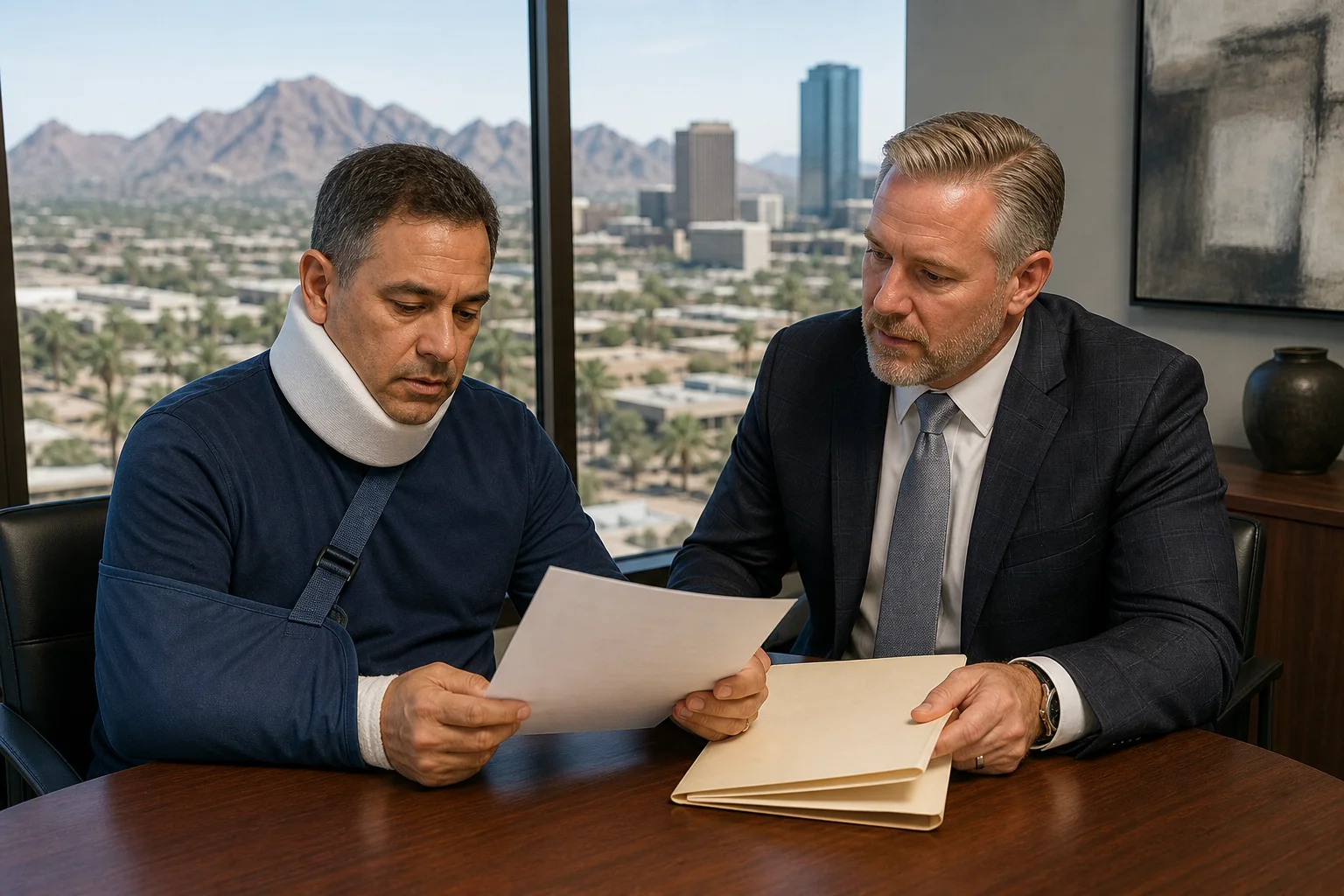
What Should You Say (and Not Say) to the Insurance Company’s Doctor?
Answer only what’s asked, describe your symptoms honestly without minimizing or exaggerating them, and avoid volunteering opinions about fault, prior injuries, or unrelated health issues unless directly relevant. The same discipline that protects you in conversations with a claims adjuster applies here: stick to facts you actually know, say “I don’t recall” when that’s true, and don’t guess at causes or timelines. Don’t downplay pain to seem tough, and don’t overstate limitations either, since the exam is often the one data point in your file the insurer trusts least, so any inconsistency between what you say and what your own medical records show becomes a talking point later.
How Should You Prepare for an IME to Protect Your Claim?
Bring a list of your current symptoms, medications, and any activities you can no longer do comfortably, including how your daily life has changed, and review your own treatment timeline beforehand so your answers stay consistent with your medical records. Arrive on time, be respectful, and treat the appointment the same way you’d treat a deposition, because in an evidentiary sense, it functions like one. Charles Paglialunga brings 32 years of experience preparing Arizona clients for exactly this appointment, background covered on our About Us page, and that preparation usually starts with a short call to walk through what the doctor is likely to ask and how the answers tend to get used. Write down what happened during the exam immediately afterward, including how long it lasted and what was and wasn’t examined, while it’s still fresh.
What Happens If the IME Report Contradicts Your Own Doctor’s Findings?
A contradictory IME report doesn’t end your claim, but it does change the negotiation. Your treating doctor’s opinion still carries weight, particularly when it’s backed by months of consistent care, imaging, and objective findings rather than a single visit. When the two reports genuinely conflict, the case often turns into a battle of medical opinions that gets resolved through negotiation or, if necessary, at trial, where a jury weighs both doctors’ credibility and the depth of their respective examinations. This is exactly the kind of dispute where having documentation, consistent treatment, and a clear financial accounting of your medical care and lost income matters most, since a thin file gives the IME report more room to control the outcome.
Frequently Asked Questions
Can I bring someone with me to an IME in Arizona? In many cases yes, though the IME doctor’s office or the insurer’s rules may limit who can be present in the exam room itself. A friend, family member, or your attorney can often wait with you and sometimes observe, but check the specifics of your appointment letter first, since some insurers restrict observers to the waiting area only.
What happens if I refuse or miss my IME appointment? Missing or refusing a properly scheduled IME can give the insurance company grounds to pause your benefits or dispute your claim, particularly under an auto policy’s cooperation clause or in a workers compensation matter. If you have a genuine scheduling conflict, notify the insurer or your attorney immediately so the exam can be rescheduled rather than treated as a refusal.
Is the IME doctor working for me or for the insurance company? The IME doctor works for the insurance company, not for you. They are hired and paid by the insurer to evaluate your condition and write a report for that insurer’s file, and no doctor patient relationship is created by the visit, so they generally have no ongoing duty of care toward you.
Can I get a copy of the IME report after the exam? Usually yes, though you may need to request it formally rather than receive it automatically. Your attorney can request the report directly from the insurance company or through the discovery process if a lawsuit has already been filed, and reviewing it promptly matters since it affects how your claim moves forward.
How long does an IME appointment usually take? Most IME appointments run somewhere between twenty minutes and an hour, depending on the complexity of the injury and how many body systems the doctor is asked to evaluate, and most people are home again within an hour or two of arriving. Some claimants report waiting longer than the exam itself takes, so plan for the visit to occupy more of your day than the appointment time alone suggests.
Talk to an Arizona Injury Attorney Before Your IME
If the insurance company has already scheduled a medical exam or you’re unsure how to answer their doctor’s questions, reach out through our Contact / Free Case Review page to learn what to expect during a free consultation before your appointment.