
Arizona bike laws give cyclists the same rights as drivers, with a duty to ride as close as practicable to the right-hand curb when moving slower than traffic. Drivers must leave a safe distance when passing. If a motorist crowded you off the road, a Bicycle Accident Lawyer can help you show what happened.
What are the bicycle laws in Arizona?
The bicycle laws in Arizona start from one idea: a bike on the road is a vehicle, and bikes share roadways with motor vehicles under the same basic rules. Riders follow traffic signals and lane rules, and motorists owe riders the same care they owe other drivers. The rules sit in Title 28 of the Arizona Revised Statutes (ARS).
What rights and duties does ARS 28-812 give a bicyclist on the road?
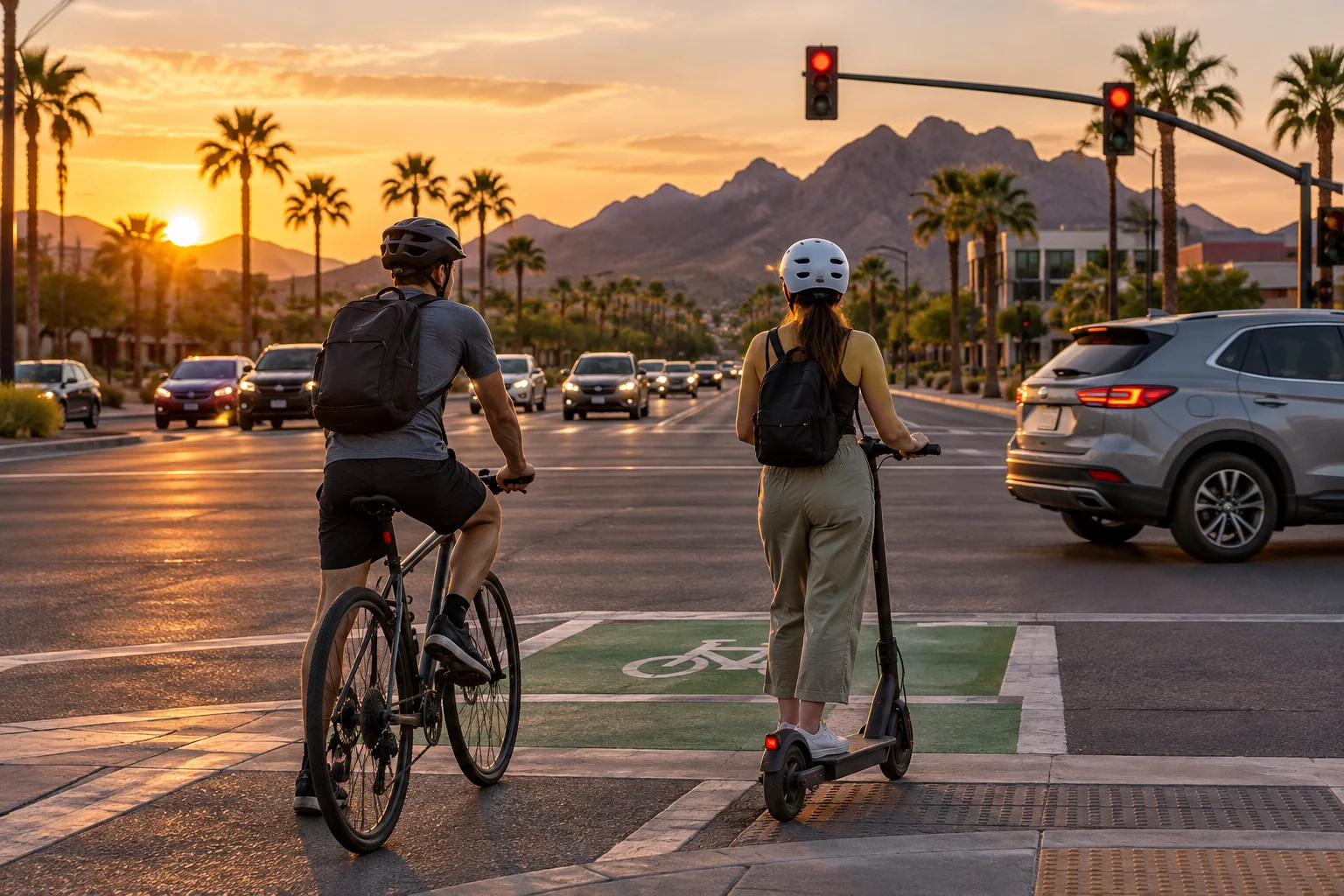
Arizona law gives a person riding a bicycle on a roadway the rights and duties of a vehicle driver, except for rules that cannot apply to a bike. That cuts both ways. Bicyclists stop for red signals, yield as drivers do, and use hand signals to show a left turn, right turn or stop. Motorists must respect a rider's place on the road, so what's expected of drivers around other motor vehicles is expected around bikes on the same roadways too.
What does ARS 28-815 require about where a cyclist rides in the lane?
ARS 28-815 is the lane-position rule. A cyclist moving slower than the normal speed of traffic must ride as close as practicable to the right-hand curb or edge of the roadway. In practice, riders should hold a close practicable line, and ride close to the curb edge when the surface is clear. The rule has exceptions that matter in crowding cases. A rider generally may move left to pass another vehicle, to prepare for a left turn, or to avoid hazards such as parked cars, pedestrians, gravel or a lane too narrow for bikes and cars to share safely.
Can a cyclist ride two abreast or take the full lane in Arizona?
Generally, bicyclists may not ride more than two abreast on a roadway, and two abreast riders must not impede the normal and reasonable movement of traffic. On a laned roadway they ride within a single lane. Taking the full lane ties back to the exceptions above, such as a lane too narrow to share or a hazard along the curb edge. A cyclist who rides out for one of those reasons is often following the law, not blocking traffic, but the facts decide each case.
How far must a driver stay from a bicyclist when passing under Arizona bike laws?
Arizona law requires a driver passing a bicyclist to leave a safe distance. We do not quote a number of feet here, because what's safe depends on the situation: speeds, lane width, oncoming traffic and road surface. Higher speeds call for a wider gap, and motorists passing bikes on narrow roadways should expect a rider to swerve around gravel or a pothole. A driver who cannot pass safely generally has to wait. Share the Road signs are a reminder, not a measurement.
How do you prove a driver crowded you out of the lane?
You prove it with evidence that shows where the driver was, how close, and how fast. A traffic citation, if one is issued, may help show what happened, but fault is still decided on all the evidence, including speeds, lane positions and lane width. Bike accidents like this often turn on whether anyone captured the pass.
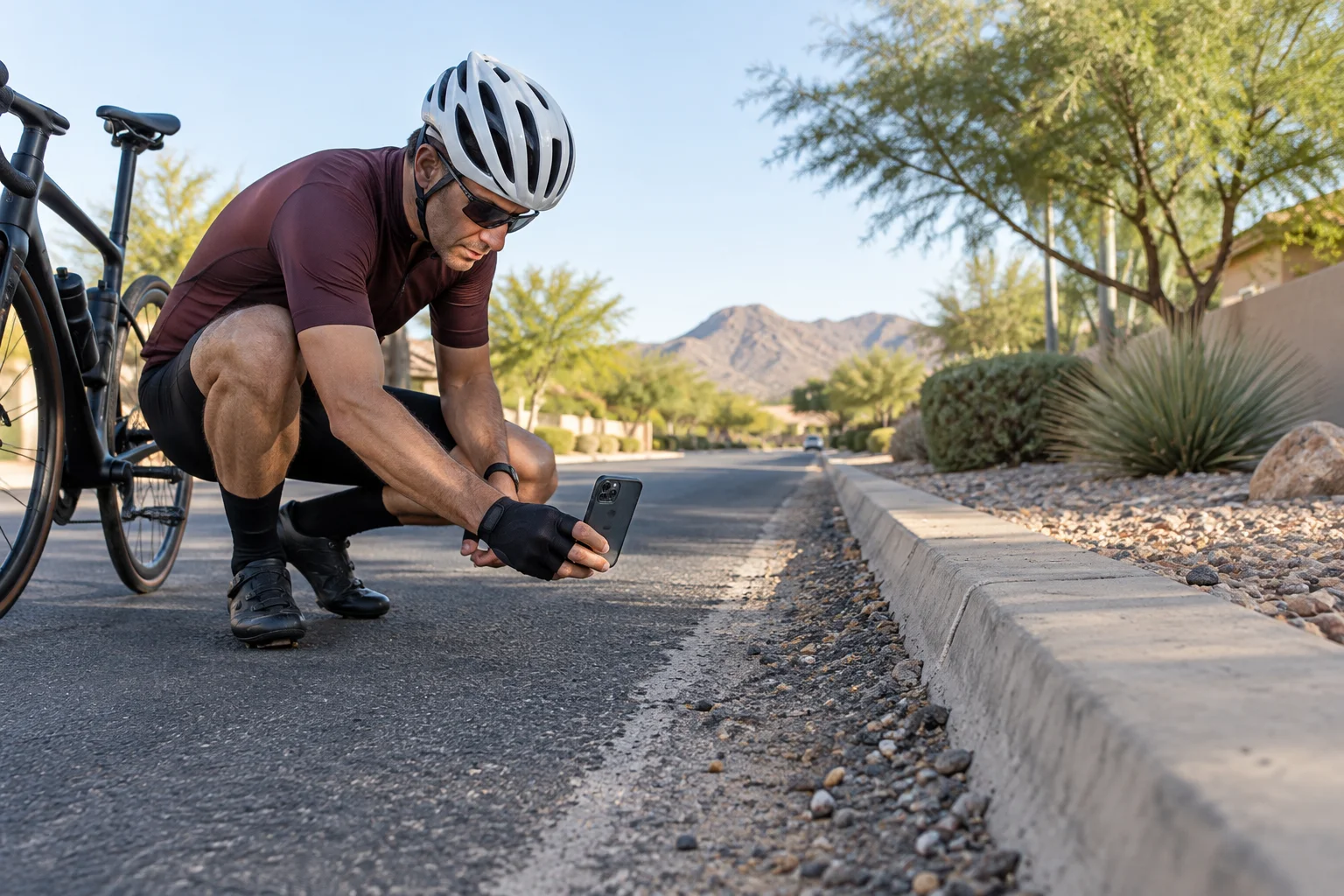
| Evidence | What it can show | What to do now | |---|---|---| | Video from dash cameras, doorbell cameras, bike cameras and nearby businesses | The gap between the vehicle and the rider, and the speeds of both | Ask for copies fast, since many systems record over old footage within days | | Witnesses | An independent account of the pass | Collect names and phone numbers | | Photos of the scene | Lane width, bike lane markings, gravel at the curb edge | Shoot from the rider's eye level | | Your bike and gear | Scraped handlebars, bent wheels and cracked helmets can point to the impact | Do not repair or discard them | | Medical records | Injuries consistent with the crash | Records that show when you were seen and what was documented |
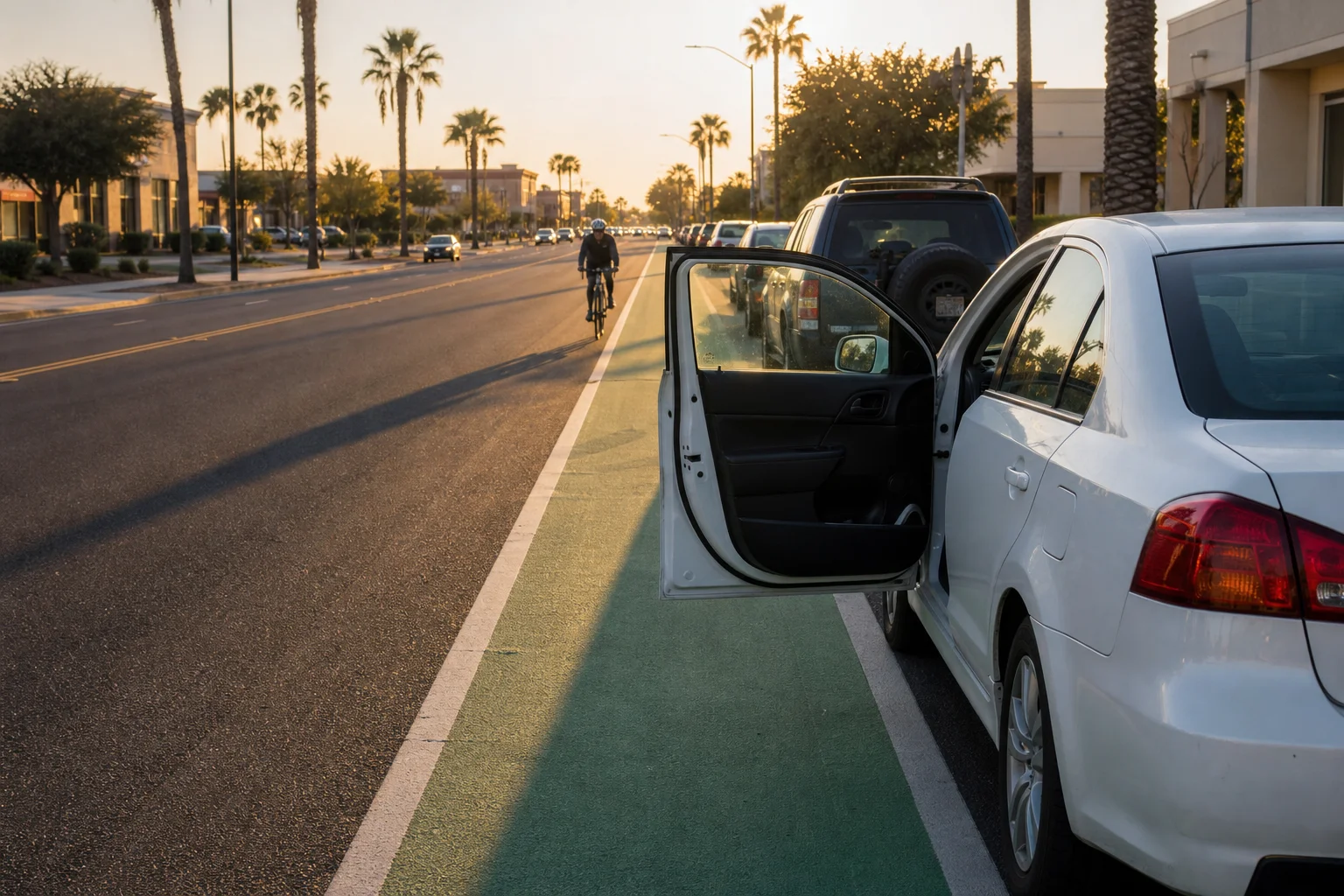
If it is safe, cyclists should photograph the lane with a tape measure, because a lane too narrow for bikes and cars to share supports why you rode where you did. Your photos should show more of two things: how wide the lane was and how close the car came. Lane markings help too, while dooring crashes raise separate fault questions.
What should you do after a driver crowds you off the road?
- Get to a safe spot and call 911 if anyone is hurt.
- If it is safely possible, photograph the scene, your bike, its wheels, your helmet and your injuries before anything moves.
- Collect the driver's name, insurance and plate, plus witness contacts. If the driver left, write down everything you remember about the vehicle.
- Be careful with insurers. Signing the wrong release can injure your legal rights.
- Watch the clock. In most Arizona injury cases, the deadline to sue is generally two years from the date of injury. A claim against a city, county, the state, a public school or a public employee needs a written notice of claim within 180 days that states a specific dollar amount (A.R.S. 12-821.01), and a lawsuit within one year (A.R.S. 12-821).
Who is at fault if a driver passes too close and a cyclist crashes?
Under Arizona bike laws, fault depends on the evidence. A driver who passes without leaving a safe distance may be responsible for the crash, even when the vehicle never touches the rider, because a swerve, a fall or a clipped mirror can all result from the pass. In accidents like these, insurers often argue that a cyclist who rides too far left or not close enough to the curb shares the blame.
Arizona follows pure comparative fault (A.R.S. 12-2505), so under Arizona Comparative Negligence rules bicyclists found partly at fault can still bring a claim, and the amount is generally reduced by that share. If an adjuster says you were riding in the wrong place, we will explain your legal rights.
What equipment and sidewalk rules apply to Arizona cyclists?
Can I ride my bicycle on the sidewalk?
Often, but it depends on the city. Rules for riding on sidewalks and shared paths, where pedestrians also walk, usually come from the city or town, so Phoenix, Scottsdale, Tucson and others can differ. Sidewalks and paths carry their own risk: a driver backing out of a driveway rarely looks for a rider who rides faster than pedestrians.
What are the ARS bicycle light requirements at night?
The ARS requirement for riding after dark is a white light on the front and a red reflector on the rear, both visible from the distance the statute sets. A red rear light is a smart addition, and reflectors on pedals and wheels help drivers see bikes in motion from the side.
Questions People Ask About Arizona Bike Laws
Are you legally allowed to ride a bike on the sidewalk in Phoenix? It depends on the local rule. Rules for riding on sidewalks often come from the city, so check the Phoenix rules for the street where you ride. Wherever sidewalks and paths are allowed, watch driveways and intersections, where cars and riders often meet without seeing each other.
What are the headlight laws in Arizona? Riding at night generally calls for a white light on the front and a red reflector on the rear, visible from a distance the statute sets. Many riders add a red rear light.
What are the e-bike laws in Arizona? Arizona generally treats electric bicycles like regular bicycles on the road and sorts them into classes by motor assist and speed. The class affects where you may ride, and local rules vary, from Tucson to Phoenix, including rules on helmets for minors in Gilbert, Mesa and Peoria.
Talk With Valley Accident Law About a Close-Pass Crash
You pay no attorney fee unless we recover money for you. Call 602-584-8054 any time, or start with Contact / Free Case Review.
This article is general information, not legal advice, and reading it does not create an attorney-client relationship.