
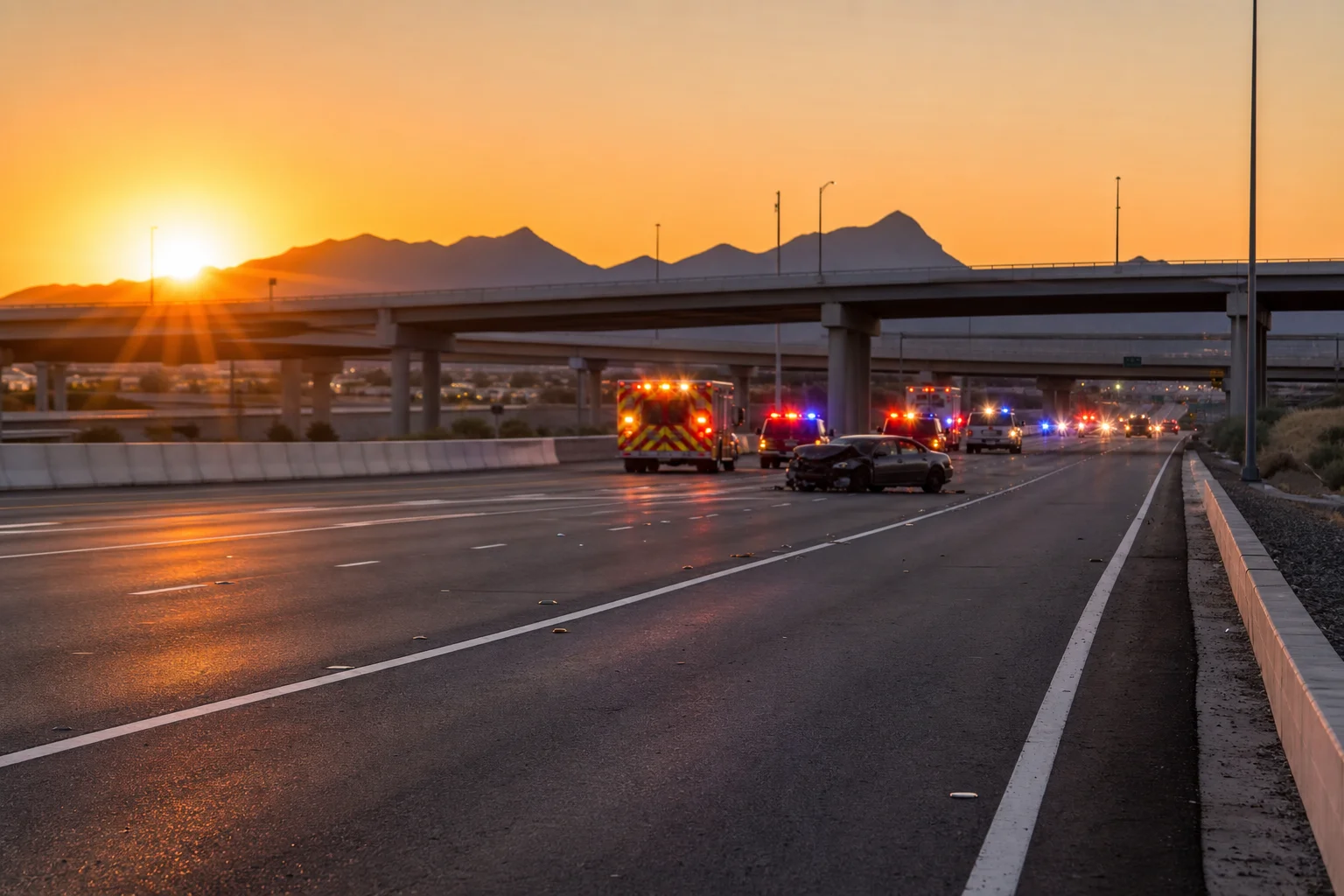
When a fatal crash takes someone you love, Arizona law gives surviving family members the right to pursue wrongful death from a car accident in Arizona through the civil courts. This guide covers who can file, what damages your family may recover, and how the process unfolds under Personal Injury law.
By Charles Paglialunga, Esq., Founder, Valley Accident Law, 29 years Arizona personal injury
What Arizona Statute Says About Wrongful Death
Arizona’s wrongful death law is codified at A.R.S. Sections 12-611 through 12-613. The statute creates a civil cause of action when a person dies as a result of another party’s wrongful act, neglect, or default. For car accidents, this means the at-fault driver’s negligence, including speeding, running a red light, driving while impaired, or texting behind the wheel, was the proximate cause of the death.
Wrongful death civil cases proceed independently from any criminal prosecution. The at-fault driver does not need to be criminally charged or convicted for a civil wrongful death lawsuit to succeed. Civil courts apply a lower standard of proof: a preponderance of the evidence, meaning more likely than not that the defendant’s conduct caused the death.
Death claims from car accidents in Arizona carry a strict two-year statute of limitations under A.R.S. Section 12-542, measured from the date of death. Allowing that deadline to pass typically ends the family’s legal options permanently.
Who Can Bring a Wrongful Death Lawsuit in Arizona
Arizona law strictly defines who holds standing to file a wrongful death lawsuit after a fatal car crash. Eligible parties are:
- A surviving spouse of the person who died
- Children of the deceased, including legally adopted children
- Parents of the deceased, when no spouse or children survive
- A personal representative of the deceased’s estate, acting on behalf of all statutory beneficiaries
The surviving spouse holds first priority. When no spouse survives, children may bring the claim. Parents may file when the deceased had neither a surviving spouse nor surviving children. The personal representative consolidates claims from multiple family members and pursues recovery for each of their losses within a single action.
Arizona limits families to one wrongful death lawsuit per death. All eligible family members channel their recovery through that single case, though each party may present evidence of their specific individual losses to a jury or in settlement negotiations.
What Damages Family Members Can Recover
An arizona wrongful death claim compensates family members across two broad categories.
Economic damages reflect measurable financial harm:
- Medical and emergency care costs incurred between the crash and the death
- Funeral and burial expenses
- The deceased’s projected future earnings across their expected working lifetime
- Lost employment benefits, including health insurance, pension contributions, and retirement savings
- Financial support the deceased regularly provided to family members at home
Noneconomic damages account for human losses that resist easy calculation:
- Loss of companionship, love, and affection from the deceased
- Loss of consortium for a surviving spouse
- Emotional grief and suffering of surviving family members
- Loss of parental guidance, protection, and care for surviving children
Arizona places no statutory cap on wrongful death damages in standard car accident cases. The value of a claim depends on the quality of evidence presented, the deceased’s age and earning history, and the attorney’s skill in conveying the full scope of family losses. Research published in the Journal of Legal Economics has found that attorney representation significantly affects recovery amounts in wrongful death and personal injury matters.
Proving Wrongful Death from a Car Accident in Arizona
The personal representative must establish four elements by a preponderance of the evidence to succeed on a wrongful death from a car accident in Arizona:
- Duty. Every driver owes a duty of reasonable care to other people on the road.
- Breach. The defendant violated that duty through negligent or reckless conduct. Speeding, running lights, texting, and driving drunk are common examples.
- Causation. The breach must be a direct and proximate cause of the death, not a remote contributing factor.
- Damages. Surviving family members must have suffered actual, compensable losses because of the death.
Evidence gathering is urgent after a fatal crash. Police reports, witness statements, and surveillance footage must be secured before they disappear. Vehicle event data recorders capture speed and braking in the seconds before impact. Crash reconstruction experts can establish cause when fault is contested.
For crashes involving large commercial vehicles, federal trucking regulations add a layer of employer liability. Logbook violations, hours-of-service breaches, and inadequate maintenance records can support findings of negligence per se. Car Accidents involving commercial trucks often require specialized investigation resources that go beyond what a standard crash case demands.
Common Crash Patterns Behind Arizona Wrongful Death Cases
Certain crash types come up repeatedly in arizona wrongful death litigation across the Phoenix metro:
Impaired driving. Alcohol and drug-impaired drivers account for a large share of fatal crashes in Maricopa County. When an impaired driver kills someone, the family may pursue both a wrongful death claim against the driver and a dram shop claim against the establishment that served them alcohol before the crash.
Distracted driving. Cell phone use at the wheel is a leading factor in fatal collisions. Attorneys subpoena phone records during discovery to establish that a driver was texting or calling at the time of impact.
High-speed intersection crashes. Several Scottsdale and Phoenix metro intersections have documented histories of serious collisions. T-bone and rear-end crashes at speed frequently produce fatal head and spinal injuries.
Hit-and-run fatalities. When the at-fault driver flees the scene, families may still recover through the deceased’s uninsured motorist coverage. Identifying the driver through surveillance footage and witness accounts opens additional avenues for recovery.
Fatigued commercial drivers. Federal hours-of-service rules exist because driver fatigue kills. Violations of those rules can support a negligence per se finding against both the driver and their employer.
Frequently Asked Questions
What is the deadline to file an Arizona wrongful death claim after a car accident?
Arizona law gives family members two years from the date of death to file a wrongful death claim. This deadline applies in most car accident cases. Missing it typically ends the right to sue permanently. Consulting an attorney promptly preserves your legal options and gives counsel time to gather evidence before it disappears.
Who serves as personal representative in a wrongful death lawsuit?
A personal representative is the person legally authorized to manage the deceased’s estate and bring the wrongful death lawsuit on behalf of all eligible family members. This person is usually named in the deceased’s will. If no will exists, the probate court appoints one. An attorney can guide the family through the appointment process so the case moves forward without delay.
Can family members recover if the deceased was partly at fault for the crash?
Yes. Arizona follows a pure comparative fault rule. When the deceased shared responsibility for the crash, the damages available to surviving family members are reduced by the percentage of fault attributed to the deceased. Recovery remains possible even when the deceased bore significant responsibility, as long as the other driver also contributed to the collision.
What if the at-fault driver had no insurance or inadequate coverage?
Uninsured and underinsured motorist coverage on the deceased’s own auto policy may provide a recovery path when the at-fault driver’s insurance is insufficient. Your attorney will identify every available source of coverage, including employer policies for commercial drivers, umbrella policies, and any policy covering the vehicle the at-fault driver was operating at the time of the crash.
Does a criminal conviction help a wrongful death civil case?
A criminal conviction is strong evidence in civil court but is not required. Civil courts use a lower burden of proof than criminal courts. Even when the at-fault driver was not criminally charged or was acquitted, a wrongful death lawsuit can still succeed if the evidence shows by a preponderance that the driver’s conduct caused the death.
Talk to Valley Accident Law About Your Arizona Wrongful Death Case
No legal process can undo the loss of a loved one. A wrongful death claim can hold the responsible party accountable and provide genuine financial stability for surviving family members during the hardest time of their lives. Valley Accident Law has represented Arizona families in serious personal injury and wrongful death matters for nearly three decades. Reach out today through Contact / Free Case Review to speak directly with Charles Paglialunga about your family’s situation.