
A commercial truck loaded to 80,000 pounds at highway speed has roughly 20 times the kinetic energy of a passenger car. The injuries follow that math. Truck crashes on I-10, I-17, US-60, and the Loop 202 leave drivers and passengers with severe and often permanent damage.
The legal fight is also different. Trucking is heavily regulated by federal law (the FMCSA), which means the case is not just about who was at fault for the crash. It is also about hours-of-service logs, vehicle maintenance records, driver qualification files, drug and alcohol testing, and whether the trucking company itself created the conditions that caused the crash.
Valley Accident Law has 29 years of experience handling Arizona injury cases. Founder Charles Paglialunga handles every truck case personally.
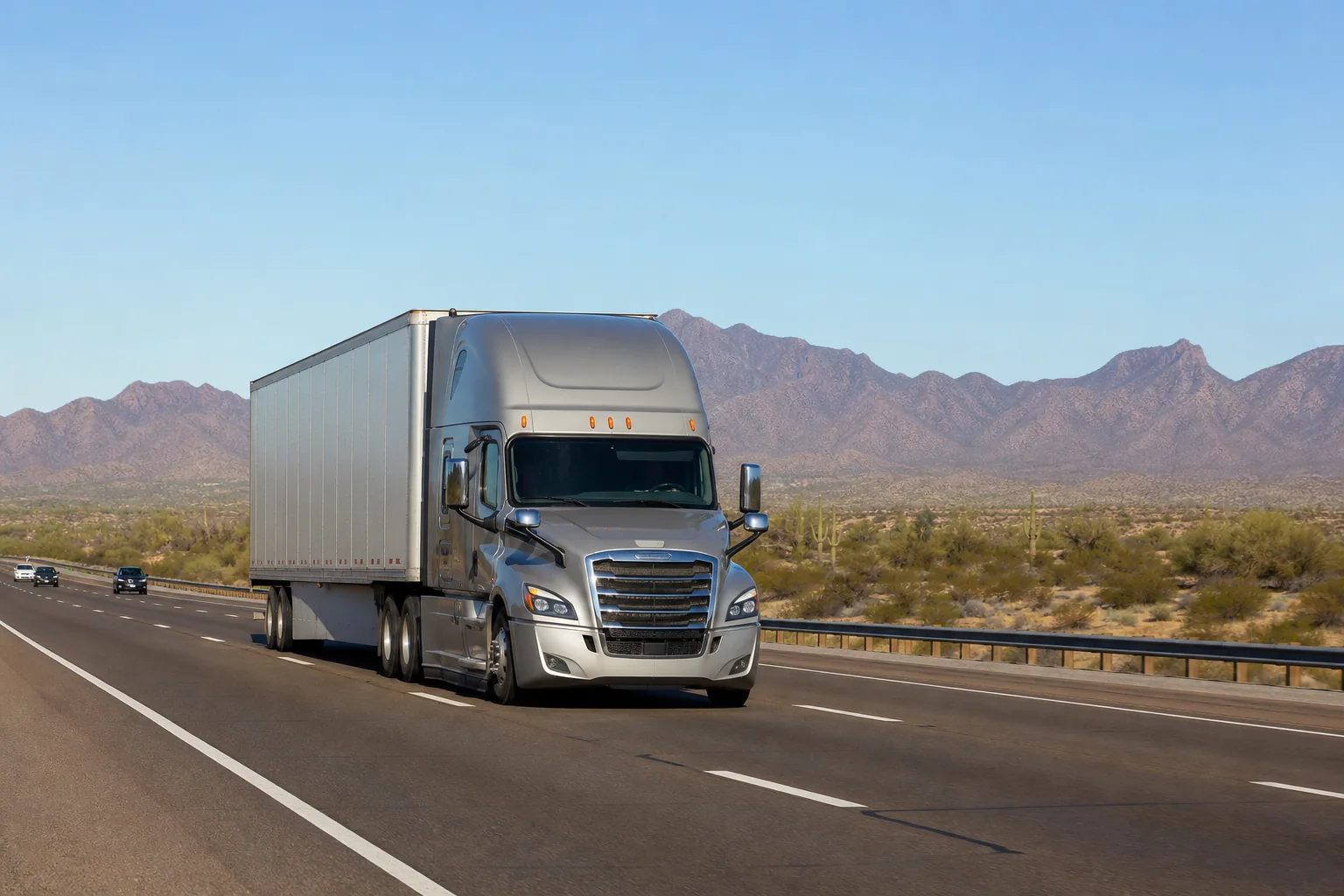
Most commercial truck cases we see fall into these patterns:
Read more about commercial truck accidents on Arizona interstates.
The Federal Motor Carrier Safety Administration sets rules that govern how trucks operate. The relevant ones for case-building:
A violation of any of these does not automatically prove liability, but it is often the strongest part of the case. We send preservation-of-evidence letters within days of being retained because trucking companies are not required to keep most of these records longer than 6 to 12 months.
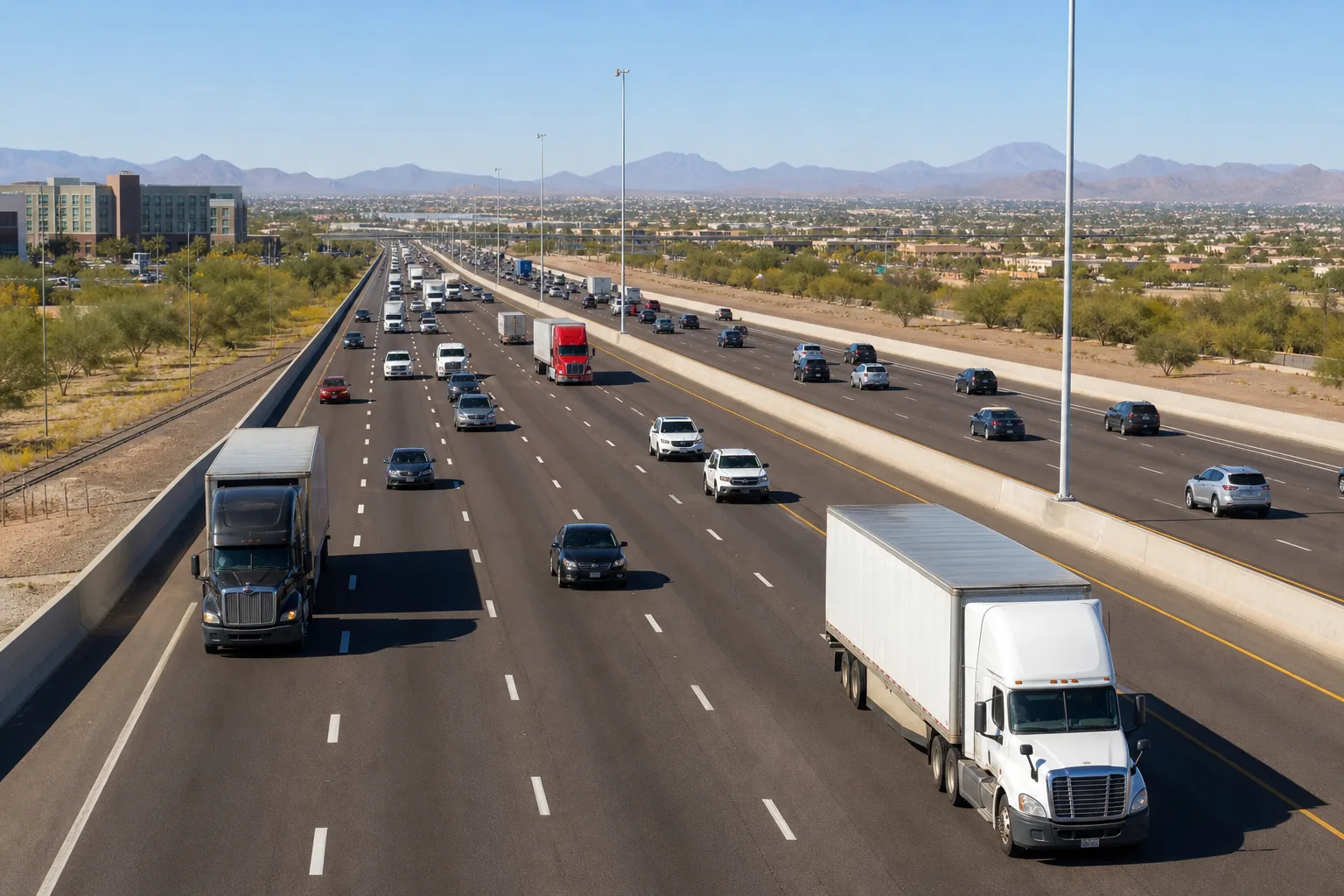
Multiple parties can be liable in a commercial truck case:
That stacking of liable parties is part of why truck cases recover more than passenger-vehicle cases of similar injury severity. There are usually multiple insurance policies in play, and the policy limits are higher than in standard auto cases.
Damages in truck cases can be significant because the injuries usually are. Recoverable categories include past and future medical bills, lost wages and lost earning capacity, pain and suffering, loss of consortium, wrongful death damages where the victim did not survive, and punitive damages where the trucking company knowingly violated federal rules or where the driver was impaired.
Most Arizona truck accident claims must be filed within two years. If the truck was a government vehicle (a state, federal, or municipal vehicle), a notice of claim is required within 180 days.
Even with a two-year statute, you should not wait. The trucking company’s records have short retention windows, and the company often has a rapid-response team at the scene within hours of the crash, photographing, measuring, and interviewing witnesses. We need to do the same on your behalf, fast.
Charles handles every truck case personally. The first consultation is free, and we work on contingency. No fee unless we recover for you.
Call 1-602-584-8054 for a free consultation.
Federal regulations, multiple liable parties, larger insurance policies, more complex evidence (logs, ELD data, maintenance records), and shorter retention windows on the truck company’s records.
As soon as you can. Some trucking records can be lawfully destroyed in 6 to 12 months. We send preservation letters fast.
Does not matter for jurisdiction. The crash happened in Arizona, so Arizona courts and Arizona law apply.
Common opening position. We litigate it with the federal regulations, the records they were required to keep, and accident reconstruction.
Yes, in cases involving impaired driving, knowing rule violations, or extreme negligence. We evaluate punitive exposure on every case.
Arizona applies comparative fault, so your compensation can be reduced by whatever percentage of fault gets assigned to you, and the trucking company’s insurer will try to maximize that percentage from the start. Within hours of a crash, the carrier often has its own investigators documenting the scene, while the police report becomes the baseline both sides argue from. The evidence that decides these cases includes the report, photos and measurements from the scene, witness statements, medical records connecting your injuries to the crash, and the trucking company’s own records, hours of service logs, maintenance history, and electronic logging device data. The adjuster you hear from is trained to settle fast and low, before your injuries are fully understood. Expect the process to run on two tracks at once, your medical treatment and recovery, and the evidence gathering that determines who pays and how much. A truck accident lawyer in Scottsdale who knows how to request and preserve these records before they age out gives your claim its strongest foundation.
When you call us, we start by getting the basic facts of the crash and your injuries, then we walk you through what the next steps typically look like, sending preservation letters to the trucking company, requesting the police report, and connecting you with medical providers if you need care. We handle communication with the trucking company’s insurer directly, so you are not on the phone explaining your case to someone trained to work against your interests. Charles reviews every truck case personally, and we work on contingency, so there is no upfront cost and no fee unless we recover for you. If you are not sure whether your situation is serious enough to call, call anyway. A short conversation costs you nothing, and it is often the only way to know where you actually stand.
Arizona uses comparative fault, so you can under most circumstances still recover damages even if you share some responsibility for the crash. Your compensation is generally reduced by your percentage of fault rather than eliminated entirely. The trucking company’s insurer will likely argue for a higher percentage against you, which is one reason to have someone reviewing the evidence on your side early.
A police report is not the final word on fault, it is one piece of evidence among several. Officers write reports quickly and do not always have access to the trucking company’s own records, like hours of service logs or maintenance history, that can show a different picture. We regularly build cases that look past an initial report.
No, once we are handling your case we take over communication with the insurer. Adjusters are trained to ask questions and gather statements that limit what the company has to pay, so it is safer for that conversation to go through us.
The initial consultation is free, and we work on contingency, which means there is no fee unless we recover for you. You can call and describe what happened without committing to anything.
That is normal, and it is part of what we sort out. Truck crashes often involve the driver, the trucking company, and sometimes a maintenance contractor or cargo loader, and figuring out who is responsible usually takes some investigation into the records those parties are required to keep.