
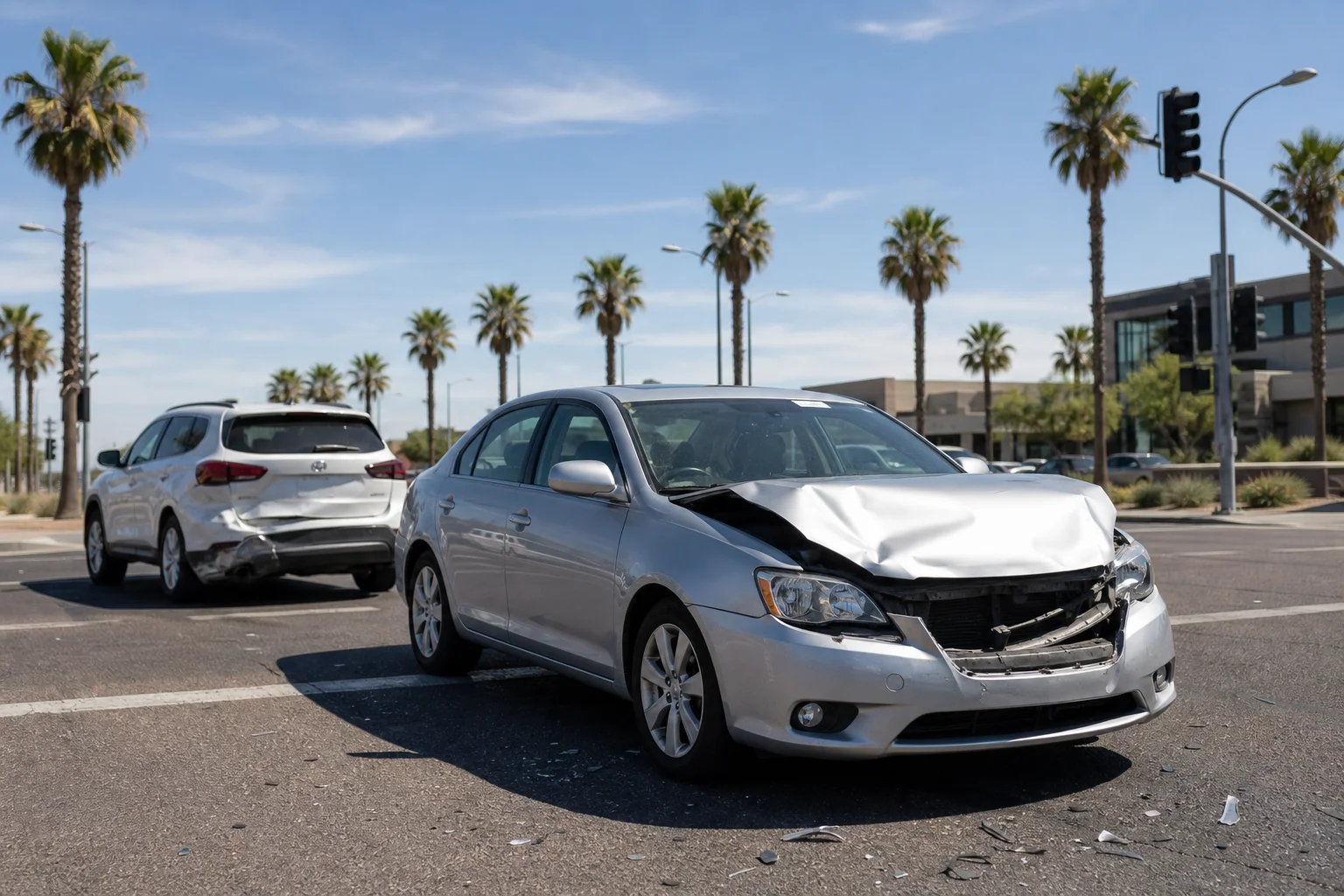
If you experienced the diminished value of your vehicle after a Mesa car accident, you are entitled to compensation beyond just repair costs. Under Arizona law, a Personal Injury claim can recover that property loss from the at-fault driver’s insurance company, even after all physical repairs are complete.
By Charles Paglialunga, Esq., Founder, Valley Accident Law, 32 years Arizona personal injury
When another driver causes a car accident, their insurance company pays to repair your car. But the moment your vehicle gains an accident history on a Carfax or AutoCheck report, buyers will offer less money for it, or walk away entirely. That gap between what your car was worth before the crash and what it is worth after is called diminished value.
Diminished value is not a hypothetical number. Any dealership appraiser in Mesa or across the Phoenix metro area will confirm that a vehicle with a prior collision on its history report sells for less than an identical vehicle with a clean title. The market discounts accident history regardless of how well the repairs were performed, and that discount comes directly out of your pocket at resale.
Arizona law recognizes three forms of diminished value:
- Inherent diminished value: the permanent drop in resale value caused solely by the accident history on the vehicle report, independent of repair quality.
- Repair-related diminished value: additional loss from substandard repairs, mismatched paint, or aftermarket parts that do not meet factory tolerances.
- Immediate diminished value: the difference in market value immediately before and immediately after the crash, before any repairs. This form matters most in total loss situations.
Most Arizona diminished value claims involve inherent diminished value because insurers complete physical repairs and then argue they have fully compensated you. They have not. You still hold a vehicle with a damaged history, and Arizona law entitles you to be made whole for that loss.
How Arizona Law Supports Your Diminished Value Claim
Arizona is a fault-based state. The driver who caused the car accident is liable for all damages that flow from their negligence, including property losses that persist after repairs are finished. Arizona courts have affirmed that injured parties may recover the full measure of property damage from a car accident, and diminished value is an accepted component of that recovery.
If the at-fault driver’s insurance company refuses to recognize a diminished value claim, that refusal can be challenged through a personal injury action. You are not limited to accepting whatever the insurer offers on repairs alone.
Arizona’s comparative fault rule applies here. If you were partly at fault for the Mesa car accident, your recovery is reduced proportionally. An attorney can review your specific facts and tell you what portion of your diminished value claim is collectible.
Insurance adjusters often contact you before you know the full scope of your loss, and how you handle those early conversations can affect your entire claim, injury and property alike. Knowing the common insurance adjuster tactics helps you avoid costly missteps early in the process.
How to Value Vehicle Loss: Calculating What You Are Owed
The insurance company will often use a formula called the 17c method to value vehicle losses in diminished value claims. Originally developed during class action litigation, the 17c formula applies a 10% base rate to pre-accident market value and then runs it through mileage and damage severity multipliers. In practice, 17c almost always generates a number that undervalues your actual loss.
Better methods to establish real market value include:
- Dealer appraisals: Get two or three written quotes from independent used car dealers for your specific make, model, year, and mileage, before and after disclosing the accident history. The difference documents your loss in concrete terms.
- Certified appraisers: A licensed diminished value appraiser uses actual comparable sales data to document your loss. This kind of report carries real weight in negotiations and in court.
- Auction data: Wholesale auction records show prices paid for repaired vehicles with accident histories versus clean-title vehicles of the same spec in the Arizona market.
The correct benchmark for any insurance claim is the price your vehicle would actually fetch in a real transaction, not a number generated by an insurer’s internal formula. Any methodology that falls short of real market evidence shortchanges you.

How to File a Diminished Value Claim After a Mesa Crash
Filing a successful diminished value claim requires documentation from the moment the crash happens.
Document the damage immediately. Photograph your vehicle before any repairs begin. Keep the police report, every repair invoice, and all written correspondence with the insurer.
Order a vehicle history report. Pull a Carfax or AutoCheck report after the accident is logged. That report is direct evidence that the crash reduced your car’s market value.
Hire an independent appraiser. Do not rely solely on the insurer’s internal estimate. A certified diminished value appraiser whose methodology can be defended in court gives you credible evidence for your insurance claim.
Submit a formal written demand. Send a written demand to the at-fault driver’s insurance company that includes your appraisal, repair invoices, vehicle history report, and a specific dollar figure. Keep copies of everything and track all correspondence by date.
Negotiate or litigate. Insurers routinely open with low offers on diminished value claims. An attorney can negotiate on your behalf. If the insurer refuses a fair offer, a lawsuit may be the appropriate next step.
Timing is critical. Arizona has a two-year statute of limitations for property damage claims arising from a car accident under A.R.S. Section 12-542. If a city, county, state agency or other public entity may be involved, a written notice of claim is due within 180 days (A.R.S. 12-821.01). Missing that deadline bars recovery entirely. Certain situations can affect your exact filing deadline, so confirming your specific timeline with an attorney early protects your claim.
Diminished value claims can run alongside a personal injury claim. If you were hurt in the crash, you may be pursuing compensation for medical bills and lost wages at the same time you pursue your property loss. Acting quickly on both fronts matters: seek medical care right away, keep every record tied to the crash, and loop in an attorney early so your injury claim and your property damage claim move forward together instead of working against each other.
When Diminished Value Claims Get Complicated
Several situations make these claims harder to resolve without legal help.
Your own insurer. Most first-party Arizona policies do not cover diminished value. Diminished value claims typically run against the at-fault driver’s liability coverage, not your own collision policy. Do not confuse these two separate insurance claim processes.
Older or high-mileage vehicles. Insurers argue that vehicles already well-depreciated have minimal diminished value. A certified appraisal built on actual comparable sales in the Mesa and Phoenix area counters that argument with real data.
Leased vehicles. Under some lease agreements, the diminished value belongs to the lessor, not the driver. Review your lease contract carefully before filing, and speak with an attorney about who holds the right to recover.
Total loss situations. When an insurer declares your car a total loss, the market value dispute is embedded in the total loss valuation rather than treated as a separate diminished value item. If you believe the insurer undervalued your total loss vehicle, you can dispute their figure using comparable sales data.
Commercial trucks and rideshare vehicles. If your Mesa crash involved a commercial truck, the insurer structure is more complex. Our Car Accidents practice page explains how property and injury damages work together when multiple insurers are involved.
Frequently Asked Questions
Can I file a diminished value claim if I was partly at fault in the Mesa accident?
Yes. Arizona uses a pure comparative fault rule, meaning your recovery is reduced by your percentage of fault but is not eliminated. If you were 20% at fault, you may still recover 80% of your diminished value. Even shared fault does not bar a diminished value claim against the other driver’s insurance company.
How much is a typical diminished value claim worth in Arizona?
There is no fixed figure. The amount depends on your vehicle’s pre-accident market value, the severity of the damage, repair quality, and comparable sales for your specific make and model in the Arizona market. Newer vehicles with higher market values before the crash typically produce larger recoveries. A certified appraisal establishes the real number for your car.
Does the at-fault driver’s insurance company have to pay diminished value?
Under Arizona law, liability insurers must compensate for all covered damages caused by their insured, and Arizona courts have confirmed that diminished value is a recognized component of property damage recovery. Insurers frequently dispute or minimize these claims, which is why a documented independent appraisal and legal representation matter.
How long do I have to file a diminished value claim in Arizona?
Arizona’s statute of limitations for property damage from a car accident is two years from the date of the crash under A.R.S. Section 12-542. Filing after that deadline eliminates your right to recover. If personal injury is also part of the claim, the same two-year window applies. Do not delay in consulting an attorney.
Do I need an attorney to recover diminished value in Arizona?
Not always, but legal help makes a real difference when the insurance company applies a low-ball valuation formula, disputes your independent appraisal, or denies liability. Valley Accident Law handles diminished value claims on a contingency fee basis, meaning you pay nothing unless we recover compensation for you.
Get a Straight Answer About Your Diminished Value Claim
The diminished value of your vehicle after a Mesa car accident is real money the at-fault driver’s insurance company owes you, and insurers have every incentive to minimize what they pay. Valley Accident Law reviews your situation at no charge with no obligation. Use our Contact / Free Case Review page to schedule your free consultation today.