

If you were injured as an Uber or Lyft passenger in Phoenix, coverage usually starts with the rideshare company’s own insurance policy rather than your own auto plan. An Uber and Lyft Accident Attorney can help you sort out which policy applies, from the driver’s coverage to third-party liability, so your medical bills get paid.
By Charles Paglialunga, Esq., Founder, Valley Accident Law, 29 years Arizona personal injury
When a rideshare driver causes a crash, whether it’s an Uber accident or a Lyft accident, coverage usually starts with the insurance policy the rideshare company carries for that trip, not the passenger’s own auto policy. A rideshare crash is still a car accident under Arizona law, so many of the same insurance principles apply. Uber and Lyft both maintain commercial liability coverage that applies while a driver has a passenger in the vehicle, and that policy is typically the first place a claim adjuster looks. Property damage, medical bills, and other losses tied to the wreck generally fall under this same coverage. Because rideshare companies structure their policies around trip status, the exact insurance that responds depends on what the driver’s app showed at the time of the crash.
How Much Insurance Coverage Applies While You’re Riding
While you’re an active passenger, meaning the app shows you picked up and en route to your destination, the rideshare company’s insurance policy provides its highest tier of coverage. This layer is meant to cover medical bills, lost income, and property damage for anyone hurt in the vehicle, including passengers, and it typically sits well above what the driver’s personal auto insurance would provide on its own. The exact limits can vary, so a Phoenix rideshare accident attorney can pull the specific policy that applied to your trip rather than relying on general figures.
Does Coverage Change If the App Was On but You Hadn’t Been Picked Up Yet
Rideshare insurance works in tiers tied to what the app was doing. If the driver had the app off, only their personal auto policy applies. If the app was on and the driver was waiting for a match, a lower level of contingent coverage applies. Once a driver accepts a ride and is en route to pick up a passenger, and through the entire trip afterward, the highest coverage tier is active. As a passenger, you were almost always hurt during this final period, so the rideshare company’s full liability coverage should apply to your claim.
Can You File a Claim Against a Third-Party Driver Who Caused the Crash
Not every rideshare accident is caused by the Uber or Lyft driver. If another vehicle ran a light, merged unsafely, or rear-ended the car you were riding in, you can generally pursue a claim against that driver’s own auto insurance policy, separate from anything Uber or Lyft carries. Arizona is a comparative negligence state, so fault can be divided between multiple drivers, and a passenger who did nothing wrong is not penalized by that split. The rideshare company’s policy can also step in through uninsured motorist protection if the other driver fled the scene or carried little to no insurance, which often comes up in a hit and run or phantom vehicle crash.
What If the Rideshare Driver Wasn’t at Fault for the Accident
If the Uber or Lyft driver wasn’t the one who caused the wreck, that doesn’t change your right to recover as a passenger. Your claim simply points toward whichever driver was actually at fault, and it can run alongside the rideshare company’s coverage if the at fault driver’s own policy isn’t enough to cover your medical bills and other losses. A passenger in Arizona is rarely, if ever, assigned any share of fault for a crash they didn’t cause, so this usually comes down to sorting out which policy pays first, not whether you have a valid claim.
What to Do Right After Being Injured as an Uber or Lyft Passenger in Phoenix
The steps you take in the hours after being injured as an Uber or Lyft passenger in Phoenix can shape how smoothly your claim moves later.
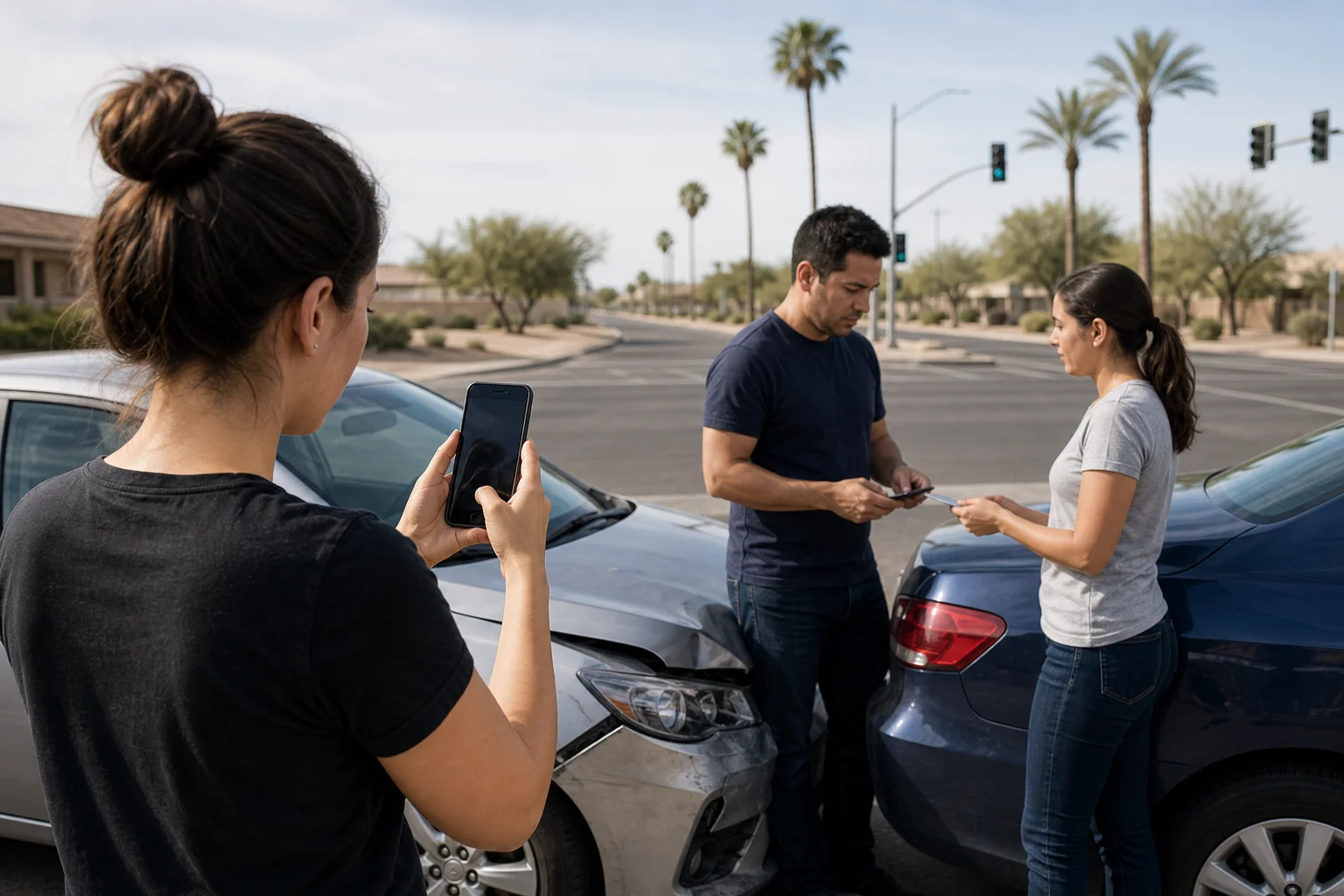
- Get medical attention, even if your injuries feel minor. Some injuries, like whiplash or a concussion, don’t show symptoms right away.
- Photograph the vehicles, the intersection, and anything else at the scene before it changes.
- Get the names, license plate numbers, and insurance information for both the rideshare driver and any other driver involved.
- Report the crash inside the Uber or Lyft app, which creates a timestamped record tied to your trip.
- Keep every receipt and statement connected to your medical bills, lost time from work, and any property damage.
- Avoid giving a recorded statement to an insurance adjuster, rideshare company or otherwise, before you’ve talked to an attorney.
Do You Need a Lawyer, and How Much Can You Recover
Not every Uber or Lyft passenger injury claim requires a lawyer, but a few situations usually call for one: the insurer is disputing fault, your medical bills are piling up faster than the claim is moving, more than one insurance policy is involved, or your injuries are serious enough that you don’t yet know the full cost of your recovery. A Phoenix Personal Injury attorney can deal with the rideshare company and any other insurer directly, so you can focus on treatment instead of paperwork.
How Much Compensation Can a Rideshare Passenger Recover for Injuries
Compensation in a rideshare passenger injury claim generally falls into a few categories: medical bills already incurred and reasonably expected in the future, lost wages, property damage to personal items in the car, and compensation for pain and the disruption to your daily life. What a case is actually worth depends on the severity of the injury, how clear liability is, and which insurance policies are available, so it’s worth having an attorney review the specifics rather than comparing your case to a number you saw online.
What Happens If Uber, Lyft, or Their Insurer Delays or Denies Your Claim
Rideshare companies carry large insurance policies, but the insurers behind them don’t pay out automatically just because you were a passenger. Delays are common while the insurer confirms trip status, fault, and which policy tier applies. A denial doesn’t necessarily mean the claim is over, it usually means the insurer is disputing one of those same facts, and an attorney can push back with the trip data, police report, and medical records that support your version of events.
Can You Sue Uber or Lyft Directly
Uber and Lyft classify their drivers as independent contractors, not employees, which generally limits direct lawsuits against the rideshare company itself. Most passenger claims are resolved through the driver’s coverage or the contingent liability policy the rideshare company carries for the trip, rather than a lawsuit against Uber or Lyft as a corporation. There are narrower circumstances, such as a company failing to screen a driver properly, where a direct claim may be possible, and that’s a legal question worth putting in front of an attorney.
How Long Do You Have to File a Claim After a Rideshare Accident in Arizona
Arizona generally gives injury victims two years from the date of the crash to file a personal injury lawsuit. That deadline can be shorter if a government entity is involved, such as a crash tied to a defective traffic signal, and insurance claims often have their own reporting windows that are much shorter than the lawsuit deadline. Waiting to report a rideshare accident can also make it harder to preserve the trip data and witness accounts that support your claim.
Frequently Asked Questions
Will filing an injury claim affect your Uber or Lyft account? Filing a claim as an injured passenger is separate from your rider account and shouldn’t affect your ability to use the app. Rideshare companies handle passenger injury claims through their insurance and legal departments, not through account status, and reporting a crash inside the app is actually the step that creates a record of what happened. If you’re ever told otherwise, that’s worth flagging to an attorney.
Does insurance still cover you if the rideshare driver caused the crash? Yes. If the Uber or Lyft driver caused the accident while you were a passenger, the rideshare company’s liability coverage for that trip generally applies to your medical bills, lost wages, and other losses. You aren’t required to carry your own auto policy to be covered as a passenger, since the coverage follows the trip and the driver, not you.
What if more than one vehicle was involved in the crash? Multi vehicle crashes are common in Phoenix rideshare accidents, and they can mean more than one insurance policy is available to cover your injuries. Fault may be split between drivers under Arizona’s comparative negligence rules, but as a passenger who wasn’t driving, you’re typically not assigned any share of that fault, which keeps your claim intact regardless of how liability ends up divided.
Can two passengers in the same rideshare vehicle each file a claim? Yes. Each injured passenger has their own claim, and one person filing doesn’t reduce what another passenger can recover. Insurance policies covering a rideshare trip are meant to respond to everyone hurt in the vehicle, not just a single claimant, though the total value of each claim still depends on that person’s own injuries and medical bills.
Talk to a Phoenix Rideshare Accident Attorney About Your Claim
If you were injured as an Uber or Lyft passenger in Phoenix and you’re not sure which insurance policy should be paying your bills, you don’t have to sort it out alone. Reach out to Valley Accident Law’s Contact / Free Case Review page to go over what happened and what your options look like.