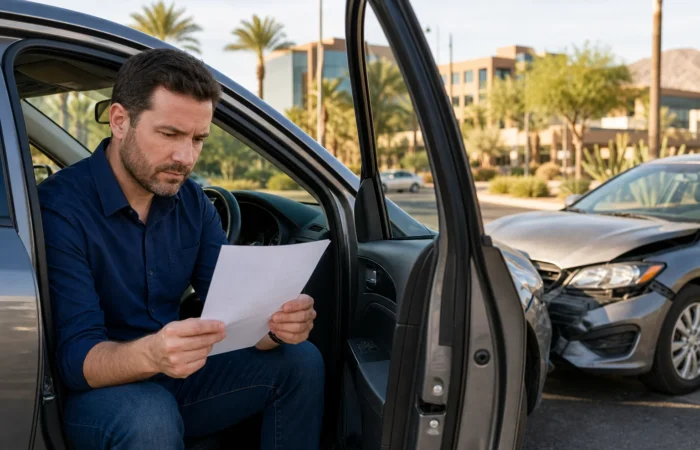
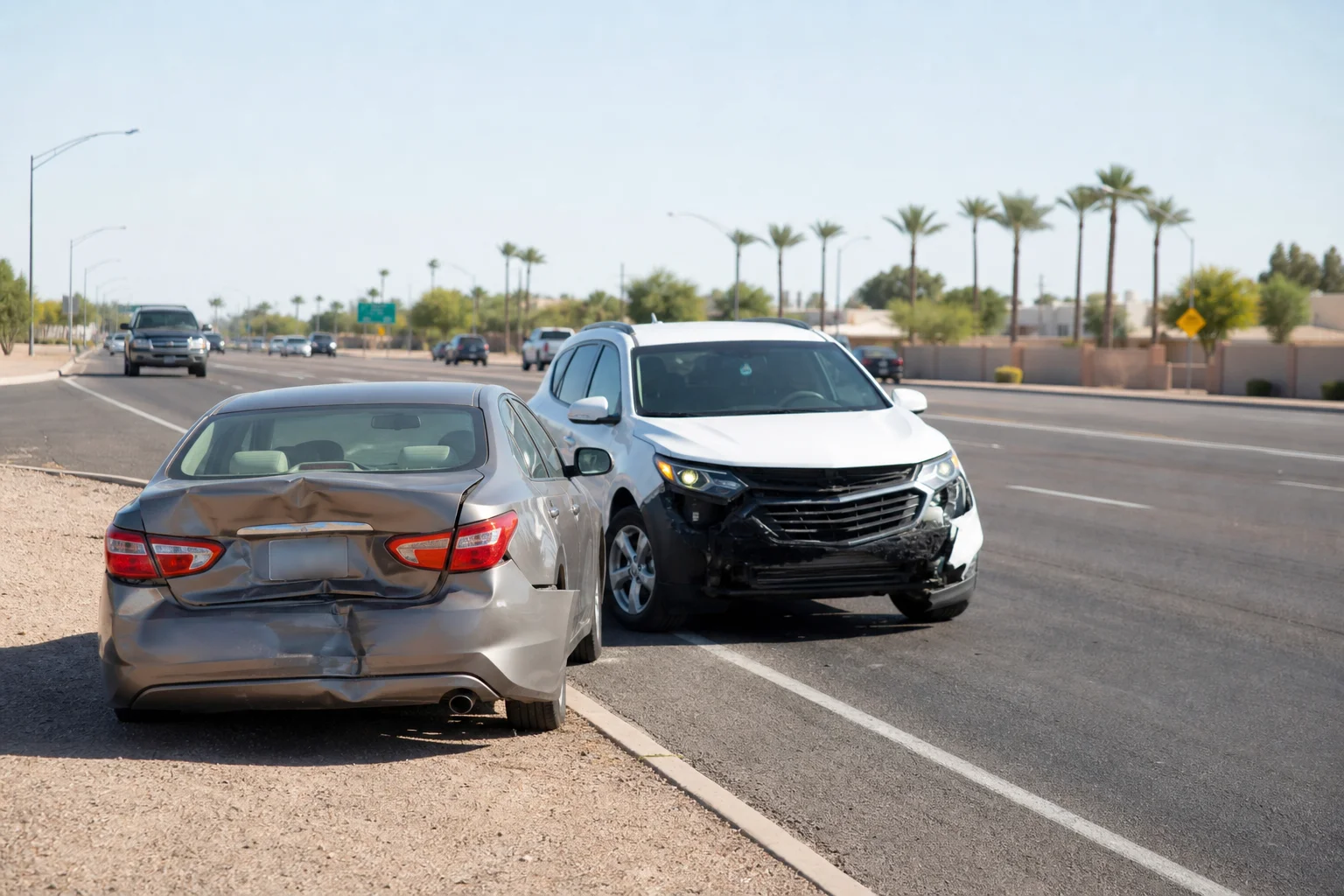
A car crash in Mesa can leave you shaken, hurt, and unsure what happens next. Arizona law and insurance timelines both move fast, so knowing what to do after a car crash in Mesa protects your health, your vehicle, and your Personal Injury claim. Here are the first 10 steps to take, in order.
By Charles Paglialunga, Esq., Founder, Valley Accident Law, 29 years Arizona personal injury
The minutes right after a crash set the tone for everything that follows, your health, your vehicle, and your claim. These first two steps come before you call anyone about insurance.
Step 1: Check for Injuries and Move to Safety
Your first job after any car accident is to check yourself and your passengers for injuries, then check on the occupants of the other vehicle if it’s safe to do so. If you can move safely and your vehicle is drivable, pull onto the shoulder or into a nearby parking lot away from traffic. Mesa’s busy corridors, including Power Road, Gilbert Road, and the US-60, see heavy volume, and a stopped car in a live lane creates a second crash risk. Turn on your hazard lights before you do anything else, and set out warning triangles or flares if you carry them. These first minutes are the foundation for what to do after a car crash in Mesa, before you even think about insurance.
Step 2: Call 911 and Request a Police Report
Arizona law requires you to report a crash that causes injury, death, or significant property damage. Call 911 even if the damage looks minor. A responding Mesa police officer will document the scene, note witness statements, and often assign fault language based on traffic law. Make sure you get the report number before the officer leaves, and ask how to request a copy once it’s filed. That police report becomes one of the most important pieces of evidence in your personal injury claim, especially if the other driver later disputes what happened.
Document the Scene Before You Leave
Once everyone is safe and the police have been called, your focus shifts to preserving evidence. Insurance companies weigh what you document at the scene far more heavily than what you remember weeks later.
Step 3: Photograph Everything at the Scene
Use your phone to photograph vehicle damage from multiple angles, license plates, skid marks, traffic signals, road conditions, weather, and any visible injuries. Photograph the surrounding intersection too, including street signs and lane markings, since that context helps recreate exactly how the crash happened. These photos matter later when you or your attorney negotiate with an insurance company. If your vehicle loses resale value even after a proper repair, thorough documentation of the damage and the vehicle’s condition gives you the evidence needed to support a diminished value claim alongside your repair costs.
Step 4: Exchange Information With the Other Driver
Get the other driver’s name, phone number, address, driver’s license number, license plate, and insurance company name and policy number. Arizona requires every driver to carry proof of financial responsibility, and if the other driver refuses to share contact information or insurance details, note that refusal and let the responding officer know immediately.
Step 5: Get Witness Contact Information
Independent witnesses carry weight that interested parties don’t. Before anyone leaves the scene, ask any bystanders who saw the crash for their name and phone number. A witness who wasn’t involved in the crash can confirm details the drivers disagree on, like who had the green light or who changed lanes without signaling. For more on how these claims are handled, see our page on Car Accidents in Arizona.

Get Medical Care and Report the Crash the Right Way
Once the scene is documented, your attention should turn to your body and to the paperwork that starts your claim moving.
Step 6: See a Doctor Even If You Feel Fine
Adrenaline masks pain. Soft tissue injuries, concussions, and spinal damage often don’t show symptoms for hours or days, and headaches, stiffness, or numbness that shows up the next morning can still be tied back to the crash. If you were injured, even mildly, get evaluated quickly, ideally within 24 to 48 hours of the crash. A documented medical visit ties your injuries to the crash date, which matters if the insurance company later argues your pain came from something else.
Step 7: Notify Your Own Insurance Company
Most Arizona auto policies require prompt notice after a crash, so call your insurance company and give the basic facts: date, location, and involved vehicles. Keep your statement factual and short, and avoid guessing about details you’re not sure of. Arizona is an at-fault state, not a no-fault state, so the driver who caused the crash and their insurance company, not your own policy, are ultimately responsible for your damages in most cases. This distinction catches a lot of drivers off guard, and the Arizona at-fault rules affect how your own insurer handles the notice you just gave them.
Step 8: Be Careful Talking to the Other Driver’s Insurance Company
The other driver’s insurance company will likely call you within days asking for a recorded statement. You are not required to give one. Insurance companies train adjusters to ask questions that minimize your injuries or shift fault onto you. Before you agree to anything, get familiar with the tactics insurance adjusters commonly use, or simply let an attorney handle the communication instead.
Protect Your Claim in the First Few Weeks
The last two steps happen away from the scene, in the days after the crash, and they often decide how much your claim is actually worth.
Step 9: Keep a File of Everything
Save every document tied to the crash: the police report number, medical bills, mileage to appointments, repair estimates, photos, witness contact information, and any letters or emails from an insurance company. A simple folder, physical or digital, keeps your insurance claim organized and makes it much easier for a lawyer to evaluate your case quickly if you decide to hire one.
Step 10: Talk to a Personal Injury Lawyer Before You Sign Anything
Insurance companies sometimes offer a fast settlement before you know the full extent of your injuries. Once you sign a release, you generally can’t ask for more money later, even if your pain gets worse or you need surgery. Before you accept any offer, understand that a fair number usually can’t be calculated until your medical treatment is finished and the full scope of your medical bills, lost wages, and pain and suffering is known. Settlement timelines vary from case to case, so talk to a personal injury lawyer about your specific claim before you sign anything.
Frequently Asked Questions
Do I need to call the police after a minor car accident in Mesa? Yes. Arizona law requires a report when there’s injury, death, or significant property damage, and a police report protects you if the other driver later changes their story. Even for a fender bender, calling 911 creates an official record you can use with your insurance company down the road.
What if the other driver doesn’t have insurance? Arizona has an uninsured and underinsured motorist system built into most policies. If the other driver has no insurance or not enough coverage, your own policy may still provide compensation. A personal injury attorney can review your policy to identify every source of recovery available to you.
How long do I have to file a car accident claim in Arizona? Arizona’s statute of limitations generally gives injury victims two years from the crash date to file a lawsuit, though insurance claims often need to move much faster than that. Don’t wait to start the process, evidence and witness memories fade quickly.
Should I accept the first settlement offer from the insurance company? Not without understanding the full value of your claim first. Early offers are usually calculated before your medical treatment is complete, and once you accept, you typically waive the right to ask for more, even if you’re still in pain months later.
Do I really need a lawyer for a car accident in Mesa? It depends on the severity of your injuries and how the other driver’s insurance company is behaving. Straightforward, low-damage claims sometimes resolve without one, but if you’re dealing with serious injuries, disputed fault, or a lowball offer, a consultation costs nothing and can clarify what you deserve.
Get Straight Answers About Your Mesa Car Accident Claim
You shouldn’t have to guess what to do after a car crash in Mesa while you’re still hurt and dealing with an insurance company that doesn’t have your best interests in mind. Valley Accident Law offers a free, no-obligation Contact / Free Case Review to help you understand your legal options.