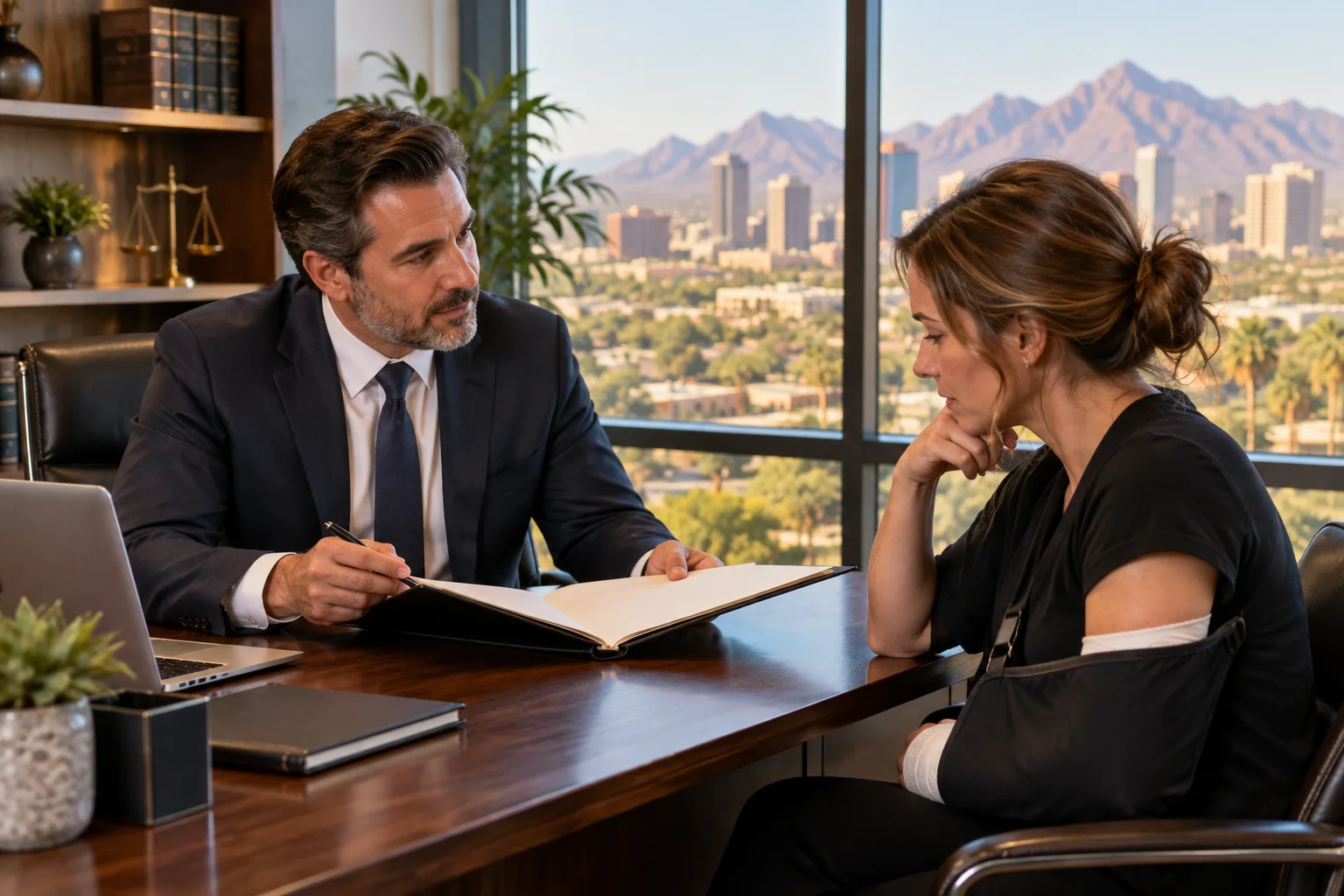

When an insurance company tells you that you share the blame for a wreck, your settlement can shrink fast under Arizona’s comparative negligence rules. Here’s what to do when the insurer blames you for part of an Arizona crash, from documenting the scene to pushing back with evidence before you accept a reduced Car Accidents settlement.
By Charles Paglialunga, Esq., Founder, Valley Accident Law, 32 years Arizona personal injury
Understanding Arizona’s Comparative Negligence Law
Arizona follows a pure comparative negligence law, which means an insurance company can try to assign you a percentage of fault for a crash, and if that argument holds up, your final recovery drops by that same percentage. If an adjuster claims you were 20 percent responsible for a car accident, the company will try to cut your settlement by 20 percent, even when the other driver caused most of the damage. Unlike states that cut off recovery entirely once a driver crosses a certain fault threshold, Arizona lets you recover damages even if you’re found mostly at fault. That structure is exactly why comparative negligence arguments show up so often in Arizona injury claims: insurance companies know that every percentage point of blame they shift onto you is money they don’t have to pay out of pocket. Before you respond to any fault allegation, it helps to understand that this math is the entire strategy behind the offer sitting in front of you.
How Insurance Adjusters Build a Shared-Fault Argument
Insurance adjusters don’t invent shared-fault claims out of nothing. They build them from whatever is available in the first few days after a crash, and they move quickly, often before you’ve had a chance to think things through. A recorded statement given before you’ve reviewed the police report, an offhand comment about not seeing the other driver until impact, or an ambiguous diagram in the report can all become the foundation of a comparative negligence argument. Insurance companies also compare your account of the crash against the other driver’s version of events, and when the two conflict, adjusters tend to lean toward whichever interpretation lowers their payout. This is standard practice across most insurance companies, not a personal judgment about your honesty.
It’s a claims-handling strategy built into how insurance adjusters evaluate liability, which is exactly why you need a plan for what to do when the insurer blames you for part of an Arizona crash instead of reacting in the moment. These conversations tend to follow a predictable pattern, and knowing what to expect before you’re on the phone with an adjuster makes it far easier to avoid the missteps that fuel a shared-fault argument. Preparing for insurance adjuster calls ahead of time is one of the simplest ways to protect your claim.
Five Steps for What to Do When the Insurer Blames You for Part of an Arizona Crash
Once you know a shared-fault argument is coming, the steps you take next matter more than almost anything else in your claim.
Don’t Admit or Argue Fault at the Scene or on the Phone
Anything you say to the other driver, a witness, or an insurance adjuster in the hours after a crash can be used to support a shared-fault argument later. Stick to facts: your name, insurance information, and a description of what happened if an officer asks. Save any analysis of who did what for after you’ve had time to think, and never guess about speed, distance, or timing on a recorded call.
Request a Copy of the Police Report
Get a copy of the police report as soon as it’s available and read it line by line. Officers sometimes note contributing factors for both drivers even when one driver is clearly the primary cause of the crash, and insurance companies will seize on any language that spreads fault around. If the report contains an error, an attorney can help you request a correction or supplement before it becomes the basis of a lowball offer.
Preserve Your Medical Records From Day One
Insurance companies look for gaps between the crash date and your first medical visit, and they use those gaps to argue your injuries came from something else, or that you weren’t really hurt in the accident. Keep every note, imaging result, and bill tied to your treatment. Complete medical records that connect your injuries directly to the crash are one of the strongest tools you have for pushing back against a shared-fault claim.
Schedule a Free Consultation Before You Respond in Writing
Before you sign a statement, accept a settlement offer, or respond to any letter alleging shared fault, talk to a Personal Injury attorney. A free consultation costs you nothing and gives you a chance to understand how Arizona’s comparative negligence rules apply to the specific facts of your case before the insurance company locks you into a position you can’t undo.
Gathering Evidence to Challenge a Shared-Fault Claim
The best way to defeat a shared-fault argument is to gather evidence that shows the other driver’s actions, not yours, caused the crash. Photos of the scene, vehicle positions, skid marks, traffic signals, and road conditions can all speak louder than a recorded statement taken under pressure. Witness contact information is valuable too, since a driver or pedestrian nearby may have seen exactly what the police report didn’t capture. If the crash involved a red-light violation, a lane change, or a rear-end collision, the mechanics of the impact often tell their own story about who was actually at fault. When our team helps a client gather evidence, we’re looking for anything that ties the physical facts of the crash to the other driver’s conduct, because that’s what shifts a comparative negligence percentage back where it belongs. This work carries real weight because Arizona is an at-fault state rather than a no-fault state. The driver who caused the crash, or their insurance company, bears financial responsibility for the damages, and that’s exactly why the evidence you gather has so much power over the final number on your settlement.
Frequently Asked Questions
Can I still recover money if the insurance company says I was partly at fault? Yes. Arizona’s comparative negligence law allows you to recover damages even if you’re found partly responsible for a crash. Your total recovery is reduced by your assigned percentage of fault, so if you’re found 15 percent at fault, your settlement drops by 15 percent rather than being eliminated entirely.
What if I already gave a recorded statement before contacting an attorney? A recorded statement isn’t the end of your claim, but it can complicate things if it contains ambiguous language about fault. An attorney can review what you said, compare it against the police report and other evidence, and help correct the record before the insurance company builds a shared-fault argument around it.
How quickly should I gather evidence after an Arizona crash? As quickly as possible. Arizona’s statute of limitations gives most injury claims two years from the crash date, but physical evidence disappears much faster than that. When a government vehicle or other public entity is involved, a written notice of claim is due within 180 days (A.R.S. 12-821.01). Traffic camera footage, skid marks, and witness memories fade within days or weeks, so acting early protects your claim.
Do I need a lawyer if my injuries are minor? Not always, but a shared-fault allegation changes the calculation even for minor to moderate injuries, since any percentage assigned to you comes directly out of your recovery. That’s often reason enough to get a quick read on whether you need a lawyer even when the injuries themselves are minor.
What happens if the police report itself is wrong? Police reports aren’t always accurate, and officers don’t always witness the crash firsthand. If the police report contains errors about fault, speed, or positioning, an attorney can help you request a correction, gather independent evidence, and present a more accurate account to the insurance company handling your claim.
Get Straight Answers About Your Arizona Crash Claim
If an insurance company is trying to blame you for part of a crash you didn’t cause, don’t guess your way through it alone. Charles Paglialunga and the Valley Accident Law team have spent 32 years helping injured Arizona drivers push back on shared-fault claims and recover what they’re owed. Reach out for a Contact / Free Case Review to talk through what to do when the insurer blames you for part of an Arizona crash before you sign anything.