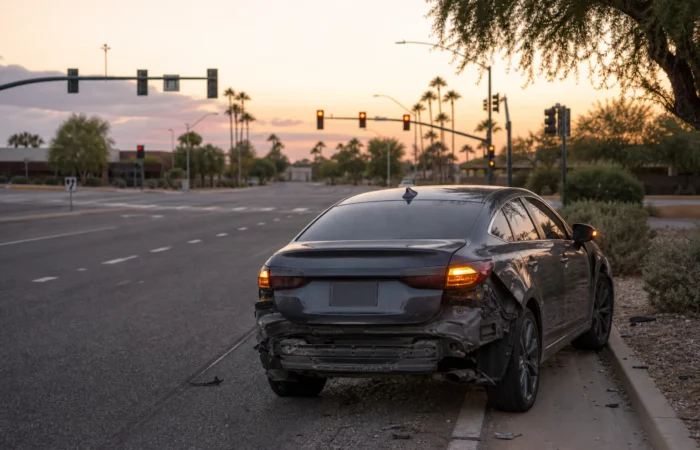

Rideshare accidents in Phoenix are covered under a layered, three-phase insurance system that shifts depending on whether the Uber or Lyft driver had the app on, had accepted a trip, or was actively transporting a passenger. Knowing which phase applied at the moment of your crash determines who pays your Personal Injury claim.
By Charles Paglialunga, Esq., Founder, Valley Accident Law, 29 years Arizona personal injury
Why Rideshare Accidents in Phoenix Are Not Like Standard Car Accidents
When two private drivers collide in Phoenix, liability coverage is usually straightforward: the at-fault driver’s personal policy pays. Rideshare accidents in Phoenix work differently because a rideshare driver operates in a commercial context even when using a personal vehicle. Insurance companies treat that distinction seriously, and the gaps between personal and commercial insurance policies create a confusing middle ground for injured people who do not know which carrier to pursue.
Arizona law requires rideshare companies to maintain commercial insurance. Under Arizona Revised Statutes Sections 28-9551 through 28-9557, transportation network companies like Uber and Lyft must carry specific minimum coverage at each phase of a trip. What those minimums are, and when they apply, depends entirely on what the rideshare driver was doing at the moment of impact.
Uber Lyft Coverage: The Three Phases of Rideshare Insurance Explained
Understanding the three coverage phases is the foundation of any rideshare accident claim in Arizona.
Phase 1: App On, No Ride Accepted
The rideshare driver has logged into the Uber or Lyft app but has not accepted a trip request. During this window, the driver’s personal auto insurance is primary. Because most personal insurance policies exclude commercial activity, coverage may be limited or denied outright. The rideshare company provides contingent liability coverage during Phase 1, but only if the driver’s personal policy denies the claim first. Under current Arizona filing requirements, that contingent coverage is $50,000 per person and $100,000 per accident for bodily injury, with $25,000 for property damage.
Phase 2: Ride Accepted, En Route to Pick Up
Once a rideshare driver accepts a trip and begins driving toward the passenger, the rideshare company’s commercial policy becomes primary. Both Uber and Lyft carry $1,000,000 in liability coverage during Phase 2 and Phase 3. This shift is significant: it represents the clearest path to full compensation for other motorists, pedestrians, and cyclists struck by a rideshare driver on the way to a pickup.
Phase 3: Passenger On Board
Once the passenger is in the vehicle and the trip is active, the $1,000,000 commercial liability policy remains in effect. Uber and Lyft also provide uninsured and underinsured motorist coverage during Phase 3. If a passenger suffers injury because another driver runs a red light, the rideshare company’s UM/UIM coverage can close the gap when the at-fault driver carries insufficient insurance.
How Independent Contractor Status Affects Your Rideshare Claim
Uber and Lyft classify their rideshare drivers as independent contractors rather than employees. This distinction matters because it affects whether the rideshare company can be held directly liable for a rideshare driver’s negligence under traditional respondeat superior principles. Corporate legal teams raise this classification early and often to limit their exposure.
Arizona law does not leave injured people without recourse. The mandatory insurance requirements under ARS 28-9551 apply regardless of employment classification, so the rideshare company’s insurance policies must respond based on the phase of the trip. Beyond that, an experienced attorney can pursue additional theories, including negligent hiring and negligent retention, when a rideshare driver’s background warranted closer screening before they were permitted to use the platform.
A 2018 National Bureau of Economic Research working paper by Barrios, Hochberg, Liu, and Xu (NBER Working Paper 25076) found that rideshare entry in U.S. markets correlated with increases in vehicle miles traveled and traffic fatalities, underscoring why robust insurance coverage matters in every rideshare accident case.
What Insurance Companies Do After a Rideshare Crash
Rideshare accidents in Phoenix generate multiple insurance carriers at once: the rideshare driver’s personal insurer, the rideshare company’s commercial carrier, and potentially a third-party driver’s insurer if another vehicle caused the crash. Every one of those insurance companies will work to minimize their own exposure. Common tactics include disputing which phase of coverage applied at the moment of impact, arguing the driver was off-platform, or contesting the severity of your injuries.
If you were a passenger in an Uber or Lyft vehicle, you may feel that one of those insurance companies is on your side. They are not. Every adjuster works for their employer, not for you. Recorded statements made in the days after a crash can be used against your claim. Before you speak with any adjuster, document the scene, seek medical attention, and talk with an attorney who handles rideshare accident cases.
Arizona sets a two-year deadline for personal injury claims under ARS 12-542. That window can be shorter in cases involving government entities. Do not let the clock work against you while insurance companies conduct their own investigations.
Collecting Evidence That Protects Your Rideshare Accident Claim
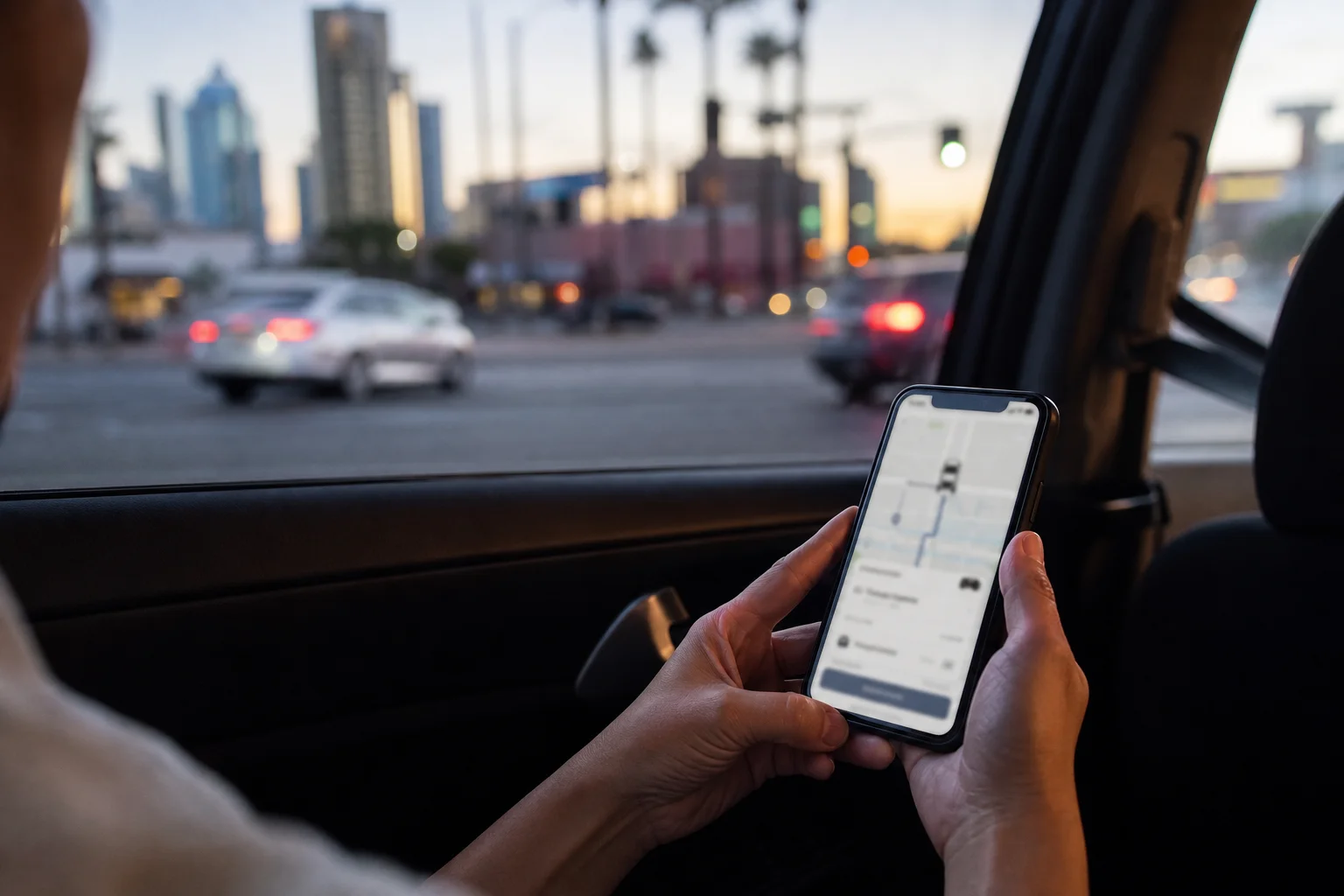
The evidence that wins rideshare accident cases is time-sensitive. The Uber or Lyft app logs the exact timestamp and GPS coordinates of every phase transition. If there is a dispute about whether the rideshare driver was on an active trip or simply online with no accepted ride, that data is critical. Your attorney can send a litigation hold letter to preserve those app records, but the process must begin quickly before routine data purging occurs.
Additional evidence worth collecting immediately: photos of all vehicles and the scene, the driver’s name and license plate, a screenshot of your trip receipt if you were a passenger, witness contact information, and any traffic camera or dashcam footage from the area. Phoenix metro intersections often have city-operated cameras, and many local drivers run dashcams that capture the seconds before impact.
For more on how fault and evidence work in Arizona collision cases generally, see our overview of Car Accidents.
Frequently Asked Questions
Can I sue Uber or Lyft directly after a rideshare accident in Phoenix? You can file a claim against the rideshare company’s commercial insurance, and there may be grounds to name the company as a defendant in litigation. The independent contractors classification makes traditional employer liability harder to establish, but theories such as negligent hiring and negligent retention remain available. An attorney can evaluate whether those theories apply based on the specific facts of your crash and the driver’s history on the platform.
What if the Uber or Lyft driver was uninsured or underinsured? Both Uber and Lyft carry uninsured and underinsured motorist coverage during Phase 2 and Phase 3. If you were a passenger and the at-fault third-party driver had no insurance or too little coverage to pay your losses, the rideshare company’s UM/UIM policy can fill that gap. Coverage conditions vary by situation, and the claim process requires careful documentation of your injuries and total damages.
I was a pedestrian hit by a Lyft driver. Do I have a claim? Yes. Pedestrians struck by rideshare drivers have access to the same layered insurance system. If the driver had accepted a trip or had a passenger on board at the time of the crash, the rideshare company’s $1,000,000 liability policy applies. Pedestrian injuries are often severe and long-lasting. An attorney can help you identify the correct phase, preserve the app records, and pursue the full available coverage on your behalf.
How long does a rideshare accident claim take to resolve? Timelines depend on injury severity, the number of insurers involved, and whether the case settles or proceeds to trial. Cases with clear phase documentation and strong medical records often move faster. Cases where carriers dispute phase coverage or fault can take considerably longer. An attorney can give you a realistic assessment once the key facts are gathered and the full extent of your injuries is known.
Do I need a lawyer if the rideshare company’s insurer contacts me with a settlement offer? You are not required to accept any offer. First settlement offers in rideshare accident cases are typically lower than the full value of the claim. A personal injury attorney can assess whether an offer accounts for future medical costs, lost income, and pain and suffering, and negotiate on your behalf before you sign anything that releases your rights.
Talk to Valley Accident Law About Your Rideshare Accident
Rideshare accident cases involve multiple carriers, overlapping insurance policies, and corporate legal teams that move quickly to protect the rideshare company’s interests. Valley Accident Law has represented personal injury clients across the Phoenix metro for 29 years, and we understand how the three-phase coverage system plays out in real claims. If you or someone you care about was hurt in an Uber, Lyft, or other rideshare crash, reach out for a Contact / Free Case Review and get straightforward answers before you make any decisions.