
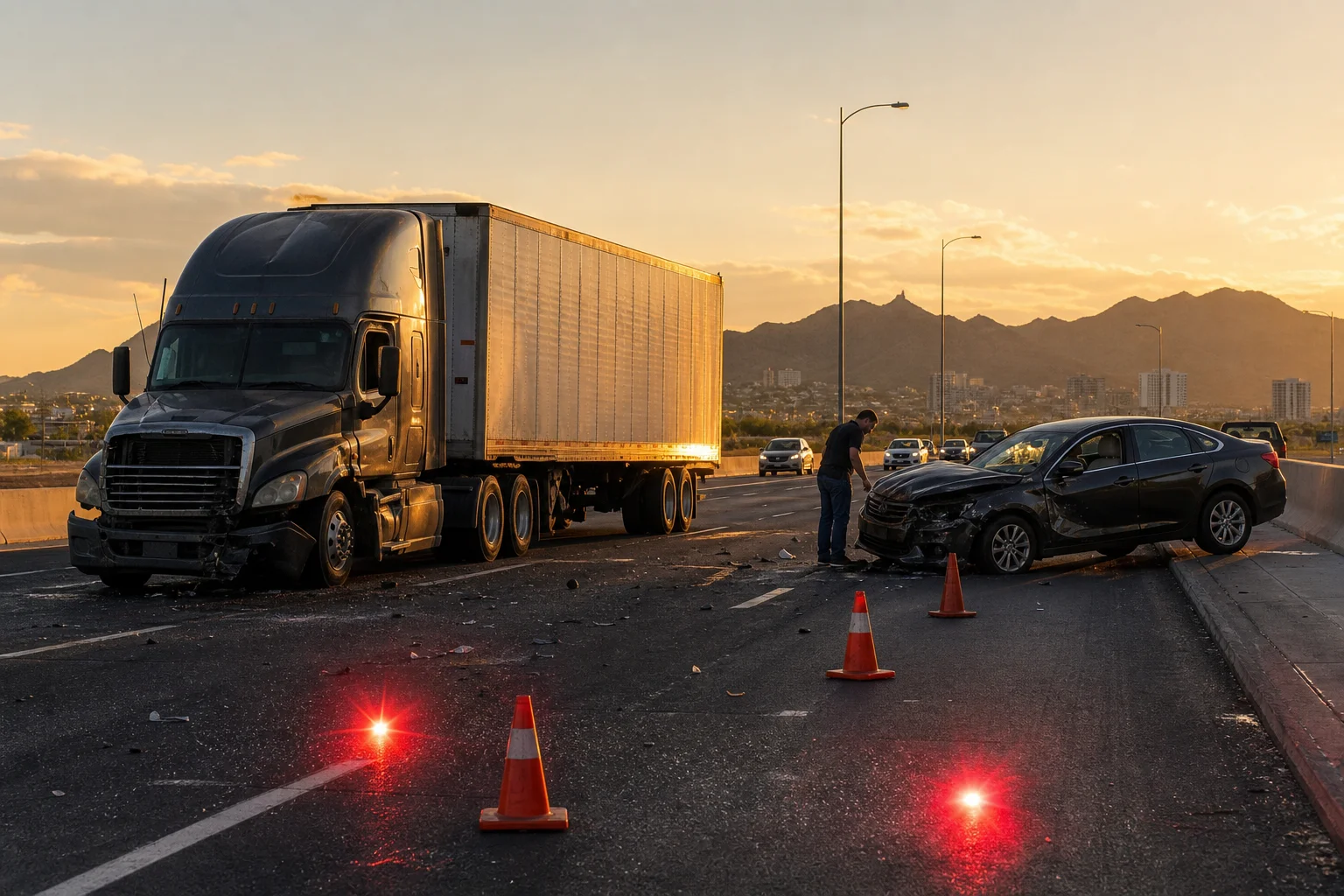
Who is actually liable after a commercial truck crash in Phoenix depends on what caused the wreck: the truck driver’s choices, the trucking company’s policies, a negligent freight broker, or a cargo loader who overloaded the trailer. Multiple parties can share fault, and sorting that out shapes every Truck Accidents claim we handle.
By Charles Paglialunga, Esq., Founder, Valley Accident Law, 29 years Arizona personal injury
Arizona follows a fault-based, comparative negligence system, so more than one party can carry legal responsibility for the same truck crash. In an ordinary passenger vehicle wreck, liability usually comes down to one driver. In a commercial truck accident, the analysis is layered: the truck driver, the trucking company that owns the rig, a freight broker who arranged the load, and even the company that loaded the cargo can each hold a share of fault. Our Phoenix accident attorneys start every truck accident case by mapping out every party who touched that truck before the wreck, because, in other words, the truth is rarely just one driver’s error alone. Arizona is a fault-based state rather than a no-fault state, which means compensation comes from proving another party’s responsibility rather than filing through your own no-fault coverage, a mix-up we unpack further in the no-fault state question.
Why This Matters for Your Claim
Naming the wrong defendant, or only one defendant, can leave real compensation on the table. Insurance carriers for a trucking company will often settle fast on the driver’s fault alone, hoping nobody looks past the cab of the truck. A full investigation asks a harder question: who actually decided the schedule, the maintenance interval, the load weight, and the carrier selection that put this truck on the road that day.
The Truck Driver’s Own Negligence
The truck driver is usually the first name on the police report, and for good reason. Speeding, following too closely, driving fatigued past federal hours-of-service limits, distracted driving, or driving under the influence all point straight at the person behind the wheel. Federal Motor Carrier Safety Administration regulations cap how many hours a truck driver can be on duty each day, and daily logs are supposed to show it. When a driver falsifies those logs, or a dispatcher pressures a driver to skip rest breaks, the truck driver’s individual negligence often opens the door to the trucking company’s negligence too, since a carrier that tolerates the practice shares the blame.
Common Signs of Driver Negligence
Skid marks that start late, inconsistent statements at the scene, a logbook that does not match the GPS pings actually used by the carrier’s own dispatch system, and a driver who was really behind schedule all suggest the truck driver was pushed past a safe limit. None of that rules out other defendants. It usually points straight at them.
When the Trucking Company Carries the Liability
Trucking companies owe an independent legal duty separate from anything their drivers do behind the wheel. Under the legal doctrine of vicarious liability, meaning a company can answer for its own employee’s conduct, a trucking company is typically responsible for a truck driver’s on-the-job negligence, but trucking companies can also be liable directly: for hiring a driver with a poor safety record, for skipping required drug testing, for deferred maintenance on brakes or tires, or for pushing unrealistic delivery schedules that encourage speeding. The American Trucking Associations and the Federal Motor Carrier Safety Administration both publish safety standards that trucking companies are expected to follow, and a pattern of ignored violations can actually become central evidence in a truck accident claim. Carrier negligence tends to show up in repeating patterns on Arizona’s interstates, where speed, tight following distances, and dispatch pressure produce the same kinds of crashes case after case, a trend we break down further in interstate truck crash patterns.
Freight Brokers and Their Duty to Vet Safe Carriers
Freight brokers arrange the load, but they are not off the hook once a shipment is on the road. A broker who hires a carrier with a poor safety score, expired insurance, or a history of out-of-service violations can face a negligent hiring or negligent selection claim. Federal law requires brokers to check a carrier’s safety rating before booking a load, and courts have allowed injured plaintiffs to bring negligent broker claims directly, separate from any claim against the trucking company itself. Because Arizona is a fault-based comparative negligence state, more than one party, including a broker, can be named in the same claim. If a broker ignored red flags to move freight faster or cheaper, that choice can add real weight to your Personal Injury claim.
Cargo Loaders and the Overloaded or Shifting Load Problem
A truck that is loaded wrong is a truck that crashes wrong. Overloaded trailers, unevenly distributed weight, and improperly secured cargo change how a rig handles, brakes, and turns, and they can cause rollovers or jackknifes that have nothing to do with the truck driver’s skill. When a third-party loading company, warehouse, or shipper packs a trailer without following federal weight and securement rules, that company can be named in the resulting truck accident lawsuit alongside the driver and the trucking company. Black box data, bill of lading paperwork, and weigh station records are often what actually pinpoint who is responsible for a bad load.
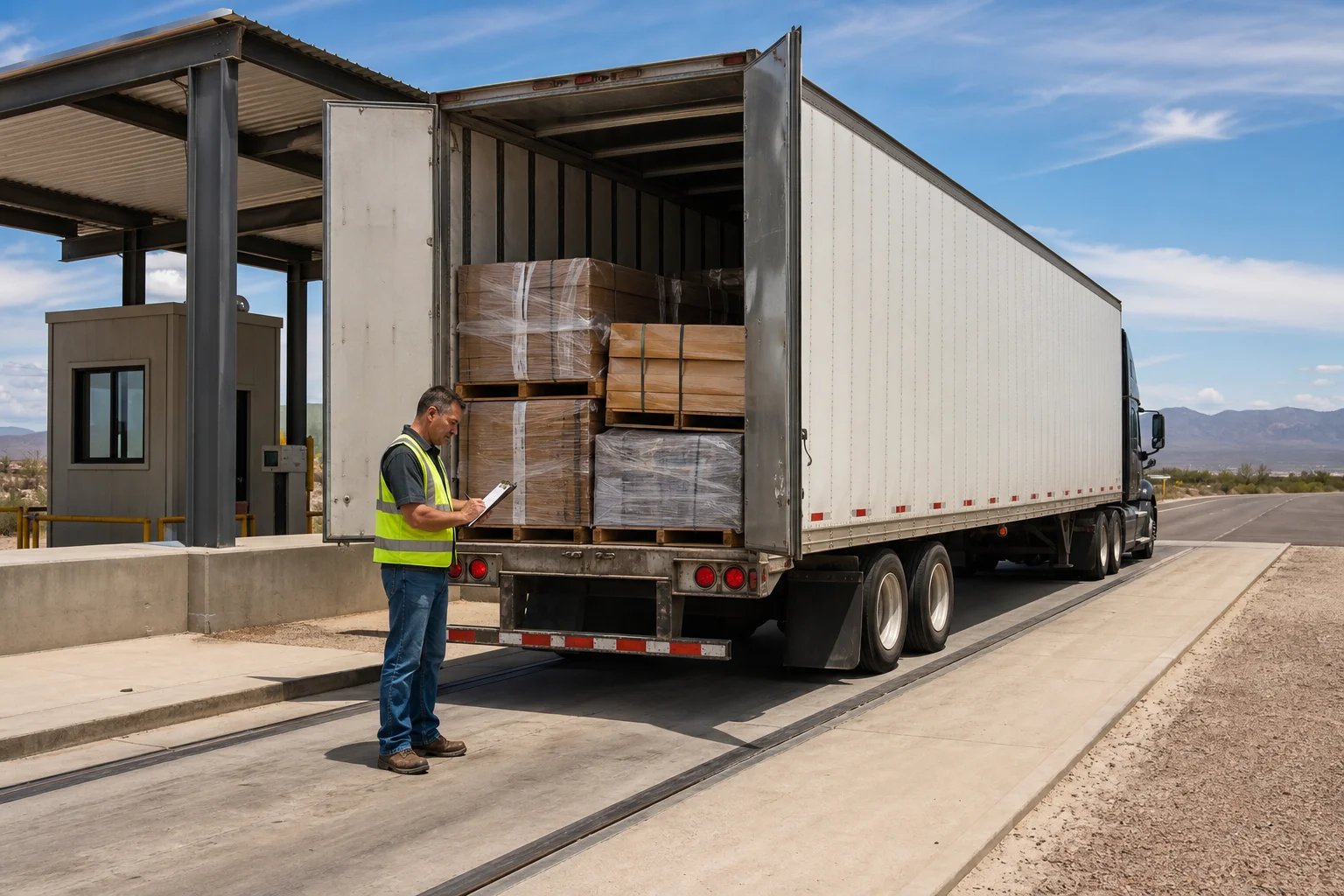
Building the Case: Evidence That Actually Proves Fault
Proving who is actually liable after a commercial truck crash in Phoenix means pulling records most drivers never see: the data present in the truck’s electronic control module, driver logs, dispatch communications, maintenance files, drug test results, and the broker’s carrier-vetting paperwork. Our accident lawyers send preservation letters within days of taking a case, because trucking companies are not required to keep dash cam footage or electronic logs forever, and some records disappear on a normal retention schedule if nobody asks for them in writing in time. The opposite is also true: a well-documented file, gathered early, tends to hold up far better once an insurance carrier’s own experts start picking it apart. If an adjuster calls before you have spoken with an attorney, keep it short: confirm only the basic facts like the date and location, and avoid giving a recorded statement, guessing at fault, or describing your injuries in detail until an attorney has reviewed the case. Adjusters are trained to use early, casual answers to limit what a claim is worth later, which is exactly why waiting for guidance first protects the value of what you’re owed.
What We Request Immediately
Within days of taking a truck accident case, we send written preservation letters for electronic logging device data, dash cam footage, maintenance and inspection records, drug and alcohol test results, and the driver’s qualification file. Trucking companies routinely recycle this data on a set schedule, so a letter sent late can mean evidence that is simply gone.
Frequently Asked Questions
Who is actually liable after a commercial truck crash in Phoenix if the driver was an independent contractor?
Even when a truck driver is classified as an independent contractor, the trucking company that dispatched the load can still be liable under federal regulations that treat many contracted drivers as statutory employees for safety purposes. Our accident attorneys review the lease agreement, the carrier’s operating authority, and dispatch records before accepting that a carrier can avoid responsibility for its driver’s conduct on the road.
Can more than one company be sued after the same truck accident?
Yes. Arizona law allows a jury to divide fault among every party who contributed to a truck accident, including the truck driver, the trucking company, a freight broker, and a cargo loader. Comparative negligence rules mean each defendant only pays their assigned percentage of fault, which is exactly why identifying every responsible party actually matters to the value of your claim.
How do accident lawyers prove a freight broker was negligent?
Accident lawyers request the broker’s carrier-vetting file, including safety ratings pulled before the load was booked, insurance certificates, and internal emails discussing the carrier’s history. If a broker booked a carrier with a poor safety record or expired authority to save money, that decision can support a negligent hiring claim against the broker directly, separate from any claim against the truck driver or trucking company.
What if the trucking company blames the driver for everything?
Trucking companies often point at the driver first because it limits their own exposure. That is not the end of the analysis. Maintenance logs, hiring files, dispatch pressure, and training records can show the trucking companies knew about a problem and did nothing, which keeps the carrier in the case even when the truck driver also shares fault.
Talk to a Truck Accident Attorney Before You Talk to the Insurance Company
If the only honest answer right now is “I’m not sure who’s responsible,” you don’t have to sort that out alone, since liability after a commercial truck crash rarely rests on one signature or one company logo on the door. Reach out through our Contact / Free Case Review page so we can look at what actually happened and who should pay for it.