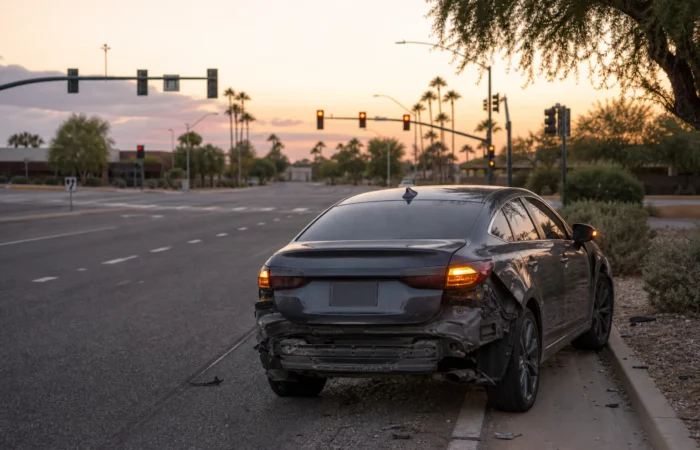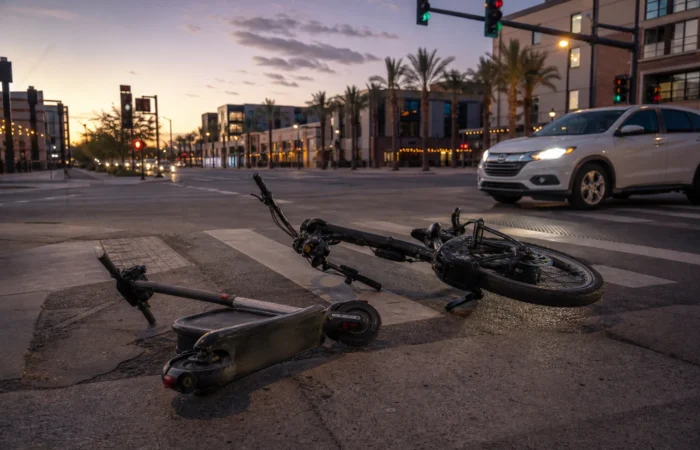
Pedestrian and crosswalk accidents in Phoenix claim dozens of lives every year and leave many more survivors facing serious injuries, mounting medical bills, and no clear path forward. If you or someone you love was struck while walking, Arizona law gives you the right to pursue compensation, and Pedestrian Accidents cases are what our firm handles every day.
By Charles Paglialunga, Esq., Founder, Valley Accident Law, 29 years Arizona personal injury
Why Phoenix Roads Are Dangerous for People on Foot
Phoenix consistently ranks among the most dangerous metro areas in the country for pedestrians. According to the Arizona Department of Transportation’s 2022 annual crash report, arizona pedestrian fatalities exceeded 220 that year, with Maricopa County accounting for the majority of those deaths. The National Highway Traffic Safety Administration, in its 2022 Traffic Safety Facts publication, found that urban areas like Phoenix account for nearly 80 percent of all pedestrian fatalities nationwide.
The city’s design places pedestrians at a structural disadvantage. Wide arterials, signal cycles optimized for vehicle throughput, high posted speeds, and limited shade make walking uncomfortable and, on many corridors, genuinely dangerous. Roads like Scottsdale Road, Thomas Road, and Indian School Road see pedestrian accidents on a regular basis, and the severity of those crashes tends to be high because of the speeds involved.
Arizona Law and Pedestrian Rights at Crosswalks
Under Arizona Revised Statutes Section 28-792, drivers must yield to any pedestrian lawfully within a crosswalk, whether marked or unmarked at an intersection. A vehicle must come to a complete stop and remain stopped until the pedestrian has fully cleared the driver’s lane. Pedestrians also carry duties: A.R.S. Section 28-793 prohibits a person from stepping off a curb suddenly into the path of a vehicle that cannot safely stop.
Arizona follows a pure comparative fault rule under A.R.S. Section 12-2505. An injured person can recover compensation even if they share partial fault for the crash. Their recovery is reduced by their percentage of fault, but it is not eliminated. Insurance companies routinely argue that a pedestrian was jaywalking, distracted, or outside a designated crosswalk in order to reduce settlement offers. An accident attorney who understands how insurers apply these arguments is essential to protecting an injured person’s recovery.
Common Causes of Pedestrian and Crosswalk Accidents in Phoenix
Pedestrian and crosswalk accidents in Phoenix follow recognizable patterns that repeat across intersections throughout the metro area.
Distracted Driving
Drivers looking at phones, adjusting navigation systems, or reaching for food miss pedestrians who are legally present in crosswalks. At 40 mph, a vehicle covers more than 58 feet per second. A single second of inattention is enough to pass through an entire marked crosswalk without the driver ever registering a person in the road.
Failure to Yield
Drivers rolling through right-turn-on-red without scanning for pedestrians, and drivers accelerating through stale yellow lights into an intersection as a walk signal activates, are among the most common scenarios in pedestrian accident claims. Many drivers treat crosswalks as a suggestion rather than a legal stopping point.
Vehicle Speed
Research published by the Insurance Institute for Highway Safety (Tefft, 2011) found that the probability of serious injury to a pedestrian struck at 40 mph is approximately four times greater than at 25 mph. Phoenix arterials are commonly posted at 40 to 45 mph, making injuries in pedestrian accidents on those corridors disproportionately severe.
Impaired and Drowsy Driving
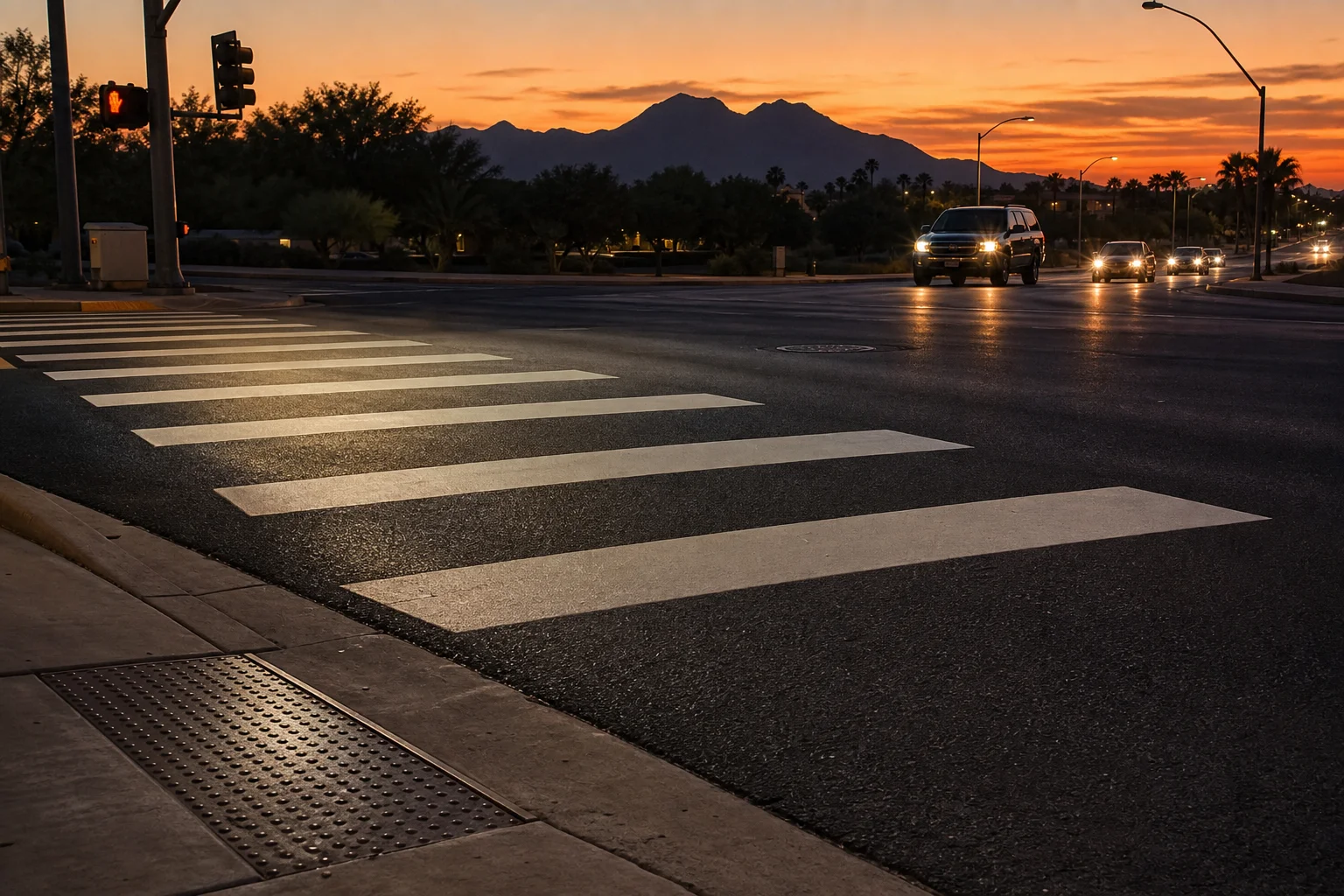
According to the NHTSA’s 2022 Traffic Safety Facts, roughly 47 percent of pedestrian fatalities nationwide involved a driver or pedestrian with a blood alcohol concentration at or above 0.08. Nighttime crashes on unlit Phoenix streets follow this pattern closely.
Poor Infrastructure
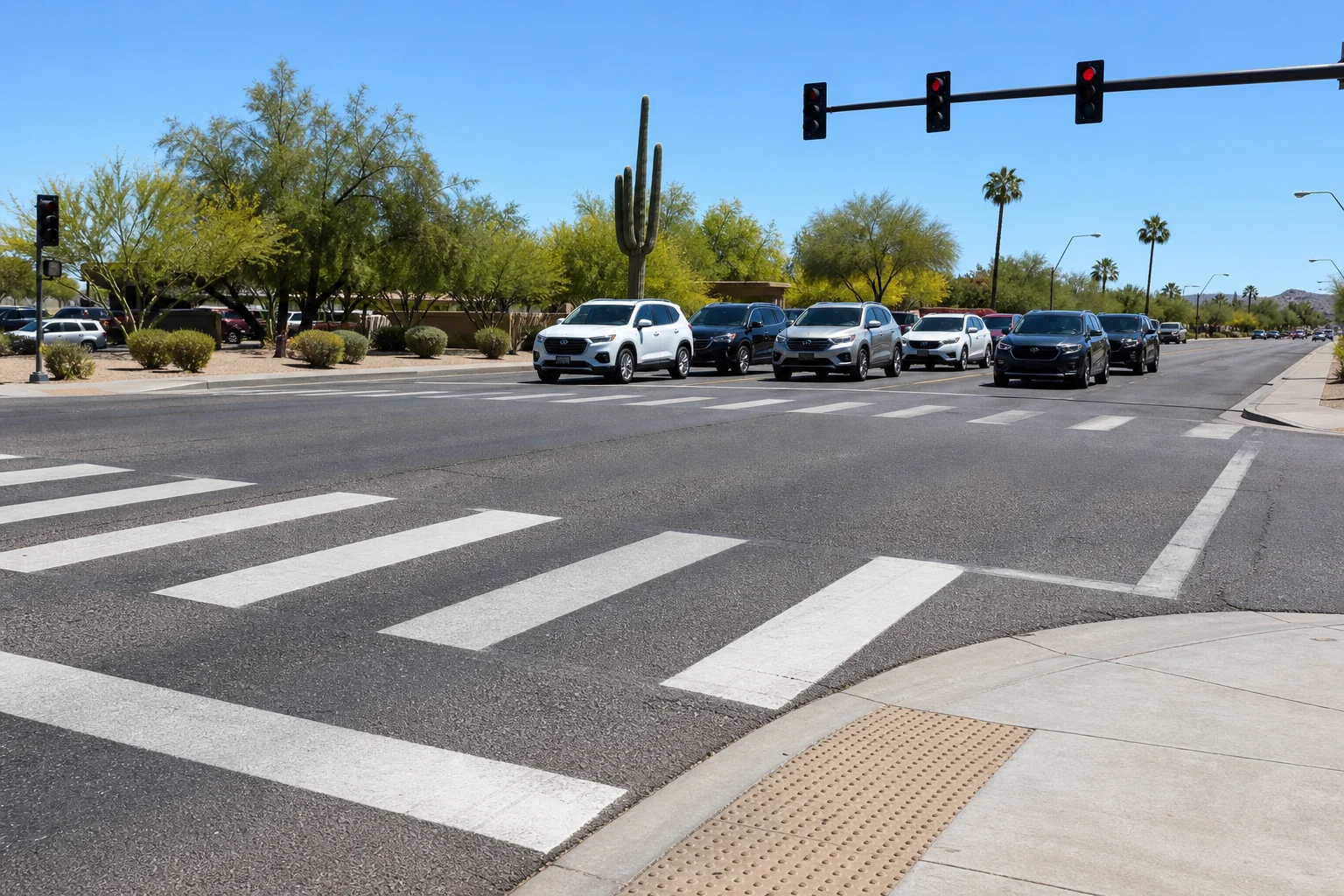
Faded crosswalk markings, missing pedestrian signals, inadequate lighting, and sightline obstructions contribute to accidents at intersections that carry heavy foot traffic near transit stops and commercial corridors. In some cases, a government entity bears partial responsibility for creating or failing to correct a hazardous condition.
Who Bears Liability After a Pedestrian Accident
Liability in pedestrian accidents does not always stop with the driver who made direct contact. Depending on the facts, additional parties may share responsibility:
- The vehicle owner may be liable if they permitted an impaired or unlicensed driver to use the car.
- A government entity may be liable if defective crosswalk design, missing signage, or failed infrastructure contributed to the crash.
- An employer may be liable if the driver was operating the vehicle in the course of employment at the time of the accident.
A Personal Injury claim can name multiple defendants. Arizona’s comparative fault system then allocates responsibility among them based on each party’s contribution to the crash. Insurance companies move quickly after pedestrian accidents to gather recorded statements and close claims before injured people understand the full scope of their injuries. Speaking with a law firm before speaking with any adjuster is the most protective step an injured pedestrian can take.
What Damages Are Available to Injured Pedestrians in Arizona
Arizona law allows injured pedestrians to pursue several categories of compensation:
Medical expenses: Emergency transport, surgery, hospitalization, physical therapy, assistive devices, and projected future treatment costs tied to the injury.
Lost income: Wages missed during recovery and reduced earning capacity if the injuries result in long-term or permanent limitations.
Pain and suffering: Physical pain, emotional distress, anxiety, and loss of enjoyment of life.
Property damage: Personal items such as a bicycle, phone, or mobility device damaged in the crash.
Wrongful death: If the pedestrian did not survive, family members may pursue a claim under A.R.S. Section 12-612, covering funeral costs, loss of financial support, and loss of companionship.
Car accidents that involve a person on foot tend to produce some of the most serious injury profiles seen in personal injury practice. Traumatic brain injury, spinal cord damage, and multiple fractures are common outcomes when a vehicle strikes someone walking, even at moderate speeds.
Steps to Take After Being Hit by a Car in Phoenix
If you are physically able to act following a pedestrian accident, these steps protect both your health and your legal rights:
- Call 911. A police report documents the scene, identifies the driver, and creates a foundational record for any personal injury claim.
- Seek medical attention immediately. Injuries like traumatic brain injury, internal bleeding, and spinal damage may not produce obvious symptoms for hours after impact. A same-day medical evaluation ties your injuries directly to the crash.
- Document the scene. Photograph the vehicle, its final position, crosswalk markings, pedestrian signals, skid marks, and any visible injuries.
- Collect witness contact information. Names and phone numbers from anyone who saw the accident before they leave the scene.
- Do not give a recorded statement to insurance companies. You have no legal obligation to do so before consulting an accident attorney, and early statements are routinely used to minimize claims.
- Contact an accident attorney as soon as possible. Under A.R.S. Section 12-542, the general statute of limitations for personal injury claims in Arizona is two years from the date of injury. Claims against government entities may carry shorter notice deadlines.
Frequently Asked Questions
Can I still recover compensation if I was not in a marked crosswalk when I was hit? Yes, in most cases. Arizona’s pure comparative fault rule means a pedestrian who crossed outside a marked crosswalk can still recover damages, reduced by their percentage of fault. If the driver was speeding, distracted, or impaired, they likely bear the majority of responsibility regardless of where the crossing occurred. An accident attorney can assess the specific facts and give you a realistic picture of your claim.
What if the driver who struck me does not have insurance? Arizona law requires registered vehicles to carry minimum liability coverage, but not all drivers comply. If the at-fault driver is uninsured or underinsured, your own uninsured motorist coverage may provide compensation. A law firm with experience in pedestrian accidents can identify all available sources of recovery and help you pursue the maximum amount available.
How long will my case take to resolve? Most pedestrian accident cases resolve through negotiated settlement before trial, typically within several months to a year depending on the severity of injuries and the clarity of liability. Cases with disputed fault or permanent injuries may take longer. Valley Accident Law handles cases through verdict when a fair settlement cannot be reached.
Do I owe any fees if you do not recover compensation for me? No. Valley Accident Law handles personal injury cases on a contingency fee basis. There are no upfront costs. A free consultation is available at no obligation, and you pay only if we recover compensation on your behalf.
What if the pedestrian accident happened at night with no witnesses? Cases without eyewitnesses are not unwinnable. Traffic and security camera footage, cell phone data, vehicle event data recorders, skid mark analysis, and physical evidence at the scene can reconstruct what happened. An experienced accident attorney works with investigators and experts to build the record your case needs.
Talk to a Valley Accident Law Attorney About Your Case
Pedestrian and crosswalk accidents in Phoenix can leave victims with life-altering injuries and no clear answers about where to turn. If you were injured while walking in the Phoenix metro, you deserve direct answers about your rights under arizona law. Contact / Free Case Review to speak with Charles Paglialunga at no cost and no obligation.